
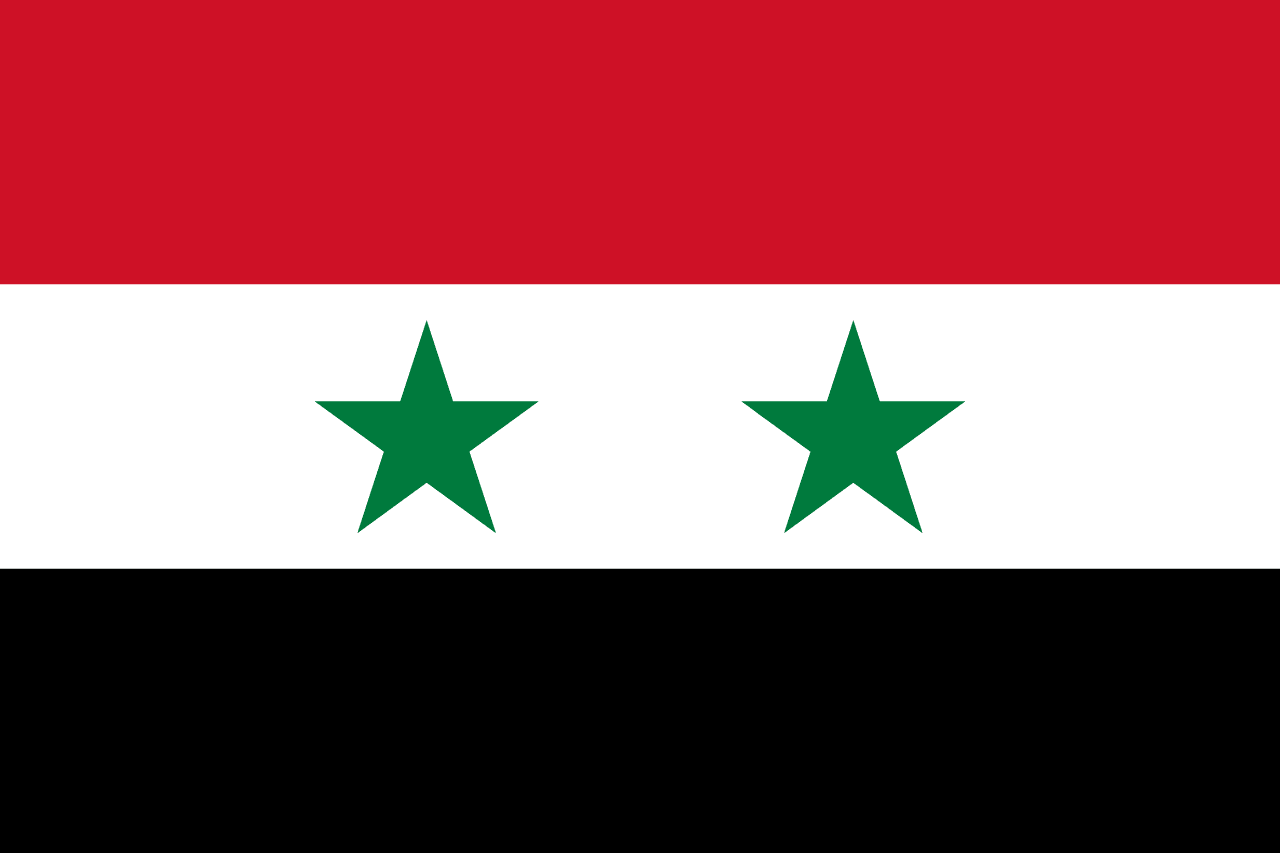
Few countries pack as much human history into their soil as Syria. Sitting at the meeting point of three continents, this is a land where the world's first alphabets were scratched into clay, where caravans hauled silk and spices for thousands of years, and where a single street in Damascus has heard prayers in a dozen languages. Beyond the headlines of recent conflict lies a nation of staggering depth, and these ten facts reveal why Syria has fascinated travelers, scholars, and conquerors alike for millennia.
1. Damascus may be the oldest capital city on Earth
Damascus, Syria's capital, has a serious claim to being the longest continuously inhabited city anywhere, with evidence of settlement stretching back many thousands of years. While other cities like Aleppo and Jericho rival it for the title, Damascus is unique in that it has never stopped being a living, breathing metropolis. Its Old City, ringed by ancient walls, is a maze of covered souks, courtyard houses, and the magnificent Umayyad Mosque. The biblical "Street Called Straight" still runs through its heart, a thoroughfare mentioned in the New Testament. To walk through Damascus is to move through layers of Aramean, Roman, Byzantine, and Islamic history all stacked atop one another. You can explore more in our country guide.
2. Syria gave the world one of its first alphabets
At the ancient coastal city of Ugarit, near modern Latakia, archaeologists uncovered clay tablets bearing a cuneiform alphabet dating to around the 14th century BCE. This Ugaritic script is among the earliest known alphabets ever discovered, a revolutionary leap from the hundreds of pictographic symbols used in earlier writing systems. The idea that a small set of signs could represent the sounds of speech would eventually ripple outward, influencing Phoenician, Greek, and ultimately the Latin letters you are reading right now. Syria, in other words, sits near the very origin point of written communication as we know it, a quiet but world-changing contribution from a corner of the eastern Mediterranean.
3. Aleppo has one of the world's greatest covered markets
Before the civil war, the souks of Aleppo formed one of the largest and most atmospheric covered marketplaces on the planet, with miles of stone-vaulted passageways stretching through the old city. Traders sold soap, spices, textiles, and gold beneath arches that had stood for centuries. Aleppo itself rivals Damascus for the title of oldest city and was a crucial hub on the Silk Road, where merchants from Persia, India, and Europe converged. The city is also famous for Aleppo soap, made from olive oil and laurel berries using a recipe that may be among the oldest soap formulas in existence. Much of the historic quarter has suffered damage, but restoration efforts are underway.
4. Palmyra was a desert empire ruled by a warrior queen
Rising from the Syrian desert, the ruins of Palmyra mark what was once a fabulously wealthy oasis city that grew rich taxing caravans crossing between Rome and the East. In the third century CE, Palmyra produced one of antiquity's most remarkable figures: Queen Zenobia, who rebelled against Rome and briefly carved out an empire stretching across the Near East before the emperor Aurelian crushed her revolt. The site's grand colonnades, temples, and theater earned it UNESCO World Heritage status. Though Palmyra suffered deliberate destruction during the recent conflict, its surviving monuments remain among the most evocative classical ruins anywhere in the world.
5. The country's name comes from ancient Assyria
The word "Syria" is widely believed to derive from "Assyria," the mighty Mesopotamian empire whose influence once spread across the region. Over centuries the Greeks and Romans applied the term broadly to the lands of the eastern Mediterranean. This deep naming heritage hints at just how central this territory has been to the rise and fall of empires, from the Akkadians and Hittites to the Romans, Byzantines, and Ottomans. If you are curious about the country's modern emblem, see our piece on the Syrian flag, whose colors and stars carry layers of pan-Arab symbolism reflecting the nation's twentieth-century struggle for independence and unity.
6. Arabic is official, but ancient Aramaic still survives
Arabic is Syria's official language, spoken by the vast majority of its people, while Kurdish, Armenian, and other tongues are also heard across the country. Most remarkable, though, is the survival of Aramaic, the language Jesus is believed to have spoken. In a handful of villages such as Maaloula, north of Damascus, residents still speak Western Neo-Aramaic in daily life. These tiny communities are living linguistic time capsules, preserving a tongue that was once the lingua franca of the entire Near East before Arabic spread with Islam. Linguists travel from around the world to document this fragile heritage, which has few thousand speakers left.
7. Syria is a mosaic of peoples and faiths
With a population of roughly 23 to 26 million, Syria is far from monolithic. The majority are Sunni Arabs, but the country is home to a rich patchwork of communities including Alawites, Christians of numerous denominations, Druze, Kurds, Armenians, Ismailis, and others. This diversity is the legacy of Syria's crossroads position, where empires and migrations layered group upon group over thousands of years. Some of the oldest Christian communities on Earth trace their roots here, and the country contains shrines sacred to multiple religions. This pluralism has shaped a culture of hospitality, where sharing food and coffee with guests is treated as a near-sacred duty.
8. Syrian cuisine is a Levantine treasure
Syrian food is among the most celebrated in the Middle East, prized for its balance of fresh herbs, tangy lemon, and warm spices. National favorites include kibbeh, croquettes of bulgur and minced meat that come in dozens of regional varieties, alongside fattoush salad, creamy hummus, and stuffed vine leaves. Aleppo in particular is regarded as a culinary capital, famous for its cherry kebab and the smoky, fruity Aleppo pepper. Sweets are a serious affair too, from flaky baklava to semolina cakes drenched in syrup. Meals are typically communal, with a generous spread of small mezze dishes meant to be shared slowly among family and friends around a single table.
9. The Euphrates and fertile plains made this the cradle of farming
The mighty Euphrates River flows through eastern Syria, and the surrounding region forms part of the Fertile Crescent, the arc of land where humans first domesticated wheat, barley, and livestock around ten thousand years ago. This makes Syria one of the birthplaces of agriculture and, by extension, of settled civilization itself. The country's geography ranges from Mediterranean coastline and coastal mountains to fertile river valleys and the vast arid steppe of the Syrian Desert. Tabqa Dam on the Euphrates created Lake Assad, the country's largest reservoir, supplying irrigation and hydroelectric power to a land where water has always been precious and fought over.
10. Crusader castles crown its hilltops
Syria holds some of the finest medieval fortifications ever built, none more famous than Krak des Chevaliers. This colossal Crusader castle, once held by the Knights Hospitaller, is often described as the best-preserved medieval castle in the world, its massive concentric walls and towers commanding a strategic pass between the coast and the interior. T.E. Lawrence called it "the most wholly admirable castle in the world." Together with the fortress of Saladin, it forms a UNESCO World Heritage Site. These castles are vivid reminders that Syria was a frontier of the Crusades, fought over fiercely by European knights and Muslim armies for control of the routes to the Holy Land.
Frequently Asked Questions
What is the capital of Syria?
The capital of Syria is Damascus, one of the oldest continuously inhabited cities in the world. It serves as the country's political, cultural, and administrative center, and its walled Old City is a UNESCO World Heritage Site filled with ancient mosques, churches, and bustling souks.
What is Syria famous for?
Syria is famous for its extraordinary depth of history, including the ancient ruins of Palmyra, the great souks of Aleppo, Crusader castles like Krak des Chevaliers, and Damascus itself. It is also renowned for its delicious Levantine cuisine and for being part of the Fertile Crescent where farming and early civilization began.
Do people in Syria still speak the language of Jesus?
Yes, remarkably. In a few villages such as Maaloula near Damascus, residents still speak Western Neo-Aramaic, a modern descendant of the Aramaic language widely believed to have been spoken by Jesus. These communities are among the last living guardians of a tongue that once dominated the entire Near East.
Conclusion
Syria is a country whose story stretches back to the very dawn of writing, farming, and city life. From the warrior queen of Palmyra to the surviving whispers of Aramaic, from the soap of Aleppo to the castles of the Crusaders, it offers a wealth of history and culture found in few places on Earth. These ten facts only begin to capture a nation that has shaped the course of human civilization, and there is always more to discover.