
Zimbabwe is a landlocked nation in Southern Africa that takes its name from a city of stone walls built without a drop of mortar nearly a thousand years ago. It is a country of thundering waterfalls, balancing granite boulders, and a culture that still echoes the rhythms of ancient kingdoms. Beyond the headlines, Zimbabwe rewards anyone willing to look closer, and these ten facts reveal why.
1. The country is named after a vanished stone city
Zimbabwe takes its name from Great Zimbabwe, a sprawling medieval city built between roughly the 11th and 15th centuries by ancestors of the Shona people. The word comes from the Shona phrase dzimba dze mabwe, meaning "houses of stone." Its most famous structure, the Great Enclosure, has walls up to 11 metres high and 250 metres in circumference, all constructed from precisely fitted granite blocks without any mortar.
At its peak, Great Zimbabwe was home to as many as 18,000 people and sat at the centre of a gold and ivory trade network reaching as far as the Swahili coast and, ultimately, China and Arabia. For decades colonial authorities refused to credit Africans with building it, but archaeology has put that myth firmly to rest.
2. Victoria Falls is one of the largest waterfalls on Earth
On the Zambezi River along Zimbabwe's border with Zambia lies Victoria Falls, locally called Mosi-oa-Tunya, "the smoke that thunders." The spray from the cascade can rise more than 400 metres into the air and is visible from kilometres away. At roughly 1,700 metres wide and 108 metres high, it is considered the largest single sheet of falling water in the world.
Explorer David Livingstone became the first European to record the falls in 1855, naming them after Queen Victoria. Today the site is a UNESCO World Heritage Site and the adventure capital of the region, drawing bungee jumpers, white-water rafters, and travellers who soak in the natural "Devil's Pool" right at the lip of the drop during the dry season.
3. Harare sits high on a cool, sunny plateau
The capital, Harare, sits at around 1,490 metres above sea level on the Highveld plateau, which gives it a mild, temperate climate despite being deep in the tropics. Founded in 1890 as Fort Salisbury, it was renamed Harare at independence in 1980 after a Shona chief. It is the country's largest city and its commercial and political engine.
Harare earned the nickname "Sunshine City" for its bright skies and the jacaranda and flame trees that erupt in purple and red blossom each spring. The wider metropolitan area is home to well over two million people, making it the gateway through which most visitors first experience Zimbabwe.
4. Sixteen official languages — one of the world's highest counts
Zimbabwe's 2013 constitution recognises sixteen official languages, among the most of any nation on Earth. These include Shona, Ndebele, English, Chewa, Tonga, Venda, Tswana, Sotho, Xhosa, Kalanga, Nambya, Shangani, and even sign language.
In practice, Shona is the mother tongue of roughly three-quarters of the population, while Ndebele is widely spoken in the south-west around Bulawayo. English remains the main language of government, business, and schooling, a legacy of the colonial era. This linguistic richness reflects the many peoples who have called the region home. You can learn more in our Zimbabwe country guide.
5. The Eastern Highlands feel like a different country
While much of Zimbabwe is rolling savanna, the Eastern Highlands along the Mozambique border are misty, green, and mountainous. Mount Nyangani, the country's highest peak at 2,592 metres, rises here amid pine forests, trout streams, and tea and coffee estates that look more like Scotland than Southern Africa.
The region includes the dramatic Bvumba Mountains and Chimanimani range, plus Nyangombe and the towering Mtarazi Falls. It is a favourite escape for hikers and birdwatchers, offering a cool, damp contrast to the hot lowveld. The contrast across such a compact country is one of the things that makes Zimbabwe's geography so surprising.
6. Sadza is the heart of every meal
The cornerstone of Zimbabwean cuisine is sadza, a thick porridge made from white maize meal. Eaten by hand, it is rolled into a small ball and used to scoop up relishes known as muriwo (leafy greens), beans, peanut-based stews, or meat. A meal without sadza is, for many Zimbabweans, not really a meal at all.
More adventurous local delicacies include mopane worms (the caterpillar of the emperor moth), which are dried and fried into a crunchy, protein-rich snack, and biltong, air-dried spiced meat shared across the region. Communal eating is central, and food often marks gatherings, ceremonies, and celebrations.
7. The country once printed a 100-trillion-dollar note
Zimbabwe became a global byword for hyperinflation in the late 2000s. At the peak in 2008, prices were doubling roughly every day, and the Reserve Bank issued a 100 trillion dollar banknote — a single bill with fourteen zeros that could barely buy a loaf of bread.
The Zimbabwean dollar was eventually abandoned in 2009 in favour of foreign currencies, chiefly the US dollar. Those near-worthless notes have since become prized collector's items and souvenirs sold to tourists. The episode is now taught in economics classes worldwide as a cautionary tale about money printing.
8. Hwange protects tens of thousands of elephants
Zimbabwe is one of Africa's great safari destinations, and Hwange National Park is its crown jewel. The country's largest park, roughly the size of Belgium, it shelters one of the biggest elephant populations on the continent, along with lions, buffalo, giraffes, and painted dogs.
Zimbabwe is also home to one of Africa's most famous lions: Cecil, whose killing by a trophy hunter near Hwange in 2015 sparked international outrage and changed conservation conversations worldwide. The country's parks and the Zambezi valley remain vital strongholds for endangered species, and wildlife tourism is a pillar of the economy.
9. The Balancing Rocks are a national symbol
Across Zimbabwe, ancient granite has weathered into surreal formations of giant boulders stacked impossibly on top of one another. The most famous are the Balancing Rocks at Epworth near Harare, where massive stones perch in seemingly precarious balance through nothing but natural erosion.
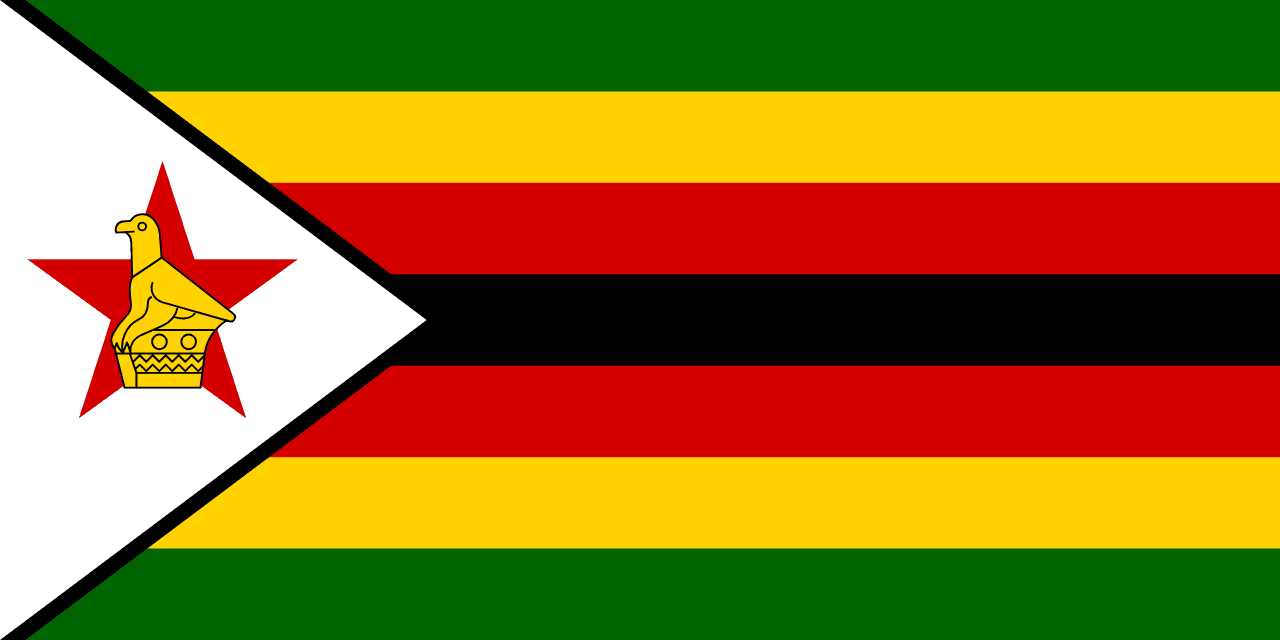
These rocks were so iconic that they appeared on Zimbabwean banknotes, a quiet nod to the country's geological wonders. The same granite tradition links back to Great Zimbabwe, whose builders quarried and split similar stone. Look closely at Zimbabwe's flag and you will also spot the soapstone "Zimbabwe Bird" that has become the nation's enduring emblem.
10. The Zimbabwe Bird connects past and present
Eight carved soapstone birds were discovered in the ruins of Great Zimbabwe, likely representing a fish eagle or a bateleur and holding deep spiritual significance for the city's builders. Today a stylised version of this Zimbabwe Bird appears on the national flag, the coat of arms, banknotes, and coins.
It is a powerful symbol of continuity, linking modern Zimbabweans to the achievements of their ancestors. One of the original carvings was famously split and partly sold abroad during the colonial period before being returned, making the bird not just a national emblem but a story of cultural reclamation.
Frequently Asked Questions
What is the capital of Zimbabwe?
The capital of Zimbabwe is Harare, formerly known as Salisbury until 1982. Sitting high on the Highveld plateau, it is the country's largest city and its main commercial, political, and cultural centre.
What is Zimbabwe most famous for?
Zimbabwe is best known for Victoria Falls, the ruins of Great Zimbabwe, and world-class safari destinations such as Hwange National Park. It is also remembered globally for its dramatic episode of hyperinflation in the 2000s.
Why did Zimbabwe print a 100-trillion-dollar note?
During the hyperinflation crisis around 2008, prices were rising so fast that the central bank kept adding zeros to keep up. The 100 trillion dollar note was the largest denomination ever issued there, though it could buy almost nothing before the currency was abandoned in 2009.
Conclusion
From the mortarless walls of Great Zimbabwe to the thunder of Victoria Falls and the gentle mist of the Eastern Highlands, Zimbabwe packs astonishing variety into a single country. Its sixteen languages, resilient people, and unforgettable wildlife make it one of Africa's most rewarding nations to explore. These ten facts are only a starting point for a place where ancient history and natural wonder meet at every turn.