
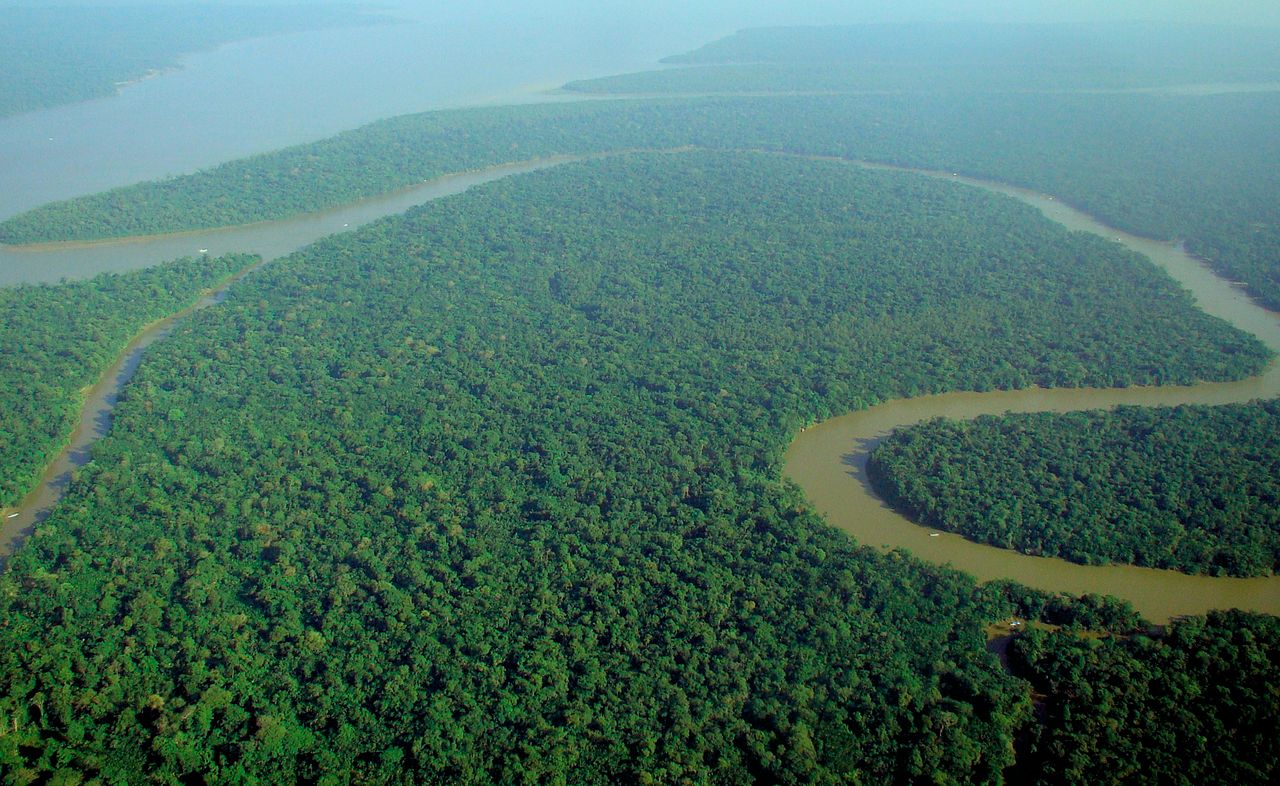
The 5 main types of forests are: tropical rainforest (hot and wet year-round), tropical dry forest (seasonal), temperate deciduous forest (four seasons), temperate rainforest (mild and wet), and boreal forest/taiga (cold, coniferous). Forests are classified by latitude, climate, and dominant tree species.
Forests cover about 31% of Earth's land surface and come in several types based on climate and latitude. From lush tropical rainforests to hardy boreal taiga, each forest type supports unique ecosystems.

Tropical Rainforest
Tropical rainforests receive 200-450 cm of rain annually with constant warm temperatures (25-27°C). They are the most biodiverse terrestrial ecosystem, with towering canopies, dense undergrowth, and an extraordinary variety of species. These forests play a critical role in regulating the global climate and water cycle.
How it forms: Found near the equator (0-10° latitude) where high solar input drives constant evaporation and convective rainfall throughout the year.
Examples: Amazon Rainforest, Congo Rainforest, Southeast Asian forests, Daintree (Australia)
Tropical Dry Forest
Tropical dry forests experience distinct wet and dry seasons. During the dry season, many trees lose their leaves to conserve water, creating an open, light-filled canopy. These forests are among the most threatened globally, having been extensively cleared for agriculture.
How it forms: Found in tropical regions (10-25° latitude) with seasonal rainfall patterns. The 4-8 month dry season shapes the vegetation and animal adaptations.
Examples: Central American dry forests, Deccan thorn forests (India), Madagascar dry forests, Brazilian caatinga
Temperate Deciduous Forest
Temperate deciduous forests are defined by four distinct seasons and trees that shed their leaves in autumn. The fall foliage display is a hallmark of this forest type. These forests have rich, fertile soils and have historically been heavily logged and cleared for agriculture.
How it forms: Found in mid-latitudes (30-50°) with moderate rainfall (75-150 cm/year) and warm summers followed by cold winters.
Examples: Eastern US forests, Western European forests, eastern China, Korea, Japan
Temperate Rainforest
Temperate rainforests are rare, occurring in cool coastal areas with extremely high rainfall (150-500 cm/year). They feature massive conifers and deciduous trees draped with mosses, ferns, and lichens. These "old-growth" forests contain some of the largest and oldest trees on Earth.
How it forms: Found on windward coasts in mid-latitudes where moisture-laden ocean air produces heavy orographic rainfall. Mild, foggy conditions support lush growth.
Examples: Pacific Northwest (USA/Canada), Valdivian forests (Chile), forests of New Zealand and Tasmania
Boreal Forest (Taiga)
The boreal forest is the largest terrestrial biome, stretching across northern North America, Europe, and Asia. It is dominated by cold-tolerant conifers — spruce, pine, fir, and larch. Winters are long and brutal (-40°C), and the growing season is only 50-100 days.
How it forms: Found between 50-60° N latitude in regions with continental climates. Permafrost may underlie parts of the forest.
Examples: Canadian boreal, Siberian taiga, Scandinavian forests
Mangrove Forest
Mangrove forests grow along tropical and subtropical coastlines in brackish water (where rivers meet the sea). Their tangled root systems protect coastlines from erosion and storm damage, serve as nurseries for fish, and store large amounts of carbon. About 35% of mangrove forests have been lost since 1980.
How it forms: Found in sheltered coastal areas in the tropics and subtropics where mangrove trees have adapted to salt water, tidal fluctuations, and low-oxygen soils.
Examples: Sundarbans (India/Bangladesh), Florida Everglades, West African mangroves, Southeast Asian mangroves
Cloud Forest (Montane Forest)
Cloud forests are tropical or subtropical forests found at high altitudes (1,500-3,500 m) that are frequently enveloped in low clouds and mist. This constant moisture supports a profusion of mosses, ferns, orchids, and epiphytes. Cloud forests are important water catchments.
How it forms: Found on tropical mountain slopes where warm, moist air rises, cools, and condenses into persistent clouds. Orographic lift drives the moisture.
Examples: Monteverde Cloud Forest (Costa Rica), Mossy forests of Borneo, Ethiopian Highlands
Key Facts
- Forests cover about 4.06 billion hectares (31% of Earth's land area).
- The boreal forest contains about 30% of the world's forest area.
- Deforestation accounts for about 10% of global carbon emissions.
- An estimated 80% of terrestrial species live in forests.
Fun Facts
- The Amazon Rainforest produces about 6% of the world's oxygen.
- A single mature tree can absorb about 22 kg of CO₂ per year.
- The oldest individual tree, a bristlecone pine named Methuselah, is over 4,800 years old.
Summary
Earth's forest types reflect the planet's diverse climates and geographies. Protecting forests of all types is essential for biodiversity, climate regulation, and the livelihoods of billions of people.
Test Your Geography Knowledge!
Think you know your geographic features? Try our interactive quizzes!
Play Geography Games →