
A peninsula is a piece of land that extends out from a larger landmass and is surrounded by water on three sides. The word comes from the Latin "paene" (almost) and "insula" (island), meaning "almost an island." Peninsulas range from small coastal promontories to vast subcontinental landmasses like the Arabian Peninsula.
Introduction
Peninsulas are found on every continent and have played outsized roles in human history, trade, and geopolitics. The Italian Peninsula gave rise to the Roman Empire, the Iberian Peninsula launched the Age of Exploration, and the Korean Peninsula remains one of the most geopolitically significant regions on Earth. Because peninsulas are largely surrounded by water, they often develop distinct cultures, climates, and ecosystems from their parent continents.
How Peninsulas Form
- Tectonic Activity: Plate movements create landmasses that jut into oceans
- Sea Level Changes: Rising waters flood low-lying areas, isolating higher ground
- Erosion and Deposition: Differential erosion shapes coastlines into peninsular forms
Most large peninsulas are the result of tectonic forces operating over millions of years. The Indian subcontinent, for example, was once a separate landmass that collided with the Eurasian plate roughly 50 million years ago, creating both the Himalayas and the Indian Peninsula. The Arabian Peninsula formed as the African and Arabian plates rifted apart, opening the Red Sea.
Smaller peninsulas often form through erosion and changes in sea level. During the last Ice Age, when sea levels were roughly 120 meters lower than today, many of today's peninsulas were simply part of the continuous coastline. As glaciers melted and seas rose, water flooded valleys and lowlands on either side of higher ground, creating the three-sided water boundary that defines a peninsula. Florida, for instance, is a low-lying limestone platform that would largely disappear with even modest additional sea level rise.
Types of Peninsulas
- Continental Peninsulas: Massive landmasses like Arabia, India, and Scandinavia
- Coastal Peninsulas: Medium-sized features like Florida, Baja California, and Korea
- Headland Peninsulas: Small, narrow projections of land into the sea
- Tied Islands (Tombolos): Islands connected to the mainland by a sandy spit, forming a peninsula-like shape
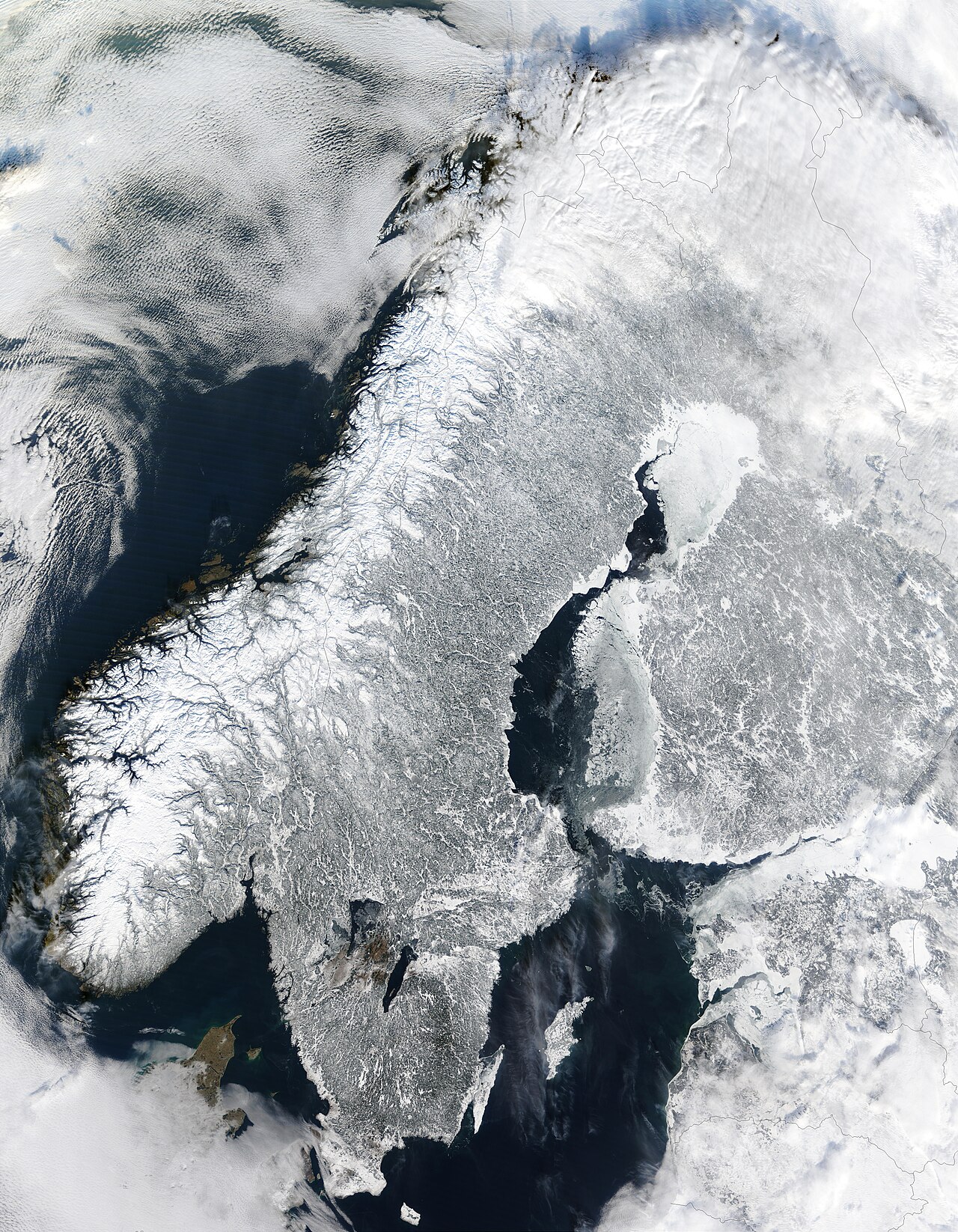
Continental peninsulas are vast landmasses that constitute major geographic regions. The Arabian Peninsula, at 3.2 million square kilometers, is the largest peninsula on Earth — so large that it is often considered a subcontinent. Scandinavia, shared by Norway and Sweden, stretches over 1,800 km from the Arctic to the temperate zones of northern Europe.
Coastal peninsulas are smaller but often highly significant. The Korean Peninsula, just 1,100 km long, has been a crossroads of East Asian civilizations for millennia and remains divided between two starkly different nations. Baja California extends 1,250 km southward from the US-Mexico border, separated from mainland Mexico by the Gulf of California and supporting unique desert ecosystems.
Famous Peninsulas
- Arabian Peninsula: 3.2 million km², largest peninsula, home to Saudi Arabia, UAE, Oman, Yemen, Qatar, Bahrain, Kuwait
- Indian Subcontinent (Deccan): 2 million km², home to over 1.4 billion people
- Iberian Peninsula: Spain and Portugal, launchpad of the Age of Exploration
- Italian Peninsula: Boot-shaped, cradle of the Roman Empire and Renaissance
- Scandinavian Peninsula: Norway and Sweden, shaped by glacial fjords
- Korean Peninsula: Divided between North and South Korea since 1953
- Florida Peninsula: Low-lying limestone platform, 700 km long
- Baja California: 1,250 km desert peninsula along Mexico's Pacific coast
The Iberian Peninsula, shared by Spain and Portugal, has been a bridge between Europe and Africa throughout history. Moorish civilization flourished there for nearly 800 years, and it was from Iberian ports that Columbus, Magellan, and Vasco da Gama launched the voyages that connected the world's continents. The Mediterranean climate and varied terrain of the peninsula support everything from olive groves to alpine skiing.
The Italian Peninsula, instantly recognizable for its boot shape, extends 1,000 km into the Mediterranean Sea. Its central position in the Mediterranean made it the heart of the Roman Empire and later the cradle of the Renaissance. The peninsula's varied geography — from the Alps in the north to the volcanic south — supports remarkable regional diversity in culture, cuisine, and dialect.
Strategic Importance
- Naval Power: Peninsulas provide extensive coastlines for ports and naval bases
- Trade Routes: Control of peninsulas means control of surrounding sea lanes
- Defensive Advantage: Water on three sides creates natural defensive barriers
- Cultural Distinction: Partial isolation fosters unique languages, traditions, and identities
Throughout history, peninsulas have been prized for their strategic value. The water surrounding them on three sides provides natural defense while offering access to maritime trade routes. Gibraltar, at the tip of the Iberian Peninsula, controls the entrance to the Mediterranean and has been contested by empires for centuries. The Crimean Peninsula's position in the Black Sea has made it a flashpoint of geopolitical conflict from the Crimean War to the present day.
Key Facts
- A peninsula is land surrounded by water on three sides and connected to a larger landmass.
- The Arabian Peninsula is the world's largest at 3.2 million square kilometers.
- The word "peninsula" comes from Latin meaning "almost an island."
- Most large peninsulas formed through tectonic plate movements over millions of years.
- Europe is sometimes called a "peninsula of peninsulas" because of its heavily indented coastline.
Fun Facts
- Europe is sometimes called the world's largest peninsula — or more accurately, a "peninsula of peninsulas," since it is itself a western extension of Eurasia containing the Iberian, Italian, Balkan, and Scandinavian peninsulas.
- Michigan's Lower Peninsula is shaped like a mitten, and residents often hold up their hand to show you where they live on the "mitten."
- The Sinai Peninsula is the only part of Egypt that lies in Asia, making Egypt a transcontinental country.
- Antarctica's Palmer Peninsula extends so far north that it has a milder climate than the rest of the continent, with summer temperatures occasionally reaching above freezing.
Final Thoughts
Peninsulas have shaped the course of human civilization. Their strategic coastal positions have launched empires, enabled global trade, and fostered unique cultures. From the vast Arabian Peninsula to the narrow Korean Peninsula, these "almost islands" remain some of the most geographically and geopolitically significant features on Earth.
Test Your Knowledge!
Think you know your geographic features? Try our interactive quiz!
Play Geography Games →