

Wood was humanity's first major building material, and for much of history it was the most common. Before the age of steel and concrete, entire cities were built from timber — from the longhouses of the Vikings to the pagodas of East Asia to the log cabins of the American frontier. Each culture developed distinctive techniques for working with locally available wood species.
Introduction
What makes wooden architecture remarkable is its range. The same basic material — tree trunks — has been transformed into buildings as different as a delicate Japanese tea house and a massive Norwegian stave church. Some wooden structures have survived for over a thousand years, defying the assumption that wood is an impermanent material. Today, mass timber construction is experiencing a global renaissance as architects seek sustainable alternatives to concrete and steel.
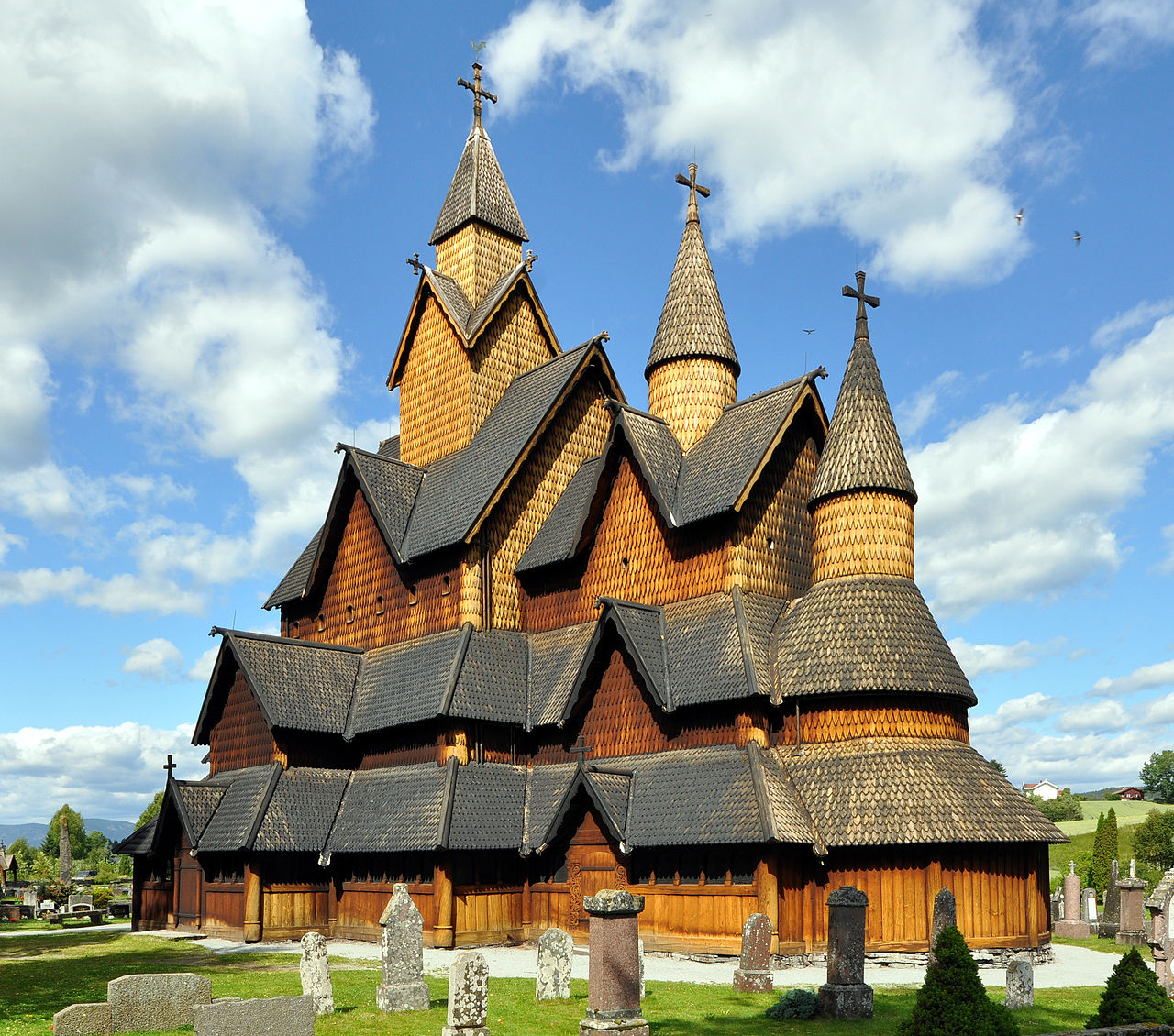
Norwegian Stave Churches
- Surviving Examples: 28 (from an estimated 1,000+ built)
- Oldest: Urnes Stave Church (~1130 CE)
- Construction: Vertical timber planks (staves) on sill beams
- UNESCO Status: Urnes is a World Heritage Site
Norway's stave churches are among the most distinctive wooden buildings ever created. Built between the 11th and 14th centuries, these churches used a unique construction method in which vertical timber planks (staves) were set into horizontal sill beams, creating walls that were both structural and decorative. The roofs, often rising in multiple tiers, were covered with wooden shingles and sometimes adorned with dragon-head finials reminiscent of Viking longships.
Of the estimated 1,000 or more stave churches built during the medieval period, only 28 survive today. The oldest, Urnes Stave Church in Sogn og Fjordane, dates to approximately 1130 CE and features intricate carved portals depicting intertwined animals and serpents in the late Viking art style. The largest surviving stave church, Heddal in Telemark, rises three stories and could accommodate several hundred worshippers. Their survival is remarkable given wood's vulnerability to fire and decay.
Japanese Timber Architecture
- Oldest Wooden Buildings: Hōryū-ji temple complex (~607 CE)
- Key Technique: Interlocking joinery without nails
- Wood Species: Hinoki (Japanese cypress), cedar, pine
- Earthquake Resistance: Flexible joinery absorbs seismic energy
Japan has the oldest surviving wooden buildings in the world. The Hōryū-ji temple complex near Nara, founded in 607 CE, contains structures that have stood for over 1,400 years — the longest-surviving wooden buildings on Earth. Japanese carpentry developed extraordinarily sophisticated joinery techniques that connect timbers without nails or screws, using precisely cut interlocking joints that allow controlled movement during earthquakes.
The Japanese tradition of periodically rebuilding sacred structures — most famously the Ise Grand Shrine, which is completely dismantled and rebuilt every 20 years — represents a unique approach to architectural permanence. Rather than preserving the physical building, the tradition preserves the knowledge and skills required to build it. The current Ise shrine structures are the 63rd iteration, maintaining an unbroken tradition spanning approximately 1,300 years.
Russian Wooden Architecture
- Key Tradition: Log construction (izba and churches)
- Notable Example: Kizhi Pogost (22-dome church, 1714)
- Construction: Interlocking notched logs without nails
- UNESCO Status: Kizhi Pogost is a World Heritage Site
Russia's vast boreal forests provided an abundance of timber that shaped one of the world's richest wooden building traditions. The izba, a traditional log house, was the standard rural dwelling across Russia for centuries, built from interlocking notched logs with distinctive carved window frames called nalichniki. These ornate frames served both decorative and spiritual purposes, with carved symbols believed to protect the household.
The pinnacle of Russian wooden architecture is the Church of the Transfiguration on Kizhi Island in Lake Onega, completed in 1714. Rising 37 meters and crowned with 22 onion-shaped domes covered in over 30,000 aspen shingles, the church was reportedly built without a single nail — though modern analysis suggests some iron fasteners were used in later repairs. The entire Kizhi Pogost ensemble, including a second church and bell tower, is a UNESCO World Heritage Site.
Scandinavian & Alpine Log Traditions
- Regions: Sweden, Finland, Switzerland, Austria
- Techniques: Corner-notch joinery, scribe-fit logs
- Roof Types: Sod roofs (Scandinavia), stone-weighted shingles (Alps)
- Modern Revival: Cross-laminated timber (CLT) originated in Austria
Across Scandinavia and the European Alps, log construction evolved independently to suit cold, snowy climates. Scandinavian log buildings, from farmhouses to storehouses, feature tightly fitted logs with sod or birch-bark roofing that provides excellent insulation. The Norwegian tradition of raised storehouses (stabbur) kept food supplies off the ground and away from rodents, elevated on mushroom-shaped stone pillars.
In the Swiss and Austrian Alps, timber chalets combined log walls with massive overhanging roofs to shed snow and protect wooden walls from rain. Stone-weighted shingle roofs allowed snow to accumulate gradually, providing additional insulation through the winter. Austria's long tradition of timber engineering eventually gave rise to cross-laminated timber (CLT), the engineered wood product now driving the global mass timber construction revolution.
Mass Timber: The Future of Wood Construction
- Key Products: CLT, glulam, LVL
- Tallest Timber Building: Mjøstårnet, Norway (85.4 m, 18 stories)
- Carbon Benefit: Timber stores carbon rather than emitting it
- Growth Rate: Mass timber construction growing ~15% annually
Mass timber construction — using engineered wood products like cross-laminated timber (CLT), glue-laminated timber (glulam), and laminated veneer lumber (LVL) — is transforming the building industry. These products combine the sustainability of wood with the structural performance of steel and concrete, enabling wooden buildings to reach heights previously impossible. The current record holder is Mjøstårnet in Brumunddal, Norway, an 18-story, 85.4-meter tower completed in 2019.
Unlike concrete and steel, which generate massive carbon emissions during production, timber actually stores carbon that the trees absorbed during their lifetime. A typical mass timber building stores roughly one tonne of carbon dioxide per cubic meter of wood used. Cities including Vancouver, Stockholm, and Vienna are actively promoting mass timber construction through updated building codes and incentive programs, driving annual growth rates of approximately 15% in the sector.
Key Facts
- Japan's Hōryū-ji temple complex, built around 607 CE, contains the world's oldest surviving wooden buildings.
- Only 28 of an estimated 1,000+ Norwegian stave churches survive today.
- The Church of the Transfiguration at Kizhi has 22 domes covered in over 30,000 aspen shingles.
- Mass timber construction is growing at approximately 15% annually worldwide.
- Mjøstårnet in Norway is the world's tallest timber building at 85.4 meters.
Fun Facts
- The Ise Grand Shrine in Japan has been completely dismantled and rebuilt every 20 years for approximately 1,300 years.
- Japanese carpenters can create over 400 different types of interlocking wood joints, none requiring nails or screws.
- Some Russian izba houses were built so precisely that you could not slide a knife blade between the logs.
- A single cubic meter of CLT stores roughly one tonne of CO₂ that the tree absorbed during its lifetime.
Final Thoughts
Wooden architecture traditions reveal the extraordinary versatility of humanity's oldest building material. From the dragon-prowed stave churches of medieval Norway to the nail-free temples of Japan, cultures around the world have transformed local timber into structures of astonishing beauty and durability. As mass timber technology brings wood construction into the 21st century, the ancient craft of building with trees is more relevant than ever — offering a path to lower-carbon cities rooted in millennia of accumulated knowledge.
Test Your Knowledge!
Think you know your architecture and cities? Try our interactive quiz!
Play Geography Games →