

The world's longest tunnels represent the pinnacle of underground engineering, boring through mountains, beneath seas, and under cities to create transportation links that would otherwise be impossible. These projects take decades to plan and build, cost billions, and push the limits of technology.
Introduction
Modern tunnel boring machines (TBMs) can cut through rock at remarkable speeds, but the challenges of underground construction remain immense: managing water ingress, dealing with unpredictable geology, maintaining air quality, and ensuring the safety of workers deep beneath the surface.
Route & Engineering
- Longest Rail: Gotthard Base Tunnel (Switzerland): 57.1 km
- Longest Undersea: Channel Tunnel (UK-France): 37.9 km undersea
- Longest Road: Laerdal Tunnel (Norway): 24.5 km
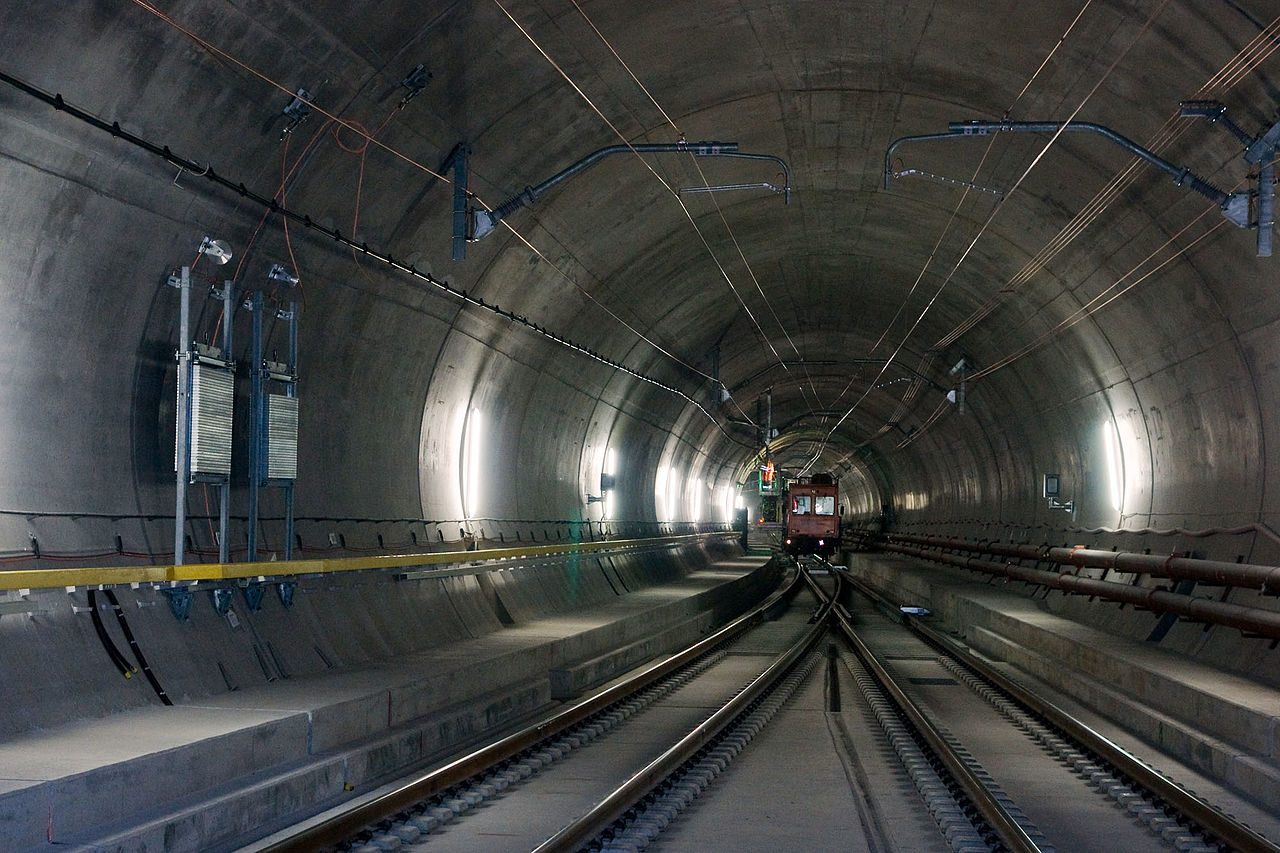
The Gotthard Base Tunnel through the Swiss Alps is the world's longest and deepest railway tunnel, running 57.1 km between Erstfeld and Bodio. It passes 2,300 meters beneath the Gotthard massif and required 17 years of construction.
The Seikan Tunnel between Japan's main island of Honshu and the northern island of Hokkaido is 53.9 km long, with 23.3 km beneath the seabed of the Tsugaru Strait. It was the world's longest tunnel from its completion in 1988 until the Gotthard Base Tunnel opened in 2016.
Key Stats
- Gotthard Cost: ~$12 billion
- Gotthard Depth: Up to 2,300 m below the mountain peaks
- TBM Speed: Up to 40-50 m per day in favorable rock
The Gotthard Base Tunnel required the excavation of approximately 28 million tonnes of rock. Workers encountered temperatures of up to 46 degrees Celsius deep inside the mountain, requiring massive cooling systems to maintain workable conditions.
Modern tunnel boring machines are engineering marvels themselves. The largest TBMs have cutting heads over 17 meters in diameter and can bore through rock at rates of 40-50 meters per day while simultaneously installing concrete lining segments behind the cutting face.
History
- Ancient Tunnels: Roman road tunnels through rock
- First Major Railway Tunnel: Mont Cenis (1871, 13.7 km)
- Modern Era: TBMs revolutionized tunnel construction from the 1960s
The Romans built some of the earliest known transportation tunnels, cutting through rock to maintain level road gradients. The 1.5 km Crypta Neapolitana near Naples, built around 37 BCE, was one of the longest tunnels in the ancient world.
The first major railway tunnel, the Mont Cenis (Frejus) Tunnel through the Alps between France and Italy, opened in 1871 after 14 years of construction. It pioneered the use of pneumatic drills and was the engineering challenge that drove tunnel technology forward.
Current Status
- Under Construction: Brenner Base Tunnel (Austria-Italy): 55 km
- Planned: Fehmarn Belt Tunnel (Germany-Denmark): 18 km immersed tube
- Technology: TBMs becoming larger and more capable
The Brenner Base Tunnel between Austria and Italy will be 55 km long when completed, becoming the world's longest road and rail tunnel. It will provide a flat route through the Alps, eliminating the steep Brenner Pass crossing and dramatically reducing transit times for both passengers and freight.
Immersed tube tunnels, where prefabricated sections are sunk into prepared trenches on the seabed, are becoming more common for underwater crossings. The Fehmarn Belt Tunnel between Germany and Denmark will use this technique for its 18 km crossing, the longest immersed tube tunnel ever built.
Visitor & Travel Info
- Experience Gotthard: Swiss Federal Railways through tunnel (17 min)
- Channel Tunnel: Eurostar London-Paris (tunnel section: 35 min)
- Laerdal Tunnel: Drive-through in Norway (20 min)
The easiest way to experience the world's longest tunnels is simply to ride or drive through them. The Gotthard Base Tunnel is traversed by regular Swiss Federal Railways services, with the tunnel section taking approximately 17 minutes at up to 250 km/h.
Norway's Laerdal Tunnel, the world's longest road tunnel at 24.5 km, features three illuminated caverns at regular intervals to break up the monotony and reduce driver fatigue. The caverns use colored lighting to create a psychological impression of open space.
Key Facts
- The Gotthard Base Tunnel at 57.1 km is the world's longest and deepest railway tunnel.
- It took 17 years to build and cost approximately $12 billion.
- The Seikan Tunnel at 53.9 km is the world's longest undersea tunnel by total length.
- The Laerdal Tunnel in Norway at 24.5 km is the world's longest road tunnel.
- Workers encountered temperatures of 46 degrees Celsius deep inside the Gotthard tunnel.
Fun Facts
- The Gotthard Base Tunnel required the excavation of 28 million tonnes of rock.
- Norway has over 900 road tunnels, more than any other country in the world.
- The Seikan Tunnel in Japan contains two underground stations where emergency stops can be made.
- The world's oldest known tunnel is the Tunnel of Eupalinos on Samos, Greece, built around 530 BCE.
Final Thoughts
The world's longest tunnels represent human ingenuity at its most ambitious, boring through mountains and beneath seas to create connections that geography would otherwise forbid. As TBM technology continues to improve, even longer and deeper tunnels are being planned.
Test Your Knowledge!
Think you know your transportation geography? Try our interactive quiz!
Play Geography Games →