

The Atlantic Forest, or Mata Atlântica, is a biodiversity hotspot that once covered 1.3 million square kilometers along Brazil's Atlantic coast, stretching into eastern Paraguay and northeastern Argentina. Today, only about 12% of the original forest remains, making it one of the most endangered tropical forests on Earth.
Introduction
Despite its drastic reduction, the Atlantic Forest harbors an extraordinary concentration of endemic species — over 8,000 plant species and 567 vertebrate species found nowhere else. It is home to more than 70% of Brazil's population and generates critical ecosystem services including water supply for São Paulo, Rio de Janeiro, and dozens of other major cities.
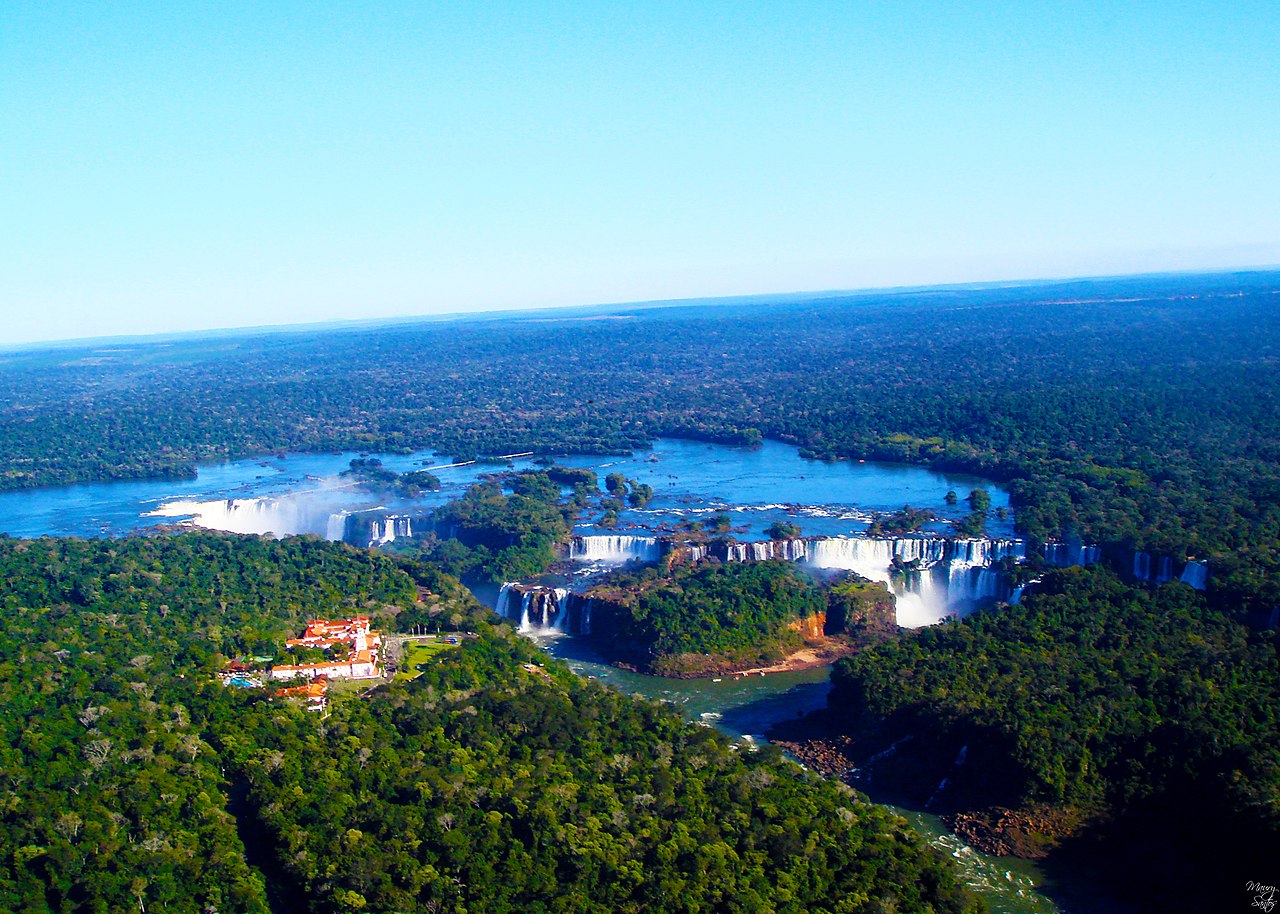
Geography & Extent
- Original Area: ~1.3 million km²
- Current Coverage: ~12-16% remaining (fragmented)
- Coastline Span: 3,300 km along Brazil's Atlantic coast
- Countries: Brazil, Paraguay, Argentina
The Atlantic Forest originally formed a continuous band up to 500 kilometers wide from Rio Grande do Norte in the north to Rio Grande do Sul in the south. It extended inland across parts of Minas Gerais, Goiás, and Mato Grosso do Sul, and crossed international borders into eastern Paraguay and the Misiones province of Argentina.
Unlike the Amazon, which is largely contiguous, the remaining Atlantic Forest exists as thousands of isolated fragments, most smaller than 100 hectares. The largest remaining tracts are found in the Serra do Mar mountain range near the coast, where steep terrain has discouraged agriculture. The Upper Paraná Atlantic Forest in the interior is the most severely fragmented region.
Biodiversity & Endemism
- Plant Species: ~20,000 (8,000 endemic)
- Bird Species: ~1,020 (188 endemic)
- Mammal Species: ~298 (90 endemic)
- Amphibian Species: ~475 (286 endemic)
The Atlantic Forest has one of the highest concentrations of endemic species on the planet. Its amphibian endemism rate exceeds 60%, higher than almost any other biome. The golden lion tamarin, with a wild population of roughly 3,700 individuals, is the forest's most iconic species and a symbol of Brazilian conservation. The black lion tamarin and the muriqui, the largest primate in the Americas, are also exclusive to this forest.
The forest's plant diversity is staggering, with some sites recording over 450 tree species per hectare — rivaling the Amazon. Bromeliads are spectacularly diverse here, with hundreds of species growing as epiphytes on the mossy tree trunks. The Atlantic Forest also contains the last wild populations of several palm species prized for their heart of palm, now critically endangered from overharvesting.
Climate & Ecosystem Services
- Annual Rainfall: 1,000-4,500 mm (varies by region)
- Temperature Range: 14-27°C (varies by altitude)
- Population Served: ~150 million people
The Atlantic Forest's climate ranges from tropical in the north to subtropical in the south, with altitude adding further variation. Coastal mountains intercept moisture-laden winds from the Atlantic, creating some of the wettest areas in Brazil along the Serra do Mar escarpment. The forest's orographic rainfall feeds rivers that supply water to over 150 million Brazilians.
The forest plays a critical role in water security for Brazil's most populated and economically important cities. São Paulo's Cantareira reservoir system depends on Atlantic Forest watersheds, and the severe water crisis of 2014-2015 highlighted the consequences of upstream deforestation. Reforestation efforts now specifically target watersheds that supply urban water systems.
Threats & Deforestation History
- Forest Lost: ~88% of original extent
- Main Drivers: Agriculture, urbanization, logging
- Remaining Fragments: ~245,000 patches, most under 100 ha
The Atlantic Forest's destruction began with Portuguese colonization in 1500 and accelerated through centuries of sugarcane, coffee, and cattle production. The 20th century saw further losses as Brazil's population and industrial agriculture expanded along the coast. By 2000, satellite analysis showed only 7-8% of the original forest remained, though regrowth has slightly increased the figure since.
Urban sprawl from megacities like São Paulo (population 22 million) and Rio de Janeiro continues to consume forest fragments. Road construction isolates remaining patches, and edge effects from surrounding farmland degrade the interior of small fragments. Climate change models predict further stress as temperatures rise and rainfall patterns shift across southeastern Brazil.
Conservation & Restoration
- Protected Areas: ~10% of remaining forest is formally protected
- Atlantic Forest Restoration Pact: Target of 15 million hectares by 2050
- Key Programs: SOS Mata Atlântica, Golden Lion Tamarin Association
The Atlantic Forest Restoration Pact, launched in 2009, is one of the world's most ambitious reforestation initiatives, aiming to restore 15 million hectares of forest by 2050. Over 700 organizations have signed on, and by 2024 roughly 700,000 hectares had been restored. The pact uses a mix of active planting and natural regeneration strategies.
The golden lion tamarin conservation program is one of the great success stories of primate conservation. From a low of roughly 200 individuals in the wild in the 1970s, the population has recovered to approximately 3,700 through captive breeding, reintroduction, and habitat corridor creation. This model is now being applied to other critically endangered Atlantic Forest species.
Key Facts
- The Atlantic Forest has lost approximately 88% of its original extent since Portuguese colonization.
- It harbors over 8,000 endemic plant species and 286 endemic amphibian species.
- More than 150 million Brazilians depend on the Atlantic Forest for water supply.
- The Atlantic Forest Restoration Pact aims to restore 15 million hectares by 2050.
- The golden lion tamarin population has recovered from ~200 to ~3,700 in the wild.
Fun Facts
- The Atlantic Forest contains more tree species per hectare in some areas than the entire continent of Europe.
- São Paulo, the largest city in the Southern Hemisphere, was built almost entirely on former Atlantic Forest land.
- The muriqui, or woolly spider monkey, is the largest primate in the Americas and hugs other group members as a greeting.
- Some Atlantic Forest fragments are so small they function as ecological islands, with species going locally extinct one by one.
Final Thoughts
The Atlantic Forest stands as both a cautionary tale and a beacon of hope. Its near-total destruction over five centuries demonstrates how quickly a vast ecosystem can be reduced to fragments. Yet the dedication of Brazilian conservationists, from the golden lion tamarin program to the Restoration Pact, shows that even severely degraded forests can begin to recover when science, policy, and community action align.
Test Your Knowledge!
Think you know the world's forests? Try our interactive geography quiz!
Play Geographic Features Quiz →