

The world's busiest ports are colossal operations that process millions of containers and billions of tonnes of cargo each year. These maritime logistics hubs are strategically located along major shipping lanes, serving as transfer points where goods move between ships, trains, and trucks.
Introduction
Port geography is shaped by natural harbor conditions, proximity to manufacturing centers, available land for terminal expansion, and connectivity to inland transportation networks. The dominance of Asian ports reflects the region's role as the world's manufacturing powerhouse.
Route & Engineering
- Busiest by TEUs: Shanghai: ~47 million TEUs/year
- Busiest by Tonnage: Ningbo-Zhoushan: ~1.2 billion tonnes/year
- Busiest Transshipment: Singapore: ~37 million TEUs/year
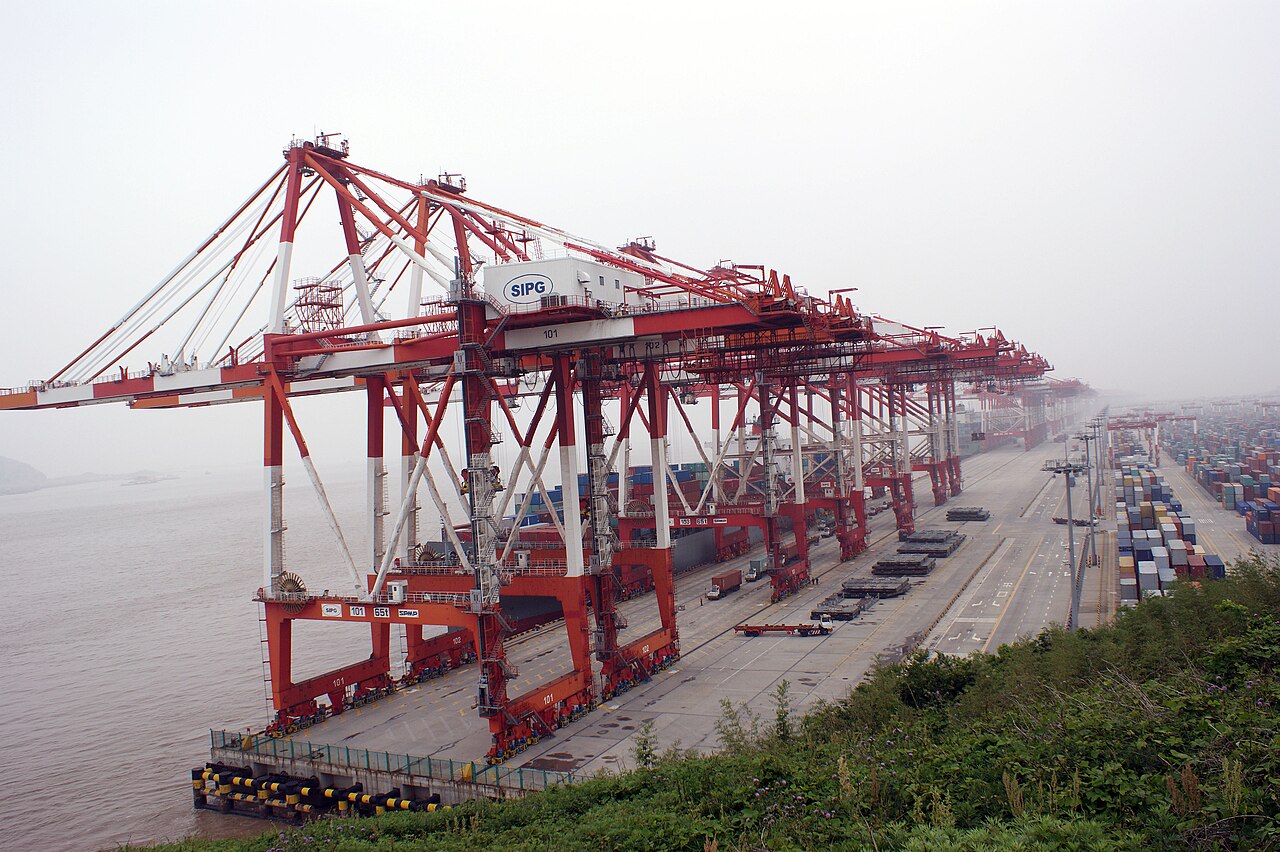
Shanghai's Yangshan Deep-Water Port, connected to the mainland by the 32.5 km Donghai Bridge, is the world's busiest container port. Its automated terminals use AI-guided cranes and self-driving vehicles to handle containers with minimal human intervention.
Singapore's port handles roughly 37 million TEUs per year, with the vast majority being transshipment cargo that arrives on one ship and departs on another. Its location at the crossroads of the Indian and Pacific Oceans makes it the world's most important maritime junction.
Key Stats
- Top Ports by TEUs: Shanghai, Singapore, Ningbo-Zhoushan, Shenzhen, Guangzhou
- Container Throughput: Global: ~850 million TEUs/year
- Port Workers: Shanghai alone employs ~30,000
Seven of the world's ten busiest container ports are in China, reflecting the country's dominant position in global manufacturing. The remaining three in the top ten are typically Singapore, Busan (South Korea), and Jebel Ali (Dubai).
Modern port operations run 24 hours a day, seven days a week. A single ship-to-shore crane can handle 30-40 containers per hour, and a large container vessel can be loaded or unloaded in approximately 24-48 hours.
History
- Ancient Ports: Tyre, Alexandria, Guangzhou
- Colonial Era: European powers established global port networks
- Container Revolution: 1960s-1980s transformed port operations
Ports have been centers of trade and civilization since antiquity. The Phoenician port of Tyre, Egyptian Alexandria, and Chinese Guangzhou were among the ancient world's great trading hubs. Their locations at the intersection of sea routes and river systems provided natural advantages.
The container revolution of the 1960s and 1970s completely transformed port operations. Traditional break-bulk cargo handling, which required armies of dockworkers, was replaced by mechanized container cranes and standardized terminal layouts.
Current Status
- Automation: Fully automated terminals expanding worldwide
- Green Ports: Shore power and electric equipment reducing emissions
- Mega-Ships: Ports expanding to accommodate 24,000+ TEU vessels
Port automation is accelerating worldwide. Fully automated terminals like Yangshan Phase IV in Shanghai and Rotterdam's Maasvlakte II use self-driving vehicles, automated cranes, and AI systems to handle containers with minimal human intervention.
Environmental sustainability is a growing focus. Green port initiatives include providing shore power to ships at berth (eliminating diesel generator emissions), using electric cranes and vehicles, and implementing ballast water treatment to prevent invasive species transfer.
Visitor & Travel Info
- Port Tours: Rotterdam, Hamburg, Singapore offer public tours
- Container Tracking: Major shipping lines offer online tracking
- Historic Ports: Visit preserved historic ports in London, Boston, Yokohama
Several major ports offer public tours and visitor centers. Rotterdam's Europoort, one of Europe's largest ports, can be toured by boat. Hamburg's HafenCity combines active port operations with waterfront dining and maritime museums.
Historic port areas like London's Docklands, Boston's waterfront, and Yokohama's Red Brick Warehouse district have been transformed into cultural and entertainment areas while preserving their maritime heritage.
Key Facts
- Shanghai is the world's busiest container port with approximately 47 million TEUs per year.
- Seven of the world's ten busiest container ports are in China.
- Singapore is the world's busiest transshipment hub.
- Global container throughput exceeds 850 million TEUs annually.
- A single ship-to-shore crane can handle 30-40 containers per hour.
Fun Facts
- Shanghai's Yangshan Port is connected to the mainland by a 32.5 km bridge, one of the world's longest.
- The world's largest ships carry enough containers to stretch end-to-end for about 72 km.
- Rotterdam's port stretches for 40 km along the River Maas.
- Singapore's new Tuas Mega Port, when completed around 2040, will be the world's largest container terminal.
Final Thoughts
The world's busiest cargo ports are the beating heart of global trade, processing the vast majority of goods that keep the world economy running. Their locations reveal the geographic and economic forces that shape international commerce.
Test Your Knowledge!
Think you know your transportation geography? Try our interactive quiz!
Play Geography Games →