

Eastern Europe includes approximately 20 countries, though the exact count depends on which definition you use. The UN geoscheme lists 10 countries in Eastern Europe, but the broader geopolitical and cultural definition — shaped by the Cold War and the former Eastern Bloc — encompasses around 20 nations.
What Counts as Eastern Europe?
Defining Eastern European countries is surprisingly controversial. The United Nations geoscheme places only 10 countries in Eastern Europe: Belarus, Bulgaria, Czech Republic, Hungary, Moldova, Poland, Romania, Russia, Slovakia, and Ukraine. However, the popular understanding of "Eastern Europe" is much broader, typically including the Balkans and the Baltic states — regions that were part of the Eastern Bloc or the Soviet Union during the Cold War.
Many people in countries like the Czech Republic, Poland, Hungary, Slovenia, and Croatia prefer the term "Central Europe" and reject being called "Eastern European." The Baltic states (Estonia, Latvia, Lithuania) identify as Northern European. These distinctions matter — they reflect real differences in culture, economics, and political orientation, especially since many of these countries have joined the EU and NATO.
UN-Defined Eastern European Countries (10 Countries)
The United Nations Statistics Division groups these 10 countries as Eastern Europe:
1. Russia
- Capital: Moscow | Population: ~144 million | Area: 17,098,242 km²
Russia is the world's largest country, spanning Eastern Europe and Northern Asia. Only about 23% of Russia's territory is in Europe (west of the Urals), but this European portion contains approximately 77% of Russia's population. Moscow and St. Petersburg are among Europe's largest cities.
2. Ukraine
- Capital: Kyiv | Population: ~37 million | Area: 603,628 km²
Ukraine is the second-largest European country by area (after Russia). It is known for its fertile black soil (chernozem), making it one of the world's most important agricultural producers — often called the "breadbasket of Europe."
3. Poland
- Capital: Warsaw | Population: ~38 million | Area: 312,696 km²
Poland is the largest economy in the UN's Eastern Europe group and a major EU member state. It has experienced rapid economic growth since its transition from communism in 1989 and is increasingly considered Central European.
4. Romania
- Capital: Bucharest | Population: ~19 million | Area: 238,397 km²
Romania is unique in Eastern Europe as a Romance-language country (Romanian is derived from Latin). It features the Carpathian Mountains, Transylvania, and the Danube Delta — Europe's best-preserved river delta and a UNESCO biosphere reserve.
5. Czech Republic (Czechia)
- Capital: Prague | Population: ~10.8 million | Area: 78,871 km²
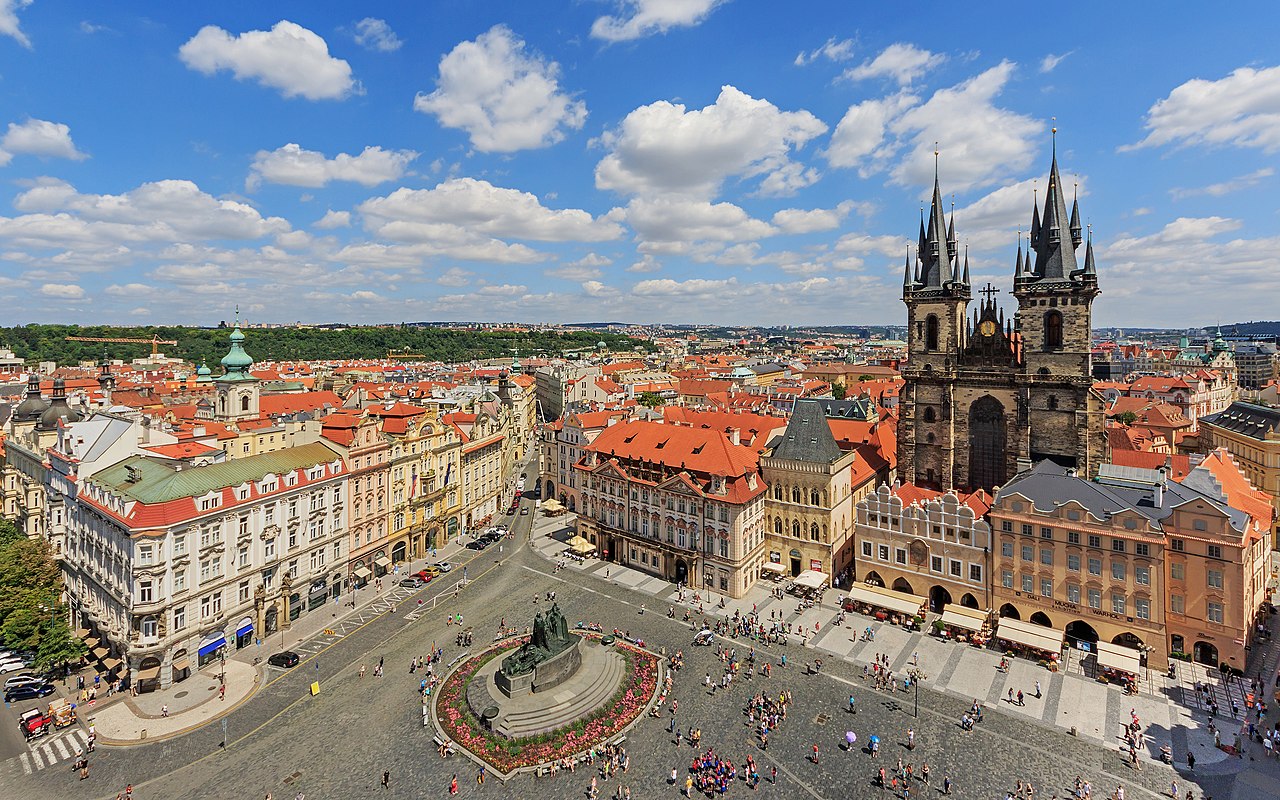
Czechia strongly identifies as Central European rather than Eastern European. Prague is one of Europe's most visited cities. The country has the lowest unemployment rate in the EU and a highly developed industrial economy.
6. Hungary
- Capital: Budapest | Population: ~9.6 million | Area: 93,028 km²
Hungary is a landlocked country on the Great Hungarian Plain. Budapest, straddling the Danube, is famous for its thermal baths, architectural grandeur, and the historic Buda Castle. Hungarian (Magyar) is a Finno-Ugric language unrelated to any of its neighbors' languages.
7. Belarus
- Capital: Minsk | Population: ~9.2 million | Area: 207,600 km²
Belarus is a landlocked country between Russia and Poland. It has been governed by President Alexander Lukashenko since 1994 and maintains closer political and economic ties to Russia than most other Eastern European countries. It is sometimes called "Europe's last dictatorship."
8. Bulgaria
- Capital: Sofia | Population: ~6.5 million | Area: 110,879 km²
Bulgaria is located in the southeastern Balkans with a Black Sea coastline. It is the birthplace of the Cyrillic alphabet and has been an EU member since 2007. The country is known for its rose oil production, ancient Thracian heritage, and affordable tourism.
9. Slovakia
- Capital: Bratislava | Population: ~5.4 million | Area: 49,035 km²
Slovakia became independent in 1993 after the peaceful dissolution of Czechoslovakia. It joined the EU in 2004 and the Eurozone in 2009. The country is known for its mountain landscapes, particularly the High Tatras and numerous medieval castles.
10. Moldova
- Capital: Chișinău | Population: ~2.6 million | Area: 33,851 km²
Moldova is the poorest country in Europe by GDP per capita. It was part of Romania until 1940 when it was annexed by the Soviet Union. The breakaway region of Transnistria remains a frozen conflict zone with Russian troops stationed there.
Additional Countries Often Included (Broader Definition)
Beyond the UN definition, these countries are frequently classified as Eastern European due to Cold War history, Soviet influence, or geographic position:
Baltic States
- Estonia — Capital: Tallinn | Pop: ~1.3 million (prefers "Northern Europe")
- Latvia — Capital: Riga | Pop: ~1.8 million
- Lithuania — Capital: Vilnius | Pop: ~2.8 million
The three Baltic states were Soviet republics from 1940-1991. All three are now EU and NATO members and have undergone rapid economic development since independence.
Balkan Countries
- Serbia — Capital: Belgrade | Pop: ~6.6 million
- Croatia — Capital: Zagreb | Pop: ~3.9 million (EU member, Euro adopted 2023)
- Bosnia and Herzegovina — Capital: Sarajevo | Pop: ~3.2 million
- North Macedonia — Capital: Skopje | Pop: ~1.8 million
- Montenegro — Capital: Podgorica | Pop: ~620,000
- Albania — Capital: Tirana | Pop: ~2.8 million
- Kosovo — Capital: Pristina | Pop: ~1.8 million (partially recognized)
Key Facts About Eastern European Countries
- The UN lists 10 countries as Eastern Europe; the broader definition includes approximately 20.
- Russia is by far the largest Eastern European country (and the largest in the world).
- Most Eastern European countries were part of the Eastern Bloc or Soviet Union during the Cold War.
- Many have joined the EU and NATO since the 1990s, transforming their economies.
- The region includes both Romance (Romanian), Slavic, Finno-Ugric (Hungarian, Estonian), and Baltic (Latvian, Lithuanian) language families.
Final Thoughts
The definition of Eastern European countries continues to evolve as the region transforms politically, economically, and culturally. What was once a clear Cold War division has become blurred as countries like Poland, the Czech Republic, and the Baltic states have integrated deeply into Western institutions. Whether you use the narrow UN definition or the broader geopolitical one, Eastern Europe represents a fascinating and rapidly changing part of the world.
Test Your Knowledge!
Think you know your geography? Try our interactive quiz!
Play Geography Games →