

There are 195 national flags in the world — one for each of the 193 UN member states plus two observers, Vatican City and Palestine. Every one of them is a piece of design meant to say something about a country in a shape you can recognise from a hundred metres away. The study of flags is called vexillology, from vexillum, the Latin word for a Roman military banner.
What the Colours Usually Mean
Colours on flags are rarely chosen at random, though the meanings are given after the fact as often as before.
Red usually stands for blood shed in war or revolution, or for courage. Blue stands for the sea, the sky, freedom or justice. Green stands for land, farming, forests or, in many Muslim countries, for Islam. White stands for peace and honesty. Black often stands for the people, or for a difficult past. Yellow and gold stand for the sun, wealth or mineral resources.
Red is the most common colour, appearing on around three quarters of national flags. Blue is on 99 of the 193 UN members. Purple is the rarest — only Dominica and Nicaragua use it at all, and in both cases in a small emblem, because purple dye was historically extremely expensive.
Families of Flags
Most flags belong to a group, and knowing the group explains the colours instantly.
The Pan-African colours are red, black and green, from Marcus Garvey's 1920 declaration, and red, gold and green from Ethiopia, the one African country never colonised. Ghana adopted them in 1957 and much of the continent followed.
The Pan-Arab colours are black, white, green and red, from the 1916 Arab Revolt flag, representing four historic dynasties. Egypt, Iraq, Syria, Jordan, Kuwait, the UAE, Yemen, Sudan and Palestine all use them. The Pan-Slavic colours are red, white and blue, agreed at a congress in Prague in 1848 and taken from the Russian flag.
-
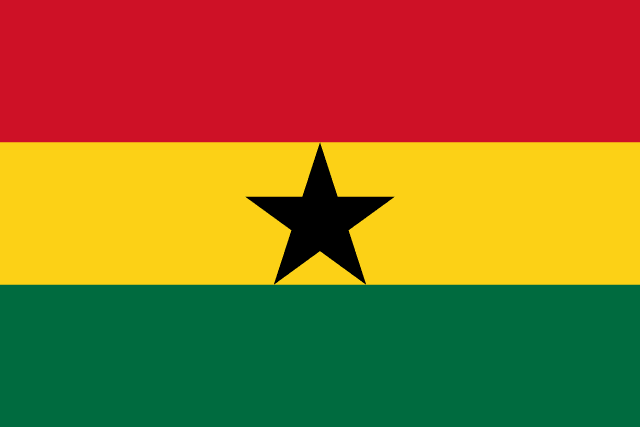 Ghana
Pan-African: red, gold, green
Ghana
Pan-African: red, gold, green
-
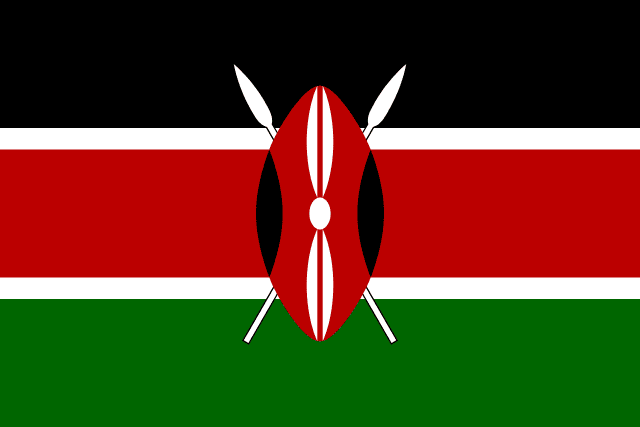 Kenya
Pan-African: red, black, green
Kenya
Pan-African: red, black, green
-
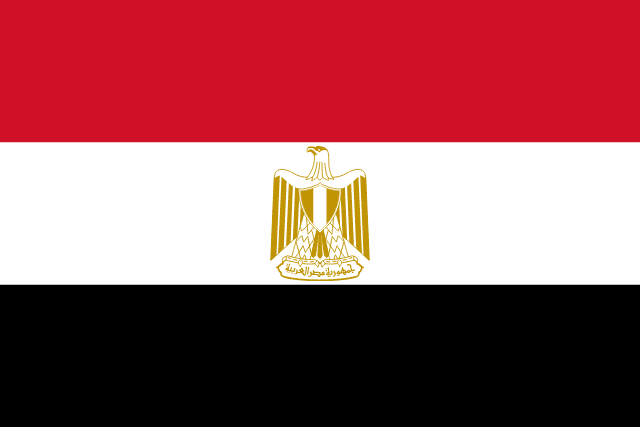 Egypt
Pan-Arab: black, white, red
Egypt
Pan-Arab: black, white, red
-
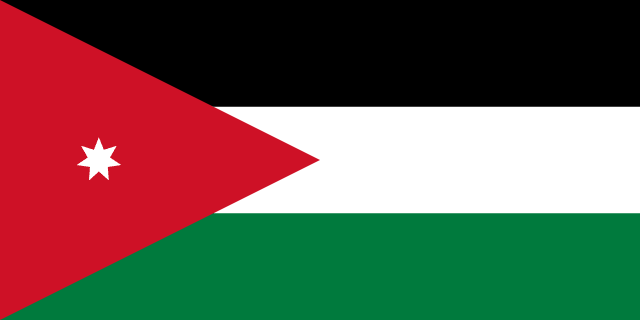 Jordan
Pan-Arab, with the hoist triangle
Jordan
Pan-Arab, with the hoist triangle
-
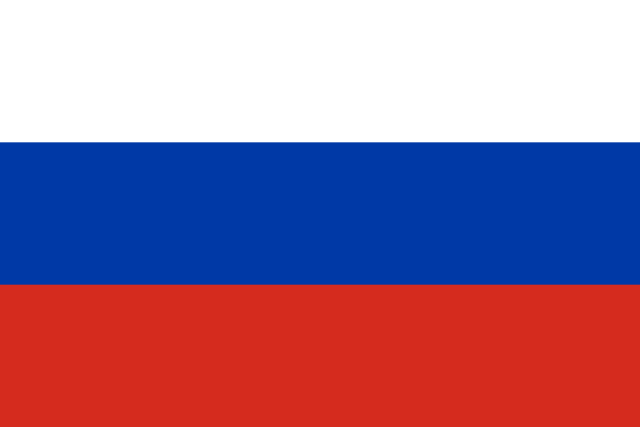 Russia
Pan-Slavic: red, white, blue
Russia
Pan-Slavic: red, white, blue
-
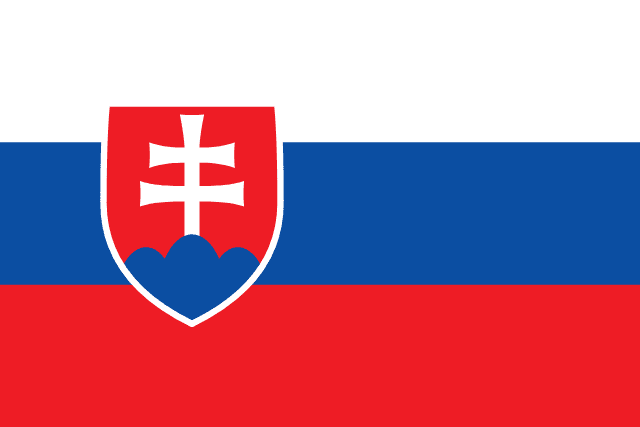 Slovakia
Pan-Slavic, with a shield to tell it apart
Slovakia
Pan-Slavic, with a shield to tell it apart
The Dutch Started It
The simple striped flag — three bands of colour and nothing else — was a Dutch invention of the 1570s. Before that, European flags carried crosses, saints and heraldic beasts.
The Dutch rebel flag was orange, white and blue, and the orange was later replaced by red. Peter the Great of Russia copied the idea after working in Dutch shipyards in 1697, and the Russian flag became the model for the Pan-Slavic colours.
France fixed the vertical version in 1794, and Napoleon's armies spread it. Today 85 national flags are built from plain bands of colour — 63 horizontal and 22 vertical — and nearly all of them descend from one Dutch design.
Symbols and What They Mean
The crescent and star appear on the flags of Turkey, Pakistan, Tunisia, Algeria, Malaysia, Azerbaijan and others, and are generally associated with Islam — though the symbol is actually older, having been used in Byzantine Constantinople before the Ottomans took it up.
The Southern Cross constellation appears on the flags of Australia, New Zealand, Brazil, Papua New Guinea and Samoa, because it is only visible from the southern hemisphere. Brazil's flag shows the exact sky over Rio de Janeiro on the morning of 15 November 1889, when the republic was declared.
Cedar trees, maple leaves, dragons, eagles, lions, suns, moons and books all turn up. Mozambique's flag has an AK-47 on it, the only modern rifle on any national flag, representing the armed struggle for independence.
Design Your Own Flag
The North American Vexillological Association published five rules for good flag design, and they are genuinely useful.
One: keep it simple enough that a child could draw it from memory. Two: use meaningful symbolism. Three: use two or three basic colours. Four: no lettering or seals — if you need to write the name of the place on the flag, the design has failed. Five: be distinctive, or be deliberately related to a neighbour.
Now try it. Draw a flag for your school, your street or your family on a rectangle three units wide by two units tall. Test it by drawing it again from memory the next day, and by shrinking it to the size of a postage stamp. If it still works at both, it is a good flag.
The Odd Ones Out
Nepal is the only national flag that is not a rectangle. It is two stacked triangles, a shape derived from two separate pennants that were combined, and its exact geometry is defined in the Nepali constitution by a series of construction instructions.
Switzerland and Vatican City are the only two square flags. Paraguay is the only one with a different design on the front and the back — the national coat of arms on one side and the treasury seal on the other.
Libya had the only single-colour flag in history, plain green with nothing on it, from 1977 to 2011. Denmark's Dannebrog is the oldest national flag still in use, dating to at least the fourteenth century, and legend says it fell from the sky during a battle in Estonia in 1219.
-
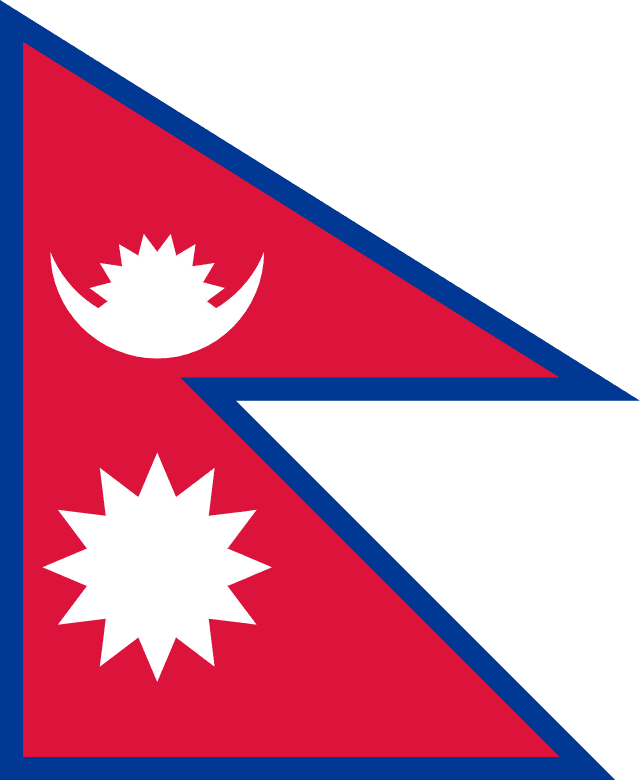 Nepal
the only non-rectangular flag
Nepal
the only non-rectangular flag
-
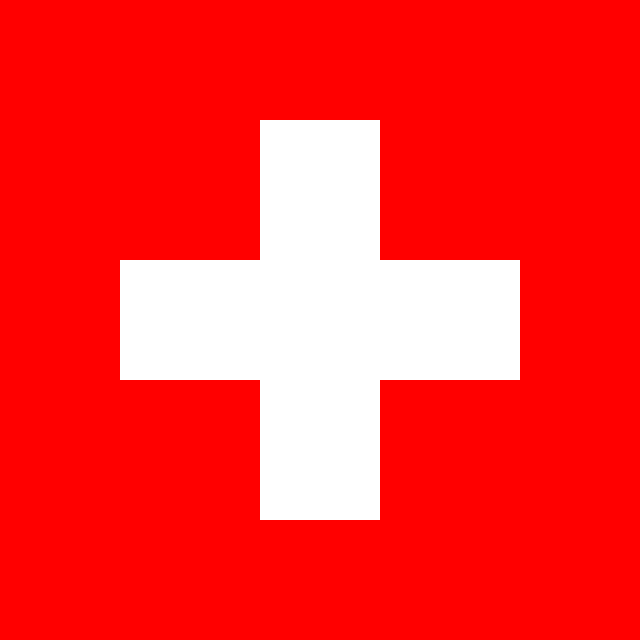 Switzerland
one of only two square flags
Switzerland
one of only two square flags
-
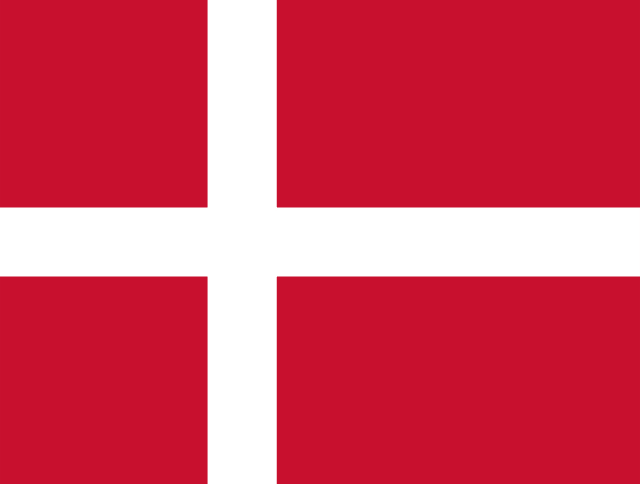 Denmark
the oldest national flag still in use
Denmark
the oldest national flag still in use
-
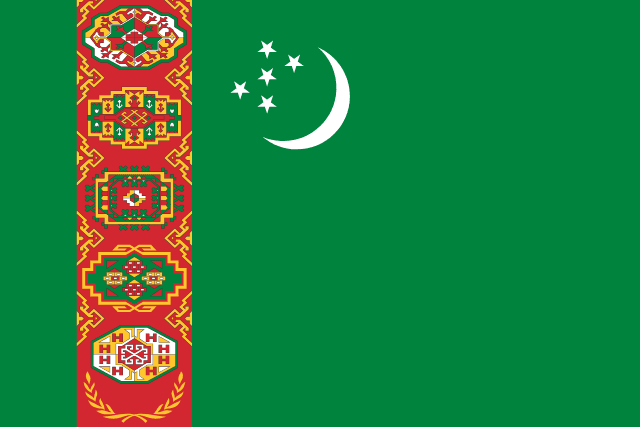 Turkmenistan
the most detailed design in the world
Turkmenistan
the most detailed design in the world
-
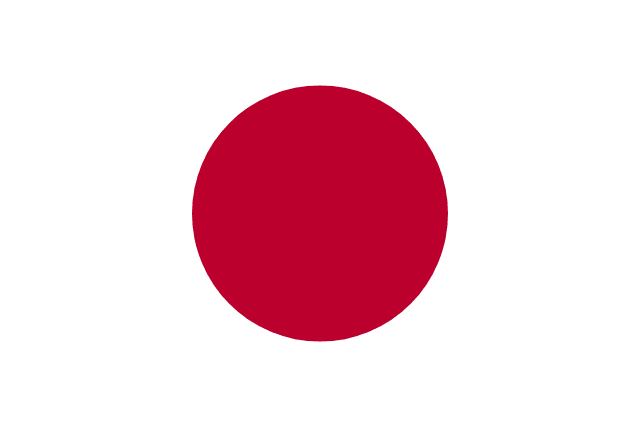 Japan
one of the simplest
Japan
one of the simplest
-
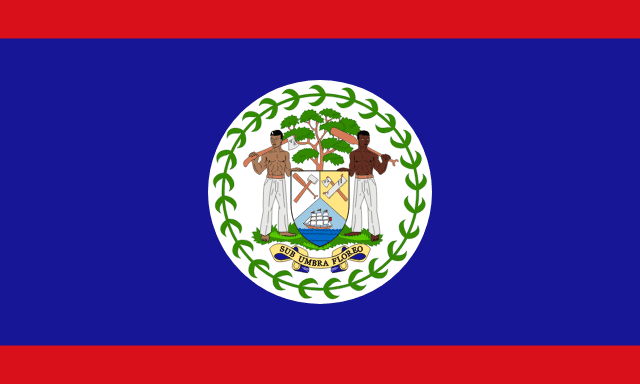 Belize
the most colours of any flag
Belize
the most colours of any flag
Flags That Look Almost the Same
Nothing stops two countries having nearly identical flags, because no authority registers them.
Chad and Romania are effectively the same flag — blue, yellow and red vertical bands. Chad raised the issue at the United Nations in 2004 and Romania declined to change. Monaco and Indonesia are the same two horizontal bands and differ only in proportion; Indonesia declined to change when Monaco objected in 1945, on the grounds that its design was older.
The Netherlands and Luxembourg differ only in the shade of blue and the proportions. Ireland and Ivory Coast are mirror images of each other. New Zealand and Australia are so similar that New Zealand held a referendum in 2016 about changing, and voted to keep it.
The Most and the Fewest
Belize has the most colours, with a coat of arms containing twelve or more distinct shades including the skin tones of two woodcutters. South Africa and South Sudan each use six colours in a simple design, the most for a flag without an elaborate emblem.
Turkmenistan's is generally reckoned the most complicated flag in the world. Alongside a crescent and stars, a vertical stripe carries five traditional carpet patterns called guls, one for each major tribe, plus an olive wreath added to symbolise neutrality.
At the other extreme, Japan's is a single red circle on white, and Bangladesh's is nearly the same on green — with the circle set slightly towards the hoist so that it looks centred when the flag is flying.
How Flags Get Chosen
South Africa's flag was designed in about a week in 1994 by the state herald Frederick Brownell, after a public competition drew 7,000 entries and none was adopted. It was meant to be temporary and proved so popular it was kept.
Canada's maple leaf flag came out of a fierce parliamentary argument in 1964 known as the Great Flag Debate, which ran for months. Before that Canada used the Red Ensign with a British Union Jack in the corner.
Some flags were designed by individuals whose names are known. Cyprus's was designed by a teacher; the flag of Alaska by a thirteen-year-old boy, Benny Benson, in a 1927 competition; and the flag of the European Union by a small committee that settled on twelve stars because twelve is a number associated with completeness, not because there were twelve members.
Flags Beyond Countries
Nations are not the only things with flags. Every US state, Canadian province, German Land and Indian state has one, and so do most cities, many organisations and a fair number of sports clubs.
Some of the most interesting are the international ones. The blue and white United Nations flag shows a map of the world seen from the North Pole, surrounded by olive branches, and the light blue was chosen in 1946 as the opposite of red, the colour of war. The Olympic flag's five rings were designed by Pierre de Coubertin in 1913, and the six colours including the white background were chosen so that at least one appears in every national flag then in use.
The Red Cross flag is the Swiss flag with the colours reversed, an honour to the country where the organisation was founded in 1863. And there is a flag for planet Earth, and one designed for Mars — three horizontal bands of red, green and blue, representing the planet's possible future rather than its present.
Rules for Flying Them
Most countries have laws or conventions about flags. Flying one upside down is a recognised distress signal at sea, and doing it by mistake is a common embarrassment — the flags of Poland and Indonesia, and of Nigeria's neighbours with vertical bands, are easy to get wrong.
The hoist is the side attached to the pole and the fly is the loose side, which is why designs are usually described from the hoist. Flying a flag at half-mast signals mourning, and in some countries the flag is raised to the top first and then lowered.
Flag Day is celebrated on different dates around the world — 14 June in the United States, 15 February in Canada, 24 February in Mexico. The United Nations flies the flags of all 193 member states outside its New York headquarters, in English alphabetical order. To keep exploring, read about the 99 flags that contain blue and see how many countries there are.
