

Ninety-nine of the 193 UN member states have blue somewhere on their national flag — just over half. Blue is the second most common flag colour after red, and it covers more of the world's flag area than any colour except white. It is also unevenly spread: blue is almost universal in the Pacific and Latin America and nearly absent across North Africa and the Arabian Peninsula, for reasons that have more to do with which independence movement a country belonged to than with local taste.
-
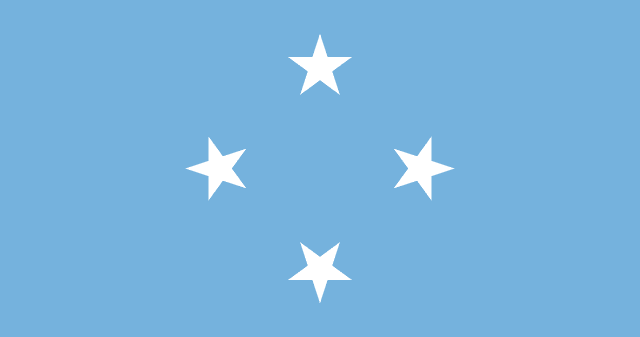 Micronesia
97% blue
Micronesia
97% blue
-
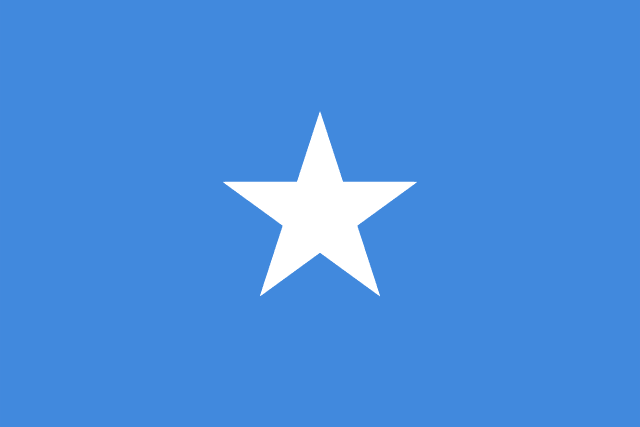 Somalia
96% blue
Somalia
96% blue
-
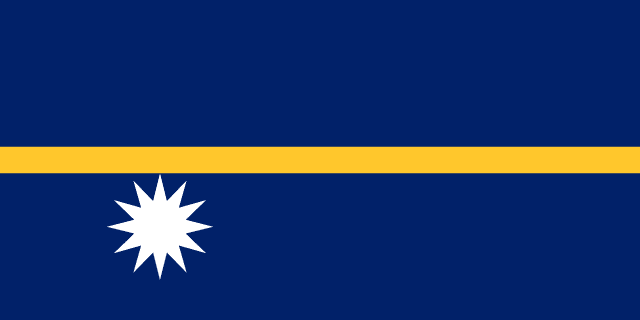 Nauru
88% blue
Nauru
88% blue
-
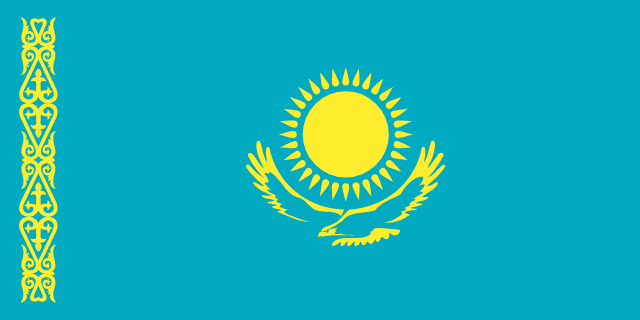 Kazakhstan
87% blue
Kazakhstan
87% blue
-
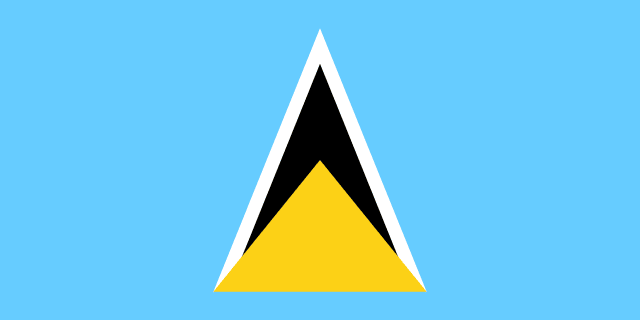 Saint Lucia
86% blue
Saint Lucia
86% blue
-
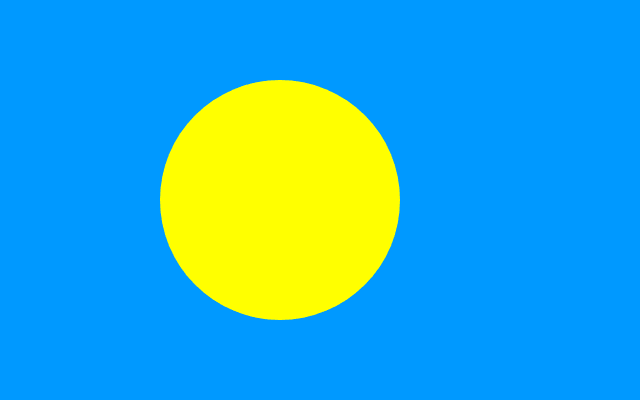 Palau
82% blue
Palau
82% blue
-
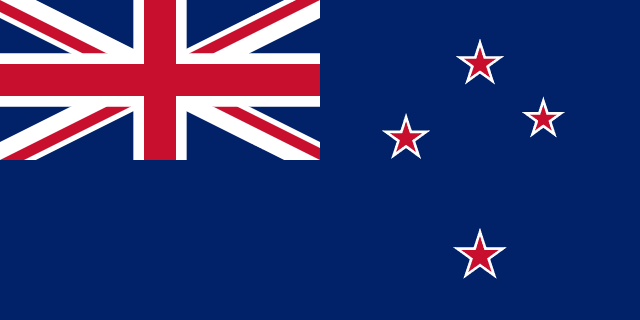 New Zealand
80% blue
New Zealand
80% blue
-
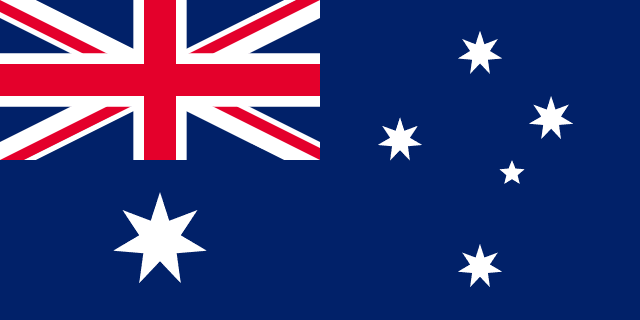 Australia
79% blue
Australia
79% blue
Counting Blue Is Harder Than It Sounds
Any list of "flags with blue" depends on where you draw the line. The figures on this page come from sampling every national flag image pixel by pixel and classifying anything in the cyan-to-indigo hue range with reasonable saturation as blue, then measuring what share of the flag it covers.
That method settles the arguments at the edges. Honduras looks turquoise rather than navy, and its bands sit at the very cyan end of blue — they still count, at 69% of the flag. India registers just 2.4%, all of it in the navy Ashoka Chakra at the centre of the white band. Portugal comes in at 0.6%, entirely from the small blue escutcheons inside its coat of arms, and Montenegro at 0.5%, from the shield on the eagle's chest.
Drop those emblem-only cases and the count falls from 99 to 97 flags where blue is a visible part of the design. Either way, the answer to "how many flags have blue" is a little over half.
The Bluest Flags in the World
Micronesia's flag is 97% blue: a plain field of United Nations blue with four small white stars for its four states. Somalia is 96%, using the same shade with one white star, adopted in 1954 when Italian Somaliland was a UN trust territory and the colour was a deliberate acknowledgement of that.
Nauru follows at 88%, its single gold stripe and twelve-pointed star marking the island's position one degree south of the equator. Kazakhstan is 87% — a sky blue field that the country's own design notes describe as the colour of the Turkic sky, carrying a golden steppe eagle beneath a sun.
The Blue Ensign flags cluster just below. New Zealand at 80%, Australia at 79%, Tuvalu at 77% and Fiji at 72% all inherit a dark blue field from British naval practice, and all four have had referendums or public campaigns about changing it. Fiji's government announced a replacement in 2015 and then dropped the plan.
Four Blue Traditions, Not One
The flags that use blue mostly belong to one of a handful of families, and knowing which one explains almost everything about the shade and the placement.
The Nordic crosses
Sweden, Iceland, Finland and Norway all carry blue in an off-centre cross derived from the Danish Dannebrog, itself the oldest continuously used national flag in the world. Sweden's is the bluest at 70%; Finland's is a light blue cross on white, chosen in 1918 for the country's lakes and snow.
-
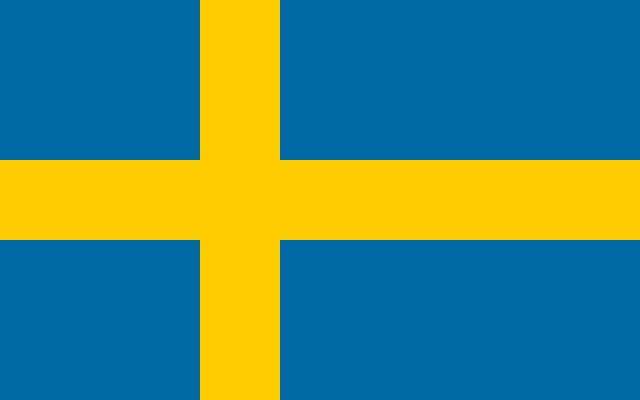 Sweden
70% blue
Sweden
70% blue
-
 Iceland
66% blue
Iceland
66% blue
-
 Finland
39% blue
Finland
39% blue
-
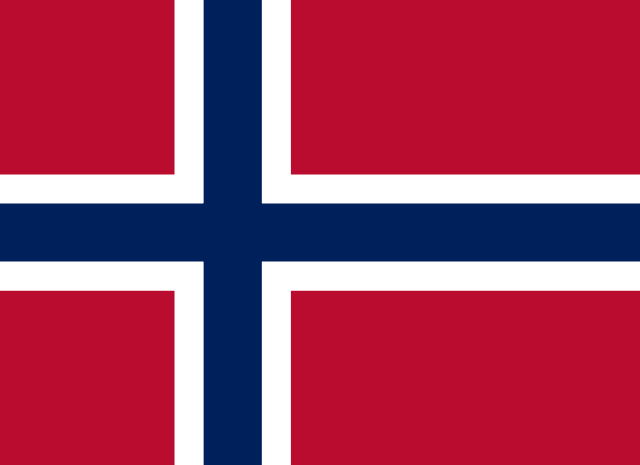 Norway
20% blue
Norway
20% blue
Denmark, the origin of the design, is the one Nordic flag with no blue at all.
Argentine celeste and its descendants
Manuel Belgrano designed a light blue and white cockade for the Argentine independence forces in 1812. That pale celeste spread across the whole of the former Spanish Central America: Guatemala, El Salvador, Honduras, Nicaragua and Costa Rica all use variants of it, and Uruguay's stripes come from the same source.
-
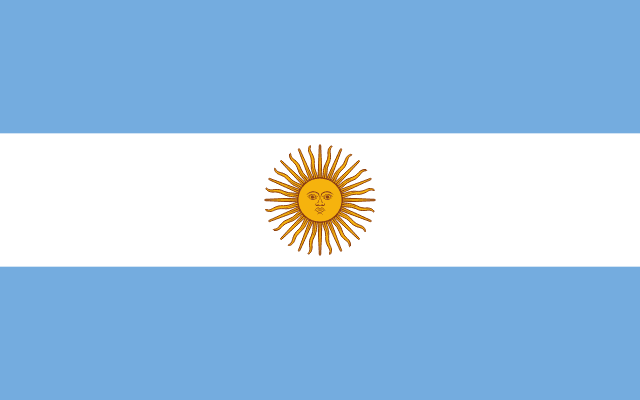 Argentina
66% blue
Argentina
66% blue
-
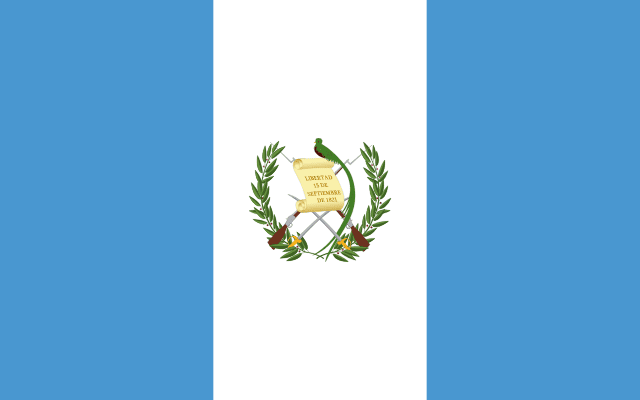 Guatemala
66% blue
Guatemala
66% blue
-
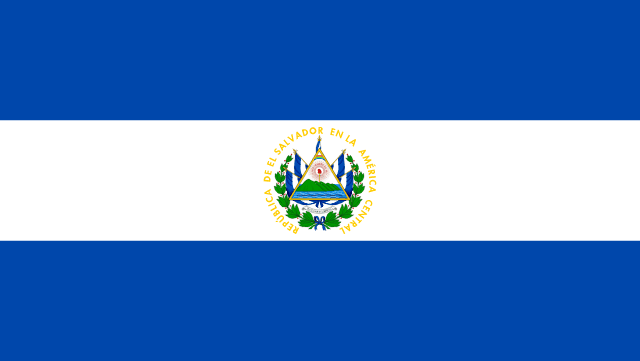 El Salvador
67% blue
El Salvador
67% blue
-
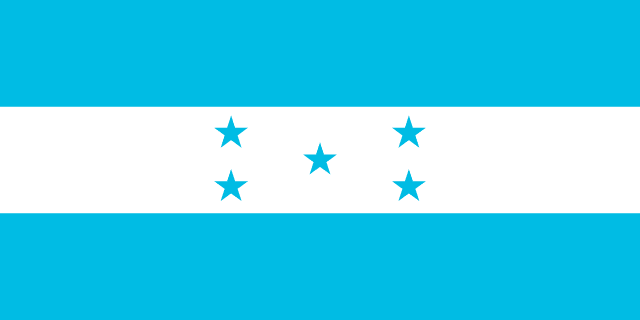 Honduras
69% blue
Honduras
69% blue
-
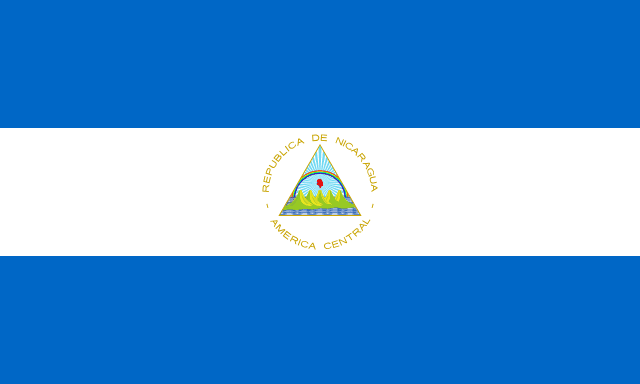 Nicaragua
67% blue
Nicaragua
67% blue
-
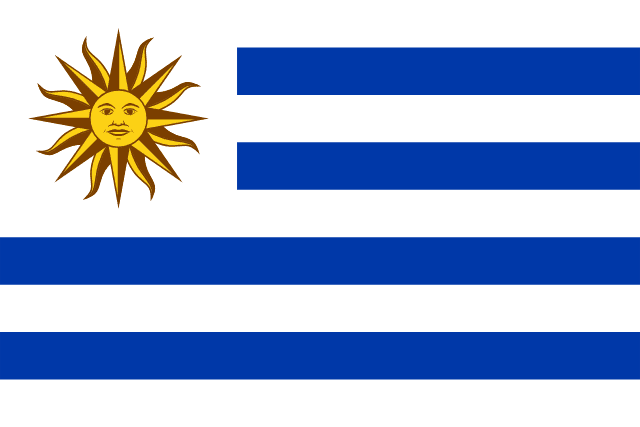 Uruguay
37% blue
Uruguay
37% blue
The five Central American flags are near-identical because they were all provinces of the same federal republic between 1823 and 1841, and each kept the federation's blue-white-blue when it broke away.
Pan-Slavic blue
Russia, Serbia, Slovakia, Slovenia, Croatia and Czechia all use a red-white-blue palette agreed at the Prague Slavic Congress of 1848, which took its colours from the Russian merchant flag Peter the Great is said to have based on the Dutch tricolour. The Dutch flag itself replaced its original orange band with red in the seventeenth century, partly because the orange dye faded at sea.
United Nations blue
The specific light blue of the UN flag was chosen in 1946 as the opposite of red, the colour of war. Several countries that reached independence under UN administration or with heavy UN involvement adopted it directly — Somalia and Micronesia most obviously, along with Palau and the Marshall Islands.
Where Blue Is Missing
The gaps are as informative as the clusters. Blue appears on almost none of the flags of North Africa and the Middle East, because the Pan-Arab colours codified in the Arab Revolt flag of 1916 are black, white, green and red — the colours of the Abbasid, Umayyad, Fatimid and Hashemite dynasties. Egypt, Sudan, Iraq, Syria, Jordan, Kuwait, the UAE, Yemen and Palestine all draw on that set, and none of them uses blue.
The Pan-African colours have the same effect further south. Red, black and green from Marcus Garvey's 1920 declaration, and the red, gold and green of Ethiopia, cover Ghana, Guinea, Mali, Senegal, Benin, Burkina Faso, Cameroon, Togo, Zimbabwe and many more. Blue turns up in Africa mainly where a country was outside those traditions — Botswana's blue for rain, Somalia's UN blue, the sky blue of the Democratic Republic of the Congo, Cape Verde's Atlantic.
Ninety-four UN members have no blue at all. The list includes Germany, Italy, Spain, Poland, Belgium, Austria, Switzerland, Ireland, Canada, China, Japan, Indonesia, Turkey, Nigeria, Kenya, Egypt and Vietnam.
Why Blue Arrived Late
Blue was the last of the major colours to become common in European heraldry and flags, and the reason is chemical. A durable blue dye was difficult and expensive: woad produced a weak, greenish blue, and indigo had to be imported. Cheap, lightfast synthetic blue only arrived with the industrial dye industry in the nineteenth century.
Before that, a blue that would not fade in sun and salt water was a luxury. Ultramarine, ground from lapis lazuli mined in Afghanistan, cost more than gold by weight in medieval Europe, which is why it was reserved for the Virgin's robe in painting. Flags flown at sea had a harder problem still, and the practical solution was a very dark navy that hid fading — the shade the Royal Navy standardised and exported to the Blue Ensign flags of the southern hemisphere.
That history is visible in the shades used today. The older maritime flags are navy; the twentieth-century flags, designed after synthetic pigment made any blue cheap, are far lighter. Kazakhstan, Argentina, Somalia, Micronesia, Botswana and Honduras would all have been impractical flags in 1600.
The Pacific Is the Bluest Region on Earth
No other part of the world uses blue as consistently as Oceania. Micronesia, Nauru, Palau, the Marshall Islands, Tuvalu, Fiji, the Solomon Islands, Samoa, Kiribati, Australia and New Zealand all carry substantial blue, and in most cases it is explicitly the Pacific Ocean rather than the sky.
Kiribati's flag makes the reference literal, with three white wavy bands for the ocean and a frigatebird flying over a rising sun. The Marshall Islands uses two diagonal rays across a deep blue field for the two island chains, Ratak and Ralik. Palau's is a full moon on ocean blue, deliberately offset from centre so it does not read as a Japanese flag.
For countries whose territory is overwhelmingly water — Kiribati's land area is 811 square kilometres spread across 3.5 million square kilometres of ocean — a blue flag is close to an accurate map.
Every National Flag With Blue
All 99 UN member states whose flags contain blue, ordered by how much of the flag it covers.
- Micronesia 97%
- Somalia 96%
- Nauru 88%
- Kazakhstan 87%
- Saint Lucia 86%
- Palau 82%
- New Zealand 80%
- Australia 79%
- Tuvalu 77%
- Marshall Islands 75%
- Botswana 75%
- Cape Verde 75%
- Fiji 72%
- Bosnia and Herzegovina 71%
- Sweden 70%
- Honduras 69%
- El Salvador 67%
- Nicaragua 67%
- Democratic Republic of the Congo 67%
- Guatemala 66%
- Barbados 66%
- Iceland 66%
- Argentina 66%
- Belize 64%
- Greece 58%
- Bahamas 56%
- Ukraine 50%
- Cambodia 49%
- Cuba 49%
- Rwanda 47%
- Liechtenstein 46%
- San Marino 45%
- Haiti 43%
- Solomon Islands 42%
- Laos 41%
- Philippines 39%
- Eswatini 39%
- Finland 39%
- Uruguay 37%
- Israel 36%
- Djibouti 35%
- Dominican Republic 35%
- Croatia 34%
- Costa Rica 34%
- Mongolia 34%
- Azerbaijan 34%
- Moldova 34%
- Sierra Leone 34%
- Netherlands 34%
- Gabon 33%
- Estonia 33%
- Luxembourg 33%
- Slovenia 33%
- Chad 33%
- France 33%
- Romania 33%
- Paraguay 33%
- Thailand 33%
- Russia 33%
- Armenia 33%
- North Korea 33%
- Andorra 32%
- Venezuela 31%
- Uzbekistan 31%
- Lesotho 30%
- United Kingdom 29%
- Tanzania 29%
- Namibia 29%
- Slovakia 26%
- Panama 26%
- Saint Vincent and the Grenadines 25%
- Czech Republic 25%
- Eritrea 25%
- Serbia 25%
- Mauritius 24%
- Colombia 24%
- Samoa 24%
- Malaysia 24%
- Kiribati 23%
- Nepal 23%
- Gambia 23%
- Comoros 22%
- Ecuador 22%
- South Africa 21%
- South Sudan 20%
- Norway 20%
- Central African Republic 20%
- United States 18%
- Seychelles 16%
- Chile 15%
- Ethiopia 14%
- Equatorial Guinea 12%
- Brazil 12%
- Antigua and Barbuda 11%
- Liberia 10%
- South Korea 6%
- India 2%
- Portugal 1%
- Montenegro 1%
The Shades Are Not Interchangeable
Countries are unusually specific about their blue. Argentina's law defines a light celeste and the exact tone has been revised more than once. Estonia's blue is fixed as Pantone 285; Israel's is drawn from the blue stripe of the tallit prayer shawl and has drifted lighter and darker across the state's history without ever being fully standardised.
Greece changed its blue by decree several times in the twentieth century, from a pale sky blue to the deep navy in use since 1978. The United States specifies "Old Glory Blue" for the canton; the United Kingdom uses two different blues in the Union Flag, the dark of the Scottish saltire behind the reds of St George and St Patrick.
These are not trivia. A flag's colour is usually written into legislation, and manufacturers work from published construction sheets. If you want to know what a country thinks it is saying, the shade of its blue and the reason given for it in the founding decree is one of the most direct places to look — as is the count of stars, stripes and other charges across the world's 195 countries, and the family of striped flag designs that carries most of that blue.
