

Eighty-five of the 193 UN member states have flags built from plain bands of colour — 63 horizontal and 22 vertical. Add the flags that are stripes plus a canton, a hoist triangle or a central emblem and the total passes 115, well over half the world. The stripe is the default national flag, and almost every one of them descends from a single Dutch design of the 1570s.
-
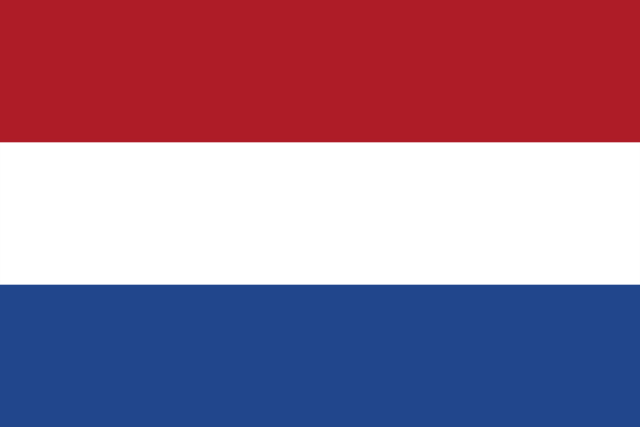 Netherlands
1572, the first tricolour
Netherlands
1572, the first tricolour
-
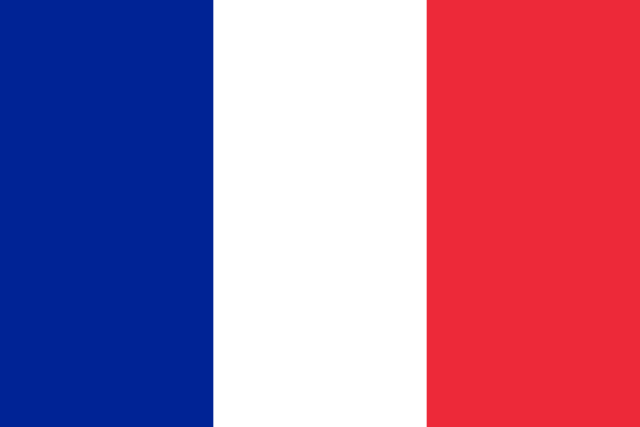 France
1794, vertical
France
1794, vertical
-
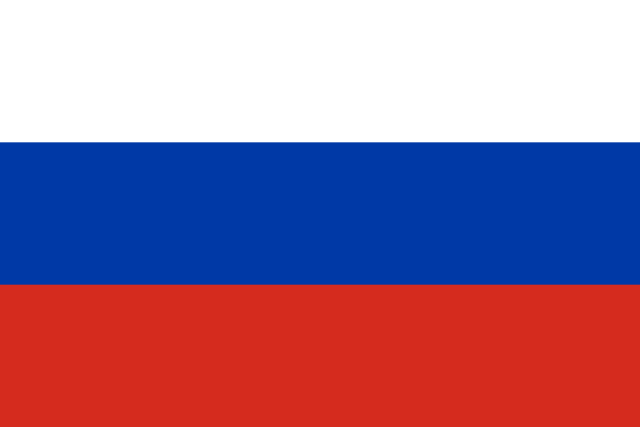 Russia
1696 merchant flag
Russia
1696 merchant flag
-
 Italy
1797, vertical
Italy
1797, vertical
-
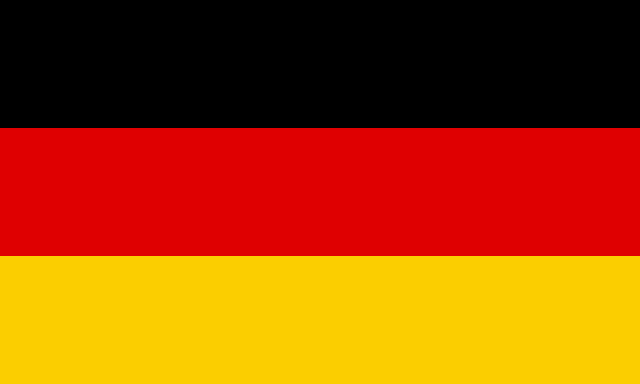 Germany
1848, horizontal
Germany
1848, horizontal
-
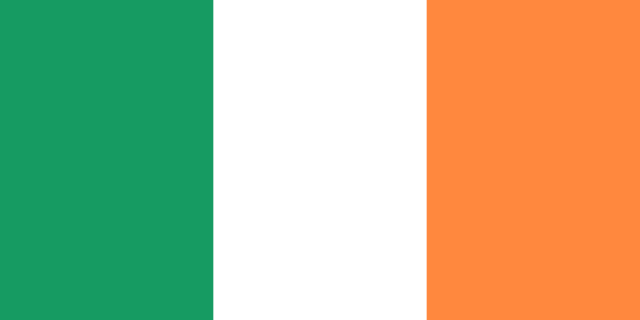 Ireland
1848, vertical
Ireland
1848, vertical
The Dutch Went First
The Prinsenvlag, flown by the Dutch rebels against Spanish rule from around 1572, was orange, white and blue in three horizontal bands — the livery colours of William of Orange. It was the first flag of a modern state that was purely geometric, with no cross, saint or heraldic beast on it, and that was the innovation.
The orange band was replaced by red during the seventeenth century. The usual explanation is that orange dye faded badly at sea and red held its colour, though contemporary evidence is thin and political distancing from the House of Orange probably played a part too.
Its influence spread by shipping. Peter the Great spent 1697 working in Dutch shipyards and returned with a red-white-blue merchant flag that became the Russian tricolour, which in turn became the template for the Pan-Slavic colours. The Dutch flag is the ancestor of a large share of the flags now flying in Europe.
Vertical Means France
Only 22 national flags use vertical bands, and the list is close to a map of French influence. France fixed the blue-white-red vertical arrangement in February 1794, and Napoleon's armies and administrations carried it into Italy, Belgium and beyond.
Decolonisation carried it further. Ivory Coast, Mali, Guinea, Senegal, Chad, Cameroon, Nigeria, Romania, Andorra, Peru, Mexico and Guatemala all use vertical bands, and most of them were either French colonies, adjacent to one, or consciously borrowing the republican symbolism.
Ireland is the clearest case of borrowing. The green, white and orange tricolour was presented to Thomas Francis Meagher in Paris in 1848 by a group of French women sympathetic to Irish nationalism, explicitly modelled on the French flag, with white between green and orange for a truce between the two traditions.
- Andorra
- Bahrain
- Barbados
- Belgium
- Cameroon
- Chad
- France
- Guatemala
- Guinea
- Ireland
- Italy
- Ivory Coast
- Mali
- Mexico
- Nigeria
- Peru
- Portugal
- Qatar
- Romania
- Saint Vincent and the Grenadines
- Senegal
- Canada
Three Bands, Sixty Times
Of the 85 plain-band flags, 60 have exactly three bands: 42 horizontal and 18 vertical. Three is the layout that reads clearly at any size, divides evenly, and allows a country to claim three ideas at once — the French revolutionary reading of liberty, equality and fraternity being the most copied.
Two bands are the next most common, with Poland, Ukraine, Indonesia, Monaco, San Marino, Haiti, Singapore, Angola and Burkina Faso among them. Poland and Indonesia are the same two colours in opposite order, and Monaco and Indonesia are the same flag in slightly different proportions — a coincidence Indonesia declined to resolve when Monaco raised it in 1945, on the grounds that the Indonesian design predated Monaco's independence.
Beyond four bands the numbers thin out quickly, and by then the stripes are usually counting something rather than symbolising it.
Stripes That Are Actually a Number
-
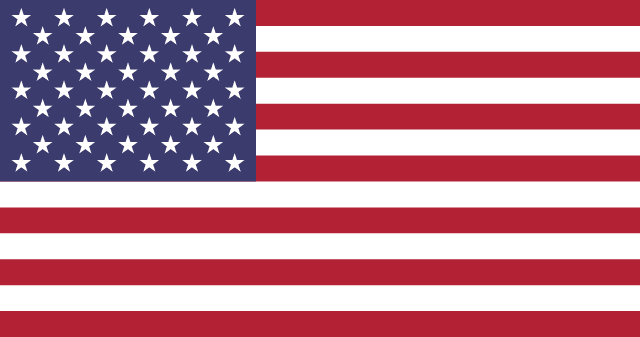 United States
13 stripes, 13 colonies
United States
13 stripes, 13 colonies
-
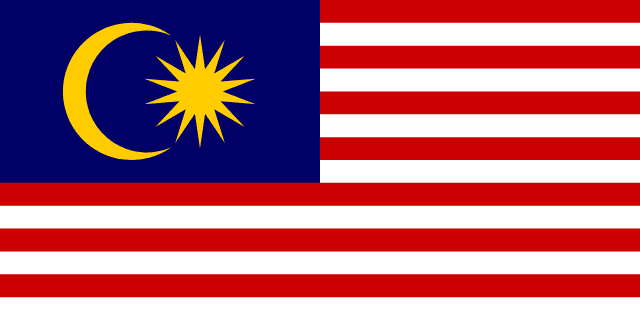 Malaysia
14 stripes, 13 states + federal government
Malaysia
14 stripes, 13 states + federal government
-
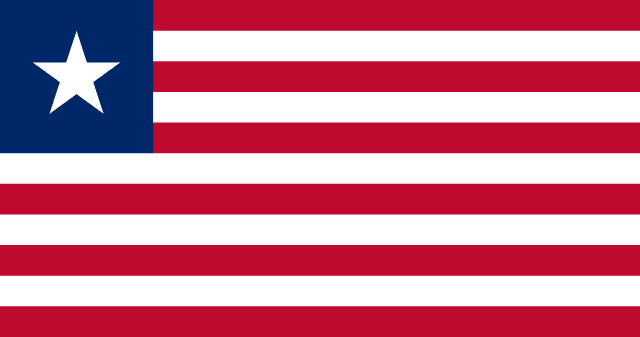 Liberia
11 stripes, 11 signatories
Liberia
11 stripes, 11 signatories
-
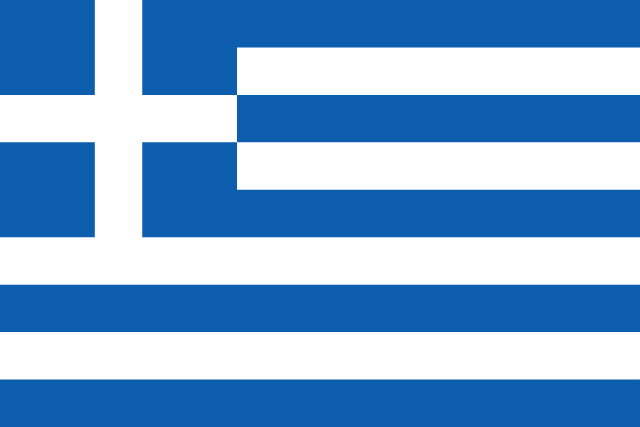 Greece
9 stripes
Greece
9 stripes
-
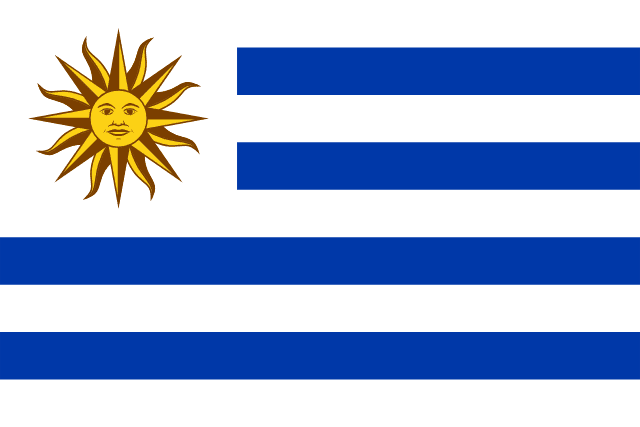 Uruguay
9 stripes, 9 departments
Uruguay
9 stripes, 9 departments
-
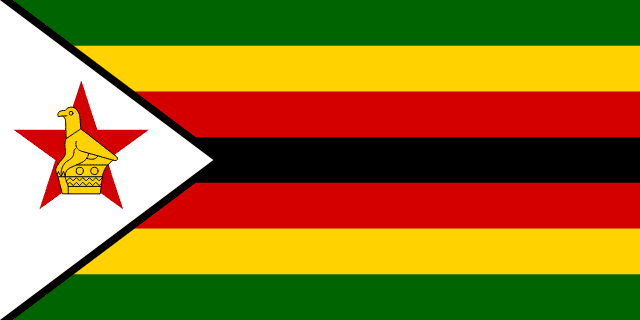 Zimbabwe
7 stripes
Zimbabwe
7 stripes
The United States has thirteen stripes for the thirteen original colonies, a count fixed by the Flag Act of 1818 after a brief period in which stripes were added along with states — the 1795 flag had fifteen, and the arithmetic was obviously not going to scale.
Malaysia's fourteen stripes stand for the thirteen states plus the federal government. Liberia's eleven represent the eleven signatories of its 1847 declaration of independence, and the flag's resemblance to the American one is deliberate, since Liberia was founded by freed American slaves.
Greece's nine stripes are usually read as the nine syllables of Eleftheria i Thanatos, "freedom or death", though the nine letters of eleftheria is an equally common explanation and neither is documented in the original decree. Uruguay's nine are its nine original departments. Zimbabwe's seven and Uganda's six carry no numeric meaning at all.
The Three Palettes That Decide the Colours
Which colours end up on a striped flag is rarely a free choice. Three political colour schemes account for most of the world's stripes.
The Pan-Slavic colours — red, white and blue — were agreed at the Prague Slavic Congress of 1848 and taken from the Russian flag. Russia, Serbia, Slovakia, Slovenia, Croatia and Czechia all use them, which is why several of these flags are distinguishable only by the order of the bands or the presence of a coat of arms. Slovakia and Slovenia are near-identical without their shields, and Russia and Serbia differ only in order.
The Pan-Arab colours — black, white, green and red — come from the flag of the Arab Revolt of 1916 and represent the Abbasid, Umayyad, Fatimid and Hashemite dynasties. Egypt, Iraq, Yemen, Syria, Sudan, Jordan, Kuwait, the UAE and Palestine all draw on the set, in horizontal bands with or without a triangle.
The Pan-African colours are two overlapping sets: red, black and green from Marcus Garvey's 1920 convention, and the red, gold and green of Ethiopia, the one African state that was never colonised. Ghana adopted the Ethiopian set in 1957 and most of West Africa followed.
Order and Proportion Do the Distinguishing
Once a family of flags shares a palette, the only things left to differentiate them are the order of the bands and the shape of the rectangle. Both matter more than they sound.
The Netherlands is red over white over blue; Luxembourg is the same three colours in the same order, distinguished only by a lighter blue and a longer proportion, 3:5 against the Dutch 2:3. Luxembourg was in a personal union with the Dutch crown until 1890 and only legally defined its flag in 1972, partly because of the confusion. It also adopted an alternative red lion banner for unofficial use for the same reason.
Chad and Romania are the sharpest case: two vertical tricolours in blue, yellow and red that are effectively identical. Chad adopted its flag in 1959 and Romania removed the communist emblem from the centre of its own in 1989, at which point the two matched. Chad raised the issue at the United Nations in 2004 and Romania declined to change, and both flags remain in use.
Indonesia and Monaco differ only in proportion, 2:3 against 4:5. Ireland and Ivory Coast are mirror images of each other in the same three colours. Nothing prevents duplication, because there is no authority that registers national flags.
Every Flag Built From Horizontal Bands
- Angola
- Argentina
- Armenia
- Austria
- Azerbaijan
- Belize
- Bolivia
- Botswana
- Bulgaria
- Burkina Faso
- Cape Verde
- Colombia
- Costa Rica
- Croatia
- Ecuador
- Egypt
- El Salvador
- Estonia
- Ethiopia
- Gabon
- Gambia
- Germany
- Ghana
- Haiti
- Honduras
- Hungary
- India
- Indonesia
- Iraq
- Israel
- Kenya
- Laos
- Latvia
- Lebanon
- Lesotho
- Libya
- Liechtenstein
- Lithuania
- Luxembourg
- Mauritius
- Monaco
- Nauru
- Netherlands
- Nicaragua
- Niger
- North Korea
- Paraguay
- Poland
- Russia
- San Marino
- Serbia
- Sierra Leone
- Singapore
- Slovakia
- Slovenia
- Spain
- Suriname
- Tajikistan
- Thailand
- Uganda
- Ukraine
- Uzbekistan
- Yemen
The Ones That Look Striped and Are Not
-
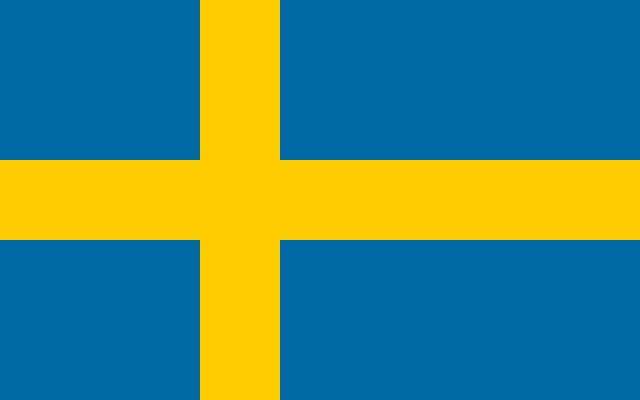 Sweden
Nordic cross
Sweden
Nordic cross
-
 Seychelles
oblique rays
Seychelles
oblique rays
-
 Brunei
diagonal bands
Brunei
diagonal bands
-
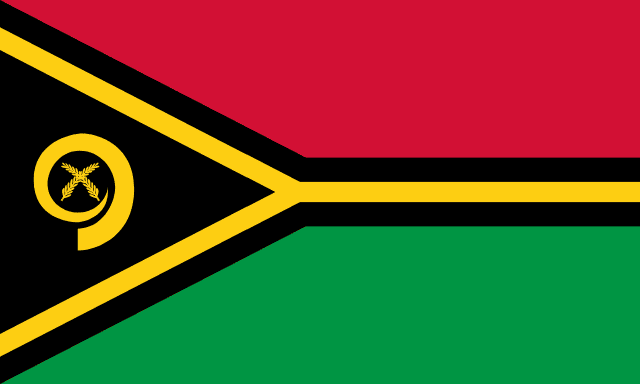 Vanuatu
a pall, not stripes
Vanuatu
a pall, not stripes
-
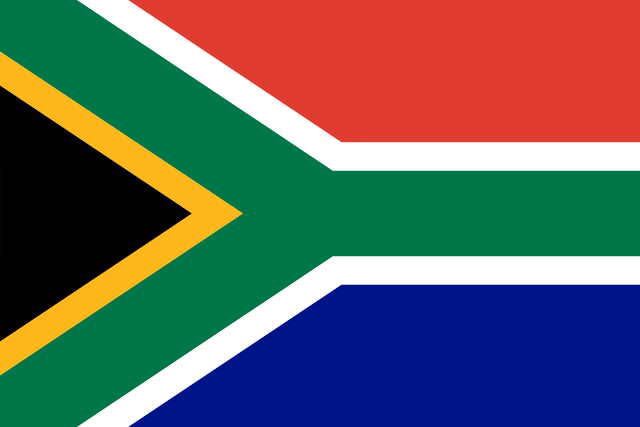 South Africa
a pall in six colours
South Africa
a pall in six colours
-
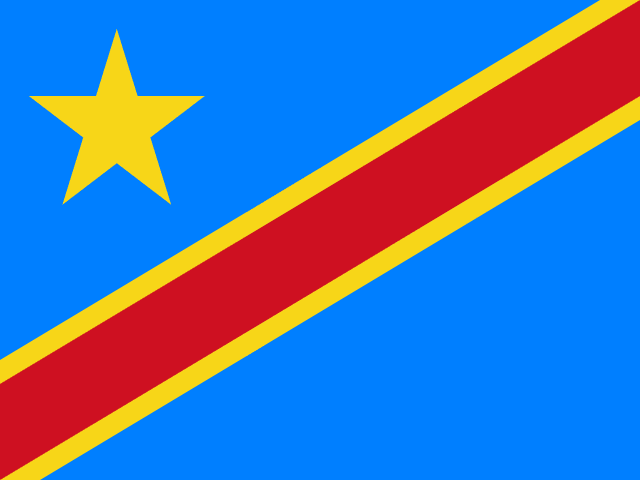 Democratic Republic of the Congo
a single diagonal band
Democratic Republic of the Congo
a single diagonal band
The Nordic cross flags are the largest group of near-misses. Denmark, Sweden, Norway, Finland and Iceland all look like bands from a distance, but the horizontal arm is crossed by a vertical arm set towards the hoist, which makes them crosses rather than stripes. The offset is the giveaway, and it traces to the Dannebrog, in continuous use since at least the fourteenth century.
Diagonals are the other common confusion. Brunei's white and black bands run corner to corner, the Democratic Republic of the Congo has a single diagonal, and the Seychelles' five bands radiate from one corner. Vanuatu and South Africa both use a pall — a Y-shaped division — which produces horizontal-looking bands at the fly end and nothing of the sort at the hoist.
Then there are the flags with no bands at all: Japan, Bangladesh, Palau, Switzerland, Nepal, Cyprus, Kiribati, Canada's central pale notwithstanding, and the handful built around a single charge on a plain field.
Why the Stripe Won
The stripe became the standard because it solves every practical problem a flag has. It is trivially easy to sew from bolts of dyed cloth, it reads correctly from any distance, it survives being reproduced at postage-stamp size, and it looks the same whether the fabric is hanging limp or fully extended.
Heraldic flags fail all of those tests. A coat of arms disappears at 200 metres, costs far more to manufacture accurately, and turns into a smear when the wind takes it. Almost every country that has redesigned its flag since 1900 has moved towards bands and away from emblems, and the exceptions — Turkmenistan's carpet patterns, Belize's crowded arms — are the ones vexillologists point at.
The practical case is also why the stripe keeps winning new adopters. South Sudan in 2011 chose bands with a hoist triangle; Malawi, Myanmar and Libya all returned to or revised band-based designs in the last two decades. If you want to see how the whole set fits together, the 99 flags that contain blue and the full count of countries in the world are the two lists that make the pattern obvious.