
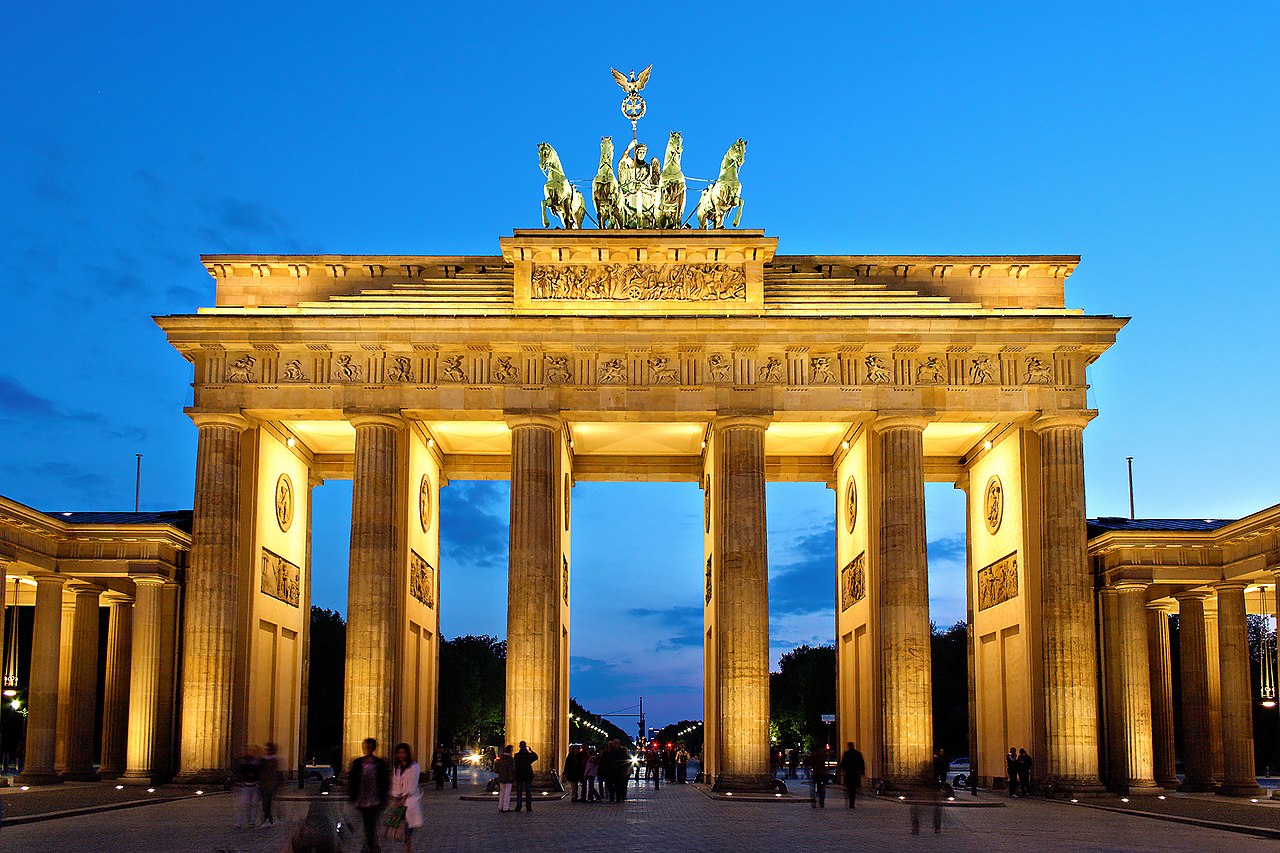
Germany has 16 federal states, known in German as Bundesländer. They are Baden-Württemberg, Bavaria, Berlin, Brandenburg, Bremen, Hamburg, Hesse, Lower Saxony, Mecklenburg-Vorpommern, North Rhine-Westphalia, Rhineland-Palatinate, Saarland, Saxony, Saxony-Anhalt, Schleswig-Holstein, and Thuringia. Together these states form the Federal Republic of Germany (Bundesrepublik Deutschland), one of the most influential federal systems in Europe.
The 16 States at a Glance
Germany's states vary enormously in size, population, and character, ranging from sprawling rural regions to compact city-states that govern a single metropolitan area. A few stand out:
- Largest by area: Bavaria, at roughly 70,550 km², covers nearly a fifth of the entire country.
- Most populous: North Rhine-Westphalia, home to more than 18 million people — more than the Netherlands.
- Smallest by area: Bremen, at just 419 km².
- City-states: Berlin, Hamburg, and Bremen each function simultaneously as a city and a federal state.
The three city-states are a distinctive feature of the German system. Rather than belonging to a surrounding state, they govern themselves directly, blending municipal and state-level responsibilities into a single administration.
How the Number Reached 16
The current map of 16 states dates from German reunification on 3 October 1990. West Germany had consisted of 11 states (10 plus West Berlin). When the German Democratic Republic (East Germany) dissolved, it re-established five historic states — Brandenburg, Mecklenburg-Vorpommern, Saxony, Saxony-Anhalt, and Thuringia — which then joined the Federal Republic. The divided city of Berlin was reunified into a single state at the same time, bringing the total to 16.
These five eastern regions are still commonly referred to as the "new states" (neue Länder), even decades later. Some borders have shifted over the longer history of the republic too: Saarland, for example, was a French-administered protectorate after World War II and only joined West Germany as a state in 1957 following a referendum.
How German Federalism Works
Germany is a federal parliamentary republic, and the states hold genuine constitutional power rather than acting as mere administrative districts. Each Bundesland has its own constitution, its own elected parliament (the Landtag), and its own head of government — a minister-president, or a governing mayor in the case of the city-states.
States are responsible for major policy areas including education, policing, cultural affairs, and broadcasting. This is why school curricula, exam systems, and even public holidays differ from one state to another. The federal government and the states share other responsibilities, with the constitution (the Basic Law, or Grundgesetz) defining who controls what.
At the national level, state governments are represented through the Bundesrat, the upper house of parliament. The Bundesrat must approve a wide range of federal laws that affect state interests, giving the states a direct and powerful voice in shaping national legislation. To balance the wealth gap between regions, Germany also operates a fiscal equalization system (Länderfinanzausgleich) that redistributes funds from richer states to poorer ones.
Economic and Regional Identity
Each state carries a strong sense of regional identity, often rooted in centuries of history as independent kingdoms, duchies, or free cities. Bavaria, the largest state, is also among the wealthiest and is home to global companies such as BMW, Siemens, and Audi. It even maintains its own regional political party, the Christian Social Union (CSU), which competes only within Bavaria.
North Rhine-Westphalia, centred on the densely populated Rhine-Ruhr area, is the economic powerhouse with the highest overall GDP, built on a legacy of coal, steel, and heavy industry that has since diversified. Hamburg, a wealthy maritime city-state, is famous for its enormous port and its network of canals — the city is criss-crossed by more bridges than any other in Europe. Meanwhile, the eastern states have undergone profound transformation since reunification, modernising their economies and infrastructure.
This diversity of landscapes, dialects, and traditions is part of what makes Germany so varied for travellers and learners alike. To explore the country in more depth, see our germany country guide.
Frequently Asked Questions
What are the German states called in German?
They are called Bundesländer (singular: Bundesland), which translates roughly as "federal states." The word Land on its own is also commonly used to refer to an individual state.
Which is the largest German state?
By area, Bavaria is the largest at about 70,550 km². By population, North Rhine-Westphalia is the largest, with over 18 million residents. They are two different states, so the answer depends on which measure you mean.
What are city-states in Germany?
Berlin, Hamburg, and Bremen are city-states, meaning a single city holds the constitutional status of a full federal state. They run both city and state government functions through one administration.
How many states did Germany have before reunification?
West Germany had 11 states (including West Berlin). The five eastern "new states" plus reunified Berlin joined in 1990, bringing the total to the present 16.
