

Introduction
A peninsula is a piece of land surrounded by water on three sides. The largest peninsulas are so big they function almost like subcontinents.
Peninsulas have played crucial roles in human history, serving as natural harbors, trade routes, and defensive positions.
1. Arabian Peninsula
- Area: 3,237,500 km²
- Countries: 7 (Saudi Arabia, Yemen, Oman, UAE, Qatar, Bahrain, Kuwait)
- Largest Country: Saudi Arabia
The Arabian Peninsula is the largest peninsula in the world. It contains the world's largest sand desert (Rub' al Khali) and some of the richest oil reserves on Earth.
The peninsula is surrounded by the Red Sea, the Arabian Sea, and the Persian Gulf. It is mostly desert, with temperatures regularly exceeding 50°C.
2. Indian Peninsula (Deccan)
- Area: ~2,072,000 km²
- Countries: India (primarily)
- Bordered By: Arabian Sea, Indian Ocean, Bay of Bengal
The Indian Peninsula extends southward into the Indian Ocean. The Western and Eastern Ghats mountain ranges run along its coasts.
The peninsula supports over a billion people and is one of the most densely populated landmasses on Earth.
3. Indochina Peninsula
- Area: ~1,938,743 km²
- Countries: Vietnam, Laos, Cambodia, Thailand, Myanmar, Malaysia
- Rivers: Mekong, Irrawaddy, Chao Phraya
The Indochina Peninsula is where mainland Southeast Asia meets the sea. It is one of the most biodiverse regions on Earth and home to the mighty Mekong River.
4. Horn of Africa
- Area: ~2,000,000 km²
- Countries: Somalia, Ethiopia, Eritrea, Djibouti
- Strait: Bab el-Mandeb
The Horn of Africa juts into the Indian Ocean at the entrance to the Red Sea. It controls one of the world's most strategic shipping lanes.
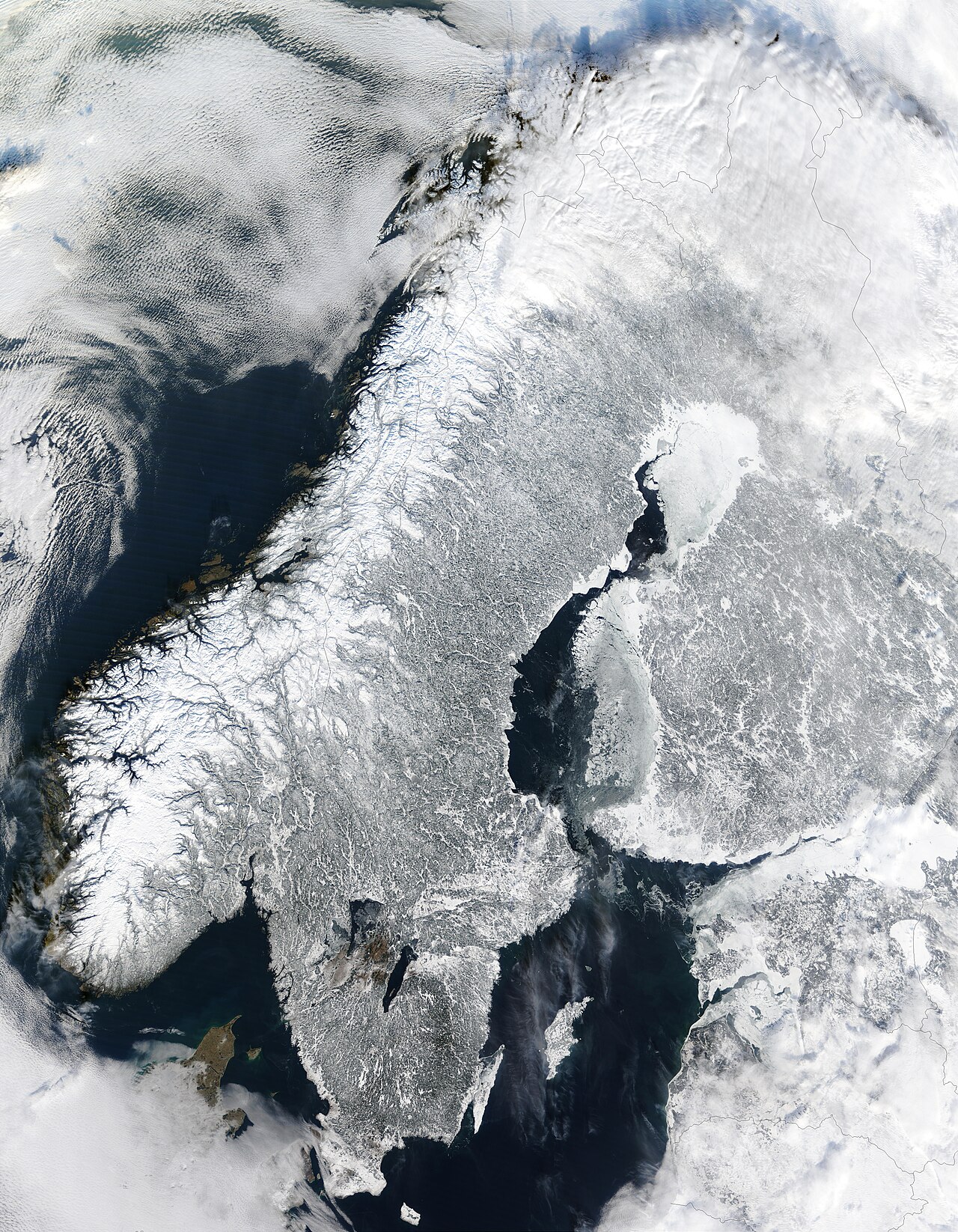
5. Scandinavian Peninsula
- Area: ~750,000 km²
- Countries: Norway, Sweden (+ part of Finland)
- Features: Fjords, midnight sun
The Scandinavian Peninsula is the largest in Europe. Its western coast has the most complex fjord system in the world.
6. Iberian Peninsula
- Area: ~582,000 km²
- Countries: Spain, Portugal, Andorra, Gibraltar
- Strait: Strait of Gibraltar
The Iberian Peninsula is separated from Africa by only 14 km at the Strait of Gibraltar. It was the last stronghold of the Moors in Europe until 1492.
7. Kamchatka Peninsula, Russia
- Area: ~270,000 km²
- Volcanoes: 160+ (29 active)
- Wildlife: Brown bears, salmon runs
Kamchatka is one of the most volcanically active regions on Earth. It has 29 active volcanoes, more than almost any equivalent area on the planet.
8. Korean Peninsula
- Area: ~220,847 km²
- Countries: North Korea, South Korea
- DMZ: 4 km wide, 250 km long
The Korean Peninsula is divided by the most heavily militarized border in the world. The DMZ has become an accidental wildlife sanctuary due to the absence of human activity.
Key Facts
- The Arabian Peninsula is larger than Greenland, the world's largest island.
- The Indian Peninsula supports over a billion people.
- Kamchatka has 29 active volcanoes and is one of Earth's most geologically active areas.
- The Korean DMZ has become one of the best-preserved temperate habitats in Asia.
- The Scandinavian Peninsula has the world's most complex fjord system.
Fun Facts
- The Arabian Peninsula was connected to Africa just 5 million years ago before the Red Sea opened.
- The Korean DMZ is home to endangered species including Amur leopards and red-crowned cranes.
- Kamchatka's bears outnumber humans in many areas.
- Gibraltar's monkeys are the only wild primates in Europe.
Final Thoughts
The world's largest peninsulas are major landforms that have shaped civilizations, trade routes, and geopolitics. From the oil-rich Arabian Peninsula to the volcanic Kamchatka, these landmasses are fundamental to understanding Earth's geography.