
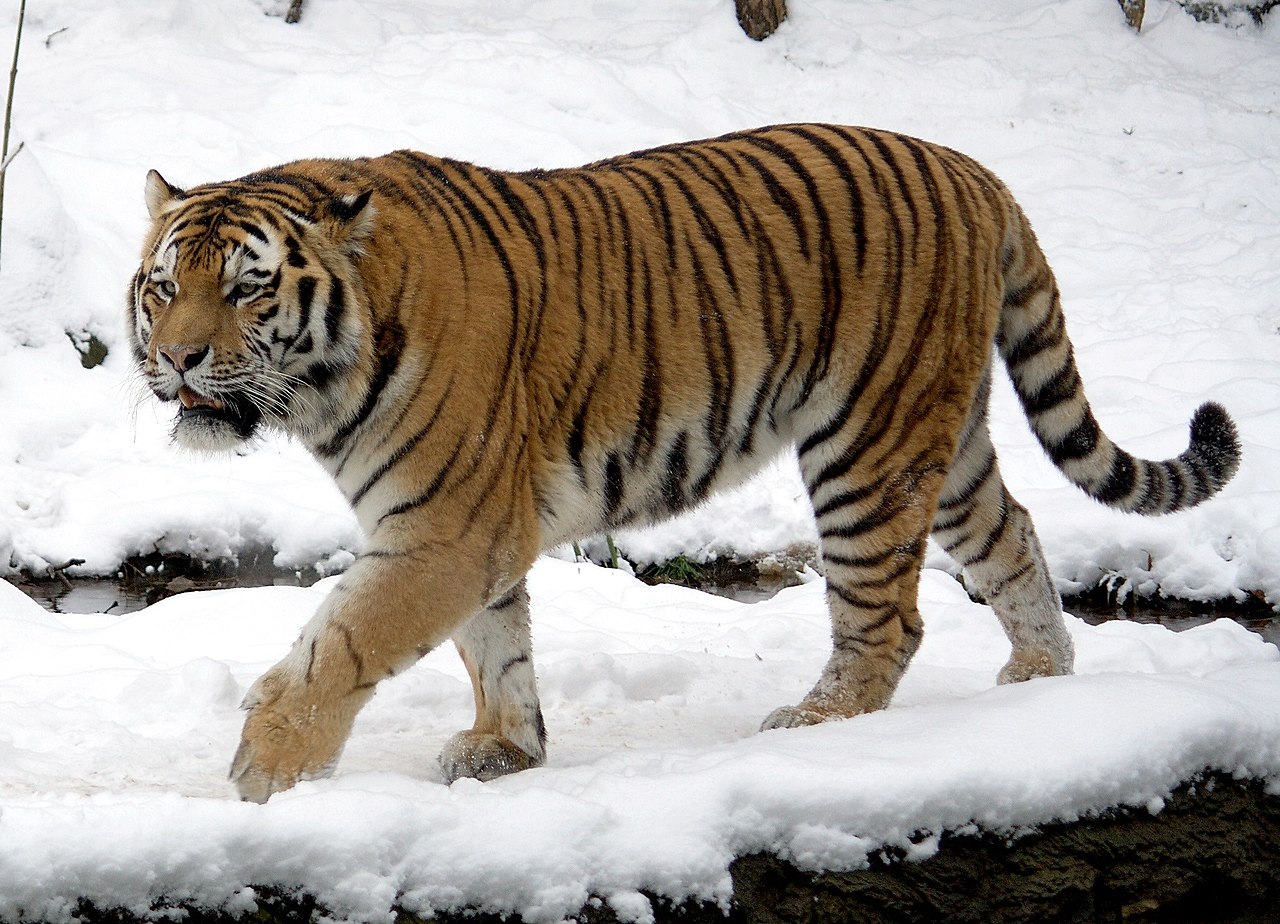
The national animal of South Korea is the Siberian tiger (Panthera tigris altaica), revered for centuries as the guardian spirit and "king of the mountains" of the Korean Peninsula. Though no wild tigers roam South Korea today, the animal remains the country's most powerful national emblem, woven into its founding myth, folk art, and even its modern Olympic mascots.
Why the Tiger Is South Korea's National Animal
Few nations identify with a single animal as deeply as Korea does with the tiger. For thousands of years the tiger has appeared in Korean myth, painting, and proverb as a protector that wards off evil and misfortune. Korean folk paintings, known as minhwa, famously pair a tiger with a magpie as a symbol of good news driving away bad luck, and carved or painted tigers guard the gates of palaces and temples.
The tiger is also bound up with Korea's national origin story. The Dangun legend tells of a bear and a tiger who prayed to become human; the bear endured 100 days in a cave eating only garlic and mugwort and was transformed into a woman, while the tiger gave up. Even in failure, the tiger's presence at the very beginning of the Korean story cemented its place in the national imagination. The common Korean storytelling opener, "back when tigers smoked," is the equivalent of "once upon a time," showing how the animal stands in for the deep past itself.
Meet the Siberian Tiger
The Siberian tiger, also called the Amur tiger, is the largest subspecies of tiger and the largest living cat on Earth. Adult males can weigh up to roughly 300 kilograms and stretch around 3.3 metres from nose to the tip of the tail. Compared with tropical tigers, it has paler, thicker fur and a heavier layer of fat, adaptations to the bitter winters of northeastern Asia.
These tigers are solitary apex predators. A single male may patrol a territory exceeding 1,000 square kilometres, hunting wild boar, elk, and deer. Despite their bulk they are explosive sprinters, capable of short bursts up to about 65 km/h, and they can bring down prey several times their own weight. Their size and strength help explain why Koreans historically saw the tiger as the supreme ruler of the forested mountains that cover much of the peninsula.
Where Korea's Tigers Live Today
The hard truth behind the symbol is that the Siberian tiger is effectively extinct in the wild on the Korean Peninsula. The last confirmed wild tiger in the South was recorded in 1922, the population wiped out by hunting and habitat loss during a period of intense pressure on Korea's forests and wildlife.
Today an estimated 500 to 600 Siberian tigers survive in the wild, almost entirely in the Russian Far East across Primorsky and Khabarovsky regions, with a small population spilling into northeastern China. In South Korea itself, tigers exist in zoos and conservation facilities rather than the mountains. The animal therefore lives on more as a cultural icon than a living part of the country's ecosystem, a status that gives its symbolism a bittersweet edge.
The Tiger as a Modern National Symbol
The tiger's grip on the Korean identity is just as strong in the modern era. It served as the mascot of the 1988 Seoul Summer Olympics in the form of Hodori, a friendly cub, and returned for the 2018 PyeongChang Winter Olympics as Soohorang, a white tiger guardian. South Korean national sports teams are frequently nicknamed the "Tigers," and the shape of the Korean Peninsula itself is popularly imagined as a tiger standing on its hind legs facing the Asian mainland.
Conservation has become part of the story too. The Siberian tiger is listed as Endangered by the IUCN, having recovered from a low of perhaps 40 individuals in the 1940s thanks largely to Russian protection efforts. South Korea supports international breeding and conservation programs, and proposals have even floated the symbolic idea of one day reintroducing tigers to the heavily forested, largely undisturbed Demilitarized Zone (DMZ) between the two Koreas, an act that would link wildlife recovery with hopes of reunification. To explore more about the country behind the symbol, see our south-korea country guide.
Frequently Asked Questions
Is the tiger officially the national animal of South Korea?
The Siberian tiger is universally recognised as South Korea's national animal through deep cultural tradition, folklore, and its repeated use as a national mascot, rather than through a single modern legislative decree. Its status as the symbolic "king of the mountains" is essentially unchallenged in Korean identity.
Are there any wild tigers left in South Korea?
No. Wild tigers were eradicated from the Korean Peninsula in the early 20th century, with the last confirmed sighting in the South dating to 1922. Tigers in South Korea now live only in zoos and conservation centres.
What is the difference between a Siberian tiger and an Amur tiger?
They are the same animal. "Siberian tiger" and "Amur tiger" are two names for Panthera tigris altaica, the largest tiger subspecies, named after the Siberian region and the Amur River basin where it survives in the wild.
Why is the tiger so important in Korean culture?
The tiger appears in Korea's founding Dangun myth, in protective folk paintings, and in countless proverbs and stories. It has long been seen as a guardian that drives away evil, making it both a spiritual protector and a proud emblem of national strength and history.
