
Introduction
Oceania is the smallest continental grouping by land area, yet it spans the largest expanse of ocean on Earth, stretching across the vast Pacific from Australia in the west to the remote islands of Polynesia in the east. The region encompasses 14 independent nations and numerous territories, including the continent of Australia, the large islands of New Zealand and Papua New Guinea, and thousands of smaller islands scattered across Melanesia, Micronesia, and Polynesia. Despite its modest population of roughly 45 million, Oceania possesses extraordinary biological diversity, from Australia's unique marsupials to the coral wonders of the Great Barrier Reef and the isolated ecosystems of Pacific islands. The peoples of Oceania are among history's greatest navigators, having settled the remotest inhabited islands on Earth using only stars, currents, and traditional knowledge.

Key Facts
- Countries: 14
- Total Area: 8.53 million km²
- Population: 45 million
- Highest Point: Puncak Jaya (4,884 m)
- Longest River: Murray-Darling (3,672 km)
Geography
Oceania's geography ranges from the continental mass of Australia to tiny coral atolls barely rising above sea level. Australia, the world's smallest continent and largest island, features the arid Outback covering much of the interior, the lush tropical rainforests of Queensland, and the ancient rock formations of Uluru and the Kimberley. New Zealand's dramatic landscape includes the volcanic North Island — with active geothermal areas around Rotorua — and the glacier-carved fjords and Southern Alps of the South Island, where Aoraki/Mount Cook reaches 3,724 meters. Papua New Guinea is one of the most mountainous and forested countries on Earth, with over 800 languages spoken among its highland and coastal communities. The Pacific islands are categorized into Melanesia, Micronesia, and Polynesia, formed by volcanic activity, coral reef growth, or a combination of both. Many low-lying atoll nations like Tuvalu, Kiribati, and the Marshall Islands face existential threats from rising sea levels.
Climate
Oceania's climate varies enormously. Australia experiences everything from tropical monsoons in the north to Mediterranean conditions in the south and arid desert across the vast interior. New Zealand has a temperate maritime climate with mild temperatures, abundant rainfall on the west coast, and occasional snow in the Southern Alps. Papua New Guinea and Melanesia have equatorial and tropical climates with high rainfall and humidity. The Pacific island nations generally enjoy tropical climates with warm temperatures year-round, though they are vulnerable to tropical cyclones and the impacts of El Nino and La Nina weather patterns. The region is disproportionately affected by climate change, with rising sea levels threatening the very existence of low-lying nations and coral bleaching damaging reef ecosystems.
Wildlife & Biodiversity
Oceania's isolation has produced some of the world's most unique wildlife. Australia is famous for its marsupials — kangaroos, koalas, wombats, and the platypus, an egg-laying mammal that baffled early European scientists. New Zealand, isolated for 80 million years, evolved a remarkable avian fauna including the kiwi, the kakapo (the world's only flightless parrot), and the now-extinct giant moa. The Great Barrier Reef off Australia's northeast coast is the world's largest coral reef system, stretching over 2,300 kilometers and visible from space. Papua New Guinea's rainforests harbor extraordinary biodiversity including birds of paradise renowned for their spectacular plumage. The Pacific islands' marine environments support sea turtles, manta rays, whale sharks, and an astonishing diversity of reef fish. However, invasive species introduced by humans have devastated many island ecosystems, and conservation efforts are critical across the region.
Culture & People
Oceania's cultures reflect tens of thousands of years of human habitation and navigation. Australian Aboriginal peoples have the oldest continuing cultures on Earth, with traditions, art, and connection to country stretching back at least 65,000 years. Their dot paintings, Dreamtime stories, and deep ecological knowledge represent an unparalleled cultural heritage. The Polynesian voyagers were among history's greatest navigators, settling islands across millions of square kilometers of open ocean using wayfinding techniques based on stars, ocean swells, bird flights, and cloud formations. Maori culture in New Zealand is expressed through the haka dance, intricate ta moko tattoos, and elaborately carved meeting houses. Papua New Guinea's more than 800 languages make it the most linguistically diverse country on Earth. Across the Pacific, traditional practices like Hawaiian hula, Fijian kava ceremonies, and Samoan fa'a Samoa (the Samoan Way) remain integral to daily life.
Economy
Australia dominates Oceania's economy, ranking among the world's top 15 by GDP, driven by mining (iron ore, coal, gold), agriculture, education exports, and a strong services sector. New Zealand's economy centers on agriculture, particularly dairy, lamb, and wine, alongside tourism and growing technology and film industries (Weta Workshop and the Lord of the Rings films). Papua New Guinea has significant mineral and energy resources but faces development challenges. The smaller Pacific island nations have limited economies often dependent on fishing, tourism, foreign aid, and remittances from diaspora communities. Several Pacific nations earn revenue from selling fishing rights and internet domain names (Tuvalu's .tv domain). Climate change poses profound economic risks, particularly for low-lying nations whose very existence is threatened by rising seas.
Famous Landmarks
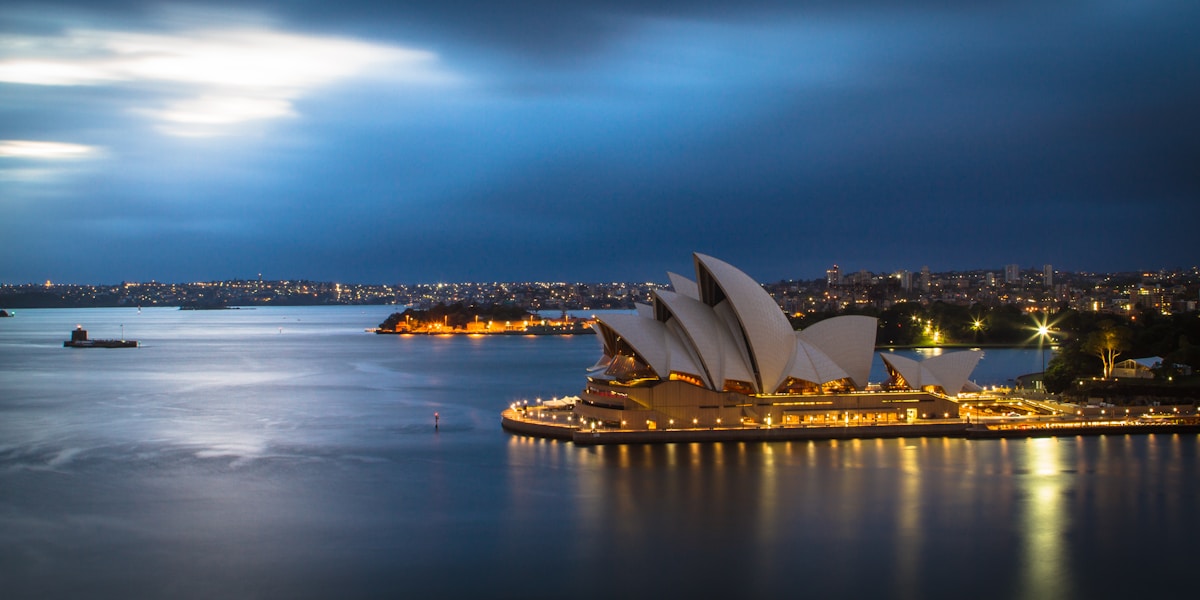
Oceania's landmarks range from ancient natural formations to cultural monuments. Uluru (Ayers Rock) in central Australia is a sacred Aboriginal site — a massive sandstone monolith that appears to change color throughout the day. The Great Barrier Reef is Earth's largest living structure. New Zealand's Milford Sound, with its steep cliffs and cascading waterfalls, is often called the eighth wonder of the world. Sydney's Opera House, with its sail-shaped roof, is one of the most iconic buildings of the 20th century. The moai statues of Easter Island (Rapa Nui), carved by Polynesian settlers, remain one of the Pacific's greatest mysteries. Bora Bora's turquoise lagoon, Fiji's coral reefs, and Hawaii's volcanic landscapes draw visitors from around the world. The Kokoda Track in Papua New Guinea commemorates a pivotal World War II campaign through dense jungle and rugged mountains.
Fun Facts About Oceania
- Australia is both the world's smallest continent and its largest island
- New Zealand was the last major landmass to be settled by humans, around 1250-1300 CE
- Papua New Guinea has over 800 languages — more than any other country on Earth
- The Great Barrier Reef is so large it can be seen from space
- Aboriginal Australians have the oldest continuing culture on Earth, dating back at least 65,000 years
- Tuvalu earns significant revenue from licensing its .tv internet domain name