
The Okavango River is one of the world's most remarkable rivers because it never reaches the sea. Flowing approximately 1,600 kilometers from the Angolan highlands southeast into the Kalahari Desert of Botswana, the river spreads out into a vast inland delta covering up to 22,000 square kilometers — the world's largest inland delta — before its water evaporates and is absorbed by the desert sand.
Introduction
The Okavango Delta is one of Africa's most iconic wildlife destinations, a lush oasis in the middle of the Kalahari Desert that supports extraordinary concentrations of large mammals, birds, and aquatic life. Designated a UNESCO World Heritage Site in 2014, the delta is one of the planet's most pristine and ecologically important wetland systems.
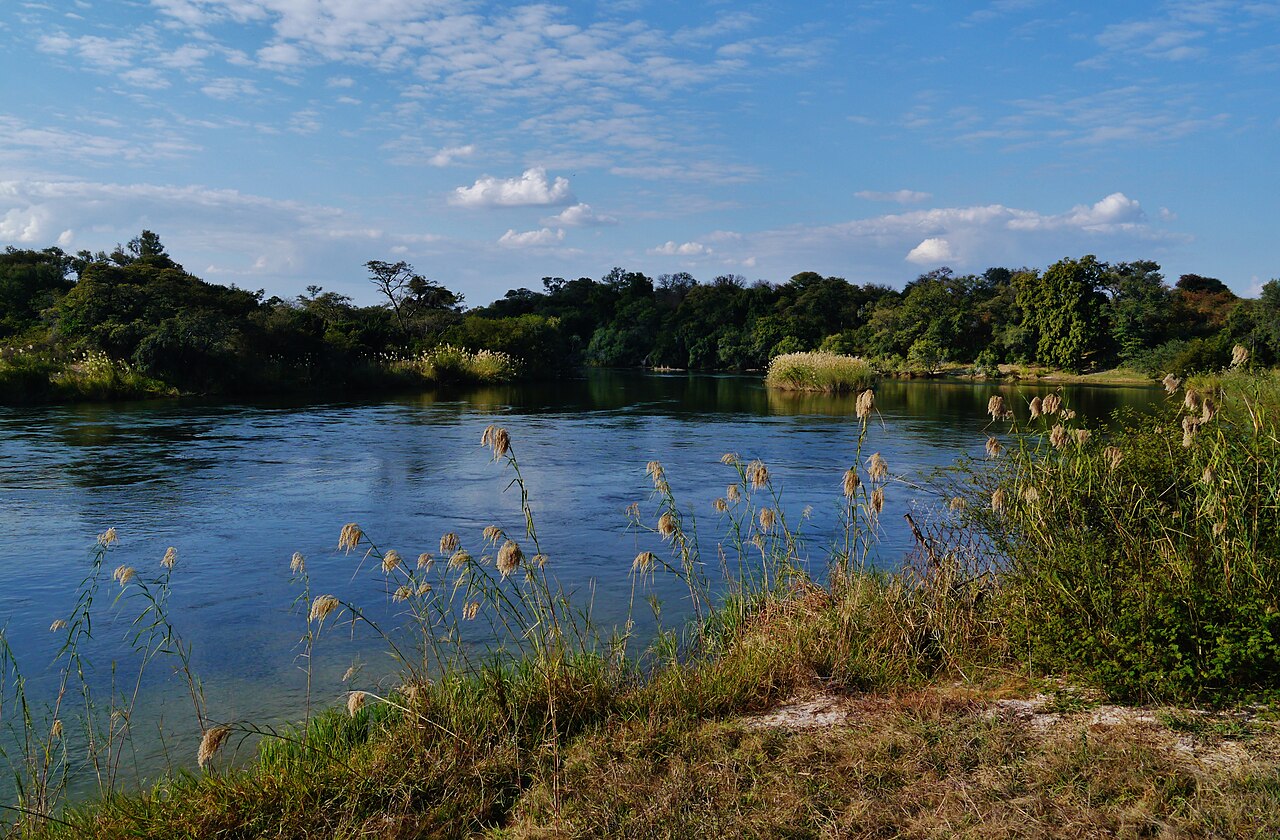
Source to Sea
- Length: ~1,600 km
- Source: Central Highlands of Angola (~1,780 m elevation)
- Terminus: Okavango Delta, Kalahari Desert, Botswana (no outlet to sea)
- Delta Area: Up to 22,000 km² during peak flood
The Okavango rises in the central highlands of Angola, where it is known as the Cubango River. It flows southeast, forming part of the Angola-Namibia border in the Caprivi Strip region. Entering Botswana near Mohembo, the river begins to spread across the Kalahari's flat terrain, forming an alluvial fan of channels, lagoons, islands, and floodplains.
The delta's annual flood cycle is one of the natural world's great events. Rainwater that fell in Angola's highlands between October and March takes roughly four months to travel downstream, reaching the delta between June and August — the middle of the dry season. This perfectly timed flood transforms the arid Kalahari into a lush wetland precisely when wildlife needs water most.
Geography & Course
- Basin Area: ~530,000 km²
- Countries: Angola, Namibia, Botswana
- Delta Type: Alluvial fan (inland delta) — no ocean outlet
- Panhandle: 80 km narrow channel before spreading into the delta
Before spreading into the delta proper, the Okavango flows through a narrow 80-kilometer stretch called the Panhandle, confined between parallel faults in the underlying rock. The Panhandle contains permanent deep water that supports different species than the seasonal floodplains of the delta, including populations of Nile crocodiles and hippos.
The delta's shape and extent are controlled by tectonic faults in the Kalahari bedrock. The Thamalakane and Kunyere faults at the delta's southern edge act as barriers, preventing the water from flowing further. Only about 3 percent of the Okavango's water eventually drains out of the delta southward via the Thamalakane and Boteti rivers; the rest evaporates or is transpired by vegetation.
Climate & Hydrology
- Average Inflow: ~10 billion m³/year
- Water Loss: ~97% lost to evaporation and transpiration in the delta
- Flood Peak: June-August (dry season — water arriving from Angolan rains 4 months earlier)
- Rainfall on Delta: ~450 mm/year locally
The Okavango Delta's hydrology is counterintuitive: the flood arrives during the driest months. Angola's rainy season peaks in January-February, and the floodwater takes roughly four months to traverse the flat terrain to the delta's distal reaches. This dry-season flood creates an oasis that attracts wildlife from vast distances across the Kalahari.
The delta's water is remarkably pure and fresh — unusual for a terminal system with no outflow. The explanation is that dissolved salts are absorbed by island vegetation and deposited in the soil when leaves fall and decompose. This biological "pumping" of salts prevents the delta from becoming saline, maintaining freshwater conditions despite 97 percent evaporation losses.
Ecology & Wildlife
- Large Mammals: 130,000+ elephants, plus buffalo, lions, leopards, hippos, wild dogs
- Birds: Over 400 species recorded
- Fish: ~70 species in the delta
- UNESCO Status: World Heritage Site since 2014
The Okavango Delta supports one of Africa's greatest concentrations of large mammals. Northern Botswana's elephant population of roughly 130,000 is the largest in the world. The delta and surrounding areas support significant populations of buffalo, giraffe, zebra, wildebeest, hippo, and lions. African wild dogs, one of the continent's most endangered predators, thrive in the delta's mosaic of habitats.
The delta's birdlife is spectacular, with over 400 species recorded. The permanent waters of the Panhandle host African fish eagles, pel's fishing owls (one of Africa's rarest birds), and huge colonies of herons and storks. When the seasonal flood arrives, the expanded wetlands attract vast numbers of waterbirds including wattled cranes, African jacanas, and several species of kingfisher.
Human Geography & History
- Population: ~100,000 people live in and around the delta
- Tourism: Botswana's "high-value, low-impact" tourism model
- Indigenous People: BaSarwa (San/Bushmen) have inhabited the region for 100,000+ years
- Threats: Upstream development in Angola and Namibia
Botswana's approach to Okavango tourism is unique in Africa: high-cost, low-volume. Lodges are small and exclusive, with per-night rates often exceeding $1,000. This model generates maximum revenue with minimum environmental impact, making the Okavango one of Africa's most expensive safari destinations but also one of its best-preserved.
The greatest threat to the Okavango Delta comes from upstream development. Angola has proposed irrigation schemes and hydroelectric dams on the Cubango/Okavango, and Namibia has sought to extract water from the river for agriculture and urban supply. Any significant reduction in the river's flow would have devastating consequences for the delta ecosystem and Botswana's tourism economy.
Key Facts
- The Okavango flows ~1,600 km from Angola into the Kalahari, never reaching the sea.
- The delta covers up to 22,000 km² and is the world's largest inland delta (UNESCO World Heritage Site).
- ~97% of the Okavango's water is lost to evaporation; only ~3% drains out.
- The annual flood arrives in June-August (dry season), 4 months after Angolan rains.
- Northern Botswana's ~130,000 elephants are the world's largest population.
Fun Facts
- The Okavango Delta stays fresh despite 97% evaporation because island vegetation absorbs salts from the water.
- The delta's flood cycle is perfectly timed to arrive during the driest months, sustaining wildlife through the winter.
- Botswana's "high-value, low-impact" tourism model makes the Okavango one of Africa's most expensive but best-preserved destinations.
- The delta's islands are formed by termite mounds that accumulate sediment and grow vegetation over thousands of years.
Final Thoughts
The Okavango River defies the assumption that rivers must reach the sea. Instead, it pours itself into the Kalahari Desert, creating one of Earth's most extraordinary ecosystems — a pulsing oasis that sustains some of Africa's greatest wildlife concentrations. The Okavango Delta is a testament to how water, even when it appears to be "lost" to evaporation, can create life on an astonishing scale. Protecting the river from upstream development is one of southern Africa's most important conservation challenges.
Test Your Knowledge!
Think you know the world's rivers? Test your knowledge!
Play Geography Games →