
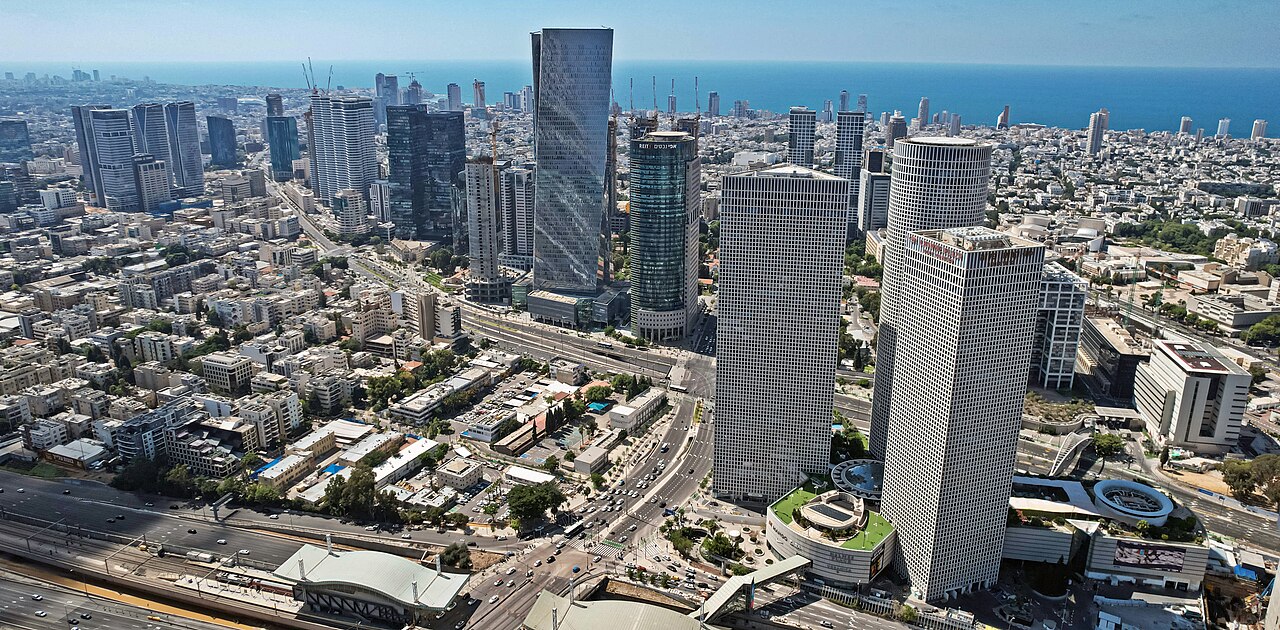
Israel has a population of approximately 10 million people as of 2025, making it the 96th most populous country in the world. Despite occupying a small sliver of land on the eastern shore of the Mediterranean, Israel packs that population into roughly 22,000 square kilometres, giving it one of the highest population densities of any developed nation and a demographic profile unlike anywhere else on Earth.
How Many People Live in Israel?
Israel's resident population sits at about 10,000,000 in 2025. That figure has roughly doubled since the early 1990s and represents a twelvefold increase since the state was founded in 1948, when only around 806,000 people lived within its borders. In global terms Israel ranks 96th by population — comparable to countries such as Sweden, Jordan, or Honduras — but its land area is far smaller than any of those, concentrating its people in a strip of territory only about 470 kilometres long.
The country's population density averages roughly 481 people per square kilometre, though the distribution is uneven. The coastal plain around Tel Aviv is intensely urbanised, while the southern Negev Desert, which makes up more than half of Israel's land area, holds only a small fraction of its residents.
Why Israel's Population Keeps Growing
Israel's population grows at an exceptional annual rate of about 1.51% — extraordinary for a wealthy, highly educated society where birth rates normally fall well below replacement. Israel is, in fact, the only developed country with a fertility rate consistently above replacement level, averaging close to 3.0 children per woman.
This growth is driven by a combination of factors rather than a single one:
- Ultra-Orthodox (Haredi) families average around 6.6 children, one of the highest rates in the world.
- Secular and traditional Jewish families still average about 2.2 children — higher than almost any country in Europe.
- The Arab population has a fertility rate of roughly 3.0, contributing significantly to natural increase.
- Immigration (aliyah) — the return of Jews from around the world — has added millions of people since 1948, including a major wave from the former Soviet Union in the 1990s.
Together these forces mean Israel adds well over 150,000 people each year, and projections suggest the population could double to around 20 million by the 2060s.
The Largest Cities
Israel's three largest cities — Jerusalem, Tel Aviv, and Haifa — anchor its urban life, economy, and culture.
Jerusalem is the capital and most populous city, with roughly 980,000 residents. Sacred to Judaism, Christianity, and Islam, it is one of the oldest continuously inhabited cities on the planet and a focal point of religious and political significance.
Tel Aviv has around 460,000 residents within the city proper, but its metropolitan area (Gush Dan) holds close to 4 million — making it the true population heart of the country. It is Israel's economic and technological engine, often nicknamed "Silicon Wadi" for its dense concentration of startups.
Haifa, with about 285,000 residents, is the largest city in northern Israel and home to the country's main industrial port, as well as a notable mix of Jewish and Arab communities living side by side.
Who Makes Up Israel's Population?
Israel's society is strikingly diverse for its size. The population is roughly 74% Jewish and 21% Arab, with the remainder made up of smaller groups. The Arab population is predominantly Muslim, with significant Christian and Druze minorities. Within the Jewish majority there are deep distinctions between secular, traditional, religious, and ultra-Orthodox communities, each with very different lifestyles and birth rates.
Hebrew and Arabic are the languages most widely spoken, and Judaism is the predominant religion. About a quarter of Jewish Israelis were born abroad, a legacy of decades of immigration. Perhaps most remarkably for a developed country, Israel's median age is only about 30 years — far younger than the European average — a direct consequence of its high birth rate. You can explore more about the country's geography and society in our israel country guide.
Frequently Asked Questions
What is the population of Israel in 2025?
Israel's population is approximately 10 million people in 2025, ranking it the 96th most populous country in the world.
What is the largest city in Israel?
Jerusalem is the largest city and the capital, with around 980,000 residents. However, the Tel Aviv metropolitan area is the most populous urban region, home to nearly 4 million people.
Why does Israel have such a high birth rate?
Israel is the only developed country with a fertility rate above replacement, averaging close to 3.0 children per woman. High birth rates among ultra-Orthodox families combine with relatively high rates among secular Jewish and Arab families to drive steady growth.
How fast is Israel's population growing?
Israel's population grows at about 1.51% per year, adding more than 150,000 people annually. At this pace, the population could reach roughly 20 million by the 2060s.