
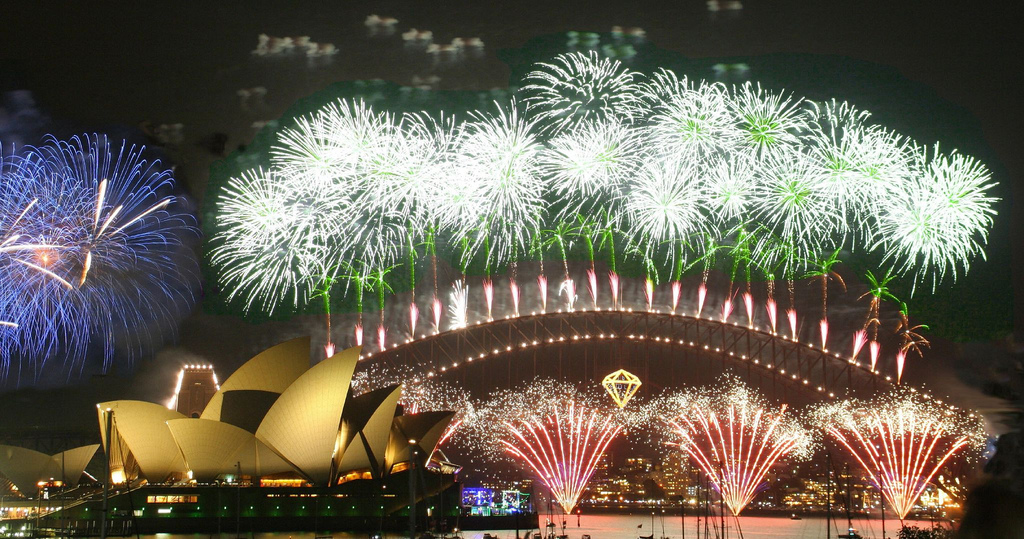
Australia has no single national list of public holidays. Each of the six states and two territories legislates its own, and only about seven days are observed nationwide — New Year's Day, Australia Day, Good Friday, Easter Monday, Anzac Day, Christmas Day and Boxing Day. Everything else varies: Queen's or King's Birthday falls on different dates in different states, Victoria closes for a horse race and a football final, and Western Australia has a public holiday nobody else has.

The Days Observed Nationwide
| Date | Holiday | Description |
|---|---|---|
| January 1 | New Year's Day | Beach parties and fireworks, particularly at Sydney Harbour |
| January 26 | Australia Day | National day; BBQs, fireworks, and citizenship ceremonies; controversy over date |
| April 3 | Good Friday | Christian holiday; hot cross buns; most businesses closed |
| April 4 | Saturday before Easter Sunday | A public holiday in all states except TAS and WA |
| April 6 | Easter Monday | Family gatherings; chocolate bilby (instead of bunny) trend growing |
| April 25 | ANZAC Day | Commemorates Australian and New Zealand military; dawn services and marches |
| June 8 | Queen's Birthday | Observed on different dates by state; public holiday for most Australians |
| December 25 | Christmas Day | Summer Christmas; beach barbecues, seafood, and traditional roasts |
| December 28 | Boxing Day (substitute) | Cricket, shopping sales; December 26 falls on Saturday |
Eight Calendars, Not One
Public holidays in Australia are a state and territory responsibility. There is no federal public holidays act, and the Commonwealth's role is limited to the Fair Work Act, which lists a set of days as public holidays for national system employees and then adds any day declared as such by a state or territory.
That means the effective list is whatever each jurisdiction declares. New South Wales, Victoria, Queensland, South Australia, Western Australia, Tasmania, the Northern Territory and the Australian Capital Territory each publish their own annually.
Totals range from around ten to thirteen days depending on the state and the year. Victoria is consistently at the top.
The King's Birthday Is Not on His Birthday
The monarch's official birthday is a public holiday in every state, and it falls on four different dates.
Most of the country observes it on the second Monday in June. Western Australia holds it in late September or early October, on a date set annually by the governor. Queensland moved it to the first Monday in October in 2016.
None of these is Charles III's actual birthday, which is 14 November. The tradition of an official birthday separate from the real one dates to Edward VII, whose November birthday was thought unsuitable for outdoor ceremonies, and the Australian dates have drifted from the British one over a century.
Melbourne Stops for a Horse Race
The Melbourne Cup, run on the first Tuesday in November, is a public holiday in metropolitan Melbourne and surrounding areas — not the whole of Victoria, and not anywhere else in Australia.
The race itself is a 3,200-metre handicap that takes a little over three minutes, and the phrase used to describe it is the race that stops a nation. Workplaces across the country stop to watch even where it is not a holiday.
Victoria also has a public holiday for the Friday before the AFL Grand Final, introduced in 2015, which exists to allow attendance at the Grand Final parade. No other Australian jurisdiction has a public holiday for a sporting event.
Anzac Day
25 April is the most solemn date in the Australian calendar, marking the landing at Gallipoli in 1915. It is a public holiday in every state and territory and has protections no other holiday has.
State legislation restricts trading on the morning of Anzac Day, and dawn services are held at war memorials across the country from around 5.30am. The Australian War Memorial in Canberra and the Shrine of Remembrance in Melbourne draw the largest crowds.
Two-up, a coin-tossing gambling game otherwise illegal in Australia, is permitted in pubs on Anzac Day by specific exemption in most states — a legacy of the game's association with Australian soldiers in the First World War.
Easter Runs Four Days
Australia is one of relatively few countries to make both Good Friday and Easter Monday public holidays nationally, which produces a guaranteed four-day weekend every year. South Australia and Victoria add Easter Saturday, and Tasmania adds Easter Tuesday.
Trading restrictions apply on Good Friday in several states, with supermarkets and most retail closed. The Sydney Royal Easter Show, which runs for about a fortnight around the holiday, is the largest annual event in Australia by attendance.
Easter falls in autumn in Australia rather than spring, which detaches it entirely from the northern hemisphere symbolism of renewal. The same inversion applies to Christmas, celebrated in midsummer, and it is why an Australian Christmas frequently involves a beach, cold seafood and cricket rather than snow.
Australia Day and the Argument Over It
26 January marks the raising of the British flag at Sydney Cove in 1788. It has been a national public holiday under that name only since 1994, when the states agreed to observe it on the actual date rather than on the nearest Monday.
It is also called Invasion Day or Survival Day by many Aboriginal and Torres Strait Islander people and their supporters, and large protest marches take place in the capital cities. A Day of Mourning was first held on 26 January 1938, the sesquicentenary.
Several councils have moved or ceased citizenship ceremonies on the date, and polling has shown a slow shift in public opinion about changing it, particularly among younger Australians. No government has proposed doing so, and the Commonwealth reinstated a requirement for councils to hold ceremonies on the date in 2023.
The Holidays Only One State Gets
Western Australia observes Western Australia Day on the first Monday in June, marking the founding of the Swan River Colony in 1829. It is the state's own foundation day and is observed nowhere else.
South Australia has Adelaide Cup Day in March; Tasmania has Eight Hours Day in March and a long list of regional show days, so that Hobart, Launceston, Burnie and Devonport each close on a different day; the Northern Territory has Picnic Day on the first Monday in August, whose origin is a railway workers' picnic.
The ACT has Canberra Day in March and Reconciliation Day, introduced in 2018 and the only public holiday of its kind in Australia. Queensland has the Royal Queensland Show holiday, known as Ekka, in Brisbane only.
Labour Day Is on Five Different Dates
Every state observes Labour Day and almost none agrees on when. Western Australia has it on the first Monday in March; Victoria and Tasmania on the second Monday in March; Queensland and the Northern Territory on the first Monday in May; New South Wales, South Australia and the ACT on the first Monday in October.
Tasmania calls it Eight Hours Day, which is closer to the origin. The eight-hour day was won by Melbourne stonemasons in April 1856, one of the earliest such victories anywhere in the world, and the Australian labour movement marks it accordingly.
The dates diverged because each colony legislated separately in the nineteenth century and no one has ever seen a reason to harmonise them.
Boxing Day and Proclamation Day
26 December is Boxing Day everywhere except South Australia, where it is Proclamation Day, marking the reading of the proclamation establishing government in the colony on 28 December 1836. South Australia moved the observance to the 26th in 1993.
Boxing Day carries two of Australia's largest sporting fixtures: the start of the Boxing Day Test at the Melbourne Cricket Ground, played since 1950 and drawing crowds above 80,000 on the first day, and the start of the Sydney to Hobart yacht race.
It is also the largest retail day of the Australian year, with Boxing Day sales beginning at dawn. Trading restrictions on the day were progressively removed across the states through the 2000s and 2010s.
Substitution Rules
Most Australian jurisdictions substitute a weekday when a holiday falls at a weekend, and the rules differ. Christmas Day on a Saturday typically produces an additional holiday on the following Monday or Tuesday, so a Christmas at the weekend can yield four consecutive days off.
Anzac Day is the exception in several states, where it is observed on the actual date regardless of the day of the week and no substitute is granted, on the grounds that the commemoration is tied to the date.
Working on a public holiday attracts penalty rates under most modern awards, typically 225% to 250% of the base rate, and employees may refuse an unreasonable request to work.
What Australian Workers Get
The National Employment Standards provide four weeks of paid annual leave for full-time employees, plus an extra week for certain shift workers, on top of public holidays. Long service leave — an additional block of paid leave after seven to ten years with one employer — is an Australian and New Zealand peculiarity with no real equivalent elsewhere.
Ten to thirteen public holidays plus twenty days of annual leave puts Australia around the middle of the OECD range, above the United States and Japan and below most of continental Europe.
The Christmas and New Year period functions as a de facto national shutdown. Much of the country stops between Christmas and Australia Day, school summer holidays run for six weeks, and it is genuinely difficult to get business done in Australia in January. For related context, see religion in Australia and the count of countries in Oceania.