
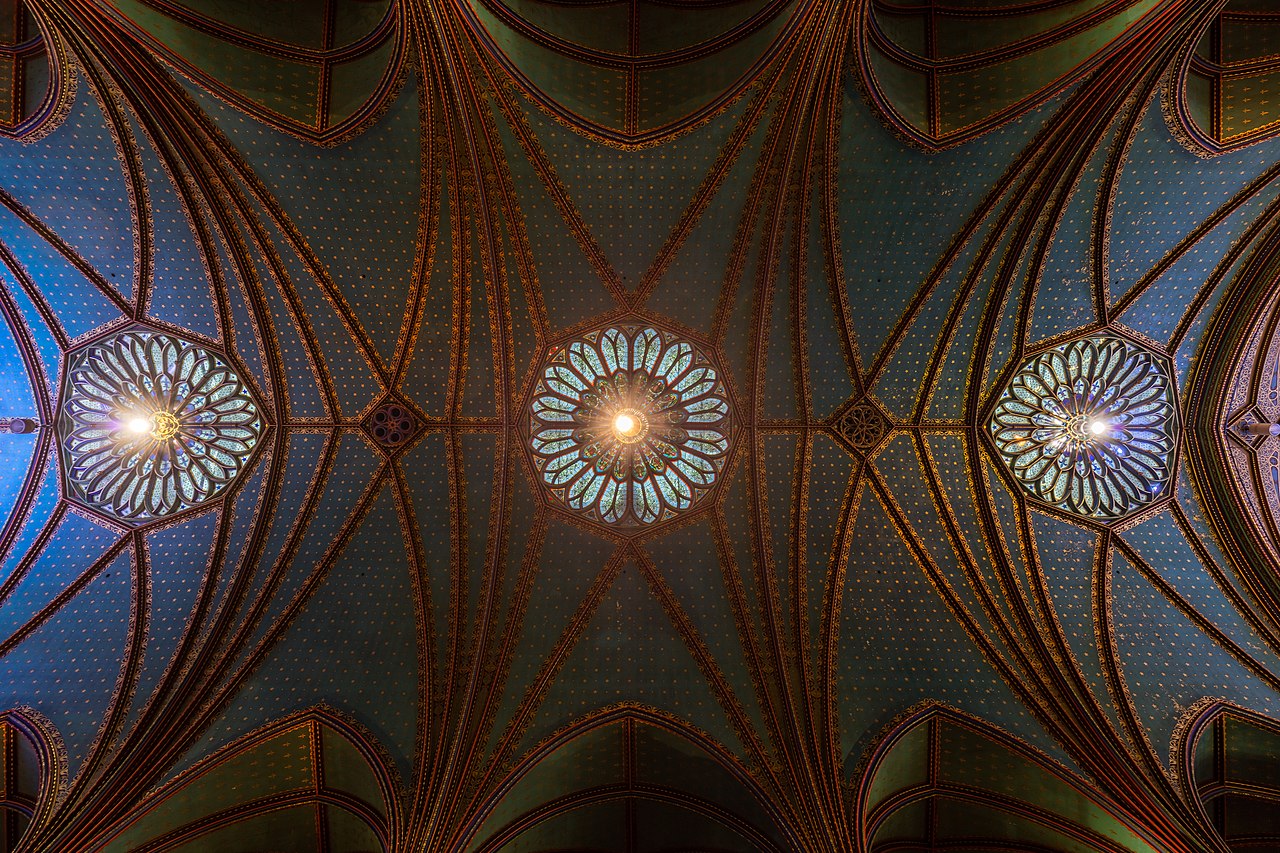
Canada is now more unaffiliated than Catholic: 34.6% of Canadians reported no religion at the 2021 census, against 29.9% Catholic and 11.4% other Christian denominations. Christianity as a whole fell to 53.3%, from 77% in 2001. Islam at 4.9%, Hinduism at 2.3%, Sikhism at 2.1% and Buddhism at 1% make up most of the rest — and Canada has a higher share of Sikhs than any country outside India.
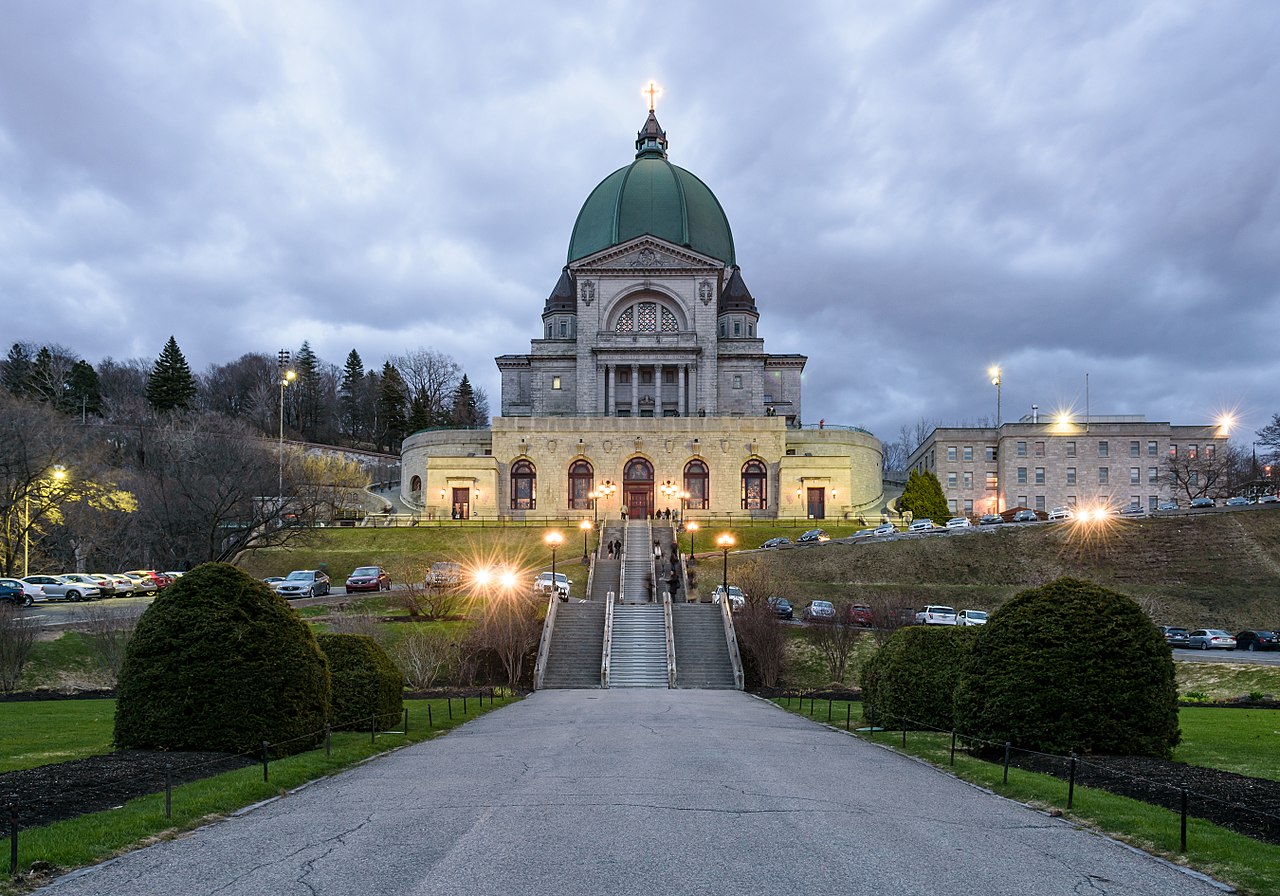
Quebec Fell Furthest and Fastest
No population in the Western world went from high religious practice to low practice as abruptly as Quebec. Into the 1950s the Catholic Church ran the province's schools, hospitals and social services; weekly mass attendance was estimated above 85%, among the highest anywhere.
The Révolution tranquille that began with the 1960 election of Jean Lesage transferred all of it to the state within a decade. A Ministry of Education was created in 1964, hospitals were secularised, and the birth rate — long the highest in North America — fell to among the lowest.
Attendance followed. Quebec today reports weekly attendance in the low single digits, while roughly half the population still identifies as Catholic. The churches emptied but were not disowned, which is why the province is simultaneously the most Catholic-identifying and least practising in Canada, and why hundreds of parish churches have been sold, converted into condominiums, libraries and climbing gyms, or demolished.
Bill 21 and the Quebec Exception
Quebec's secularism is assertive in a way the rest of Canada's is not, and it is closer to French laïcité than to the Canadian norm. The Act Respecting the Laicity of the State, passed in June 2019 as Bill 21, prohibits public employees in positions of authority — including teachers, police officers, judges and prosecutors — from wearing religious symbols at work.
Because it applies to symbols rather than to a religion, it catches hijabs, turbans, kippahs and visible crosses alike, though its practical effect has fallen most heavily on Muslim women seeking teaching posts. The National Assembly invoked the notwithstanding clause, section 33 of the Charter, to shield it from Charter challenge in advance.
The federal government and most other provinces oppose it, and litigation continues. It is the sharpest illustration of the fact that Canada does not have one settlement on religion but two, divided at the Ottawa River.
Residential Schools and the Reckoning
From the 1870s to 1996, roughly 150,000 First Nations, Inuit and Métis children passed through a system of residential schools funded by the federal government and largely operated by churches — about 60% Catholic, the rest Anglican, Presbyterian and United Church.
The Truth and Reconciliation Commission, which reported in 2015, described the system as cultural genocide and documented at least 3,200 deaths, a count it said was certainly incomplete. Ground-penetrating radar surveys beginning at Kamloops in May 2021 identified probable unmarked burials at several sites, prompting national mourning, the lowering of flags, and a wave of church fires and vandalism.
The churches have responded unevenly. The United, Anglican and Presbyterian churches apologised in the 1980s and 1990s; the Canadian Catholic bishops apologised in September 2021, and Pope Francis apologised in Canada in July 2022, repudiating the Doctrine of Discovery in a Vatican statement the following March.
The consequence for religious demography is direct. Trust in the churches among Indigenous communities and among Canadians generally has fallen, and 30 September is now a federal statutory holiday, the National Day for Truth and Reconciliation.
Indigenous Spirituality, Counted at Last
The 2021 census counted just over 80,000 people reporting Indigenous spirituality, a number that has risen sharply and still undercounts practice, since many people follow ceremonial traditions alongside Christianity or alongside no affiliation at all.
What the traditions have in common is less doctrine than relationship to specific land, expressed through ceremony: the sweat lodge, the sun dance of the Plains nations, the potlatch of the Northwest Coast, the Anishinaabe Midewiwin. Several were criminalised — the potlatch ban ran from 1885 to 1951, and the sun dance was similarly suppressed.
Revival has been steady since. Elders are now provided in prisons and hospitals on the same basis as chaplains, ceremony opens public events across much of the country, and land-claim and consultation law increasingly treats sacred sites as protected interests.
Sikhism's Outsized Place
Canada's 800,000-plus Sikhs make up about 2.1% of the population, a higher proportion than any country except India, and their political presence is larger still — Sikhs have held the defence portfolio and led a federal party, and Punjabi is among the most spoken languages in the House of Commons.
The community dates to 1897, when Sikh soldiers passed through British Columbia on the way home from Queen Victoria's Diamond Jubilee, and settlement followed in the lumber mills of the Fraser Valley. It was then deliberately blocked: the continuous journey regulation of 1908 required migrants to travel directly from their country of origin, which no shipping line did from India.
The Komagata Maru tested it in 1914, arriving in Vancouver with 376 passengers, mostly Sikhs, and being turned back after two months in the harbour; twenty of those aboard were killed on return to India. Canada apologised formally in the House of Commons in 2016.
Gurdwaras in Surrey and Brampton now serve some of the largest langar kitchens outside India, and the community's visibility has also imported the politics of Punjab, including the diplomatic rupture with India that followed the killing of Hardeep Singh Nijjar in Surrey in June 2023.
The Charter and the Reasonable Accommodation Rule
Section 2(a) of the Charter of Rights and Freedoms guarantees freedom of conscience and religion, and Canadian courts have read it broadly, building a doctrine of reasonable accommodation that generally requires institutions to adjust rather than to insist on uniformity.
The cases are well known. Multani in 2006 allowed a Sikh student to wear a kirpan to school under conditions. Amselem in 2004 allowed Jewish residents to build succahs on condominium balconies. The Supreme Court refused accreditation to Trinity Western University's proposed law school in 2018 over its covenant on sexuality.
The Charter's preamble, oddly for a secular state, opens by recognising the supremacy of God, a phrase added late in the 1981 negotiations and treated by courts as having no operative legal effect.
Ontario's Catholic Schools, Which Cannot Be Abolished
Section 93 of the Constitution Act of 1867 protected the denominational school rights that existed at Confederation, and Ontario still fully funds a parallel Catholic public school system educating around 550,000 students.
No other faith has the same right. The UN Human Rights Committee found in 1999 that this discriminated against Ontario's other religious communities; Ontario declined to change it, and a 2007 provincial election in which extending funding was the main issue was lost decisively.
Other provinces have unwound their systems. Quebec replaced denominational school boards with linguistic ones in 1998, and Newfoundland abolished its church-run system by referendum in 1997 — both requiring constitutional amendments. Ontario's remains, an artefact of 1867 that shapes how a third of a million Canadian families choose a school.
Islam, and the Second-Largest Religion
Muslims are now Canada's largest non-Christian religious group at 4.9%, roughly 1.8 million people, up from under 1% in 1991. The community is unusually diverse by origin — South Asian, Arab, Iranian, Somali, Bosnian and a growing Canadian-born majority in some cities.
Canada's first mosque, the Al Rashid in Edmonton, opened in 1938, built largely through fundraising by Lebanese Muslim women in the city and later moved to Fort Edmonton Park to save it from demolition.
The Quebec City mosque shooting of January 2017, in which six worshippers were killed after evening prayers, and the killing of four members of a family in London, Ontario in June 2021, prompted the appointment of a federal special representative on combatting Islamophobia in 2023.
The Churches That Are Being Sold
The National Trust for Canada has estimated that a substantial share of the country's roughly 27,000 faith buildings could close within a generation, with Quebec's parish churches the sharpest case — several hundred have already been sold, repurposed or demolished since 2000.
The problem is arithmetic rather than hostility. Congregations that once numbered in the hundreds now number in the dozens, while the buildings are large, old, and frequently heritage-listed, which restricts what an owner may do with them and depresses their market value.
Conversions have become a minor Canadian architectural genre: Montreal's Église Saint-Jean-de-la-Croix into condominiums, Quebec City's Saint-Charles-de-Limoilou into a public library, and churches across the country into theatres, climbing gyms and community centres. What disappears with them is often the only large public gathering space a neighbourhood has.
Canada's religious profile only makes sense read region by region. British Columbia is the most unaffiliated province at over half. Quebec is Catholic in identity and empty in practice. The Prairies retain higher church attendance. Toronto, Vancouver and Calgary are among the most religiously diverse cities anywhere, with Brampton majority-Sikh and Hindu in parts and Mississauga heavily Muslim.
The national figures average all of that into a picture that describes nowhere in particular. What holds across the country is the direction of travel: identification falling, diversity rising through immigration, and the institutional churches shrinking faster than the buildings they leave behind. Among the countries of North America, Canada sits between a far more religious United States and a Mexico still overwhelmingly Catholic.