
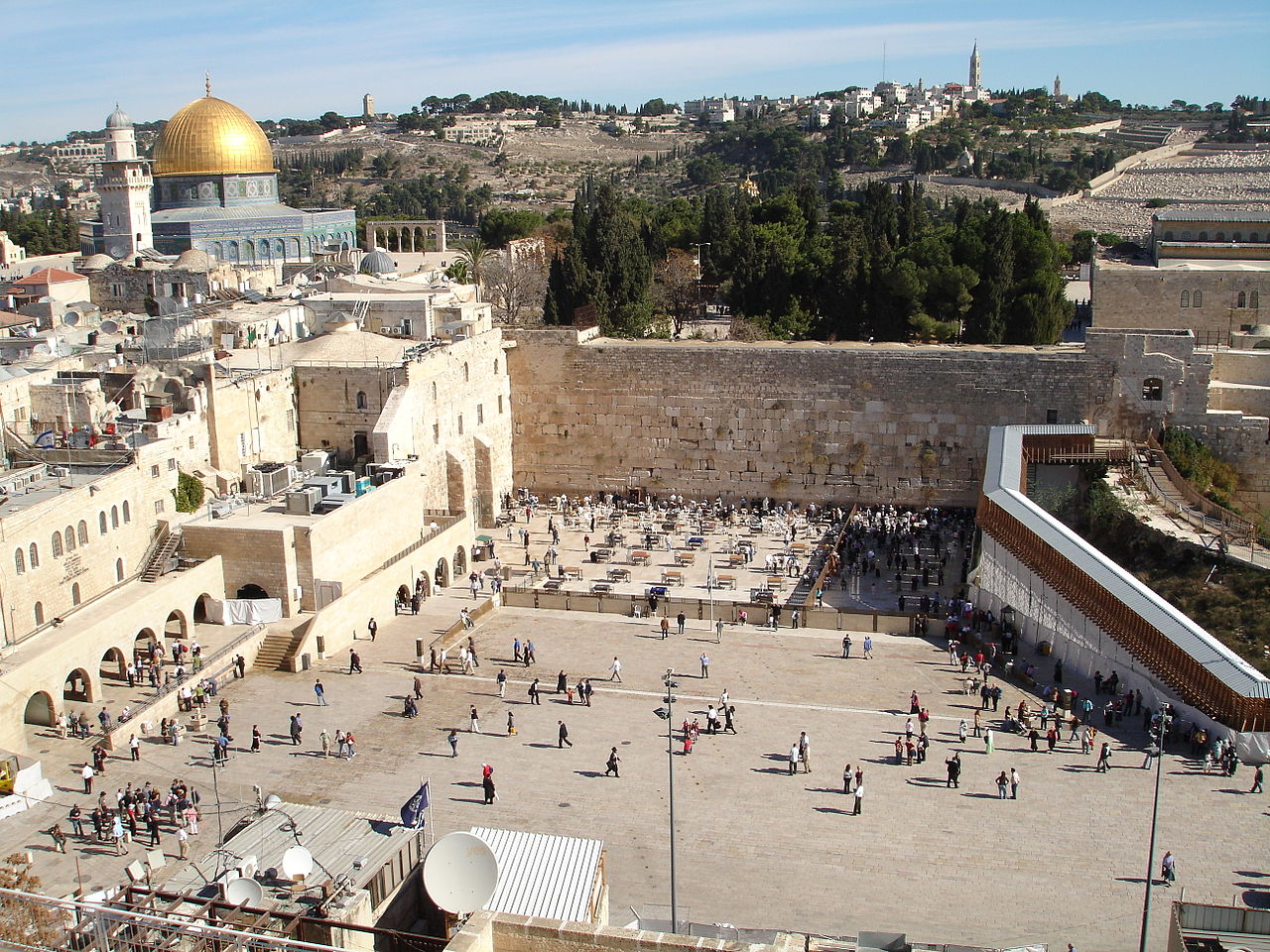
The main religion in Israel is Judaism (73.5%). Other significant religions include Islam (18%), Christianity (2%), and Druze (1.6%). Israel has a population of 9.7 million, of which approximately 6.8 million are Jewish. Israel contains Jerusalem, a city holy to Judaism, Christianity, and Islam.
Major Religions & Demographics
| Religion | Percentage |
|---|---|
| Judaism | 73.5% |
| Islam | 18% |
| Christianity | 2% |
| Druze | 1.6% |
| Other/none | 4.9% |
Israel is the world's only Jewish-majority state, with approximately 73.5% of its population identifying as Jewish. Among Israeli Jews, there is a spectrum from ultra-Orthodox (Haredi, ~13%) through Modern Orthodox (~12%), traditional/conservative (~29%), to secular (~43%). The secular majority maintains cultural Jewish identity without strict religious practice.
Muslims make up about 18% (predominantly Sunni), mostly among Israel's Arab population. Christians account for about 2%, including Arab Christians and smaller Armenian, Maronite, and other communities. The Druze, a distinct monotheistic group, represent about 1.6% and serve in the Israeli military. About 4.3% are classified as other or non-religious.
History of Religion
Israel/Palestine is the cradle of Judaism and Christianity and holds profound significance for Islam. Judaism emerged in the land of Israel around 2000 BCE, centered on the Temple in Jerusalem. After the Roman destruction of the Second Temple in 70 CE, the Jewish diaspora spread across the world for nearly two millennia.
Christianity originated in Roman Judea with the ministry of Jesus in the 1st century CE. Jerusalem is where Muslims believe Muhammad ascended to heaven during the Night Journey (Isra and Mi'raj). The modern State of Israel was established in 1948 as a Jewish homeland. The religious significance of the land has been central to the Israeli-Palestinian conflict.
Religious Sites & Landmarks
Jerusalem's Old City contains the holiest sites of three religions within its walls. The Western Wall is Judaism's holiest prayer site, the last remnant of the Second Temple. The Church of the Holy Sepulchre is believed to be the site of Jesus's crucifixion and resurrection. The Al-Aqsa Mosque and Dome of the Rock on the Temple Mount/Haram al-Sharif are Islam's third-holiest site.
Other major sites include the Church of the Nativity in Bethlehem, the Sea of Galilee where Jesus is said to have walked on water, Masada fortress, and the ancient synagogues of Safed. The Baha'i Gardens in Haifa are the world center of the Baha'i faith. Hebron's Cave of the Patriarchs is sacred to both Judaism and Islam.
Religion in Daily Life
Religion profoundly shapes Israeli daily life and politics. Shabbat (Saturday) is the national day of rest — public transport stops in most cities, businesses close, and Jewish religious law governs the day. Jewish dietary laws (kashrut) influence the food industry, with kosher certification required in many contexts.
Israel has no civil marriage — marriages are conducted through religious authorities (Jewish, Muslim, Christian, Druze). Ultra-Orthodox communities in Jerusalem and Bnei Brak live by strict religious codes. The Chief Rabbinate controls matters of personal status for Jews. The tension between religious and secular Israelis is a defining feature of Israeli society and politics.
Test Your Geography Knowledge!
Think you know your world geography? Try our interactive quizzes!
Play Geography Games →