

Swahili is an official language in five countries — Tanzania, Kenya, Uganda, Rwanda and the Democratic Republic of the Congo — and is spoken by somewhere between 100 and 200 million people across East and Central Africa. It is the most widely spoken African language, an official language of the African Union, and unusual among the world's major languages in that the overwhelming majority of its speakers learned it second.
-
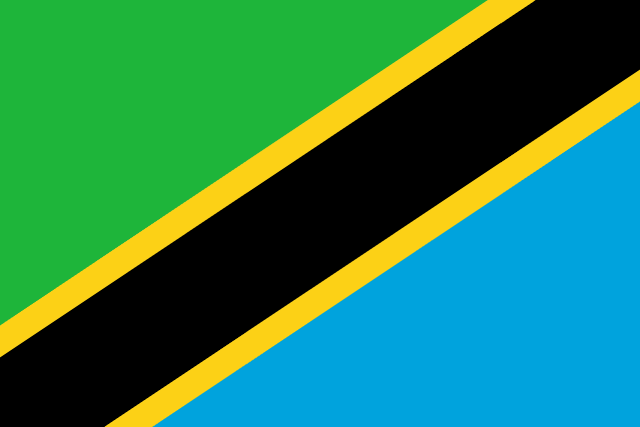 Tanzania
national language
Tanzania
national language
-
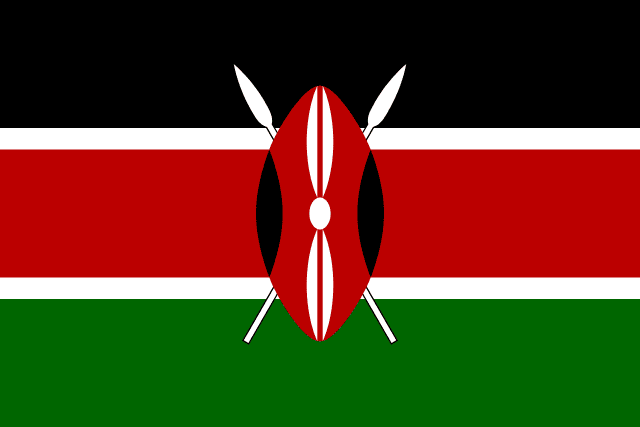 Kenya
co-official with English
Kenya
co-official with English
-
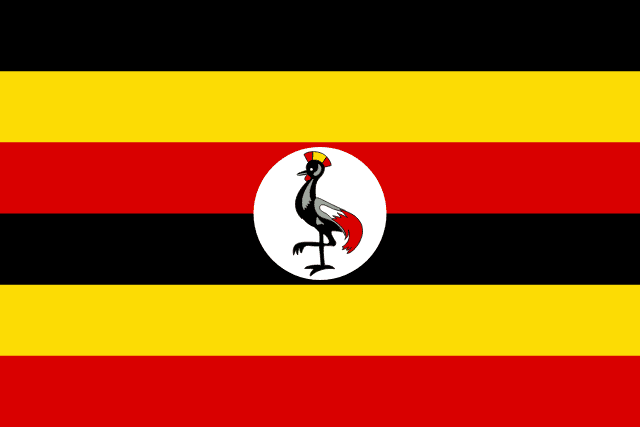 Uganda
second official language
Uganda
second official language
-
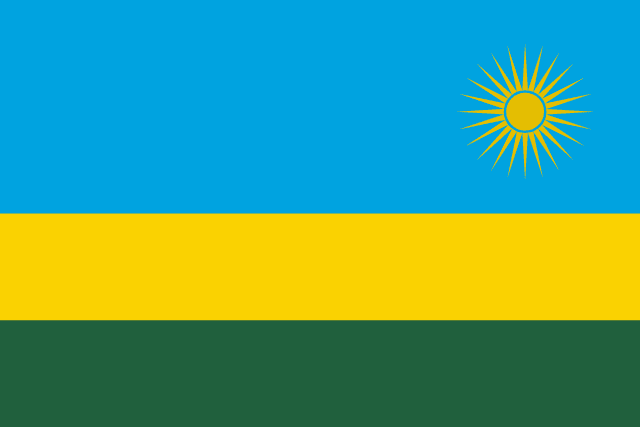 Rwanda
official since 2017
Rwanda
official since 2017
-
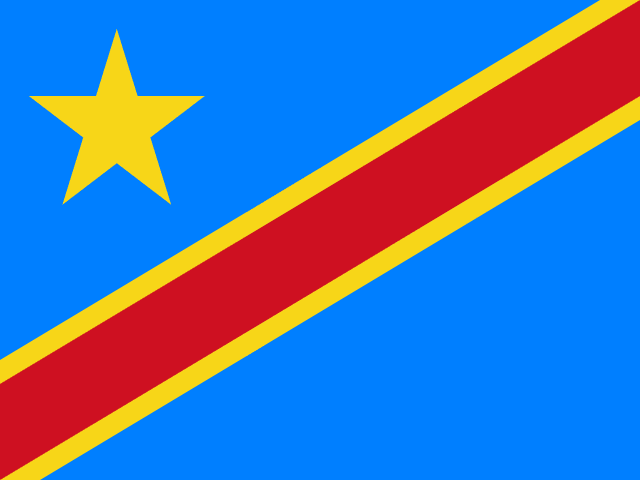 Democratic Republic of the Congo
one of four national languages
Democratic Republic of the Congo
one of four national languages
Most Swahili Speakers Are Not Native Speakers
Estimates of first-language Swahili speakers run to roughly 15 to 20 million, concentrated along the coast of Tanzania and Kenya and on Zanzibar, Pemba and the Comoros. Estimates of total speakers run five to ten times higher.
That ratio is close to unique. Most large languages have a native-speaker core with a smaller learner population; Swahili is the reverse. It functions as a lingua franca that people acquire in markets, schools and cities rather than at home, and it has done so for centuries.
The wide range in the published totals — you will see 100 million, 150 million and 200 million quoted — reflects genuine uncertainty about how much competence counts as speaking it. Nobody disputes that it is the most spoken language on the continent.
Born on the Coast, Not Inland
Swahili is a Bantu language, closely related to the languages of the East African interior, but it developed on the Indian Ocean coast among the communities the Arabs called the Sawāḥil, the people of the shores. Trade with Arabia, Persia, India and later Portugal ran along that coast for more than a thousand years.
The grammar is entirely Bantu — noun classes, verb prefixes, the whole structure — but the vocabulary absorbed heavily from Arabic, which supplies somewhere between 15 and 30% of the lexicon depending on the register. Persian, Hindi, Portuguese, German and English all contributed too, though none of the Arabic-speaking countries lies in East Africa -- the borrowing came by sea rather than by land.
The name of the language itself, Kiswahili, is the Bantu noun-class prefix ki- attached to the Arabic root. The oldest surviving Swahili documents date to the early eighteenth century and are written in Arabic script; the Latin alphabet was standardised only in the colonial period.
Tanzania Made It a National Project
Tanzania is the reason Swahili became what it is. Julius Nyerere, president from independence in 1961, made Kiswahili the national language and pushed it into every part of public life — primary education, government, the army, courts, and the ruling party's political vocabulary.
The strategic logic was that Tanzania had over 120 ethnic groups and no dominant one, and that a coastal trade language belonged to nobody in particular. Adopting it avoided elevating any single group and avoided leaving English in place as the language of power.
Nyerere translated Shakespeare into Swahili himself, producing versions of Julius Caesar and The Merchant of Venice, partly to demonstrate that the language could carry anything. Tanzania's success is why Swahili is a first language for so many urban Tanzanians today, and why Tanzanian Swahili is treated as the standard.
Kenya, Uganda, Rwanda and the DRC
Kenya made Swahili a co-official language with English in the 2010 constitution and had already made it the national language in 1974. Kenyan Swahili carries more English mixing than the Tanzanian standard, and Sheng — a Swahili-English urban slang from Nairobi — has become a language of its own for young Kenyans.
Uganda added Swahili as a second official language alongside English in 2005 and moved to make it a compulsory school subject in 2022. Adoption has been slower than in Kenya, partly because of the language's association with the army and the Amin period.
Rwanda made Swahili its fourth official language in 2017, alongside Kinyarwanda, English and French, explicitly as part of its East African Community integration. In the Democratic Republic of the Congo it is one of four national languages and dominates the eastern provinces around Goma, Bukavu and Lubumbashi, where a distinct variety known as Congo Swahili is spoken.
Zanzibar Sets the Standard
The variety chosen as the basis for standard Swahili is Kiunguja, the dialect of Zanzibar Town, selected by the colonial Inter-Territorial Language Committee in the 1920s over the alternatives. That decision still shapes what is taught in schools from Kampala to Lubumbashi.
It was not the obvious choice. Kimvita, the dialect of Mombasa, had the older written literature, including the epic poetry of the eighteenth century, and Kiamu of Lamu had strong claims too. Zanzibar won partly because it was the commercial and administrative centre of the coast and partly because missionaries had already produced a Zanzibar-based Bible translation.
Some fifteen or more traditional dialects survive along the coast and islands, from Kingazija in the Comoros to Kimwani in northern Mozambique, and several are diverging from the standard rather than converging on it.
The Arabic Script Came First
Swahili was written for at least three centuries before anyone used the Latin alphabet for it. The script was ajami, an adapted Arabic alphabet, and the surviving corpus includes chronicles, correspondence and a large body of religious and epic poetry.
The Utendi wa Tambuka, dated to 1728 and composed on Pate Island, is the oldest surviving Swahili manuscript with a firm date. Earlier material almost certainly existed and did not survive the coast's humidity and its wars.
Missionaries introduced the Latin alphabet in the nineteenth century, and the colonial standardisation locked it in. Ajami usage declined sharply but never disappeared entirely, and manuscript collections in Zanzibar, Lamu and Mombasa are still being catalogued.

Where Else It Is Spoken
Swahili is used across a much wider area than the five official states. Burundi, Zambia, Malawi, Mozambique, Somalia, South Sudan and the Comoros all have Swahili-speaking populations, generally in border regions or trading towns.
Comorian, spoken in the Comoros and Mayotte, is closely related but usually classified as a separate language rather than a dialect. Speakers of the two can follow each other partially, and the relationship is roughly that of Spanish to Portuguese.
Oman has a Swahili-speaking community descended from the Zanzibari Omanis who returned after the 1964 revolution, and Swahili is audible in Muscat. Small communities exist in the UAE and in the East African diaspora across Britain and North America.
Official at the African Union
The African Union adopted Swahili as an official working language in February 2022, the first African language to be given that status alongside English, French, Arabic and Portuguese. It had already been used in AU sessions since 2004 without formal standing.
It is also the official language of the East African Community, which now spans Kenya, Tanzania, Uganda, Rwanda, Burundi, South Sudan, the DRC and Somalia — a bloc of well over 300 million people. The Southern African Development Community adopted it as a working language in 2019.
UNESCO declared 7 July World Kiswahili Language Day in 2021, the first such day for an African language. The date marks Nyerere's 1954 adoption of Swahili as the language of the Tanganyika African National Union.
Why It Spread and Others Did Not
Africa has roughly two thousand languages and very few that cross borders on this scale. Hausa reaches perhaps 80 million across Nigeria and Niger, Amharic is confined to Ethiopia, Yoruba and Igbo to Nigeria and its neighbours, Zulu and Xhosa to southern Africa.
Swahili had three advantages. It was a trade language before colonisation, so it already carried commercial vocabulary and had no single ethnic owner. German and then British administrators used it for administration across a wide territory, standardising it in the process. And after independence, at least one government invested in it deliberately for decades.
The German colonial administration in Tanganyika conducted business in Swahili rather than German, and the British inherited and continued the practice, publishing standardised grammars and dictionaries through the Inter-Territorial Language Committee from 1930. Colonial policy accidentally did much of the work Nyerere later finished.
How Hard Is It to Learn?
The US Foreign Service Institute places Swahili in Category II at around 900 class hours for English speakers — harder than Spanish or French, considerably easier than Arabic or Chinese. It is the only sub-Saharan African language in that band.
The pronunciation is the easy part. Swahili has five pure vowels, almost no consonant clusters, stress that falls predictably on the second-to-last syllable, and a Latin orthography that is close to perfectly phonetic. There are no tones, which sets it apart from most African languages.
The difficulty is the noun class system. Swahili sorts nouns into around 15 to 18 classes, each with its own prefixes that must agree across adjectives, verbs and pronouns. Getting kitabu kimoja kizuri kinatosha right — one good book is enough — means tracking the ki- class through four words.
The Words You Already Know
Swahili has entered global vocabulary largely through one film. Simba means lion, rafiki means friend, hakuna matata genuinely means there are no worries, and Sarabi, Pumbaa and Shenzi are all ordinary Swahili words with meanings that range from mirage to foolish.
Older borrowings arrived through trade and exploration. Safari is simply the Swahili for journey, from Arabic; bwana for sir and askari for soldier entered colonial English; jenga, the name of the game, is the imperative of the verb to build.
Going the other way, Swahili has absorbed English wholesale in technical fields — kompyuta, simu for phone from Arabic but meseji for message from English — and Tanzania's language council has spent decades coining alternatives with limited success. For the broader picture, the count of countries in Africa shows how many national borders a single lingua franca has to cross.