
Tucked into the western edge of the Balkan Peninsula, Albania spent much of the 20th century as Europe's most sealed-off country, a place outsiders could barely visit. Today it has flung its doors open, revealing turquoise coastlines, snow-capped mountains, ancient cities, and a culture full of delightful contradictions. Here are ten genuinely fascinating facts that show why this small nation punches far above its weight.
1. Albanians Call Their Country "Shqiperia" — Land of the Eagles
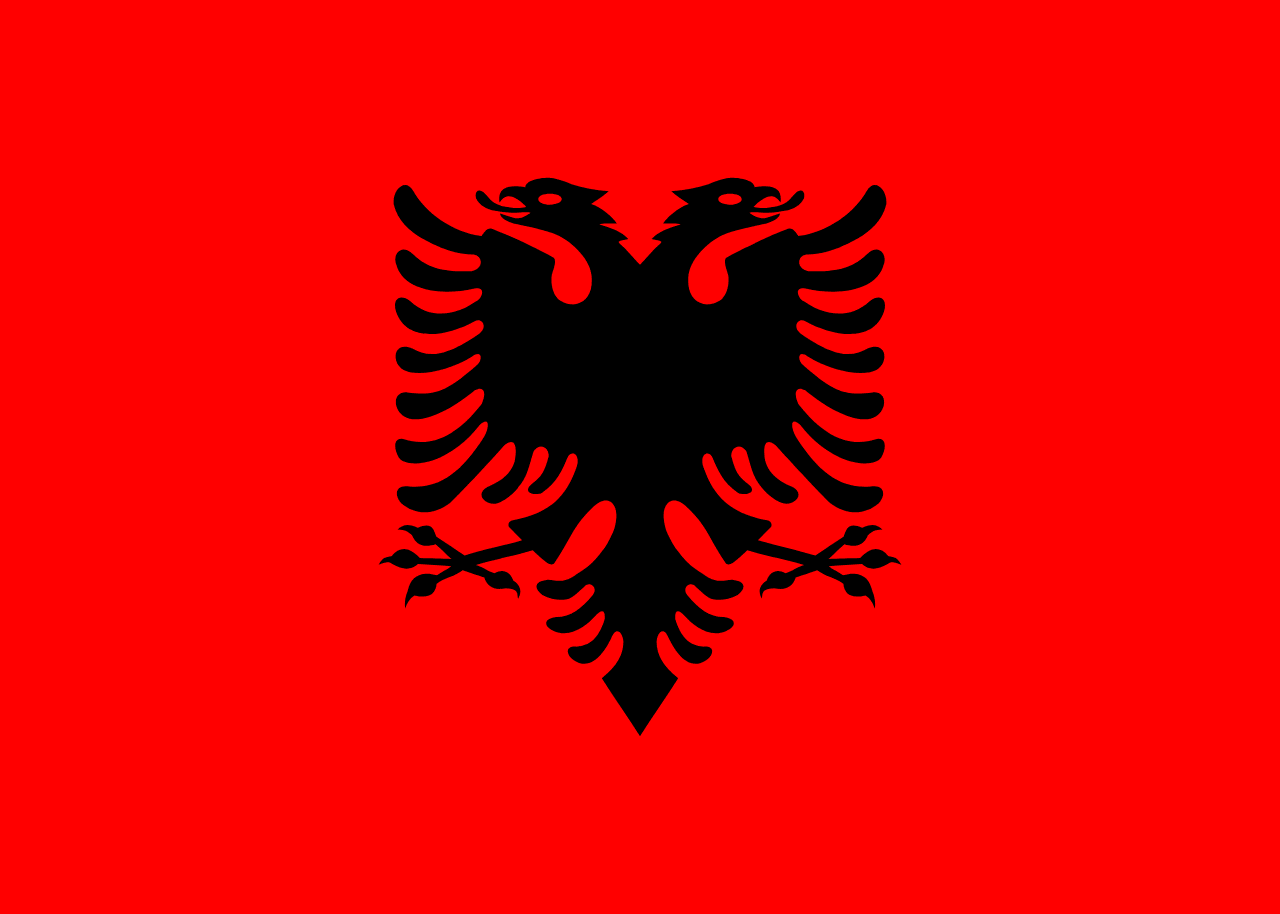
Forget "Albania" — locals call their homeland Shqiperia, often translated as "Land of the Eagles," and they call themselves Shqiptaret. The double-headed black eagle on a crimson field dominates the national flag and traces back to the 15th-century hero Skanderbeg, whose seal bore the imperial eagle. The bird is everywhere: in the country's name, on the flag, and even in the celebratory gesture Albanians make by crossing their thumbs and fanning their fingers to mimic an eagle in flight. Few nations weave a single symbol so completely into their identity, and the eagle remains a powerful emblem of independence and resilience for Albanians both at home and across the global diaspora.
2. The Country Is Studded With Hundreds of Thousands of Concrete Bunkers
Under the paranoid dictatorship of Enver Hoxha, who ruled from 1944 until his death in 1985, Albania built an astonishing number of military bunkers — estimates commonly run into the hundreds of thousands. Hoxha, convinced the country could be invaded at any moment by NATO, the Soviets, or even neighboring Yugoslavia, scattered these dome-shaped concrete pillboxes across beaches, mountains, fields, and city streets. The invasion never came. Today the bunkers have been creatively repurposed as cafes, storage sheds, mushroom farms, art galleries, and quirky museums. Two large nuclear-proof bunkers in Tirana, known as Bunk'Art, are now among the capital's most popular attractions, transforming a symbol of fear into a record of the country's strange recent history.
3. Tirana Is a Capital Painted in Wild Colors
Albania's capital, Tirana, is home to roughly half a million people and ranks among Europe's most colorful cities. After the fall of communism, the city's drab gray apartment blocks were transformed when then-mayor Edi Rama, a trained artist, ordered building facades painted in bold oranges, purples, and geometric patterns. The result is a riot of color that lifted residents' spirits and helped revive civic pride. Tirana sits in a valley overlooked by Mount Dajti, reachable by cable car, and its central Skanderbeg Square is one of the largest pedestrian plazas in the Balkans. You can learn more in our country guide.
4. Religious Tolerance Is a Point of National Pride
Albania is one of the most religiously diverse and tolerant countries in Europe. Its population is predominantly Muslim, with significant Orthodox Christian and Catholic communities, yet faith rarely divides Albanians the way it has elsewhere in the Balkans. Many families count members of different religions, and interfaith marriages are common. There is a famous Albanian saying that "the religion of Albanians is Albanianism," reflecting how national identity tends to outweigh sectarian lines. During the communist era, Albania was even declared the world's first officially atheist state in 1967, with all places of worship closed. Religious freedom was restored after 1990, and the country's easygoing coexistence remains a genuine source of pride.
5. Mother Teresa Is Albania's Most Famous Daughter
One of the most beloved figures of the 20th century, Mother Teresa, was an ethnic Albanian. Born Anjeze Gonxhe Bojaxhiu in 1910 in Skopje (now in North Macedonia) to an Albanian family, she went on to found the Missionaries of Charity in India and won the Nobel Peace Prize in 1979. Albanians revere her, and Tirana's international airport is named in her honor. She is one of several globally recognized people of Albanian heritage, a list that also includes Hollywood stars and renowned athletes, underscoring the outsized cultural footprint of this small nation and its sprawling diaspora communities scattered across Europe and the Americas.
6. The Albanian Riviera Rivals the Beaches of Greece and Croatia
Along the southern Ionian coast lies the Albanian Riviera, a stretch of dazzling beaches, hidden coves, and crystal-clear water that has earned a reputation as one of the Mediterranean's last affordable hideaways. Villages like Dhermi, Himare, and Ksamil draw a growing wave of travelers seeking the beauty of nearby Greece or Croatia at a fraction of the cost. Just offshore from Ksamil, the water is so transparent that swimmers can wade out to small islands. The coastline is backed by the rugged Ceraunian Mountains, which plunge dramatically toward the sea, and the scenic Llogara Pass offers sweeping panoramas. The Riviera has become the engine of Albania's booming tourism industry.
7. Albanian Is a Language All Its Own
Albanian, or Shqip, is one of the most distinctive languages in Europe. It forms its own independent branch of the Indo-European family, meaning it has no close living relatives — unlike, say, Spanish and Italian or German and Dutch. Linguists believe it may descend from ancient Illyrian, spoken by the peoples who inhabited the region in antiquity. The language has two main dialects: Gheg in the north and Tosk in the south, with the modern standard based largely on Tosk. Albanian also uses a 36-letter alphabet that includes unusual digraphs like "dh," "gj," and "xh." Its isolation and antiquity make it a treasure for linguists and a fierce point of pride for speakers.
8. The Mountains Hide a Vanishing Tradition of "Sworn Virgins"
In the remote highlands of northern Albania, an extraordinary custom persisted for centuries: the burrnesha, or "sworn virgins." Within the patriarchal framework of the traditional Kanun code, a woman could take an oath of lifelong celibacy and live as a man — dressing in male clothing, taking a male name, and gaining the legal and social rights denied to women, including heading a household. Women typically made this choice to fill a gap when a family had no male heir or to avoid an arranged marriage. Only a handful of sworn virgins remain today, mostly elderly, making this one of Europe's last living examples of an institutionalized gender-crossing tradition.
9. Albania Is Home to One of Europe's Last Wild Rivers
The Vjosa River, flowing roughly 270 kilometers from the mountains of Greece to the Adriatic, is one of the last large free-flowing rivers in Europe — undammed along its entire Albanian course. In 2023, Albania designated the Vjosa and its tributaries as a national park, the first wild river national park on the continent. The river's untamed channels, gravel islands, and braided streams support rare fish, birds, and plant life that have disappeared from Europe's heavily engineered waterways. Conservationists hail it as a landmark victory. Albania's wider landscape is similarly rich, ranging from the alpine "Accursed Mountains" of the north to wetlands that shelter flamingos and pelicans along the coast.
10. Nodding Means "No" and Shaking Your Head Means "Yes"
Visitors to Albania are often left thoroughly confused by body language, because the gestures for agreement and disagreement are essentially reversed from much of the world. A shake of the head can mean "yes," while a nod can signal "no." The cues are subtle and accompanied by slight tilts and tongue clicks that locals read instantly. This quirk has tripped up countless tourists trying to order food or ask directions. It is one of those small cultural surprises that reveals how customs we assume are universal are anything but — and it makes a simple conversation in a Tirana cafe an unexpectedly entertaining puzzle for newcomers.
Frequently Asked Questions
What is the capital of Albania?
The capital is Tirana, home to around half a million people. It is the country's political, economic, and cultural center, known for its colorfully painted buildings, the vast Skanderbeg Square, and the nearby Mount Dajti, which is accessible by cable car.
What is Albania famous for?
Albania is famous for the stunning beaches of the Albanian Riviera, its hundreds of thousands of communist-era concrete bunkers, exceptional religious tolerance, the wild Vjosa River, and being the homeland of Mother Teresa. It is increasingly known as one of the Mediterranean's best-value travel destinations.
Why do Albanians shake their heads for "yes"?
It is simply a deep-rooted cultural convention, much like how nodding means "yes" elsewhere. In Albania, head movements for agreement and disagreement are largely reversed, a quirk shared with some neighboring Balkan cultures that frequently surprises and delights first-time visitors.
Conclusion
From its eagle symbolism and bunker-dotted hills to wild rivers, reversed head gestures, and a language unlike any other, Albania is a country full of surprises that reward the curious traveler. Once Europe's most isolated nation, it has emerged as one of its most intriguing. These ten facts only scratch the surface of a place where ancient traditions and a fast-changing modern identity sit side by side.