
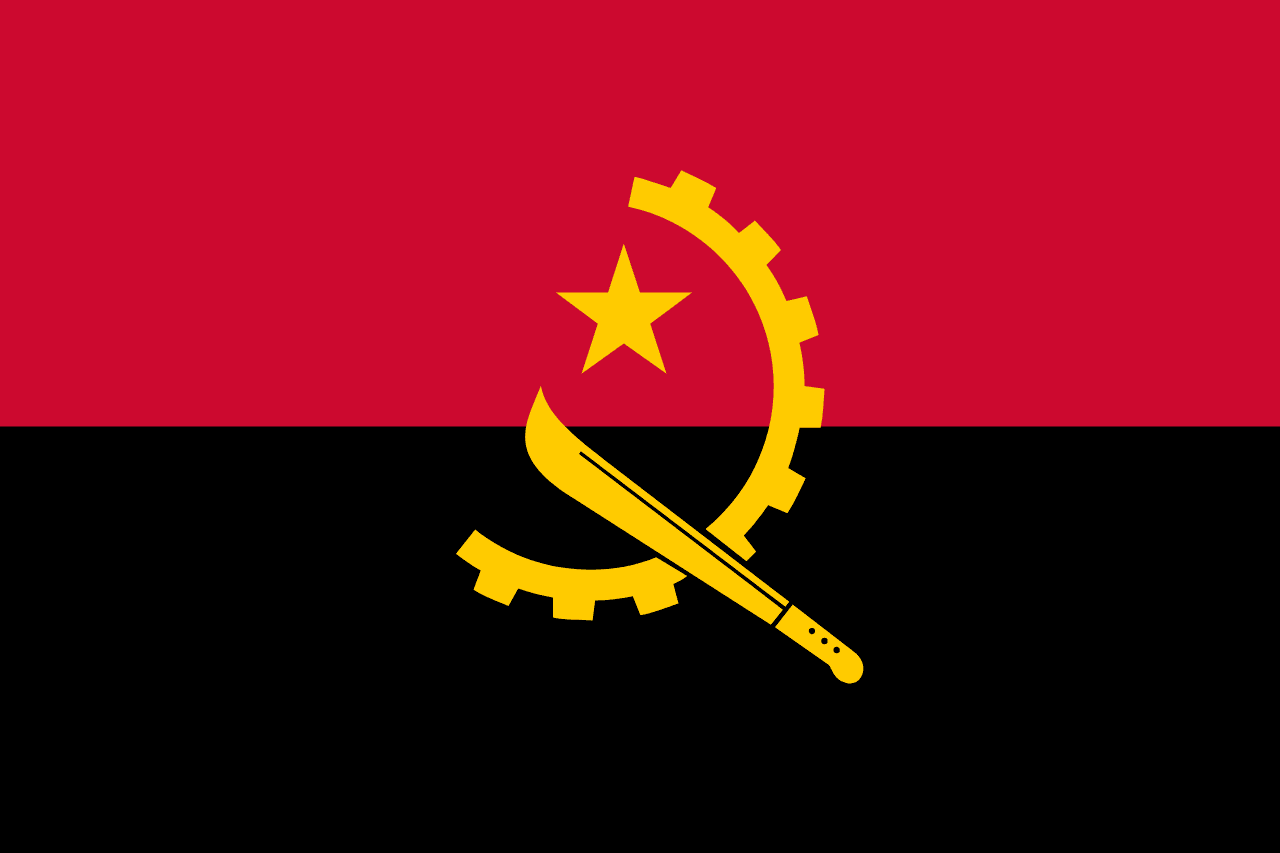
Angola is a country of staggering scale and contradiction: a place where Portuguese fado mingles with Bantu rhythms, where oil wealth sits beside one of Africa's most ambitious environmental recovery stories, and where the second-longest river in southern Africa shares the map with the world's oldest desert. Emerging from decades of war into the 21st century, this Atlantic giant rewards anyone willing to look past the headlines. Here are ten genuinely surprising facts about Angola.
1. It Is Far Bigger Than Most People Imagine
Angola covers roughly 1.25 million square kilometres, making it the seventh-largest country in Africa and nearly twice the size of Texas. Its territory stretches from the Atlantic coast deep into the southern African interior, encompassing tropical rainforest in the north, vast central highlands, and arid desert in the south. The country even includes Cabinda, a small exclave separated from the rest of Angola by a sliver of the Democratic Republic of the Congo. This geographic separation, combined with Cabinda's enormous offshore oil reserves, has made the enclave one of the most strategically important and politically sensitive corners of the entire nation. You can learn more in our country guide.
2. Luanda Is One of the World's Most Expensive Cities
Angola's capital, Luanda, has repeatedly ranked among the most expensive cities on Earth for expatriates, occasionally topping global cost-of-living surveys. Founded by the Portuguese in 1576, it is one of the oldest European-established settlements in sub-Saharan Africa. The oil boom of the 2000s transformed Luanda's skyline with gleaming towers, but the surge also created extreme prices, where a simple imported meal could cost a fortune. The city perches dramatically on a bay overlooking the Atlantic, and its population has swelled past eight million, making it the largest Portuguese-speaking city in Africa and home to roughly a quarter of all Angolans.
3. Portuguese Is the Official Language, but Far From the Only One
Angola is the second-largest Portuguese-speaking nation in the world by some measures, behind only Brazil, and Portuguese is the language of government, education, and media. Yet the linguistic reality is far richer. Dozens of Bantu languages are spoken across the country, with Umbundu, Kimbundu, and Kikongo among the most widespread. Umbundu, the tongue of the Ovimbundu people, is spoken by millions in the central highlands. This blend of a European colonial language layered over deep indigenous roots shapes everyday Angolan identity, music, and storytelling in ways that make the country culturally distinct from its neighbours.
4. It Was the Heart of the Powerful Kingdom of Kongo
Long before Europeans arrived, the region was home to sophisticated African states, most famously the Kingdom of Kongo, which flourished from the 14th century with its own administration, currency, and trade networks. When Portuguese explorers made contact in 1483, the Kongo king converted to Christianity and exchanged diplomats with Lisbon and even the Vatican. Other powerful states, including the Ndongo and Matamba kingdoms, also rose here. The fierce 17th-century resistance led by Queen Njinga Mbande, a brilliant diplomat and military strategist who fought Portuguese expansion for decades, remains a defining symbol of Angolan pride and independence to this day.
5. Independence Came Late, and Peace Even Later
Angola endured one of the longest anti-colonial struggles in Africa before finally winning independence from Portugal on 11 November 1975. Independence did not bring calm, however. The country plunged almost immediately into a brutal civil war, fuelled by Cold War rivalries, that dragged on for 27 years until 2002. The conflict left the nation scarred but also forged a resilient national character. Since then, Angola has rebuilt at remarkable speed, reconstructing roads, railways, and cities, and emerging as one of the more stable and influential states in central and southern Africa.
6. It Sits on a Sea of Oil and Diamonds
Angola is one of Africa's largest oil producers, frequently vying with Nigeria for the continent's top spot, and petroleum dominates its economy and exports. The offshore fields near Cabinda and the Atlantic coast generate the bulk of government revenue. Beyond oil, Angola is also a major diamond producer, with rich deposits in the northeastern provinces such as Lunda Norte. This mineral wealth funded the post-war reconstruction boom, though the country has worked to diversify into agriculture and fishing to reduce its heavy dependence on volatile commodity markets and to spread prosperity more widely.
7. Home to the Welwitschia, a Living Fossil
In the arid south, where Angola meets the Namib Desert, grows one of the strangest plants on the planet: the Welwitschia mirabilis. This bizarre living fossil produces just two leaves in its entire lifetime, which grow continuously and fray into tattered ribbons over the centuries. Some specimens are believed to be well over a thousand years old, surviving on coastal fog in one of the driest environments imaginable. The plant is so iconic that it appears on Angola's national coat of arms, symbolising endurance and longevity, a fitting emblem for a nation that has weathered so much.
8. Its Wildlife Is Staging a Dramatic Comeback
Decades of war devastated Angola's once-abundant wildlife, but conservation efforts are now bringing it roaring back. Iona National Park in the southwest and the restored Quissama (Kissama) National Park near Luanda are reintroducing elephants, antelope, and other species. The waters off the Angolan coast host migrating humpback whales, and the country's diverse habitats range from rainforest to savanna to desert. Perhaps most remarkable are the Angolan highlands, the source waters that feed the Okavango Delta in neighbouring Botswana, meaning Angola's rivers sustain one of Africa's greatest wildlife spectacles hundreds of kilometres away.
9. Kizomba and Semba: The Sound of Angola
Angola gave the world kizomba, a slow, sensual partner dance and music genre that has spread across Europe, Latin America, and beyond, filling dance floors far from its Luanda birthplace. Kizomba grew out of semba, the older, faster Angolan style that many believe is an ancestor of Brazilian samba, carried across the Atlantic during the era of forced migration. Music is woven into Angolan life, from street celebrations to family gatherings, and contemporary genres like kuduro, an energetic electronic dance style born in Luanda's neighbourhoods, have become global cultural exports that put Angola firmly on the world's musical map.
10. Funje, Calulu, and a Coast Full of Seafood
Angolan cuisine reflects its geography and its Portuguese and African heritage. A staple at many tables is funje, a smooth porridge made from cassava flour, often served alongside calulu, a hearty stew of fish or meat cooked with vegetables and palm oil. Thanks to the long Atlantic coastline, fresh fish and seafood feature heavily, while muamba de galinha, a rich chicken dish flavoured with palm oil and okra, is considered a national favourite. Meals are communal and generous, and the blend of indigenous ingredients with Portuguese techniques makes Angolan food one of the most distinctive cuisines in the region.
Frequently Asked Questions
What is the capital of Angola?
The capital of Angola is Luanda, a sprawling coastal city on the Atlantic Ocean that was founded by the Portuguese in 1576. It is the country's political, cultural, and economic centre, home to more than eight million people, and is the largest Portuguese-speaking city in Africa.
What is Angola famous for?
Angola is famous for being one of Africa's leading oil and diamond producers, for its music genres kizomba and semba, for the unique Welwitschia plant on its coat of arms, and for the legendary Queen Njinga who resisted Portuguese colonisation. You can also explore the symbolism behind its national flag.
Why are Angola's rivers important to Botswana?
The Angolan highlands are the source of the rivers that feed the Okavango Delta in Botswana, one of the world's greatest inland wetlands. Without the rain falling on Angola's plateau each year, this extraordinary wildlife haven hundreds of kilometres south would simply dry up.
Conclusion
Angola is a nation of dramatic extremes and quiet wonders, from desert living fossils and oil-rich coasts to globe-conquering dance rhythms and a fierce history of resistance. Having emerged from a turbulent past, it now stands as one of Africa's most intriguing and resilient countries. These ten facts only begin to capture its depth, and there is always more to discover about this captivating Atlantic giant.