
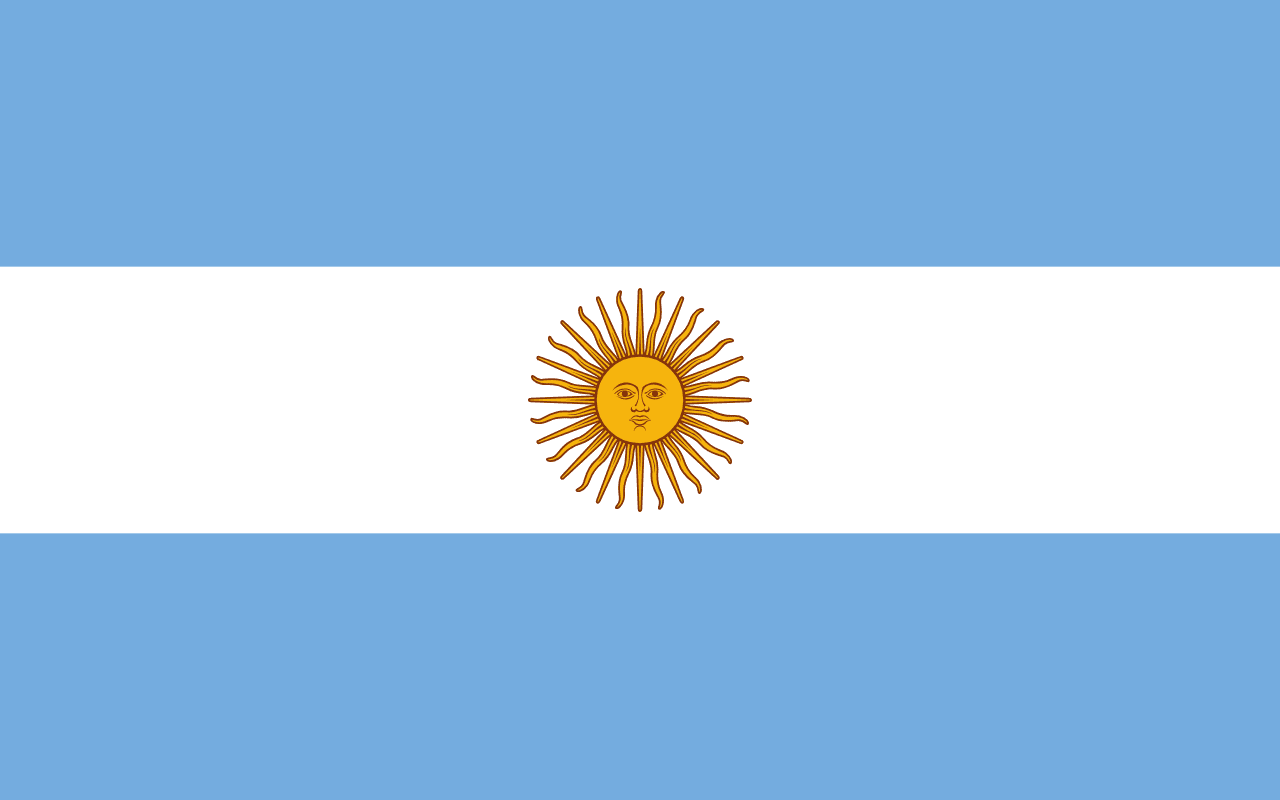
Stretching from the subtropical jungles of the north to the wind-scoured ice fields of the far south, Argentina is a country of staggering extremes packed into one ribbon of land. It gave the world the tango, the breakaway run of Lionel Messi, and beef so good it became a national identity. Here are ten facts that reveal why this South American giant is endlessly fascinating.
1. It Is the Eighth-Largest Country on Earth
Argentina sprawls across roughly 2.78 million square kilometres, making it the second-largest country in South America after Brazil and the eighth-largest in the world. Its territory spans more than 30 degrees of latitude, which means a single nation contains palm-fringed wetlands, high-altitude deserts, fertile grasslands, and glacier-carved fjords. From the cactus-studded Andean northwest to the sub-Antarctic tip near Cape Horn, the climate ranges from tropical to polar. Want the full picture of its provinces and regions? Our country guide breaks it down. This vast scale is why Argentines say their homeland holds "todos los climas" — every climate imaginable within one set of borders.
2. The Andes Hold the Highest Peak Outside Asia
Running along Argentina's entire western edge, the Andes form a natural border with Chile and contain Aconcagua, which rises to about 6,961 metres. It is the tallest mountain in both the Western and Southern Hemispheres, and the highest point on Earth outside the great Asian ranges. Climbers from around the world attempt its non-technical northern route, making it one of the most-summited high peaks anywhere. Beyond Aconcagua, the Argentine Andes shelter vineyards, salt flats, and the colourful rock formations of the Quebrada de Humahuaca. The mountains also feed the rivers and meltwater that sustain agriculture in otherwise arid western provinces like Mendoza.
3. Buenos Aires Is the "Paris of South America"
Argentina's capital and largest city, Buenos Aires, is home to roughly three million people in the city proper and around 15 million across its greater metropolitan area — nearly a third of the entire nation. Founded permanently in 1580, the city earned its European nickname thanks to grand boulevards, ornate Belle Époque architecture, and a café culture imported by waves of Italian and Spanish immigrants. Its residents, called porteños ("people of the port"), are famous for their love of late dinners, all-night dance halls, and passionate political debate. Neighbourhoods range from the brightly painted houses of La Boca to the leafy elegance of Recoleta, where Eva Perón is entombed.
4. Tango Was Born in Its Riverside Slums
The tango emerged in the late 19th century in the working-class port districts of Buenos Aires and Montevideo, blending African rhythms, European melodies, and immigrant longing into a single smouldering dance. Once dismissed as scandalous, it became a global sensation and is now recognised by UNESCO as part of humanity's intangible cultural heritage. Today milongas — social tango dances — still fill the city nightly, and musicians like the legendary Astor Piazzolla pushed the form into the concert hall. The dance remains a living symbol of Argentine identity, embodying the melancholy, sensuality, and improvisation that locals call "duende."
5. A Nation Built by Immigrants
Argentina's population of roughly 46 million is one of the most European-descended in Latin America, the result of a massive immigration wave between 1850 and 1950. Millions of Italians and Spaniards arrived, alongside Germans, Welsh, French, and Eastern European Jews, reshaping the culture, cuisine, and even the accent. The Argentine Spanish dialect, with its distinctive "sh" sound for the letters "ll" and "y," reflects this Italian influence, as does the love of pasta, pizza, and gelato. Welsh-speaking communities still exist in Patagonia, and Argentina hosts one of the largest Jewish populations in the Americas. This mosaic gives the country a uniquely cosmopolitan flavour.
6. Spanish Is Official, but the Accent Is Unmistakable
The official language is Spanish, though Argentines speak a distinctive variety often called Rioplatense, centred on the Río de la Plata. They use "vos" instead of "tú" for "you," a feature called voseo, and pepper their speech with lunfardo, a colourful slang born from immigrant communities and tango lyrics. Indigenous languages such as Quechua, Guaraní, and Mapudungun are still spoken in various regions, and Italian loanwords are everywhere. The result is a way of speaking so recognisable that other Spanish speakers can usually identify an Argentine within a sentence or two.
7. Iguazú Falls Dwarfs Niagara
On Argentina's northern border with Brazil, the Iguazú Falls thunder across nearly three kilometres of cliffs, comprising hundreds of individual cascades. The most dramatic is the Devil's Throat, a U-shaped chasm where the river plunges in a roaring veil of mist. Set within a subtropical rainforest teeming with toucans, jaguars, and coatis, the falls are taller and far wider than Niagara, and they were named one of the New Seven Wonders of Nature. The site is protected as a national park and a UNESCO World Heritage area. Legend says the falls were created by a furious deity, and standing before them, that explanation feels entirely believable.
8. Beef and Asado Are a Way of Life
Argentina is one of the world's top beef consumers and a major exporter, and the asado — a slow barbecue over wood or charcoal — is a sacred social ritual rather than just a meal. Families and friends gather for hours around the grill, tended by a designated asador, sharing cuts like ribs, sausages, and sweetbreads with chimichurri sauce. The tradition descends from the gauchos, the legendary cattle-herding cowboys of the Pampas grasslands. Beyond beef, Argentina produces world-renowned Malbec wine in Mendoza, addictive dulce de leche caramel, flaky empanadas, and shares the bitter herbal tea yerba mate, sipped from a gourd through a metal straw, with friends throughout the day.
9. Football Is a National Religion
Few countries love football as fiercely as Argentina. The national team has won the World Cup three times — in 1978, 1986, and most recently in 2022 — and produced two of the sport's greatest icons, Diego Maradona and Lionel Messi. Maradona's "Hand of God" and his slaloming wonder-goal against England in 1986 are etched into global football folklore, while Messi's 2022 triumph in Qatar sparked nationwide celebrations attended by millions. Club rivalries, especially the Superclásico between Boca Juniors and River Plate, generate an atmosphere widely considered among the most intense in world sport. To dive deeper into national symbols, see the story behind the Argentine flag and its sun emblem.
10. Patagonia Holds Glaciers That Are Still Growing
The southern region of Patagonia, shared with Chile, is one of the planet's last great wildernesses. Its crown jewel is the Perito Moreno Glacier, a colossal wall of ice up to 70 metres high that periodically calves enormous chunks into the milky waters below with a sound like thunder. Remarkably, it is one of the few glaciers in the world that is not significantly retreating. Patagonia's coasts host penguin colonies, elephant seals, and migrating southern right whales near the Valdés Peninsula, while the steppe is roamed by guanacos and the elusive puma. It is a landscape of wind, silence, and overwhelming scale.
Frequently Asked Questions
What is the capital of Argentina?
The capital of Argentina is Buenos Aires, located on the western shore of the Río de la Plata estuary. It is the country's largest city and its political, financial, and cultural heart, often called the "Paris of South America" for its grand European-style architecture and vibrant café and tango scene.
What is Argentina most famous for?
Argentina is famous for tango, world-class football, premium beef and asado barbecues, Malbec wine, and breathtaking natural wonders like Iguazú Falls, the Andes, and the glaciers of Patagonia. It is also celebrated for its passionate culture, European-influenced cuisine, and legendary sporting figures such as Messi and Maradona.
What is a quirky fact about Argentine culture?
Argentines share yerba mate, a caffeinated herbal tea, from a single gourd and metal straw passed around a group — refusing the straw or wiping it is considered impolite. The shared mate is a daily symbol of friendship and trust, and many people carry a thermos of hot water everywhere they go.
Conclusion
From the icy silence of Patagonia to the roar of a packed football stadium, Argentina compresses an entire continent's worth of wonder into one country. Its towering mountains, immigrant-built cities, soulful music, and unforgettable food make it one of the most captivating nations on Earth — a place that rewards every traveller, student, and curious mind willing to explore it.