
Tucked between Mexico, Guatemala, and the turquoise Caribbean Sea, Belize is the kind of country that surprises everyone who looks closer. It is the only nation in Central America where English is the official language, home to the largest barrier reef in the Northern Hemisphere, and a place where ancient Maya cities still rise out of the jungle. Here are ten genuinely fascinating facts about this small but extraordinary country.
1. The Only English-Speaking Country in Central America
Belize stands apart from every one of its Spanish-speaking neighbors as the only nation in Central America where English is the official language. This is a direct legacy of its time as British Honduras, a British colony until it adopted the name Belize in 1973 and gained full independence in 1981. Yet English is only part of the story. Walk through any town and you will hear Belizean Kriol, a vibrant English-based creole that functions as the true lingua franca, alongside Spanish, Maya languages, and Garifuna. This multilingual blend means a single conversation in a Belize City market might bounce effortlessly between three or four languages, reflecting the country's remarkable cultural diversity. You can learn more in our country guide.
2. Home to a Capital City Built From Scratch
Belize's capital is not its largest or most famous city. That distinction belongs to Belmopan, a planned city deliberately constructed inland in the 1970s. The decision came after Hurricane Hattie devastated the old coastal capital, Belize City, in 1961, prompting the government to relocate the seat of power to safer high ground roughly 50 miles inland. Belmopan is one of the smallest and youngest national capitals in the world, with a population of only around 25,000. Its layout was even inspired by ancient Maya city design. Belize City, meanwhile, remains the commercial and cultural heart of the country, having served as the capital before the move.
3. The Second-Largest Barrier Reef on Earth
Just off the Belizean coast lies the Belize Barrier Reef, the largest reef system in the Northern and Western Hemispheres and second in size globally only to Australia's Great Barrier Reef. Stretching roughly 190 miles, it is a UNESCO World Heritage Site teeming with hundreds of species of fish, coral, sea turtles, and rays. At its center sits the famous Great Blue Hole, a perfectly circular marine sinkhole over 400 feet deep that draws divers from around the world. Jacques Cousteau helped make it legendary in 1971, declaring it one of the top scuba diving sites on the planet. From the air, the deep blue circle ringed by shallow turquoise is one of nature's most striking sights.
4. A Land Once Ruled by the Ancient Maya
Long before European contact, the region that is now Belize was a heartland of the Maya civilization. At its peak, an estimated one to two million Maya may have lived here, far more than the country's population today. Their legacy survives in spectacular ruins scattered through the rainforest. Caracol, the largest Maya site in Belize, contains Caana ("Sky Place"), a pyramid that remains the tallest man-made structure in the country at over 140 feet. Other major sites include Xunantunich, Lamanai, and Altun Ha. These cities were centers of astronomy, mathematics, and trade, and exploring them feels like stepping directly into a living history book carved in limestone.
5. One of the Least Densely Populated Nations in the Americas
With a population of roughly 429,000 spread across nearly 9,000 square miles, Belize is one of the most sparsely populated countries in the Americas. Vast stretches of the interior remain covered in tropical forest, much of it protected. The population is strikingly young and diverse, made up of Creole, Mestizo, Maya, Garifuna, Mennonite, and many other communities living side by side. This low population density is one reason Belize has been able to preserve so much of its natural environment, with over a third of its land and sea designated as protected areas or reserves.
6. The Garifuna Culture and a UNESCO Heritage
One of Belize's most distinctive cultural groups is the Garifuna, descendants of West African, Carib, and Arawak peoples who arrived along the Caribbean coast in the early 1800s. Their language, music, and dance were recognized by UNESCO as a Masterpiece of the Oral and Intangible Heritage of Humanity. Every November 19th, Belize celebrates Garifuna Settlement Day, a national holiday filled with drumming, dancing, and reenactments of the Garifuna arrival by canoe. The hypnotic punta rhythm, played on hollowed-log drums, is at the core of their celebrations and has influenced popular music across the region.
7. A National Dish of Rice and Beans
Belizean cuisine reflects its cultural melting pot, but no dish is more beloved than rice and beans cooked in coconut milk, typically served with stewed chicken, fried plantains, and potato salad. It is comfort food found everywhere from roadside stands to family kitchens. Other staples include fry jacks for breakfast, fresh seafood like conch and lobster along the coast, and the spicy heat of Marie Sharp's habanero pepper sauce, a homegrown brand so iconic it appears on tables nationwide. The mix of Creole, Maya, Mestizo, and Garifuna flavors makes Belizean food far more varied than its small size suggests.
8. The Jaguar's Last Caribbean Stronghold
Belize is a sanctuary for wildlife, most famously the jaguar. The Cockscomb Basin Wildlife Sanctuary, established in 1990, was the world's first protected area created specifically for jaguar conservation. Beyond big cats, the country's forests and wetlands shelter tapirs (the national animal, locally called the "mountain cow"), howler monkeys, ocelots, and more than 500 species of birds, including the vivid keel-billed toucan, which is Belize's national bird. This astonishing biodiversity, packed into such a small territory, makes Belize a dream destination for naturalists and eco-tourists alike.
9. A Flag Unlike Any Other in the World
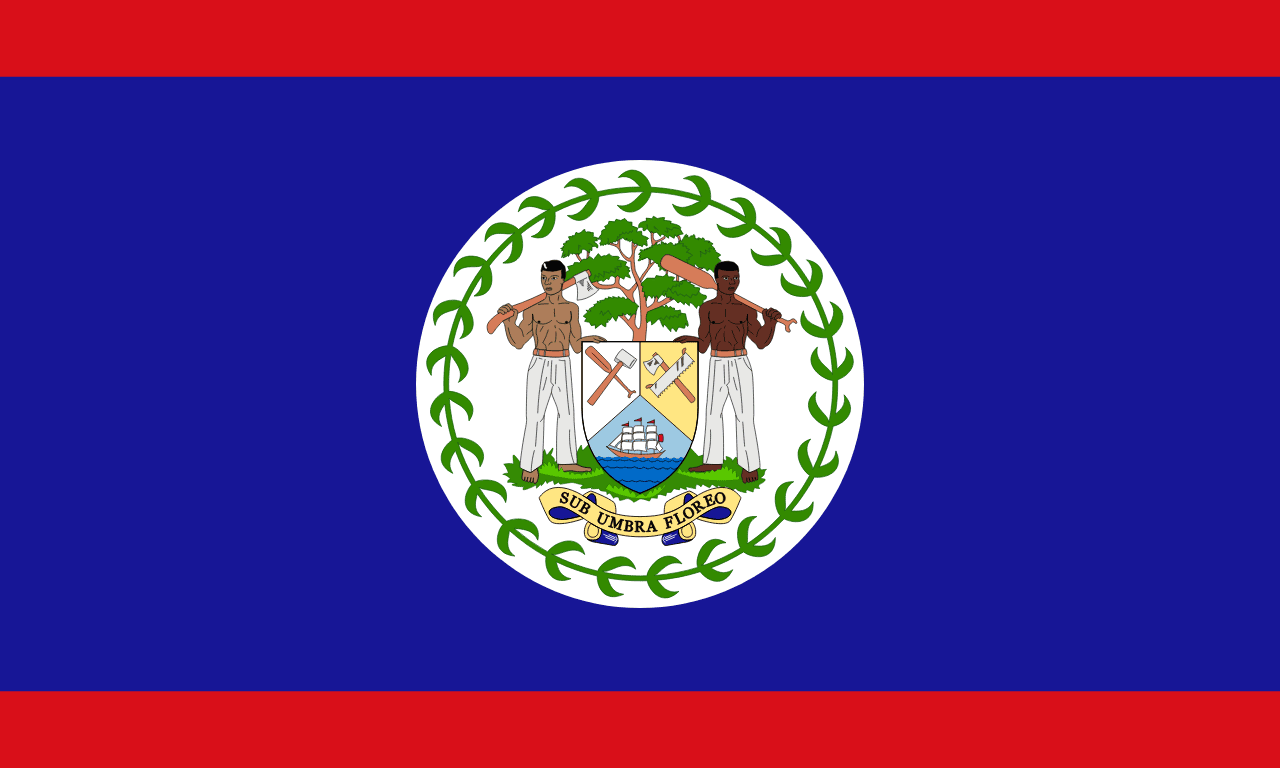
Belize holds a unique distinction: its national flag features more colors than any other national flag on Earth. The central coat of arms depicts two woodcutters, one Creole and one Mestizo, flanking a mahogany tree and a shield, surrounded by a wreath of fifty leaves. Counting the figures, tools, and emblems, the design incorporates around a dozen distinct colors. The mahogany tree is no accident, the logging of mahogany and logwood was the backbone of the colonial economy for centuries, and the motto "Sub Umbra Floreo" means "Under the shade I flourish."
10. Tourism Powers a Tiny Economy
For a country of fewer than half a million people, Belize attracts a remarkable number of visitors, with tourism now one of its largest economic pillars alongside agriculture and exports like sugar, citrus, and bananas. The combination of world-class diving, Maya ruins, jungle adventures, and offshore islands called cayes draws travelers from across the globe. Ambergris Caye and its town of San Pedro are especially popular gateways to the reef. The Belizean dollar is pegged to the US dollar at a fixed two-to-one rate, which makes the country particularly easy and welcoming for international visitors.
Frequently Asked Questions
What is the capital of Belize?
The capital of Belize is Belmopan, a planned city built inland in the 1970s after Hurricane Hattie destroyed much of the former coastal capital, Belize City. With around 25,000 residents, it is one of the smallest national capitals in the world, though Belize City remains the country's largest urban and commercial center.
What is Belize most famous for?
Belize is best known for the Belize Barrier Reef and the Great Blue Hole, two of the world's premier diving destinations. It is also celebrated for its ancient Maya ruins, lush rainforests, abundant wildlife, and for being the only country in Central America where English is the official language.
Why does Belize have the most colorful flag in the world?
Belize's flag contains more colors than any other national flag because of its detailed central coat of arms. The emblem shows two woodcutters, a mahogany tree, tools, and a leafy wreath, all rendered in lifelike detail. Counting every element, the flag uses roughly a dozen distinct colors, far more than typical flags.
Conclusion
Belize proves that geographic size has little to do with significance. From the largest reef in the hemisphere to towering Maya pyramids, from a one-of-a-kind flag to a tapestry of languages and cultures, this small Caribbean nation overflows with wonders. Whether you come for the diving, the ruins, the wildlife, or the warm multicultural spirit, Belize rewards curiosity at every turn, and these ten facts are only the beginning.