
Canada is the kind of country that defies easy summary: a place where you can surf cold Pacific waves in the morning and stand on Arctic tundra the same week, where two official languages share every cereal box, and where a population smaller than California's spreads across the second-largest landmass on Earth. Behind the maple-syrup clichés lies a nation of staggering scale, deep Indigenous roots, and quietly fascinating quirks. Here are ten facts that reveal why Canada is one of the world's most intriguing places.
1. It Is the Second-Largest Country on Earth
Spanning roughly 9.98 million square kilometres, Canada is the world's second-largest country by total area, behind only Russia. It stretches from the Atlantic to the Pacific and all the way up to the Arctic Ocean, crossing six time zones. To put the sheer scale in perspective, it is larger than the entire European Union and bigger than the United States once you include water. Yet most of this immense territory is sparsely settled wilderness of boreal forest, tundra, and lakes. In fact, Canada contains an estimated two million lakes, holding roughly a fifth of the world's fresh surface water. You can explore more in our country guide.
2. Ottawa Is the Capital, but Not the Biggest City
Many visitors assume Toronto or Montreal must be Canada's capital, but that honour belongs to Ottawa, in the province of Ontario. It was chosen by Queen Victoria in 1857 as a compromise between English-speaking and French-speaking power centres, and partly because its inland position made it safer from American attack. Today Ottawa sits across the river from Gatineau, Quebec, giving the capital region a bilingual character. Its Gothic Revival Parliament buildings, the Rideau Canal (which becomes the world's largest skating rink in winter), and numerous national museums make it a cultural hub, even if Toronto remains the largest and most economically dominant city.
3. Home to Roughly 40 Million People
Canada's population is about 40.5 million, remarkably small for its size, which gives it one of the lowest population densities of any nation. Around 90 percent of Canadians live within roughly 160 kilometres of the southern border with the United States, clustering in a thin band of cities. The country is also one of the most multicultural on Earth: more than one in five residents was born abroad, and immigration drives nearly all of Canada's population growth. Cities like Toronto and Vancouver are among the most ethnically diverse on the planet, where dozens of languages are spoken in a single neighbourhood.
4. It Has Two Official Languages
English and French are both official languages at the federal level, a legacy of Canada's British and French colonial history. While English is most widely spoken nationwide, French dominates in Quebec, where it is the sole official provincial language. New Brunswick is the only officially bilingual province. This duality shapes daily life: federal services, product labels, and road signs appear in both tongues. Beyond the official two, Canada is home to dozens of Indigenous languages, including Cree, Inuktitut, and Ojibwe, some of which are seeing revitalisation efforts. Inuktitut even has official status in the territory of Nunavut, where it shares space with English and French.
5. The World's Longest Coastline
Canada boasts the longest coastline of any country in the world, measuring an astonishing 202,080 kilometres when every inlet, fjord, and island is counted. That is more than the rest of the world's coastlines combined for many comparisons, and it would take you decades to walk it all. Much of this coastline traces the rugged Arctic Archipelago, a maze of more than 36,000 islands in the far north. The country touches three oceans: the Atlantic, the Pacific, and the Arctic. This vast shoreline shaped Canada's identity as a seafaring and fishing nation, particularly in the Atlantic provinces.
6. A Young Nation with Ancient Roots
Canada became a self-governing dominion through Confederation on July 1, 1867, when three British colonies united into one. It gradually gained full legal independence, achieving complete sovereignty with the patriation of its constitution in 1982. Yet this "young" country sits on land inhabited for over 15,000 years by First Nations, Inuit, and later Métis peoples, whose histories, treaties, and cultures predate European arrival by millennia. Canada Day, celebrated every July 1, marks Confederation. The nation's modern story is increasingly one of reconciliation, as Canadians confront the painful legacy of residential schools and work to honour Indigenous rights and traditions.
7. Niagara Falls and Spectacular Landscapes
Canada's natural landmarks are world-famous, none more so than Niagara Falls, shared with the United States, where roughly 168,000 cubic metres of water plunge over the edge every minute. But the falls are just the start. The Canadian Rockies cradle turquoise glacial lakes like Lake Louise and Moraine Lake in Banff, the country's first national park. The Bay of Fundy experiences the highest tides on Earth, rising up to 16 metres. In the north, the aurora borealis dances across the sky on hundreds of nights a year, making places like Yellowknife premier destinations for chasing the northern lights.
8. Maple Syrup and Comfort Food
Canada produces around 75 percent of the world's maple syrup, with the province of Quebec accounting for the lion's share. The country even maintains a Global Strategic Maple Syrup Reserve to stabilise supply and prices, which was famously the target of a multi-million-dollar heist. Beyond syrup, Canadian cuisine offers hearty comfort dishes: poutine, the beloved combination of fries, cheese curds, and gravy born in rural Quebec; butter tarts; Nanaimo bars; and tourtière meat pie. Regional specialties abound, from Atlantic lobster rolls to bannock, a bread with deep Indigenous and settler history. Food in Canada reflects its layered cultural makeup.
9. Hockey Is a National Obsession
Ice hockey is woven into the Canadian soul. It is the official national winter sport (lacrosse is the official summer sport), and the country has produced many of the game's greatest legends, including Wayne Gretzky. Frozen ponds and backyard rinks serve as the training grounds where countless children first lace up skates. The Hockey Hall of Fame in Toronto draws devoted pilgrims, and a televised Saturday-night game is practically a cultural ritual. Canada's national teams dominate international tournaments and the Winter Olympics, and few things unite the country quite like cheering on the national side for Olympic gold.
10. Iconic Wildlife and Vast Wilderness
Canada's wilderness teems with iconic animals: polar bears patrol the Arctic and gather near Churchill, Manitoba, often called the "polar bear capital of the world." Moose, grizzly and black bears, beavers, caribou, and bald eagles all roam its forests and rivers. The beaver, a symbol of the fur trade that helped build the early economy, appears on the five-cent coin and is an official national emblem. The country protects this natural heritage through a sprawling network of national parks. Roughly 38 percent of Canada remains forested, forming a critical part of the planet's lungs and a refuge for biodiversity.
Frequently Asked Questions
What is the capital of Canada?
The capital of Canada is Ottawa, located in the province of Ontario on the Ottawa River. It is the political and administrative heart of the country, home to Parliament Hill and many national institutions, though it is not the largest city. Toronto, Montreal, and Vancouver all have larger populations.
What is Canada most famous for?
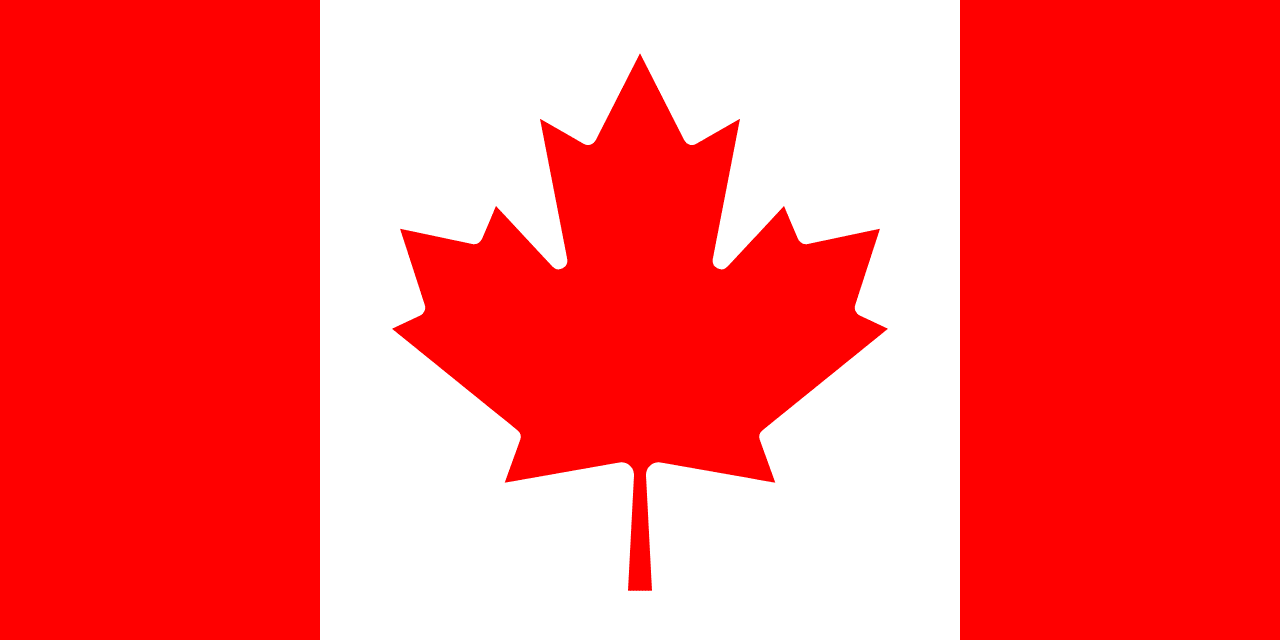
Canada is famous for its vast natural beauty, including the Rocky Mountains, Niagara Falls, and the northern lights, as well as for maple syrup, ice hockey, friendly politeness, and being one of the most multicultural nations on Earth. Its distinctive red-and-white flag with the maple leaf is recognised worldwide.
What is a surprising fact about Canada?
Canada has more lakes than the rest of the world combined, with roughly two million of them. It also holds about 20 percent of the planet's fresh surface water, and its coastline is so long it would take many years to walk end to end.
Conclusion
From its record-breaking coastline and millions of lakes to its bilingual culture, hockey devotion, and roaming polar bears, Canada is a country of superlatives and surprises. These ten facts only begin to capture a nation defined by immense space, deep Indigenous heritage, and a welcoming, diverse spirit. Whether you are studying geography or simply daydreaming about the aurora, Canada rewards a closer look, and there is always more to discover.