
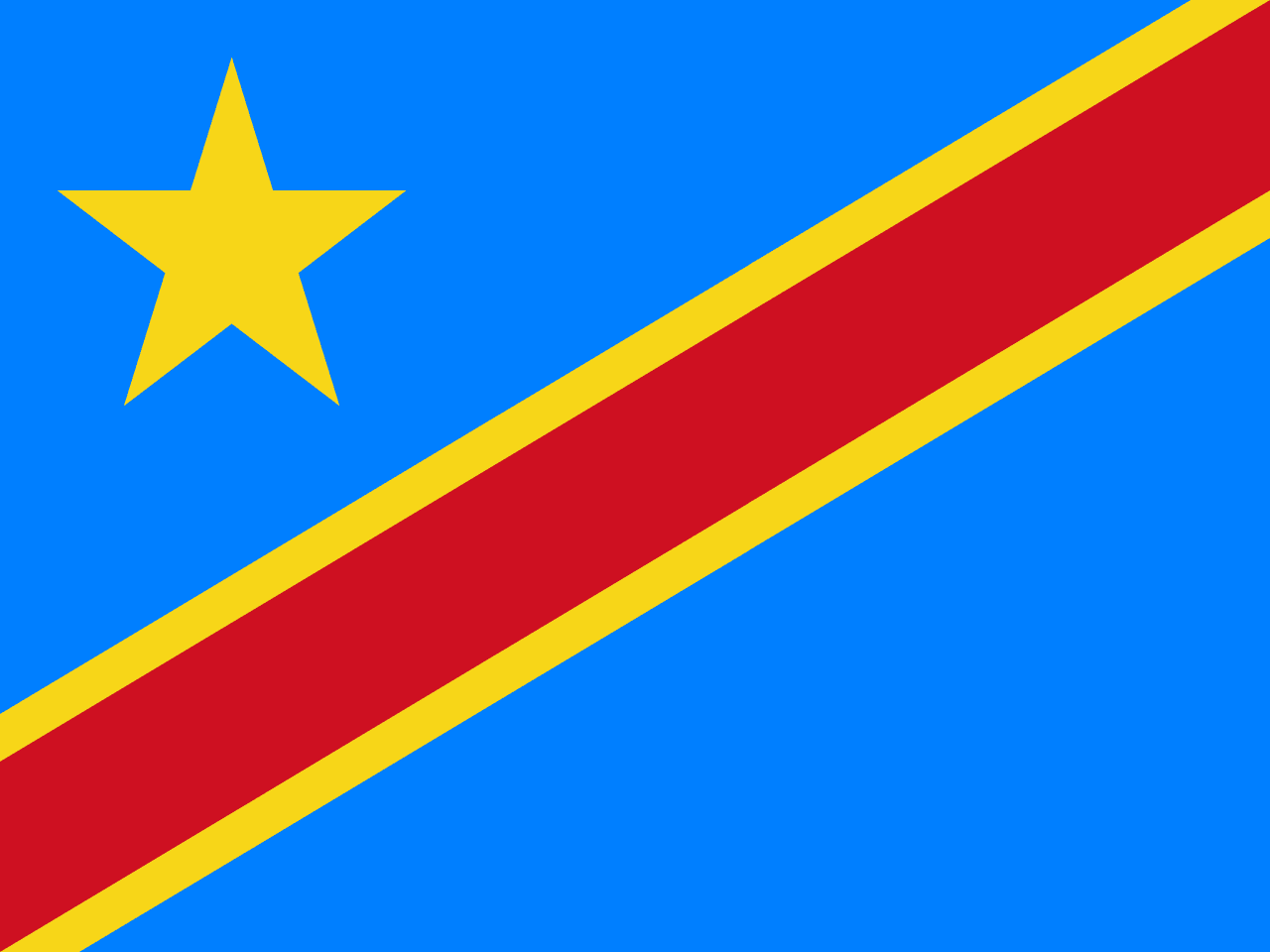
Sprawling across the heart of Africa, the Democratic Republic of the Congo is a country of staggering superlatives: the second-largest nation on the continent, home to the world's second-biggest rainforest, and threaded by a river so mighty it could power an entire continent. Yet for all its riches, the DRC remains one of the planet's most misunderstood places. These ten facts peel back the layers of a country that is equal parts wilderness, music, mineral wealth, and resilience.
1. It Is Africa's Second-Largest Country by Area
Covering roughly 2.34 million square kilometres, the Democratic Republic of the Congo is the largest country in Sub-Saharan Africa and second only to Algeria on the continent. It is so vast that it spans two time zones and shares borders with nine countries, more than almost any other African nation. Its sheer size means a journey from the Atlantic coast in the west to the volcanic highlands near the Rwandan border in the east crosses thousands of kilometres of rainforest, savanna, and mountain. To put it in perspective, the DRC is larger than Spain, France, Germany, Sweden, and Norway combined. This immense scale shapes everything from the country's climate diversity to the enormous logistical challenge of governing it.
2. The Congo River Is the Deepest in the World
The Congo River is the lifeblood of the nation and one of Earth's great waterways. It is the deepest river on the planet, plunging to depths of more than 220 metres in places, and it carries the second-largest volume of water of any river after the Amazon. Crucially, it is the only major river to cross the Equator twice, which means part of its basin is always in a rainy season, giving it a remarkably steady year-round flow. The river and its tributaries serve as natural highways through dense forest where roads simply do not exist. Its hydroelectric potential, particularly at the Inga Falls, is estimated to be enough to electrify much of Africa.
3. Kinshasa Is One of the World's Largest French-Speaking Cities
The capital, Kinshasa, is a roaring megacity of more than 15 million people perched on the south bank of the Congo River. It sits directly across the water from Brazzaville, the capital of the neighbouring Republic of the Congo, making the two the closest pair of capital cities in the world. Kinshasa is also the largest French-speaking city on Earth after Paris, and by some projections it will overtake the French capital. Energetic, chaotic, and endlessly creative, "Kin" is the cultural engine of Central Africa, famous for its street fashion, nightlife, and a population whose entrepreneurial spirit fuels a sprawling informal economy.
4. It Holds the World's Largest Reserves of Cobalt
The DRC sits atop some of the most extraordinary mineral wealth on the planet. It produces around 70 percent of the world's cobalt, a metal essential for the lithium-ion batteries that power smartphones, laptops, and electric vehicles. The country is also a major source of copper, diamonds, gold, tin, and coltan. This concentration of resources places the DRC at the centre of the global green-energy transition. Paradoxically, despite this geological fortune, much of the population has seen little benefit, a tension that defines the nation's modern economy. You can read more about how these resources shape the country in our country guide.
5. More Than 200 Ethnic Groups and 200 Languages Coexist Here
The DRC is one of the most ethnically diverse nations on Earth, home to over 200 distinct ethnic groups, the majority of whom are of Bantu origin. French serves as the official language for government and education, a legacy of Belgian colonial rule, but daily life unfolds in four major national languages: Lingala, Swahili, Kikongo, and Tshiluba. Lingala in particular has spread far beyond the country's borders thanks to Congolese music. This linguistic patchwork allows traders, musicians, and travellers to move between regions, with most Congolese fluent in several tongues, blending local identity with a shared national one.
6. It Is the Birthplace of Congolese Rumba, a UNESCO Treasure
Music is woven into the soul of the DRC, and its greatest export may be Congolese rumba. Born in the bars of Kinshasa in the mid-twentieth century, the genre fused Cuban rhythms with local Bantu traditions and gave rise to the irresistible dance style known as soukous. Legendary artists like Franco Luambo and Papa Wemba turned Congolese music into a continent-wide phenomenon. In 2021, UNESCO recognised Congolese rumba as part of humanity's Intangible Cultural Heritage. The country's flair for style also produced the sapeurs, dapper dressers who treat elegant tailoring as a way of life. The colours and symbolism of national identity even extend to the country's striking flag.
7. The Congo Basin Is the "Second Lungs of the Earth"
The DRC contains the bulk of the Congo Basin rainforest, the second-largest tropical forest in the world after the Amazon. Often called the planet's second lungs, these forests absorb vast quantities of carbon dioxide and play a critical role in regulating the global climate. The basin's peatlands store enormous amounts of carbon, making their protection a matter of worldwide importance. This green expanse shelters extraordinary biodiversity and supports millions of people who depend on the forest for food, medicine, and livelihoods. Conserving it has become one of the central environmental challenges of the twenty-first century.
8. It Is the Only Place on Earth Where Wild Bonobos Live
The forests south of the Congo River are the exclusive home of the bonobo, one of humanity's closest living relatives alongside the chimpanzee. Found nowhere else in the wild, bonobos are famous for their peaceful, matriarchal societies that resolve conflict through cooperation rather than aggression. The DRC is also home to the mountain gorilla, the okapi, a forest relative of the giraffe found only here, and the rare Congo peafowl. The country's eastern Virunga National Park, the oldest in Africa, protects active volcanoes and endangered gorillas alike, making it one of the most ecologically precious yet perilous reserves on the planet.
9. It Was the Stage for the Legendary "Rumble in the Jungle"
In October 1974, the world's eyes turned to Kinshasa for one of the most famous sporting events in history: the "Rumble in the Jungle." Muhammad Ali faced the seemingly invincible George Foreman in a heavyweight title fight watched by an estimated billion people. Ali's surprise victory, using his now-iconic "rope-a-dope" tactic, cemented the bout as a landmark in boxing lore. The fight was paired with a three-day music festival featuring James Brown and B.B. King. For a brief moment, the country, then called Zaire, stood at the very centre of global popular culture.
10. Its National Dish Reflects the Bounty of the Forest and River
Congolese cuisine is hearty, communal, and rooted in the land. A staple is fufu or chikwangue, a dough made from cassava that diners use to scoop up rich sauces. One of the most beloved dishes is moambe chicken, simmered in a thick sauce made from palm fruit and often considered the national dish. Smoked fish from the Congo River, leafy greens like cassava leaves (pondu), plantains, and peanuts feature heavily. Meals are typically shared from communal plates, reflecting the deep cultural value placed on hospitality and togetherness. The result is a cuisine that is filling, flavourful, and unmistakably Central African.
Frequently Asked Questions
What is the capital of the Democratic Republic of the Congo?
The capital is Kinshasa, a massive city of more than 15 million people on the Congo River. It is the largest city in Central Africa and the second-largest French-speaking city in the world after Paris, serving as the country's political, economic, and cultural centre.
What is the Democratic Republic of the Congo famous for?
The DRC is famous for the mighty Congo River, the vast Congo Basin rainforest, and its extraordinary mineral wealth, especially cobalt. It is also celebrated as the home of Congolese rumba music, the only place where wild bonobos live, and the setting of the historic 1974 "Rumble in the Jungle" boxing match.
Why is the DRC sometimes confused with another country?
There are two neighbouring nations with similar names: the Democratic Republic of the Congo (capital Kinshasa) and the Republic of the Congo (capital Brazzaville). The two capitals sit directly across the river from each other, the closest capital cities in the world, which often causes confusion for travellers and map-readers alike.
Conclusion
The Democratic Republic of the Congo is a country of breathtaking scale and contradiction, a place where the world's deepest river winds through rainforests that help cool the entire planet, where the batteries of the future are mined, and where rumba rhythms fill the air of one of Earth's fastest-growing cities. Its challenges are real, but so is its immense natural and human potential. To know the DRC is to glimpse the beating heart of Africa itself, and these ten facts are only an invitation to explore further.