
The Gambia is the smallest country on mainland Africa, a slender sliver of land that hugs both banks of a single river and burrows deep into Senegal like a finger pushed into a loaf of bread. Despite its tiny size, it packs in bustling markets, world-class birdwatching, sun-drenched Atlantic beaches, and a reputation for warmth so genuine that tourism brochures call it "the smiling coast of Africa." Here are ten fascinating facts that reveal why this overlooked nation deserves a much closer look.
1. The Whole Country Is Built Around One River
The Gambia owes its very shape and name to the River Gambia, which flows for roughly 1,120 kilometres from the Fouta Djallon highlands in Guinea down to the Atlantic. The country is essentially a narrow ribbon of land never more than about 50 kilometres wide, wrapped on both sides around the river's lower course. This unusual geography is no accident of nature but a relic of colonial deal-making, when British control extended only as far inland as a gunboat's cannon could fire from the water. The result is a nation almost entirely surrounded by Senegal, with a short Atlantic coastline at its western end. The river remains the lifeblood of the country, used for fishing, transport, and irrigation.
2. It Is Mainland Africa's Smallest Nation
At around 11,300 square kilometres, The Gambia is the smallest country on the African mainland, smaller than the U.S. state of Connecticut. Only island nations such as the Seychelles, São Tomé, and the Comoros are smaller across the entire continent. Yet within this compact territory lives a population of roughly 2.9 million people, making it one of the more densely populated countries in West Africa. You can drive from the Senegalese border in the east to the Atlantic in the west, but crossing the river itself long required a ferry. To learn more about the country's full profile, see our country guide.
3. Banjul Is a Capital on a Disappearing Island
Banjul, the capital, sits on St Mary's Island (Banjul Island) at the mouth of the River Gambia, founded by the British in 1816 as a trading post and base for suppressing the slave trade. It is one of the smallest capital cities in Africa, with a city-centre population of only a few tens of thousands. Most government and commercial life has spilled outward into the larger Kombo Saint Mary area and the booming urban hub of Serekunda, the country's most populous town. Banjul itself faces serious challenges from coastal erosion and rising sea levels, and parts of the low-lying island are increasingly vulnerable to flooding.
4. English Is Official, but Mandinka Rules the Street
English is The Gambia's official language, a legacy of British colonial rule, and it is used in government, schools, and business. In everyday life, however, you are far more likely to hear Mandinka, the most widely spoken indigenous tongue, alongside Wolof, Fula (Pulaar), Serer, Jola, and several others. Wolof in particular serves as a lingua franca in urban areas, much as it does in neighbouring Senegal. This multilingual reality reflects the country's ethnic mosaic, where most people speak two or three languages fluently. Arabic is also widely used in religious contexts, as The Gambia is a predominantly Muslim country.
5. "Kunta Kinte" Made This Tiny Nation World-Famous
One of The Gambia's most famous global connections comes through literature. Author Alex Haley traced his ancestry to the Gambian village of Juffureh and the figure of Kunta Kinte in his landmark 1976 book Roots: The Saga of an American Family, later adapted into a hugely influential television series. The story turned a quiet riverside village into a place of pilgrimage for African Americans seeking their heritage. Nearby Kunta Kinteh Island (formerly James Island), a UNESCO World Heritage Site, was a key node in the transatlantic slave trade. Today these sites stand as sober memorials to one of history's darkest chapters and as symbols of remembrance and return.
6. It Is One of the World's Great Birdwatching Destinations
For its size, The Gambia is a staggering haven for birdlife. More than 500 bird species have been recorded within its borders, drawn by the mix of mangrove creeks, wetlands, savanna, and coastal lagoons. Sites such as the Abuko Nature Reserve, Tanji Bird Reserve, and the Kiang West National Park attract birdwatchers from across Europe, who can spot kingfishers, bee-eaters, herons, hornbills, and African fish eagles often within a short walk. The country's accessibility and English-speaking guides have made it especially popular with British nature tourists. Beyond birds, the reserves shelter monkeys, monitor lizards, hippos along the upper river, and crocodiles.
7. The Sacred Crocodile Pool of Kachikally
Among the country's more surprising attractions is the Kachikally Crocodile Pool in Bakau, where visitors can walk right up to and even touch dozens of Nile crocodiles. Far from being a mere tourist gimmick, the pool is considered sacred by local people, who believe its waters bring fertility and good fortune. Women hoping to conceive have visited for generations to perform rituals there. The crocodiles, accustomed to people and well-fed, are remarkably docile during the day. The site combines spiritual significance, folklore, and a small museum, offering a window into the blend of traditional belief and daily life that characterises Gambian culture.
8. Groundnuts Power the Economy
Agriculture employs the majority of Gambians, and for much of its modern history the economy has revolved around a single crop: the groundnut (peanut). Introduced as a cash crop during the colonial era, groundnuts long dominated exports, leaving the country heavily dependent on global prices and seasonal rains. In recent decades, tourism has grown into a vital pillar of the economy, with European visitors flocking to the Atlantic resorts during the winter sun season. Fishing, remittances from Gambians living abroad, and re-export trade through the river port also play significant roles. Diversifying away from groundnut dependence remains a key economic challenge.
9. A Beloved National Dish Called Benachin
Gambian cuisine is hearty, communal, and bursting with flavour. The unofficial national dish is benachin, also known as "Jollof rice," a one-pot meal of rice cooked with tomatoes, vegetables, fish or meat, and a rich blend of spices, traditionally served on a single large platter shared by the whole family. Another favourite is domoda, a creamy groundnut (peanut) stew, and superkanja, a rich okra stew. Fresh fish from the Atlantic and the river features heavily, often grilled or stewed. Meals are typically eaten with the right hand from a communal bowl, reflecting the deep value Gambians place on hospitality and sharing.
10. Wrestling Is the National Sport
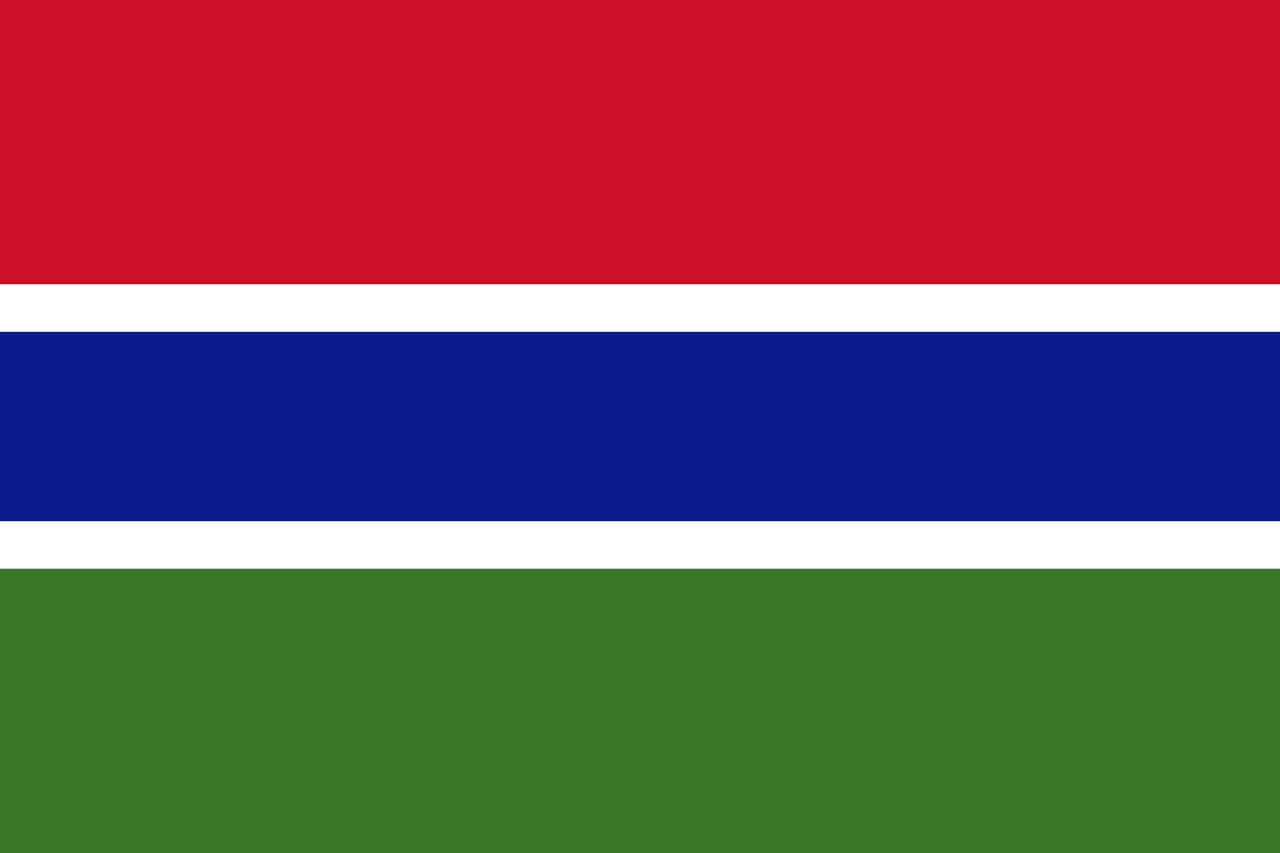
While football is wildly popular, traditional wrestling, known locally as borreh, holds a special place as a long-standing cultural institution shared with neighbouring Senegal. Bouts are accompanied by drumming, chanting, and elaborate pre-match rituals in which wrestlers invoke protective charms and ancestral spirits. Champions can become local celebrities, and matches draw enthusiastic crowds. The sport blends athletic competition with ceremony, music, and spectacle. You can see the colours of the country represented on the national flag, whose red, blue, and green bands separated by white stripes symbolise the sun and savanna, the river, and the land and forests.
Frequently Asked Questions
What is the capital of The Gambia?
The capital is Banjul, located on St Mary's Island at the mouth of the River Gambia. It is one of Africa's smallest capitals; the larger urban centre of Serekunda nearby is the country's most populous town.
What is The Gambia famous for?
The Gambia is famous for being mainland Africa's smallest country, for its excellent birdwatching, sunny Atlantic beaches, and its connection to Alex Haley's Roots through the village of Juffureh and Kunta Kinteh Island. It is widely nicknamed "the smiling coast of Africa."
Why is The Gambia such a strange shape?
Its narrow, finger-like shape follows the lower River Gambia and is a colonial relic. British control was defined roughly by how far cannon fire could reach from gunboats on the river, leaving a thin strip almost entirely surrounded by French-controlled Senegal.
Conclusion
The Gambia proves that geographic size says little about a country's richness. From its river-bound borders and birdsong-filled reserves to its shared platters of benachin and its sacred crocodile pools, this small nation offers an outsized experience. Whether you come for the wildlife, the history, or simply the famous Gambian smile, the smiling coast of Africa rewards every curious traveller and armchair explorer alike.