
Tucked into the northeastern shoulder of South America, Guyana is one of the most misunderstood countries on the continent. People often assume it sits in the Caribbean, speaks Spanish, or is just another stretch of Amazon rainforest. The truth is far stranger and more delightful: this is an English-speaking nation of cricket-lovers, towering waterfalls, and a cultural mosaic unlike anywhere else in the Americas.
1. The Only English-Speaking Country in South America
Guyana holds a distinction that surprises almost everyone: it is the only country in South America where English is the official language. While its neighbors speak Spanish, Portuguese, French, or Dutch, Guyana's colonial history under British rule cemented English as the language of government, schools, and newspapers. In everyday life, most Guyanese also speak Guyanese Creole, a vibrant English-based vernacular peppered with African, Indian, and indigenous words. This linguistic identity helps explain why Guyana often feels more culturally Caribbean than South American, and why it joined the Caribbean Community (CARICOM) rather than aligning solely with its continental neighbors. You can learn more in our country guide.
2. Its Name Means "Land of Many Waters"
The word "Guyana" comes from an indigenous Amerindian term meaning "land of many waters," and few names have ever been more accurate. The country is laced with mighty rivers, including the Essequibo, Demerara, and Berbice, which slice through dense rainforest on their way to the Atlantic. The Essequibo alone is one of the largest rivers in South America by volume. These waterways have shaped Guyanese settlement, transport, and trade for centuries, with much of the population clustered along a narrow coastal strip while the vast interior remains a wilderness of rivers, swamps, and forest reachable mainly by boat or small aircraft.
3. Kaieteur Falls Is One of the World's Most Powerful Single-Drop Waterfalls
Hidden deep in the rainforest is Kaieteur Falls, a natural wonder that dwarfs the famous falls most travelers know. Plunging roughly 226 meters (about 741 feet) in a single uninterrupted drop, Kaieteur is several times taller than Niagara and ranks among the most powerful single-drop waterfalls on Earth when you combine its height with its enormous water volume. Remarkably, it remains largely untouched by mass tourism, with no railings, crowds, or souvenir stalls. Visitors typically arrive by small plane, walking right up to the thundering edge. The surrounding Kaieteur National Park shelters golden frogs and swifts that nest behind the cascade itself.
4. A Population Smaller Than Many Single Cities
Despite being roughly the size of Britain, Guyana is home to only about 800,000 people, making it one of the least densely populated countries in the Western Hemisphere. The overwhelming majority live along the Atlantic coast, particularly around the capital, while the forested interior is home to scattered indigenous communities. This sparse population is one reason Guyana has preserved so much of its natural environment: an estimated 80 percent or more of the country remains covered in tropical forest, making it a global leader in protecting standing rainforest and a key player in international climate conservation efforts.
5. Georgetown, the "Garden City" of Wooden Architecture
The capital, Georgetown, sits on the Atlantic coast, much of it below sea level and protected by a long seawall built during Dutch and British colonial times. Once nicknamed the "Garden City of the Caribbean," it is famous for its tree-lined avenues and striking colonial-era buildings made almost entirely of wood. St. George's Cathedral is one of the tallest wooden churches in the world, and the bustling Stabroek Market, with its iconic cast-iron clock tower, has anchored city life for generations. Canals and drainage ditches called "kokers" thread through the city, a reminder of the Dutch engineers who first reclaimed this swampy coastline.
6. A Cultural Mosaic of Six Peoples
Guyana proudly calls itself the "Land of Six Peoples," reflecting a society built from Indigenous Amerindians, Africans, Indians, Chinese, Portuguese, and other Europeans. The largest groups today are Indo-Guyanese, descended from indentured laborers brought from India in the 1800s, and Afro-Guyanese, descended from enslaved Africans. This blend gives Guyana an extraordinary cultural richness: Hindu and Muslim festivals like Diwali and Eid are celebrated alongside Christian holidays and African-rooted traditions. The result is a national identity that feels genuinely multicultural, expressed in everything from religious diversity to the rhythms of chutney and soca music heard at celebrations across the country.
7. The Birthplace of Curry-and-Roti Comfort Food
Guyanese cuisine is a delicious reflection of its mixed heritage. The unofficial national dish is pepperpot, a rich, dark meat stew flavored with cassareep (a sauce made from bitter cassava) and traditionally eaten at Christmas. Indian influence shows up everywhere in fragrant curries, dhal, and fluffy roti, while Afro-Guyanese cooking contributes hearty cook-up rice and metemgee. Chinese chow mein and Portuguese-influenced baked goods round out the table. Tropical staples like plantain, cassava, and fresh seafood appear in countless dishes, and the local love of fiery wiri wiri peppers ensures that meals here rarely lack heat or character.
8. Sugar, Gold, and a Sudden Oil Boom
For most of its history, Guyana's economy leaned on agriculture and mining, especially sugar, rice, gold, and bauxite. Then, in 2015, enormous offshore oil reserves were discovered, transforming the country almost overnight. Production began in 2019, and Guyana has since become one of the fastest-growing economies in the world, with petroleum reshaping its national outlook and finances. The challenge now is to convert this windfall into lasting prosperity for its small population without sacrificing the pristine rainforest and rivers that make the country so distinctive. It is a balancing act watched closely by economists and environmentalists alike.
9. Cricket Is a National Obsession
Ask a Guyanese about sport, and the conversation will almost certainly turn to cricket. As part of the wider West Indies, Guyana has produced legendary cricketers and contributes players to the famed West Indies team that once dominated the global game. Providence Stadium near Georgetown has hosted international matches, and the sport unites the country's diverse communities like little else. This shared passion is yet another marker of how Caribbean Guyana feels at heart, even though geographically it is firmly anchored to the South American mainland. Football and other sports have followings too, but cricket reigns supreme.
10. Home to the Giants of the Animal Kingdom
Guyana's vast, well-preserved wilderness shelters some of the largest creatures of their kind on the planet. Its rivers and wetlands are home to the giant river otter, the giant anteater, the capybara (the world's biggest rodent), and the arapaima, one of the largest freshwater fish in existence. The endangered harpy eagle soars over the canopy, while jaguars prowl below. The Iwokrama rainforest and the Rupununi savannahs are prized destinations for ecotourists and wildlife researchers. Because so much habitat remains intact, Guyana is increasingly recognized as a stronghold for biodiversity that has been lost in more developed parts of the continent.
Frequently Asked Questions
What is the capital of Guyana?
The capital of Guyana is Georgetown, located on the Atlantic coast at the mouth of the Demerara River. It is the country's largest city and its political, commercial, and cultural hub, famous for its wooden colonial architecture, seawall, and the historic Stabroek Market.
What is Guyana famous for?
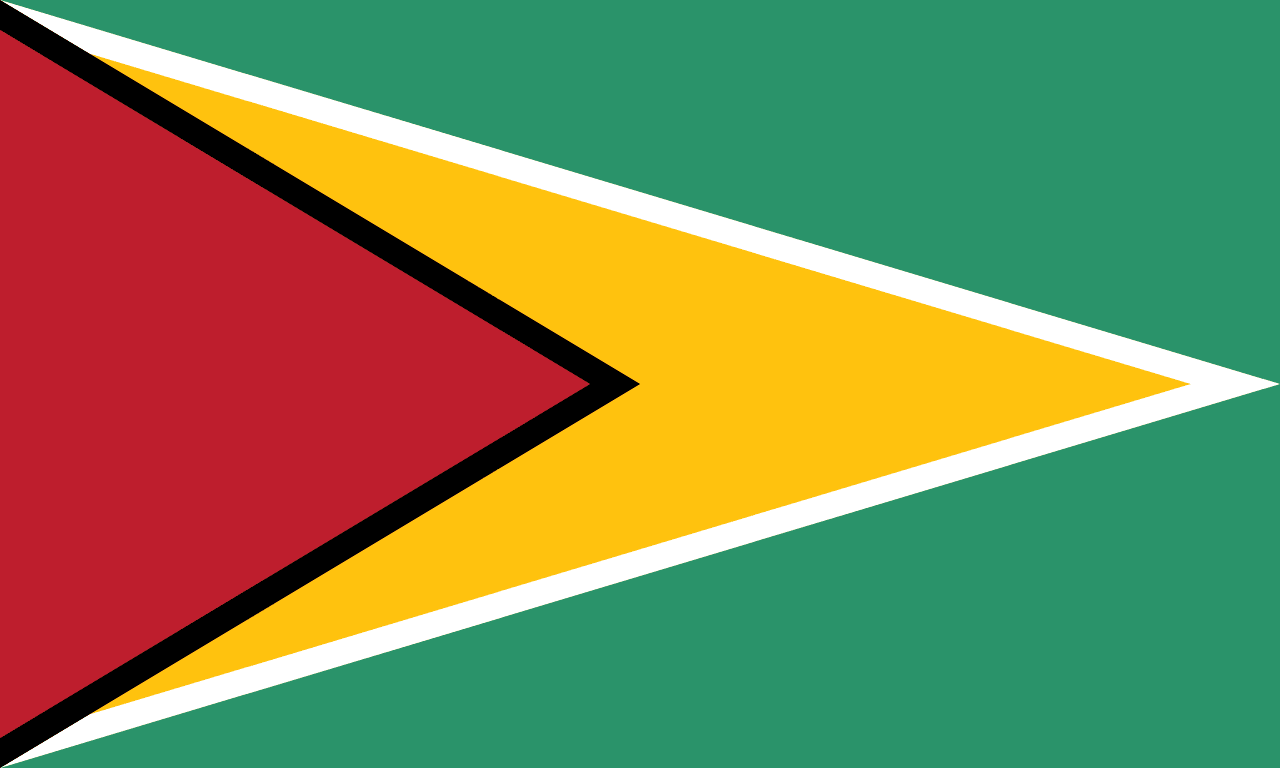
Guyana is famous for being the only English-speaking country in South America, for the spectacular Kaieteur Falls, and for its richly multicultural "Land of Six Peoples" society. In recent years it has also drawn global attention for its booming offshore oil industry and its vast, largely untouched rainforest. Its national flag, the Golden Arrowhead, is another well-known symbol.
Is Guyana in the Caribbean or South America?
Geographically, Guyana is firmly part of South America, sharing borders with Venezuela, Brazil, and Suriname. Culturally and politically, however, it identifies strongly with the Caribbean, sharing English, cricket, and similar traditions, and is a founding member of CARICOM. This dual identity is one of the things that makes Guyana so unique.
Conclusion
Guyana defies easy categorization, and that is precisely what makes it so fascinating. It is a South American country that feels Caribbean, an English-speaking outlier on a Spanish-and-Portuguese continent, and a tiny-population nation guarding some of the planet's most spectacular wilderness. From the roar of Kaieteur Falls to the spice of a Sunday pepperpot, Guyana rewards anyone willing to look past the assumptions and discover the land of many waters for themselves.