
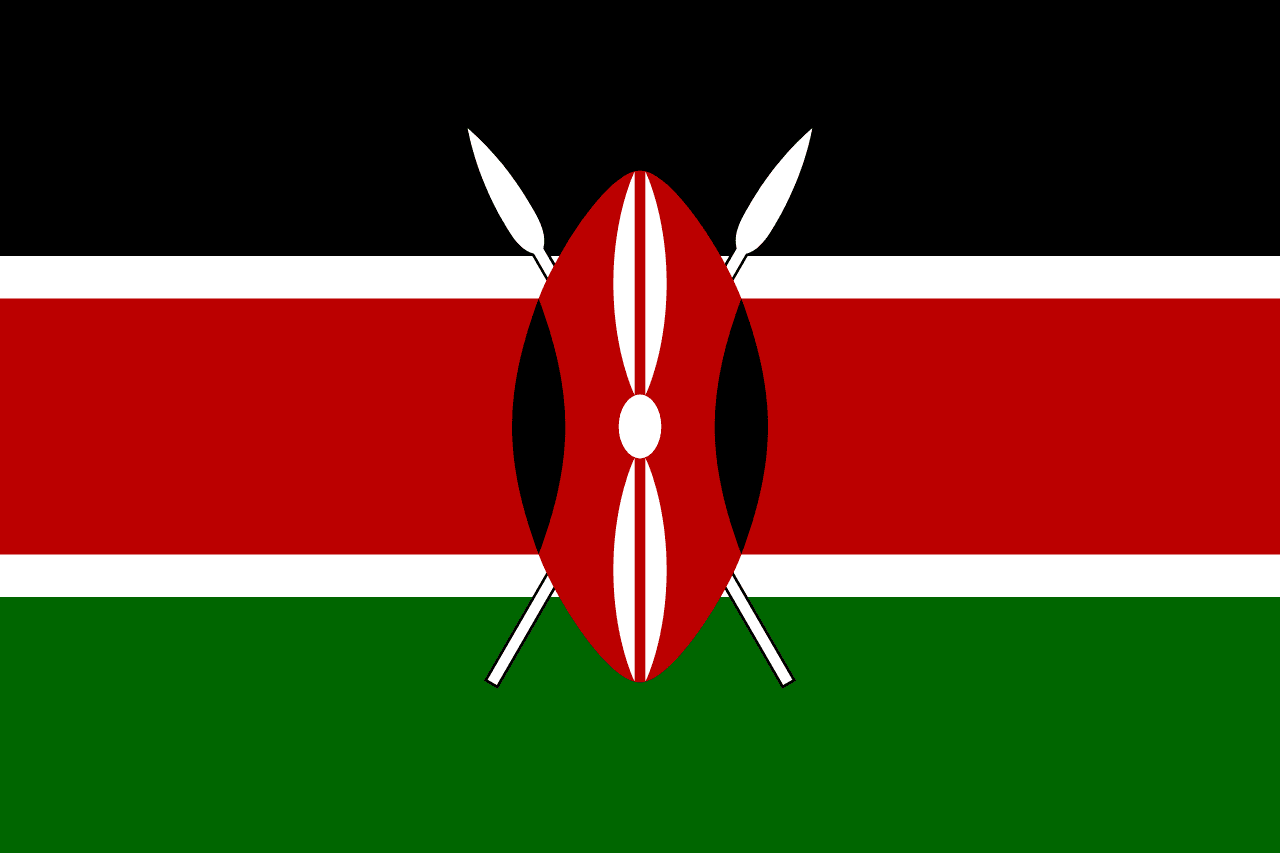
Straddling the equator on the eastern shoulder of Africa, Kenya packs glacier-topped mountains, sun-baked savannahs, coral reefs, and one of the continent's most dynamic cities into a single nation. It is the place where humanity's oldest footprints meet a booming tech scene, where marathon legends train in highland villages, and where the world's most famous wildlife spectacle unfolds every year. Here are ten facts that reveal why Kenya is far more layered than any safari brochure suggests.
1. The Great Rift Valley Splits the Country in Two
One of the most dramatic geological features on Earth slices straight through Kenya from north to south. The Great Rift Valley is part of a continental fracture where the African plate is slowly tearing apart, a process that, over millions of years, will eventually separate East Africa from the rest of the continent. Within Kenya the valley floor cradles a chain of lakes, from the flamingo-dotted shallows of Lake Nakuru to the steaming hot springs and geysers of Lake Bogoria. Towering escarpments and dormant volcanoes line its edges, and the rich volcanic soils make the surrounding highlands some of the most fertile farmland in the region. The valley is geology you can actually watch happening.
2. Nairobi Is the Only Capital With a National Park Inside It
Kenya's capital, Nairobi, is the largest city in East Africa and the region's commercial and diplomatic hub, hosting major United Nations offices. What truly sets it apart is Nairobi National Park, which sits right on the city's doorstep. Lions, rhinos, giraffes, and zebras roam grasslands with a skyline of high-rise towers shimmering in the background, a juxtaposition found nowhere else on the planet. Founded as a railway depot in 1899 where the line crossed cool highland country, Nairobi grew explosively into a metropolis of millions. Today it blends gleaming financial districts, sprawling informal settlements, leafy suburbs, and a vibrant creative culture, earning nicknames like the "Green City in the Sun."
3. It Gave Africa Its First Female Nobel Peace Prize Winner
In 2004, Kenyan environmentalist Wangari Maathai became the first African woman to win the Nobel Peace Prize. She earned the honor for founding the Green Belt Movement, a grassroots campaign that mobilized rural women to plant tens of millions of trees across Kenya to combat deforestation, soil erosion, and poverty. Maathai linked environmental protection directly to democracy, women's rights, and peace, an idea that was radical at the time and is now widely embraced. Her work made Kenya a global symbol of community-led conservation, and her legacy lives on in reforestation projects and a generation of activists she inspired far beyond the country's borders.
4. Kenyans Speak Swahili, English, and Dozens More
Kenya has two official languages: Swahili and English. Swahili, a Bantu language enriched over centuries of Indian Ocean trade with Arabic, Persian, and Portuguese loanwords, serves as the national lingua franca and binds the country's many communities together. English, a legacy of British colonial rule, dominates business, law, and education. Beyond these, Kenya is home to more than 40 distinct ethnic groups, each with its own language, including Kikuyu, Luhya, Luo, Kalenjin, and Maa. In Nairobi's streets you will also hear "Sheng," a fast-evolving urban slang that mixes Swahili and English with local languages, popular especially among the youth.
5. Mount Kenya Has Glaciers on the Equator
Africa's second-highest mountain after Kilimanjaro, Mount Kenya rises to 5,199 metres and gave the country its name. Although it sits almost exactly on the equator, its highest peaks are so cold that they carry glaciers and permanent ice fields, a startling sight in tropical Africa. The mountain is an ancient, eroded volcano whose jagged summits, Batian and Nelion, challenge serious climbers, while the gentler Point Lenana is a popular trekking goal. Its slopes pass through bamboo forests, eerie giant lobelias, and alpine moorland. Sacred to the Kikuyu people, who traditionally regarded it as the dwelling of God, the mountain is a UNESCO World Heritage Site. Sadly, its glaciers are shrinking fast due to climate change.
6. The Maasai Mara Hosts the Great Migration
Every year, more than a million wildebeest, along with hundreds of thousands of zebras and gazelles, thunder across the plains in search of fresh grazing, and the Maasai Mara National Reserve is the dramatic stage for the most perilous chapter of this journey. Crocodile-filled rivers and prowling lions await as the herds cross from Tanzania's Serengeti. Often called one of the Seven Natural Wonders of Africa, the Mara teems with big cats, elephants, and rhinos year-round. The reserve is named for the Maasai people, the iconic red-robed pastoralists whose lands border it. Tourism built around this spectacle is a cornerstone of Kenya's economy and global image.
7. Kenya Is Home to the Cradle of Humankind
The shores of Lake Turkana in northern Kenya have produced some of the most important fossil discoveries in human history. It was here, in the 1980s, that researchers unearthed the remarkably complete skeleton known as "Turkana Boy," a Homo erectus youth who lived around 1.5 million years ago. Earlier finds in the region pushed back our understanding of human ancestry by millions of years. The arid badlands around Lake Turkana, sometimes called the "Jade Sea" for its turquoise hue, remain one of the world's richest hunting grounds for paleontologists. For this reason Kenya is frequently described as part of the "Cradle of Humankind," a place that helped rewrite the story of where we all came from.
8. It Produces the World's Greatest Distance Runners
Few countries dominate a sport the way Kenya dominates long-distance running. Marathoners and middle-distance athletes from Kenya, many from the highland Kalenjin community around the town of Iten, routinely sweep medals at the Olympics and major marathons in London, Boston, Berlin, and beyond. Researchers credit a mix of high-altitude training, lean physiques, active rural childhoods, and a fiercely competitive running culture. Eliud Kipchoge, widely regarded as the greatest marathoner of all time, became the first person to run the distance in under two hours in a special 2019 event. For aspiring runners worldwide, Iten has become a pilgrimage site and training mecca.
9. Tea, Coffee, and Flowers Drive the Economy
Kenya is one of the world's largest exporters of black tea, and the chances are good that a cup of tea sold in Britain or Pakistan contains leaves grown on its cool, misty highland plantations. Kenyan coffee, prized by specialty roasters for its bright, fruity flavor, is another famous export. Perhaps more surprisingly, Kenya is a global powerhouse in cut flowers, supplying a large share of the roses sold in European supermarkets, many flown out of Nairobi within a day of being picked. Alongside agriculture, the country has become East Africa's leading tech hub, nicknamed the "Silicon Savannah," and pioneered M-Pesa, a mobile money system that transformed how millions handle cash.
10. The Coast Is a 1,000-Year-Old Crossroads
Kenya's Indian Ocean coastline has been a meeting point of cultures for over a millennium. Trading dhows carried by monsoon winds brought Arab, Persian, Indian, and later Portuguese merchants to ports like Mombasa, Malindi, and the island of Lamu, where they exchanged goods and ideas with Bantu communities. The result was the distinctive Swahili civilization, with its coral-stone architecture, intricately carved wooden doors, and fusion cuisine heavy on coconut and spices. The Lamu Old Town, a UNESCO World Heritage Site, is the oldest continuously inhabited Swahili settlement, while Mombasa's Fort Jesus, built by the Portuguese in the 16th century, still guards the harbor. The coast feels worlds away from the inland savannahs.
Frequently Asked Questions
What is the capital of Kenya?
The capital of Kenya is Nairobi, the largest city in East Africa and a major regional center for finance, technology, and international diplomacy. It is also the only national capital in the world with a full wildlife national park inside its boundaries. You can learn more in our Kenya country guide.
What is Kenya most famous for?
Kenya is best known for its spectacular safaris, especially the Great Migration in the Maasai Mara, and for producing many of the world's top long-distance runners. It is also celebrated for its tea and coffee, the Swahili culture of its coast, and Mount Kenya, the snow-capped peak that gave the nation its name.
Why does Kenya have glaciers on the equator?
Even though Kenya lies on the equator, the summits of Mount Kenya reach above 5,000 metres, where temperatures stay below freezing year-round. At such extreme altitude, the air is thin and cold enough to sustain glaciers and permanent ice, despite the tropical location far below. Sadly these glaciers are melting rapidly due to climate change.
Conclusion
From the tearing earth of the Rift Valley to the icy crown of Mount Kenya, from million-year-old fossils to world-beating marathoners and a thriving Silicon Savannah, Kenya defies easy summary. It is a country of striking contrasts where ancient traditions and modern innovation share the same horizon. These ten facts are only a starting point, so keep exploring, and take a closer look at the colors and symbolism of the Kenyan flag to continue your journey.