
Tucked away in the green heart of mainland Southeast Asia, Laos is the only landlocked country in the region and one of the least crowded, most laid-back corners of Asia. From the mighty Mekong River and thunderous waterfalls to saffron-robed monks and a cuisine built around sticky rice, this is a nation that rewards slow, curious travel. Here are ten genuinely fascinating facts that go well beyond the guidebook clichés.
1. It Is the Only Landlocked Country in Southeast Asia
Laos is the sole nation in Southeast Asia with no coastline at all. It is wedged between five neighbors: Thailand to the west, Vietnam to the east, Cambodia to the south, and China and Myanmar to the north. Instead of a sea, the country's lifeline is the Mekong River, which flows for roughly 1,900 kilometers through or along Laos, forming much of the western border with Thailand. The Mekong shapes everything here, from fishing and farming to transport and trade. Because the country is so mountainous and river-dependent, Laos has invested heavily in hydropower, aiming to become the so-called "battery of Southeast Asia" by exporting electricity to its energy-hungry neighbors.
2. Vientiane Is One of the World's Most Relaxed Capitals
The capital, Vientiane, sits right on the banks of the Mekong, directly across the water from Thailand. With a metropolitan population in the hundreds of thousands, it is one of the smallest and most low-key national capitals in Asia, a place where bicycles, riverside cafés, and golden temples set the pace rather than skyscrapers and traffic jams. Its name derives from words meaning "city of sandalwood." The city's signature landmark is Pha That Luang, a towering gold-covered Buddhist stupa that serves as the national symbol of Laos and appears on the country's official seal. Vientiane also features Patuxai, a victory monument that looks strikingly like the Arc de Triomphe in Paris.
3. The Country Is Home to Around 8 Million People and Dozens of Ethnic Groups
With roughly 8 million residents, Laos is sparsely populated for its size, giving it one of the lowest population densities in Southeast Asia. What it lacks in numbers it makes up for in diversity: the government officially recognizes 49 ethnic groups, though the true count of distinct communities is far higher. The lowland Lao, who live along the Mekong valley, form the majority, while highland peoples such as the Hmong, Khmu, and many others maintain their own languages, dress, and customs. This mosaic of cultures means a journey across Laos can feel like visiting many small nations at once. You can learn more in our country guide.
4. Lao Is the Official Language, but French Still Lingers
The official language is Lao, a tonal language written in an elegant, rounded script descended from ancient Indian writing systems. It is closely related to Thai, so Lao and Thai speakers can often understand a good deal of each other's speech. Because Laos was part of French Indochina until the mid-20th century, French was once the language of administration, and you can still spot it on older signs, street names, and government documents. Today English is increasingly popular among younger people, especially in tourism. Many ethnic minorities also speak their own distinct languages at home, adding yet another layer to the country's rich linguistic tapestry.
5. It Was Once the "Land of a Million Elephants"
From the 14th century, Laos was unified under the powerful kingdom of Lan Xang, a name that translates to "Land of a Million Elephants and the White Parasol." Elephants were prized as symbols of royal power and used in warfare, ceremony, and heavy labor. The kingdom lasted for centuries before fragmenting into smaller states. While wild and working elephants are far fewer today, the animal remains a national emblem, and conservation centers in places like Sayaboury work to protect the remaining herds. The legacy of Lan Xang is why elephants appear so often in Lao art, festivals, and storytelling, a proud reminder of the country's golden age.
6. Sticky Rice Is the National Obsession
Laotians are believed to eat more sticky (glutinous) rice per person than any other people on Earth. Rather than the loose grains common elsewhere, Lao sticky rice is steamed and served in small woven baskets, then rolled into balls by hand and dipped into sauces and dishes. The national dish is larb (or laap), a zesty minced-meat salad seasoned with herbs, lime, chili, and toasted ground rice. Other staples include tam mak hoong, a fiery green papaya salad, and grilled river fish. Lao cuisine is bold, fresh, and herb-heavy, and it heavily influenced the food of neighboring northeastern Thailand, which shares deep cultural roots with Laos.
7. Luang Prabang Is a UNESCO World Heritage Jewel
The former royal capital of Luang Prabang is widely considered one of the most beautiful towns in Southeast Asia. Set where the Mekong meets the Nam Khan River, its perfectly preserved blend of gilded Buddhist temples and French colonial architecture earned it UNESCO World Heritage status in 1995. Each dawn, hundreds of monks in saffron robes walk silently through the streets to collect alms of rice from kneeling residents, a centuries-old ritual called tak bat. Nearby, the turquoise tiers of the Kuang Si waterfalls cascade through the forest. The town's blend of spirituality, history, and natural beauty makes it the country's most beloved destination.
8. It Is One of the Most Heavily Bombed Countries in History
During the Vietnam War era, Laos endured a "secret war" in which it became, per capita, the most heavily bombed country in history. Between 1964 and 1973, an estimated two million tons of ordnance were dropped on Laos. Tragically, a large share of those bombs failed to explode, leaving the countryside contaminated with unexploded ordnance that still injures people decades later. Demining organizations continue painstaking clearance work today. The legacy is sobering, but Laotians have channeled it into creativity too: in some villages, recycled bomb casings are repurposed into boats, planters, fences, and even spoons cast from melted-down war scrap.
9. The Plain of Jars Is an Ancient Mystery
In the highlands of Xieng Khouang province lies one of the world's most enigmatic archaeological sites: the Plain of Jars. Thousands of giant stone jars, some weighing several tons and standing taller than a person, are scattered across the landscape in clusters. Dating back roughly 2,000 years to the Iron Age, their purpose is still debated. The leading theory holds that they were used in ancient funerary practices, perhaps to hold the dead during cremation rituals. Designated a UNESCO World Heritage Site in 2019, the Plain of Jars remains shrouded in mystery, and parts of it are still being cleared of wartime explosives.
10. The Mekong Hosts Rare Dolphins and a Spectacular Waterfall
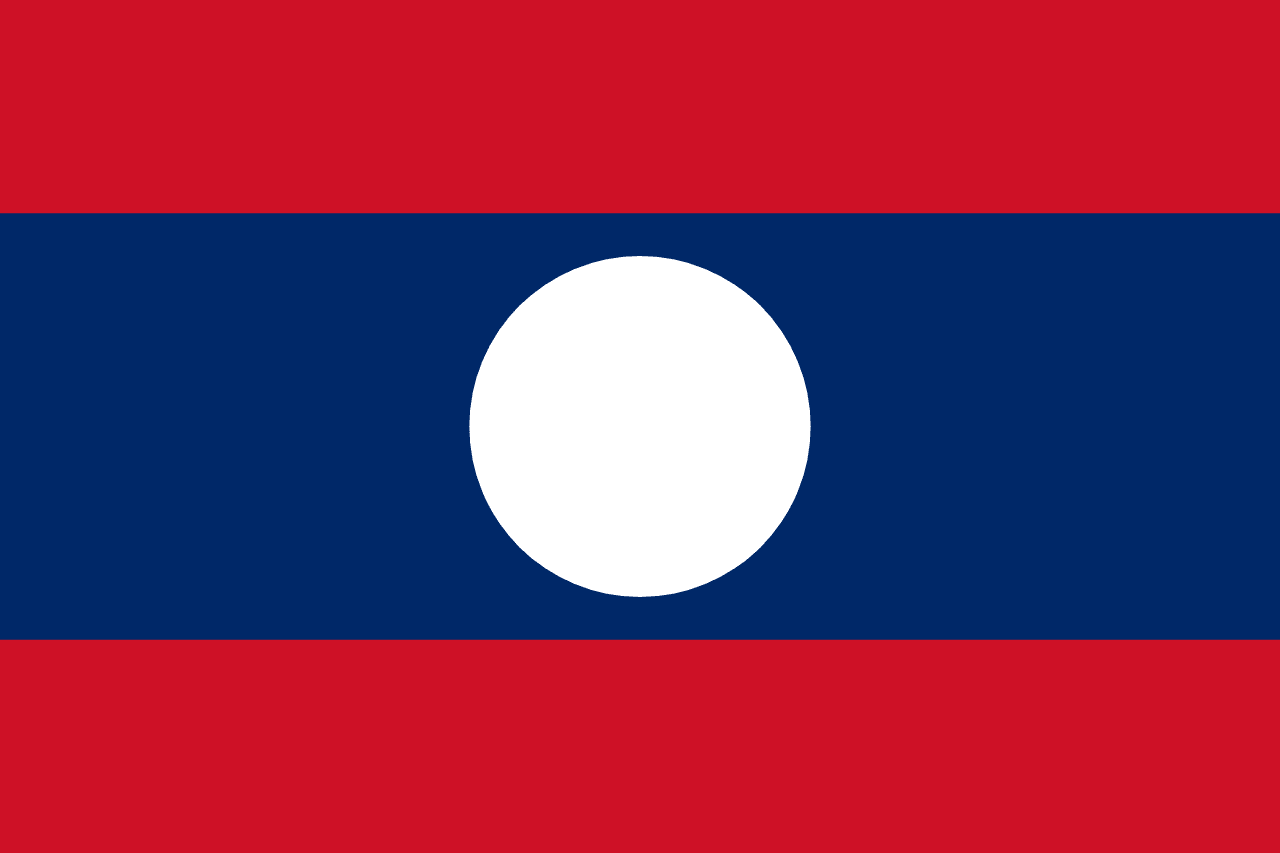
Southern Laos guards some of the region's most remarkable nature. In the far south, the Mekong fans out into Si Phan Don, the "Four Thousand Islands," a maze of channels and sandbars dotted with sleepy villages. Here you can find some of the last surviving Irrawaddy dolphins, a critically endangered freshwater species. Nearby roars the Khone Phapheng Falls, often called the largest waterfall in Southeast Asia by volume, a thundering cascade so powerful it historically blocked boat navigation up the Mekong. The Lao flag, with its distinctive white circle on blue and red bands, even symbolizes the full moon over the Mekong; read more in our piece on the flag.
Frequently Asked Questions
What is the capital of Laos?
The capital of Laos is Vientiane, located on the banks of the Mekong River across from Thailand. It is one of the smallest and most relaxed national capitals in Asia and is home to Pha That Luang, the gold-covered stupa that serves as the country's national symbol.
What is Laos famous for?
Laos is famous for the Mekong River, the UNESCO-listed town of Luang Prabang with its dawn alms-giving monks, its sticky-rice-centered cuisine, and the mysterious Plain of Jars. It is also known as the only landlocked country in Southeast Asia and the historic "Land of a Million Elephants."
Why do Laotians eat so much sticky rice?
Sticky rice is the cultural and dietary heart of Laos, eaten at nearly every meal and even used in religious offerings. Laotians are thought to consume more glutinous rice per person than any other people in the world, rolling it into balls by hand to scoop up flavorful dishes like larb and spicy papaya salad.
Conclusion
Laos is a country that quietly surprises everyone who takes the time to explore it. From ancient stone jars and a kingdom of a million elephants to saffron-robed monks, freshwater dolphins, and baskets of sticky rice, it blends deep history with serene natural beauty. These ten facts only hint at the richness of this gentle, landlocked nation, and there is always more to discover about its people, landscapes, and traditions.