
Scattered across the western Pacific like a handful of emerald jewels dropped into impossibly blue water, Palau is one of the planet's smallest and most extraordinary nations. It is a place where jellyfish have lost their sting, where the world's first shark sanctuary protects the ocean's apex predators, and where ancient matrilineal traditions still shape everyday life. Here are ten facts that reveal why this tiny archipelago looms so large in the imagination.
1. An Archipelago of More Than 300 Islands
Palau is not a single island but a scattered chain of over 300 islands and islets stretching across the western Pacific, in the region of Micronesia. Most of the population clusters on a few of them, while the majority remain uninhabited green humps rising from the lagoon. The crown jewels are the Rock Islands, hundreds of mushroom-shaped limestone mounds carpeted in dense jungle that seem to float above turquoise channels. These ancient coral formations were undercut at the waterline by erosion and marine creatures, giving them their distinctive top-heavy silhouette. For a fuller picture of the country's geography, see our country guide.
2. Ngerulmud Is One of the World's Smallest Capitals
Palau's capital, Ngerulmud, has the rare distinction of being one of the least populated national capitals on Earth, home to only a few hundred people. It sits on the island of Babeldaob, surrounded by jungle and rolling hills rather than skyscrapers. The seat of government moved here in 2006 from the former capital of Koror, which remains the country's largest town and commercial hub. The capitol building, with its domed roof echoing the United States Capitol, rises somewhat surreally out of the wilderness, a reminder of the close ties between the two nations.
3. A Nation of Roughly 18,000 People
With a population of only around 18,000, Palau is among the smallest sovereign states in the world. This intimate scale means community bonds run deep and extended family networks form the backbone of society. Yet despite its tiny size, Palau is a full member of the United Nations and maintains its own foreign policy, currency arrangements, and national identity. The Palauans are descended from seafarers who settled these islands thousands of years ago, and a strong sense of belonging to clan and village persists alongside modern life.
4. A Society Organized Around Women
Palauan culture is traditionally matrilineal, meaning clan membership, land rights, and titles pass through the mother's line. Senior women hold significant authority: they choose and can remove the male chiefs who represent their clans, and they manage important family resources and money. This gives Palauan women a degree of social and political influence unusual among traditional societies. Even today, female elders command deep respect, and major community decisions often hinge on their counsel. It is a striking example of how a small culture can organize power very differently from the wider world.
5. English and Palauan Share Official Status
The national language is Palauan, an Austronesian tongue spoken by most residents and rich with terms tied to fishing, family, and the sea. English is also widely used and shares official status nationally, a legacy of decades of American administration after World War II. Curiously, the state of Angaur recognizes Japanese as one of its official languages, a relic of the Japanese colonial era and reportedly one of the few places on Earth where Japanese holds such status. This linguistic mix reflects Palau's layered history of foreign rule.
6. A History of Many Flags
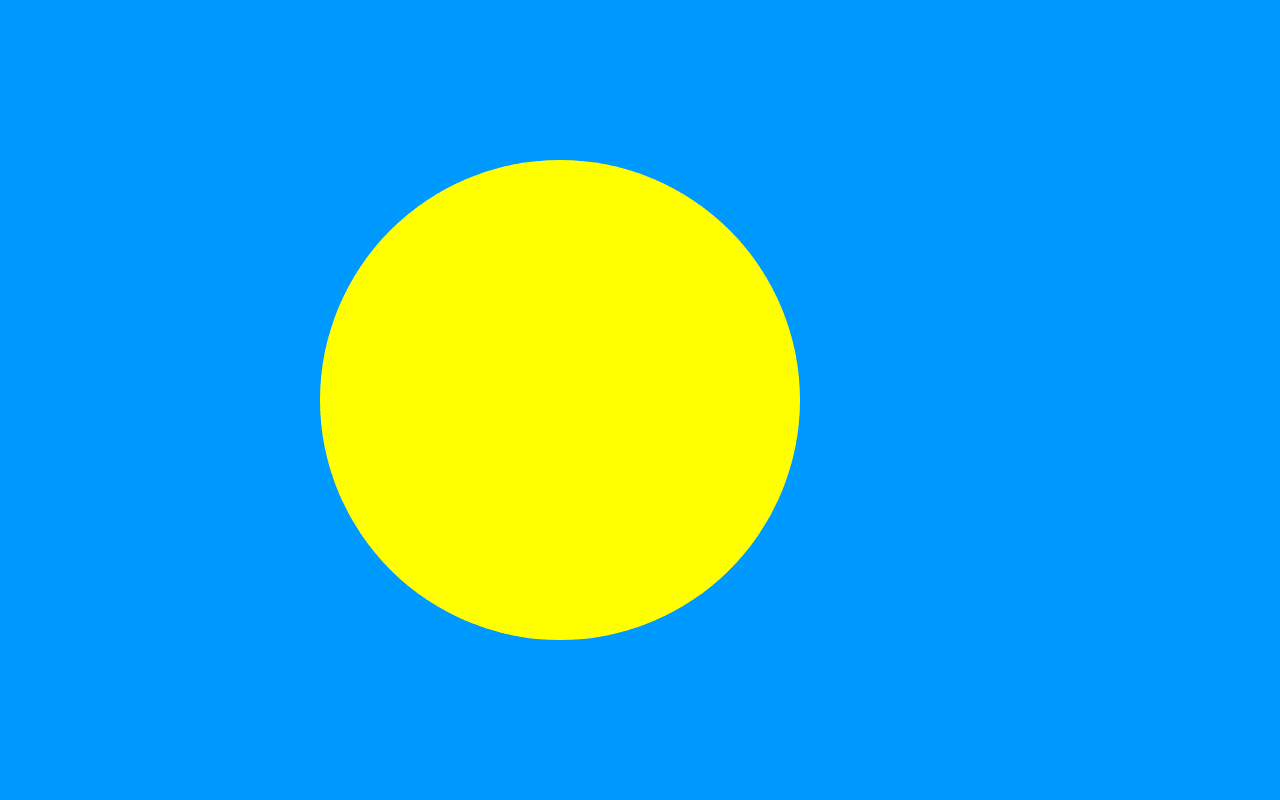
Palau's modern history reads like a relay race of colonial powers. Spain claimed the islands in the late 19th century, then sold them to Germany in 1899. Japan took control during World War I and ruled until the Pacific battles of World War II, when the United States captured the islands after brutal fighting on Peleliu in 1944. Palau then spent decades as part of a US-administered trust territory before finally achieving independence in 1994 under a Compact of Free Association with the United States. The story behind the national symbol is explored in our piece on the flag.
7. Jellyfish Lake, Where You Can Swim Among Millions
One of Palau's most surreal attractions is Jellyfish Lake on Eil Malk island, a saltwater lake cut off from the ocean and home to millions of golden jellyfish. Over thousands of years of isolation, these jellyfish lost much of their stinging ability because they had few predators. Each day they migrate across the lake following the sun, which feeds the algae living inside their bodies. Snorkelers can drift gently among the pulsing golden cloud in an experience found almost nowhere else on Earth. It is one of the world's most famous marine wonders.
8. The World's First Shark Sanctuary
Palau has positioned itself as a global leader in ocean conservation. In 2009 it declared its entire exclusive economic zone the world's first national shark sanctuary, banning commercial shark fishing across an area of water larger than France. The country later created the Palau National Marine Sanctuary, protecting a vast swath of ocean from commercial fishing. Palau also pioneered the "Palau Pledge," a promise stamped into every visitor's passport committing them to protect the environment for future generations. For a nation whose economy leans heavily on dive tourism, healthy reefs are not just beautiful but essential.
9. Food From the Reef, the Garden, and the Earth Oven
Palauan cuisine draws on the abundance of the sea and the fertility of the tropics. Fresh fish, reef creatures, and the prized mangrove crab feature heavily, alongside taro, cassava, sweet potato, and coconut. Taro in particular carries deep cultural meaning and is often cultivated by women in flooded patches. Traditional feasts may include food cooked in an earth oven, where ingredients are baked slowly over hot stones buried in the ground. Tropical fruits, fermented dishes, and the influences of Japanese and American cooking round out a varied and distinctly Pacific table.
10. A Living Tradition of Storyboards and Bai
Palau preserves its oral history through a unique art form known as the storyboard, in which legends and folktales are carved in relief onto wooden panels. These intricate carvings originally decorated the bai, the traditional men's meeting houses that served as community and political centers. The bai were elaborately painted with mythological scenes and stood on stone platforms, and a handful of restored examples survive today. Storyboard carving has since become a celebrated craft, allowing visitors to take home a piece of Palauan legend while keeping ancient stories alive across generations.
Frequently Asked Questions
What is the capital of Palau?
The capital is Ngerulmud, located on the island of Babeldaob. It is one of the smallest national capitals in the world by population. The country's largest town and main commercial center, however, is nearby Koror, which served as the former capital until 2006.
What is Palau famous for?
Palau is famous for its spectacular marine environment, especially the Rock Islands and Jellyfish Lake, where you can swim among millions of nearly stingless jellyfish. It is also celebrated for world-class scuba diving and for being a global pioneer in ocean conservation, having created the world's first national shark sanctuary.
Is it true that women hold special power in Palau?
Yes. Palauan society is traditionally matrilineal, meaning land, titles, and clan membership pass through the mother's line. Senior women select and can remove the male chiefs, giving female elders considerable authority over community affairs and family resources.
Conclusion
From its sun-chasing jellyfish and shark-filled sanctuaries to its women-led clans and storyboard carvings, Palau proves that a nation of just 18,000 people can hold a wealth of wonders. This tiny Pacific archipelago is a reminder that some of the world's most remarkable places come in the smallest packages, rewarding anyone willing to look a little closer.
