
Poland is one of Europe's great comeback stories: a nation that literally vanished from the map for 123 years yet kept its language, faith, and identity alive, then rebuilt itself into one of the continent's economic dynamos. Stretching from Baltic dunes to Carpathian peaks, with a capital that rose from rubble and forests where wild bison still roam, this is a country full of surprises. Here are ten fascinating facts that go far beyond the textbook.
1. It Was Erased From the Map for 123 Years
In a sequence of three partitions between 1772 and 1795, the powerful empires of Russia, Prussia, and Austria carved Poland up among themselves until it simply ceased to exist as a sovereign state. For 123 years there was no Poland on any official map of Europe. Yet the nation refused to disappear: Poles preserved their language in secret schools, kept the Catholic faith, and staged repeated uprisings. When independence was finally restored in 1918 after World War I, it was one of the most remarkable national resurrections in modern history. You can read more in our country guide.
2. Warsaw Was Rebuilt Almost Brick by Brick
Warsaw, the capital, was deliberately razed by occupying forces near the end of World War II, with an estimated 85 percent of the city destroyed. Rather than abandon it or build something entirely modern, Poles painstakingly reconstructed the historic Old Town using old paintings, photographs, and architectural drawings as references. The result was so faithful and unprecedented that UNESCO inscribed the rebuilt Old Town on its World Heritage List, not as a forgery but as an extraordinary example of total reconstruction. Today, with around 1.8 million residents, Warsaw is a fast-growing hub of finance and culture where reconstructed Baroque facades sit beside gleaming skyscrapers.
3. A Country of Nearly 38 Million Proud Poles
Poland is home to roughly 37.8 million people, making it one of the largest populations in Central Europe. What is striking is the country's homogeneity: after the upheavals of the 20th century, the vast majority of residents identify as ethnically Polish and Roman Catholic, giving the nation an unusually strong shared identity. Poles are also one of the world's most widely scattered peoples, with a massive diaspora known as the Polonia living in the United States, the United Kingdom, Germany, and beyond. Chicago, in fact, has long been considered one of the largest Polish urban populations outside Poland itself.
4. The Polish Language Is Famously Tricky
Polish is a West Slavic language written in the Latin alphabet, but with a thicket of consonant clusters and special characters like ą, ę, ł, ż, and ź that intimidate many learners. Tongue-twisting words and phrases, such as the notorious chrząszcz (beetle), are a national source of pride and amusement. The language has seven grammatical cases and a complex system of gendered nouns. Despite the difficulty, Polish has given the world plenty: it is the language of Nobel-winning poets like Wisława Szymborska and Czesław Miłosz, and of writers whose work shaped European literature.
5. A Polish Astronomer Stopped the Sun and Moved the Earth
Nicolaus Copernicus, born in Toruń in 1473, transformed humanity's understanding of the cosmos by proposing that the Earth and other planets revolve around the Sun rather than the other way around. His heliocentric model, published in On the Revolutions of the Celestial Spheres, sparked a scientific revolution. Poland's pride in its scientists did not stop there: Marie Skłodowska-Curie, born in Warsaw, became the first person to win two Nobel Prizes and the only person to win in two different sciences, physics and chemistry. She named the element polonium after her homeland.
6. Europe's Last Primeval Forest Is Home to Wild Bison
Straddling the border with Belarus, the Białowieża Forest is the last remaining fragment of the immense lowland woodland that once blanketed much of the continent. Within it roam the European bison, or wisent, the heaviest land animal in Europe. Hunted to the brink, the species was reintroduced from captive herds and now numbers in the hundreds within the forest. The ancient oaks, some centuries old, and the rich ecosystem of wolves, lynx, and rare birds earned the forest UNESCO World Heritage status. It offers a rare glimpse of how Europe looked before farms and cities.
7. There Is a Cathedral Carved Entirely From Salt
Near Kraków lies the Wieliczka Salt Mine, where miners spent centuries excavating rock salt and, in their spare time, sculpting an underground world of breathtaking beauty. The mine descends to depths of more than 300 meters and contains chapels, statues, and chandeliers all carved from salt. The crown jewel is the Chapel of St. Kinga, an enormous subterranean church with salt altars, salt reliefs of biblical scenes, and even glittering chandeliers made from dissolved and recrystallized salt. It was one of the very first sites ever added to the UNESCO World Heritage List, back in 1978.
8. Pierogi, Bigos, and a Cuisine Built for Cold Winters
Polish cuisine is hearty, comforting, and deeply tied to family life. The most iconic dish is the pierogi, soft dumplings stuffed with anything from potato and cheese to mushrooms, meat, or sweet fruit. Other staples include bigos, a slow-cooked hunter's stew of cabbage and meats, and żurek, a tangy sour rye soup often served in a bread bowl. Meals are social occasions, and hospitality is taken seriously. Poland is also famous for its vodka, with a tradition of distillation stretching back centuries, and it is one of the countries that claims to have invented the spirit.
9. From Communist Hardship to EU Economic Star
For decades after World War II, Poland lived under a communist system with shortages and central planning. The Solidarity movement, led by electrician Lech Wałęsa and backed by the moral authority of the Polish-born Pope John Paul II, helped bring down communism across the Eastern Bloc in 1989. Since then, Poland has been one of Europe's economic success stories, joining the European Union in 2004 and posting some of the most consistent growth on the continent. It was famously the only EU member to avoid recession during the 2008 global financial crisis, earning it a reputation for resilience.
10. Mountains, Beaches, and a Thousand Castles
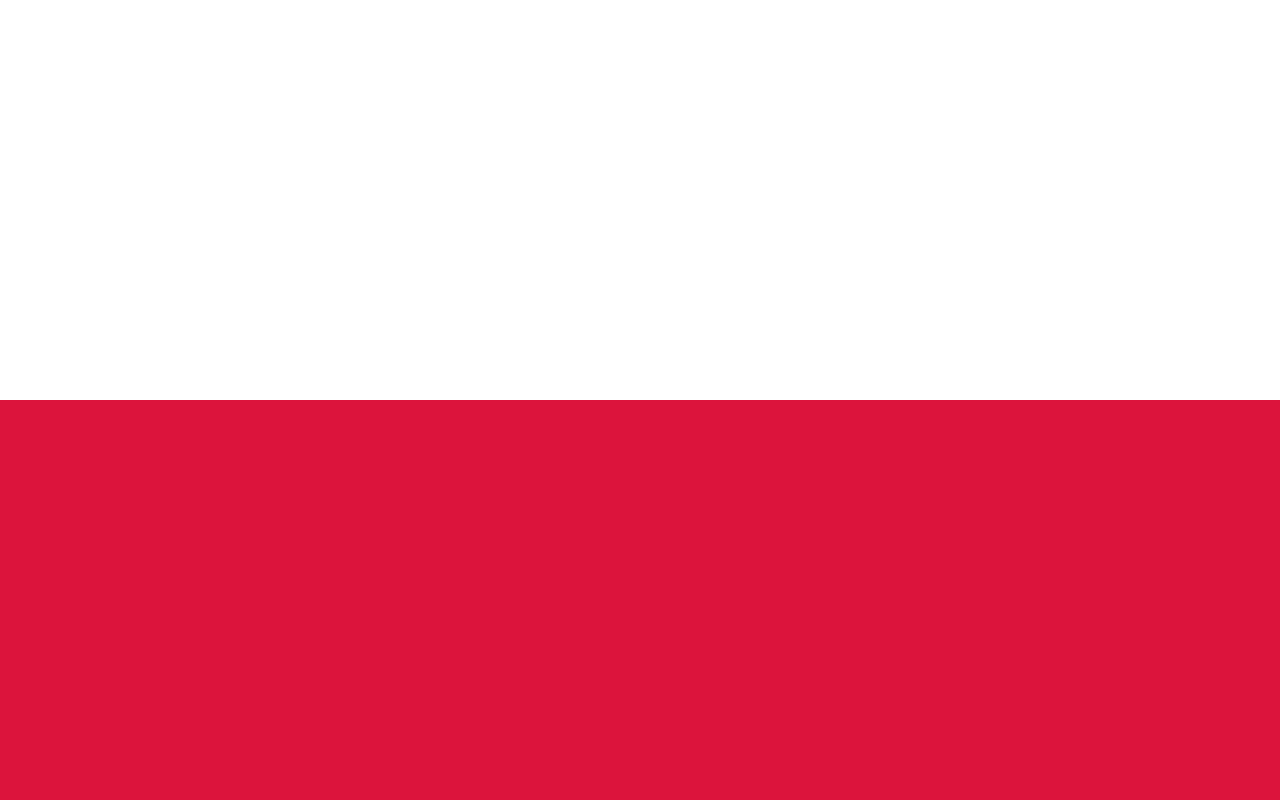
Poland's geography is surprisingly varied for a country often imagined as flat plains. To the south rise the Tatra Mountains, a dramatic alpine range crowned by Rysy peak, where the resort town of Zakopane draws skiers and hikers. To the north stretches the Baltic coast, with sandy beaches and the shifting dunes of Słowiniec National Park. In between lie lake districts, ancient forests, and the medieval brick fortress of Malbork, the largest castle in the world by land area. The colours of the nation's flag, white over red, fly proudly across all these landscapes.
Frequently Asked Questions
What is the capital of Poland?
The capital of Poland is Warsaw, a city of around 1.8 million people on the Vistula River. Almost completely destroyed in World War II, it was meticulously rebuilt and is now the country's political, financial, and cultural heart.
What is Poland most famous for?
Poland is famous for its dramatic history of surviving partition and wartime destruction, its rich cuisine of pierogi and hearty stews, the Wieliczka Salt Mine, the bison of Białowieża Forest, and as the homeland of figures like Copernicus, Marie Curie, Chopin, and Pope John Paul II.
Is it true Poland has a forest of crooked trees?
Yes. Near the town of Gryfino stands the Crooked Forest, a grove of around 400 pine trees that all bend sharply at the base in the same direction before growing straight upward. No one knows for certain why, with theories ranging from a deliberate but interrupted human technique to snow damage, making it one of Poland's enduring natural mysteries.
Conclusion
Poland is a country that rewards curiosity at every turn, from its salt cathedrals and primeval forests to its astonishing capacity to rebuild and reinvent itself. A nation that refused to vanish, it now stands as one of Europe's most dynamic and culturally rich societies. These ten facts only begin to capture its depth, and there is always more waiting to be discovered.