
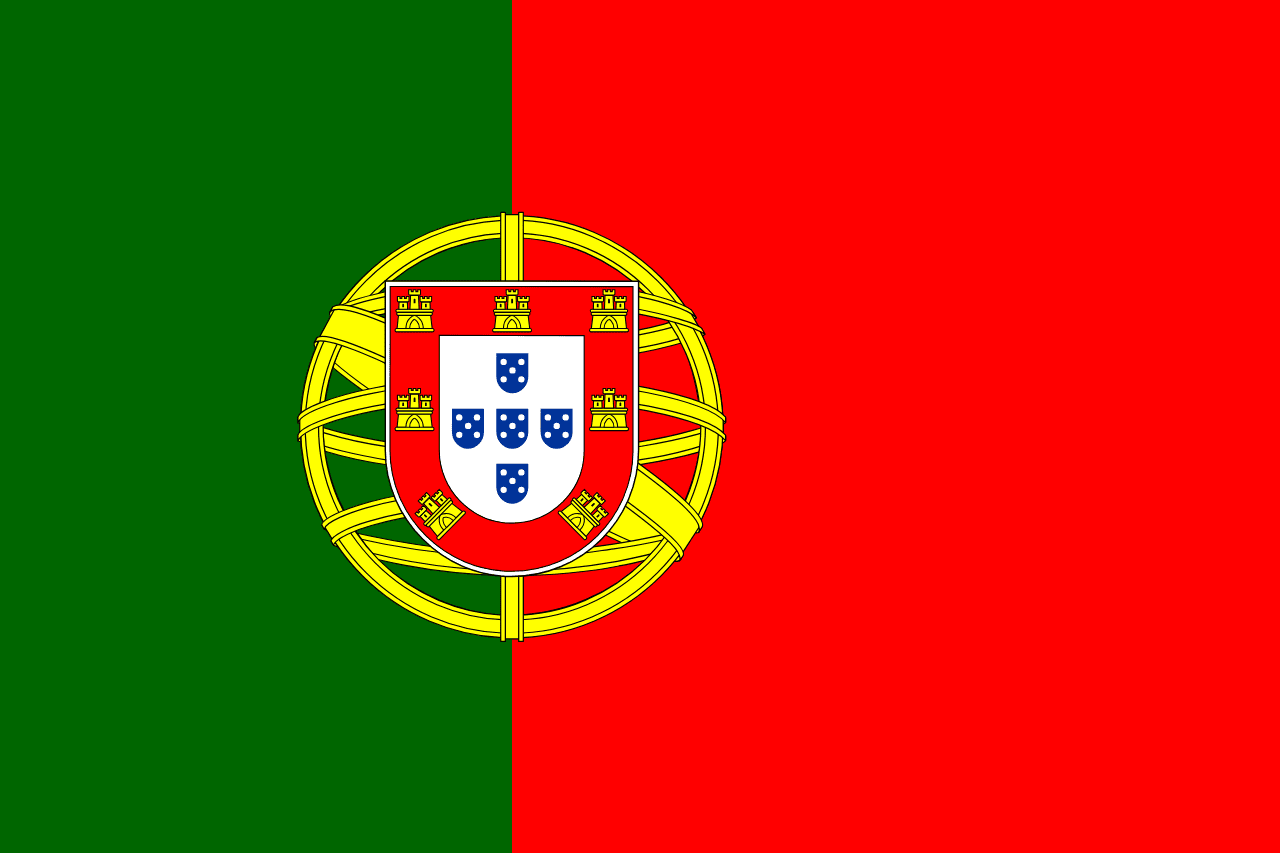
Perched on the southwestern edge of the Iberian Peninsula, Portugal is a country where Atlantic waves crash against golden cliffs, where 500-year-old explorers' tales still echo through cobbled streets, and where a custard tart can spark genuine devotion. It is one of Europe's oldest nations, yet it feels endlessly fresh. Here are ten fascinating facts that reveal why Portugal continues to captivate travelers, historians, and food lovers alike.
1. It Has Europe's Oldest Unchanged Borders
Portugal's mainland borders have remained essentially fixed since 1297, when the Treaty of Alcanizes settled the frontier with the Kingdom of Castile. That makes Portugal one of the oldest nation-states in the world, with boundaries older than almost any other country in Europe. The nation itself was founded in 1143, when Afonso Henriques was recognized as the first King of Portugal. This remarkable continuity has helped forge a strong, unified national identity. While empires rose and fell and the rest of the European map was redrawn time and again, Portugal's shape stayed strikingly constant for more than seven centuries, a quiet testament to its endurance.
2. Lisbon Is Older Than Rome
The capital, Lisbon, is one of the oldest cities in Western Europe, predating other great capitals like London, Paris, and even Rome by centuries. Founded by Phoenician traders and later shaped by Romans and Moors, Lisbon sprawls across seven hills overlooking the Tagus River. Its vintage yellow Tram 28 rattles past pastel facades, miradouros (viewpoints) offer sweeping vistas, and the Alfama district preserves a medieval maze of alleys that survived the catastrophic 1755 earthquake. That disaster, one of the deadliest in European history, reshaped both the city and Enlightenment thinking about natural catastrophes. To learn more about the country's regions and cities, see our Portugal country guide.
3. A Small Country That Once Ruled a Global Empire
During the Age of Discovery in the 15th and 16th centuries, tiny Portugal became the launchpad for some of history's most consequential voyages. Vasco da Gama opened the sea route to India in 1498, Ferdinand Magellan's expedition completed the first circumnavigation of the globe, and Pedro Alvares Cabral reached Brazil in 1500. At its height, the Portuguese Empire stretched across South America, Africa, and Asia, making it the first truly global empire and one of the longest-lived. This maritime legacy still shapes Portuguese identity, and you can read about its symbolism in the national flag, whose armillary sphere recalls these world-spanning expeditions.
4. Portuguese Is Spoken by Over 250 Million People
Although Portugal is home to only around 10.4 million people, the Portuguese language reaches far beyond its borders. It is the official language of nine countries and territories, including Brazil, Angola, Mozambique, Cape Verde, and Guinea-Bissau, and is spoken by more than 250 million people worldwide. That makes it one of the most widely spoken languages on the planet and the most spoken language in the Southern Hemisphere. This vast linguistic family is a direct legacy of Portugal's seafaring past, binding together a global community known as the Lusophone world that spans four continents.
5. Fado: The Soulful Sound of Saudade
Portugal gave the world fado, a melancholic style of music recognized by UNESCO as Intangible Cultural Heritage. Performed in the taverns of Lisbon and the university city of Coimbra, fado expresses saudade, a uniquely Portuguese word describing a deep, bittersweet longing for something or someone absent. Accompanied by the teardrop-shaped Portuguese guitar, fado singers pour raw emotion into their songs. The genre rose from the working-class neighborhoods of 19th-century Lisbon and was immortalized by legendary singer Amalia Rodrigues. Even if you do not understand the lyrics, the haunting melodies convey a feeling that words alone cannot capture.
6. The Birthplace of the Custard Tart
No discussion of Portugal is complete without the pastel de nata, a flaky pastry shell filled with rich, caramelized egg custard. The original recipe was created before the 18th century by Catholic monks at the Jeronimos Monastery in Belem, who used leftover egg yolks (egg whites were used to starch laundry and clarify wine). The secret recipe lives on at the famous Pasteis de Belem bakery, which has been baking them since 1837. Beyond the beloved tart, Portuguese cuisine is built around the sea: bacalhau (salted cod) is said to have 365 different preparations, one for every day of the year, and grilled sardines are a summer festival staple.
7. The World's Top Cork Producer
Portugal produces roughly half of the world's cork, harvested from the bark of cork oak trees that blanket the sun-baked Alentejo region. The cork oak is so important that it is Portugal's national tree, and cutting one down without permission is illegal. The bark is stripped by hand every nine years without harming the tree, which can live for over two centuries. While cork is famous for sealing wine bottles, today it appears in everything from flooring and insulation to handbags, shoes, and even NASA spacecraft components. The sprawling, biodiverse cork oak forests, known as montados, also provide vital habitat for endangered wildlife.
8. Home of the Comeback Iberian Lynx
Portugal's landscapes shelter some remarkable wildlife, including the Iberian lynx, once the most endangered cat species in the world. Thanks to intensive conservation programs across Portugal and Spain, the lynx has made a dramatic recovery and is no longer classified as endangered, one of conservation's great success stories. The country's wild spaces also host Iberian wolves in the north, while the Azores archipelago in the Atlantic is one of the best places on Earth to spot whales and dolphins. Add the pink flamingos of the Algarve wetlands and Portugal becomes a surprisingly rich destination for nature lovers.
9. Europe's Longest Bridge and a Wave-Surfing Capital
Spanning the Tagus estuary near Lisbon, the Vasco da Gama Bridge stretches over 17 kilometers, making it one of the longest bridges in Europe. But Portugal's most jaw-dropping natural spectacle lies on the coast at Nazare, where an enormous underwater canyon funnels Atlantic swells into some of the biggest surfable waves on the planet. Surfers have ridden walls of water exceeding 26 meters there, setting world records. From the southern beaches of the Algarve to the dramatic cliffs of the west coast, Portugal's roughly 1,800 kilometers of coastline make it a paradise for surfers, sunseekers, and storm-watchers alike.
10. The Oldest Wine Region in the World
The Douro Valley, a stunning landscape of terraced vineyards carved into steep river hillsides, was officially demarcated in 1756, making it the oldest regulated and protected wine region on Earth. This is the home of port wine, the sweet fortified wine that takes its name from the northern city of Porto, Portugal's second-largest city. Portugal is also famous for vinho verde, a light "green wine" from the country's lush northwest. With grape-growing traditions stretching back to Roman times and beyond, wine is woven deeply into Portuguese culture, and the terraced Douro vineyards are now a UNESCO World Heritage Site.
Frequently Asked Questions
What is the capital of Portugal?
The capital of Portugal is Lisbon, the country's largest city and one of the oldest in Western Europe. Built across seven hills beside the Tagus River, it is the political, cultural, and economic heart of the nation, famous for its historic trams, hilltop viewpoints, and the riverside Belem district.
What is Portugal famous for?
Portugal is famous for its Age of Discovery explorers, port wine, custard tarts (pasteis de nata), soulful fado music, and its sunny Algarve beaches. It is also the world's leading cork producer and home to historic landmarks like the Belem Tower and the terraced vineyards of the Douro Valley.
Why does Portugal speak Portuguese instead of Spanish?
Although Portugal and Spain share the Iberian Peninsula, Portuguese evolved as a distinct language from Latin in the western region of Galicia and northern Portugal. Portugal's independence as a kingdom from 1143, with borders fixed by 1297, allowed the language to develop separately and spread worldwide through Portuguese exploration and colonization.
Conclusion
From its ancient, unchanging borders to its globe-spanning language and its world-record waves, Portugal packs an extraordinary amount of history, flavor, and natural beauty into a relatively small space. It is a nation that looks both outward to the Atlantic and inward to its deep traditions. These ten facts are only the beginning, so let your curiosity lead you to discover even more about this remarkable corner of Europe.