
Russia is so enormous that when the sun rises over its Pacific shoreline, it is still the previous day in its westernmost towns. It is a country of frozen taiga and subtropical beaches, of czars and cosmonauts, of grand ballet and gritty industrial cities. Here are ten facts that capture just how singular this colossal nation really is.
1. It Spans Eleven Time Zones and Two Continents
Russia is the largest country on Earth, covering roughly 17.1 million square kilometers — nearly twice the size of Canada, the runner-up. It stretches across eleven time zones, from Kaliningrad on the Baltic to the Chukotka Peninsula a stone's throw from Alaska. The Ural Mountains traditionally divide the country between Europe and Asia, meaning Russia sits on two continents at once. When commuters in Moscow are heading home from work, fishermen in Kamchatka are already starting the next morning. This sheer scale shapes everything about Russian life, from the legendary Trans-Siberian Railway to the logistical headache of governing a single nation that touches both the Arctic Ocean and the Caspian Sea.
2. Moscow Is Built Around a Medieval Fortress
The capital, Moscow, is home to over 12 million people and centers on the Kremlin, a fortified complex whose name simply means "fortress." Its red brick walls and towers have housed Russian rulers since the days of the grand princes, and today it remains the seat of government. Just outside its walls sits Red Square and the riotously colorful onion domes of Saint Basil's Cathedral, commissioned by Ivan the Terrible in the 16th century. Beneath the streets lies the Moscow Metro, whose chandeliered, marble-clad stations are often called the world's most beautiful subway. To dig deeper into the country's regions and cities, see our country guide.
3. Around 143 Million People Speak Dozens of Languages
Russia has a population of roughly 143 million, making it the most populous country entirely within Europe (counting its European heartland). While Russian is the official state language and one of the six official languages of the United Nations, the country is astonishingly diverse. It recognizes well over 100 minority languages, including Tatar, Chechen, Bashkir, and Yakut, spoken across its many republics. The Russian language uses the Cyrillic alphabet, devised from a script attributed to the monks Cyril and Methodius. With more than 250 million speakers worldwide, Russian is among the most widely spoken languages on the planet.
4. Lake Baikal Holds a Fifth of the World's Fresh Water
In southern Siberia lies Lake Baikal, the deepest and oldest freshwater lake on Earth. At over 1,600 meters deep and around 25 million years old, it contains roughly 20 percent of all the unfrozen fresh water on the planet — more than all five of North America's Great Lakes combined. Its waters are so clear that in places you can see dozens of meters down. Baikal is also a living laboratory of evolution: it hosts hundreds of species found nowhere else, including the nerpa, the world's only exclusively freshwater seal. In winter the lake freezes into a vast sheet of turquoise ice strong enough to drive a truck across.
5. The Trans-Siberian Railway Is a Week-Long Journey
The Trans-Siberian Railway is the longest railway line in the world, running about 9,289 kilometers from Moscow to the Pacific port of Vladivostok. A non-stop trip takes roughly seven days and crosses eight time zones, passing through dense forests, over mighty rivers, and along the shores of Lake Baikal. Completed in the early 20th century, the line knitted Russia's far-flung east to its European core and remains a vital artery for both passengers and freight. For many travelers it is a bucket-list adventure, offering a slow, panoramic window into the staggering breadth of the Russian landscape.
6. It Was the Heart of the Soviet Union
For most of the 20th century, Russia was the dominant republic within the Soviet Union, a superpower that emerged from the 1917 Bolshevik Revolution and dissolved in 1991. The Soviet era left an indelible mark on the nation's cities, institutions, and identity, from grand neoclassical architecture to a legacy of scientific ambition. During the Cold War, the USSR rivaled the United States in military and technological might. The collapse of the Soviet Union in 1991 was one of the defining geopolitical events of modern times, reshaping borders across Eurasia and giving birth to fifteen independent nations.
7. Russia Launched the First Human Into Space
On April 12, 1961, Soviet cosmonaut Yuri Gagarin became the first human to orbit the Earth aboard Vostok 1, a triumph that still echoes in Russian national pride. The Soviet space program had already stunned the world in 1957 by launching Sputnik, the first artificial satellite, kicking off the Space Race. Russia's Baikonur Cosmodrome (in present-day Kazakhstan) remains a key launch site, and Soyuz spacecraft ferried astronauts to the International Space Station for years. Few countries can claim such a foundational role in humanity's reach beyond the planet, and space exploration remains woven into Russia's sense of achievement.
8. Comfort Food Built for Brutal Winters
Russian cuisine is hearty, warming, and made for long, cold winters. Borscht, a beet soup served with a dollop of sour cream, is perhaps the most iconic dish, while pelmeni (meat-filled dumplings) and blini (thin pancakes) are beloved staples. Caviar, smoked fish, and pickled vegetables fill festive tables, and black rye bread accompanies nearly every meal. Tea brewed in a samovar is a centerpiece of hospitality. And no discussion of Russian culture is complete without vodka, whose name comes from the word for "water" and which plays a ceremonial role in toasts at gatherings and celebrations across the country.
9. A Powerhouse of Energy and Natural Resources
Russia is one of the world's leading producers of oil and natural gas, and its economy is heavily tied to these vast reserves. The country also holds enormous deposits of coal, timber, gold, diamonds, and rare metals, much of it locked beneath the frozen ground of Siberia. The taiga — the world's largest forest — blankets much of the country and helps make Russia one of the planet's great storehouses of natural wealth. This resource abundance has long shaped Russia's role in global trade, giving it significant influence over international energy markets and the economies of many of its neighbors.
10. Land of Tigers, Bears, and the Northern Lights
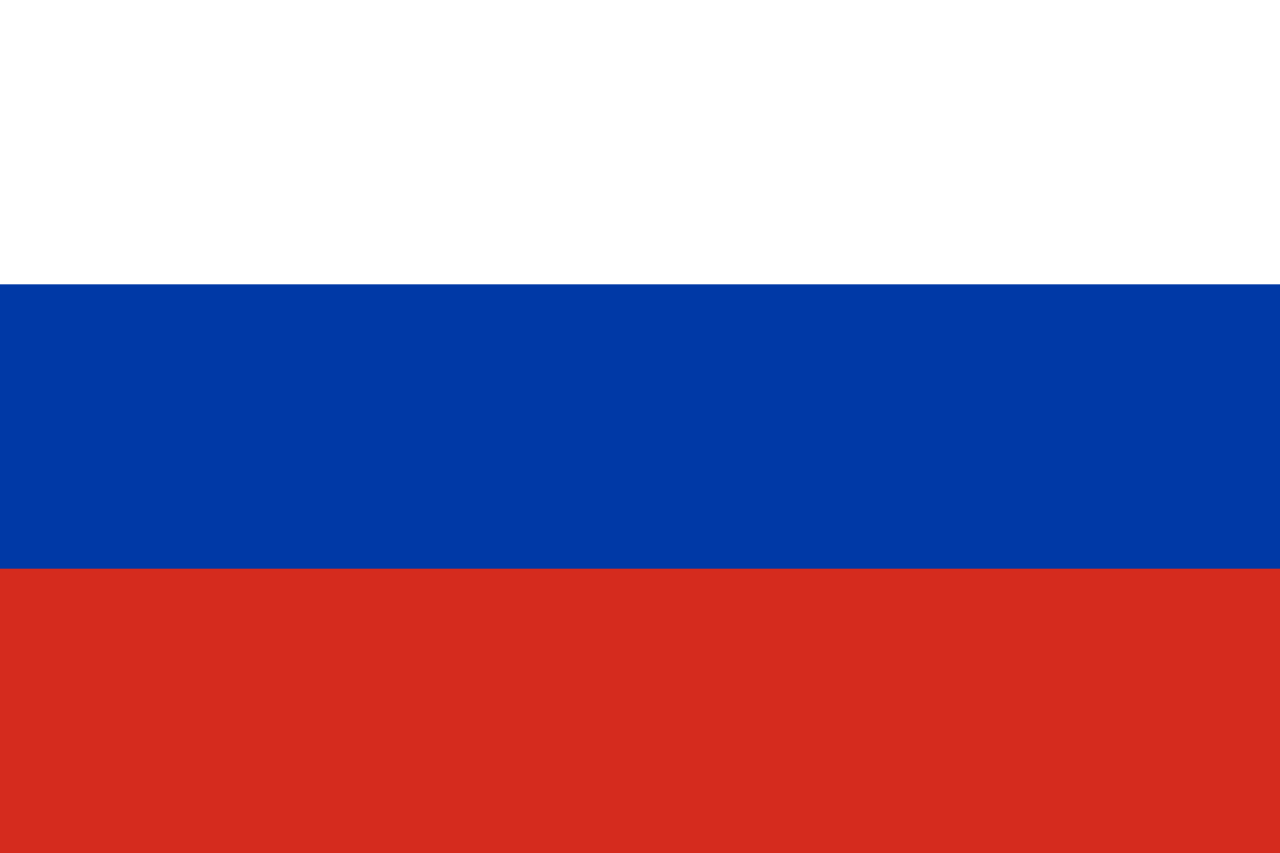
Russia's wilderness shelters some of the world's most magnificent animals. The endangered Siberian (Amur) tiger, the largest cat on Earth, prowls the forests of the Far East, while brown bears — a national symbol — roam from Kamchatka to the western woods. In the Arctic north, you'll find polar bears, reindeer, and Arctic foxes, and the skies above Murmansk often shimmer with the green ribbons of the northern lights. The country's tricolor white, blue, and red flag flies over a territory containing tundra, steppe, mountains, and volcanoes, making Russia a true treasure chest of natural wonders.
Frequently Asked Questions
What is the capital of Russia?
The capital is Moscow, a city of more than 12 million people centered on the historic Kremlin fortress and Red Square. It serves as Russia's political, economic, and cultural heart and is famous for its ornate metro stations and the colorful domes of Saint Basil's Cathedral.
What is Russia famous for?
Russia is famous for being the largest country in the world, spanning eleven time zones across Europe and Asia. It is renowned for its literature and ballet, its role in space exploration, the Trans-Siberian Railway, Lake Baikal, and landmarks like the Kremlin and Saint Basil's Cathedral.
Why does Russia have so many time zones?
Russia spans roughly 9,000 kilometers from west to east, an immense distance that requires eleven separate time zones to keep clocks roughly aligned with the sun. When it is morning in Moscow, it is already evening in the far eastern city of Vladivostok on the Pacific coast.
Conclusion
From the depths of Lake Baikal to the heights of human spaceflight, Russia is a country of extremes that rewards every bit of curiosity you bring to it. These ten facts barely scratch the surface of a nation defined by its staggering scale, deep history, and rich culture. Keep exploring, and you'll find that the world's largest country holds an endless supply of surprises.