
Jutting out toward the Americas at the westernmost tip of mainland Africa, Senegal is a country where Atlantic surf, sweeping savanna, and one of the continent's most electric music scenes all meet. It is famous for its warm hospitality, captured in the Wolof word teranga, and for being a rare beacon of democratic stability in a turbulent region. These ten facts reveal a nation that is far more surprising than any map can suggest.
1. Africa's Westernmost Point Sits Just Outside Dakar
Senegal holds the geographic distinction of containing the westernmost point of continental Africa: Pointe des Almadies, on the Cap-Vert peninsula near Dakar. This dramatic position means Senegal is one of the closest African countries to both Europe and the Americas, a fact that shaped its entire history as a launching point for trade, exploration, and tragically the transatlantic slave trade. The peninsula's basalt cliffs and pounding surf draw surfers from around the world, while the surrounding waters are among the most fish-rich on the planet. Geographically, the country is mostly low, flat savanna, drained by the Senegal, Gambia, and Casamance rivers, with the Sahara's edge brushing its dry northern reaches.
2. The Country Wraps Almost Entirely Around Another Nation
Look at a map of Senegal and you will spot one of the strangest borders on Earth. The tiny nation of The Gambia, a narrow sliver following the Gambia River, slices deep into Senegal and is surrounded by it on three sides. This odd arrangement is a colonial leftover: the British controlled the river while the French held the surrounding territory, and the line was reportedly fixed roughly as far inland as British gunboats could fire from the water. The two countries briefly united as "Senegambia" in the 1980s, but the experiment dissolved. To learn more about how the country fits together, see our country guide.
3. Dakar Is a Buzzing Atlantic Megacity
Dakar, the capital, is one of West Africa's great cities, home to several million people and perched on the Cap-Vert peninsula. Founded as a French colonial port, it grew into a cosmopolitan hub of finance, fashion, art, and politics. Its skyline mixes colonial-era buildings, gleaming new towers, and bustling markets like Sandaga and Kermel. Dakar was once the glamorous finish line of the legendary Paris-Dakar Rally, and it remains a cultural launchpad for African film, music, and contemporary art, hosting the prestigious Dak'Art biennale. The city pulses with traffic, street vendors, and the sound of mbalax drifting from taxis and cafés.
4. Wolof Glues the Nation Together
French is Senegal's official language, a legacy of colonial rule, but the true lingua franca of daily life is Wolof. Spoken and understood by the vast majority of Senegalese regardless of their ethnic background, Wolof dominates markets, music, and street conversation, peppered with French and Arabic loanwords. The country is a tapestry of peoples, including the Wolof, Fulani (Pulaar), Serer, Mandinka, Jola, and Toucouleur, each with their own languages and traditions. This linguistic blending reflects the famous spirit of teranga, the Senegalese ethic of hospitality and generosity toward guests that visitors remember long after they leave.
5. Gorée Island Carries a Heavy History
Just off the coast of Dakar lies Gorée Island, a UNESCO World Heritage Site and one of the most emotionally powerful places in Africa. For centuries it was a trading post under Portuguese, Dutch, English, and French control, and it became a haunting symbol of the Atlantic slave trade. The island's "House of Slaves" and its "Door of No Return" draw pilgrims and heads of state from around the world. Today Gorée is also strikingly beautiful, with pastel colonial houses, bougainvillea-draped lanes, and no cars, making it a place of both reflection and quiet charm.
6. One of Africa's Most Stable Democracies
Senegal gained independence from France in 1960 and has since stood out for something remarkable in its region: it has never suffered a military coup. Power has changed hands peacefully through elections, a rarity in West Africa. Its first president, Léopold Sédar Senghor, was not only a statesman but also a celebrated poet and philosopher, a founding figure of the "Négritude" literary movement that celebrated Black African identity and culture. This tradition of intellectual leadership and democratic resilience has given Senegal an outsized influence on the continent's political and cultural life.
7. Thieboudienne Is a National Treasure
If Senegal has a soul on a plate, it is thieboudienne (often spelled ceebu jën), the national dish of fish and rice cooked with tomatoes, vegetables, and tangy seasonings. So beloved is this dish that UNESCO inscribed it on its list of Intangible Cultural Heritage. Senegalese cuisine is rich and communal, with families often eating from a shared platter using the right hand. Other favorites include yassa (chicken or fish in a zesty onion-and-lemon sauce) and mafé, a hearty peanut stew. Strong, sweet attaya tea, brewed and poured in three rounds, accompanies long, unhurried conversations.
8. Lake Retba Turns Bubblegum Pink
Northeast of Dakar lies one of nature's strangest sights: Lac Rose, or Lake Retba, a shallow lagoon that can glow a vivid bubblegum pink. The color comes from Dunaliella salina, a salt-loving micro-algae that produces a red pigment to survive the intensely salty water, which rivals the Dead Sea in concentration. Local workers wade in to harvest salt by hand, coating their skin in shea butter to protect against the brine. The lake was for years the famous finishing point of the Dakar Rally, and on a sunny day the contrast of pink water against white salt mounds and golden dunes is genuinely otherworldly.
9. The Tallest Statue in Africa Towers Over Dakar
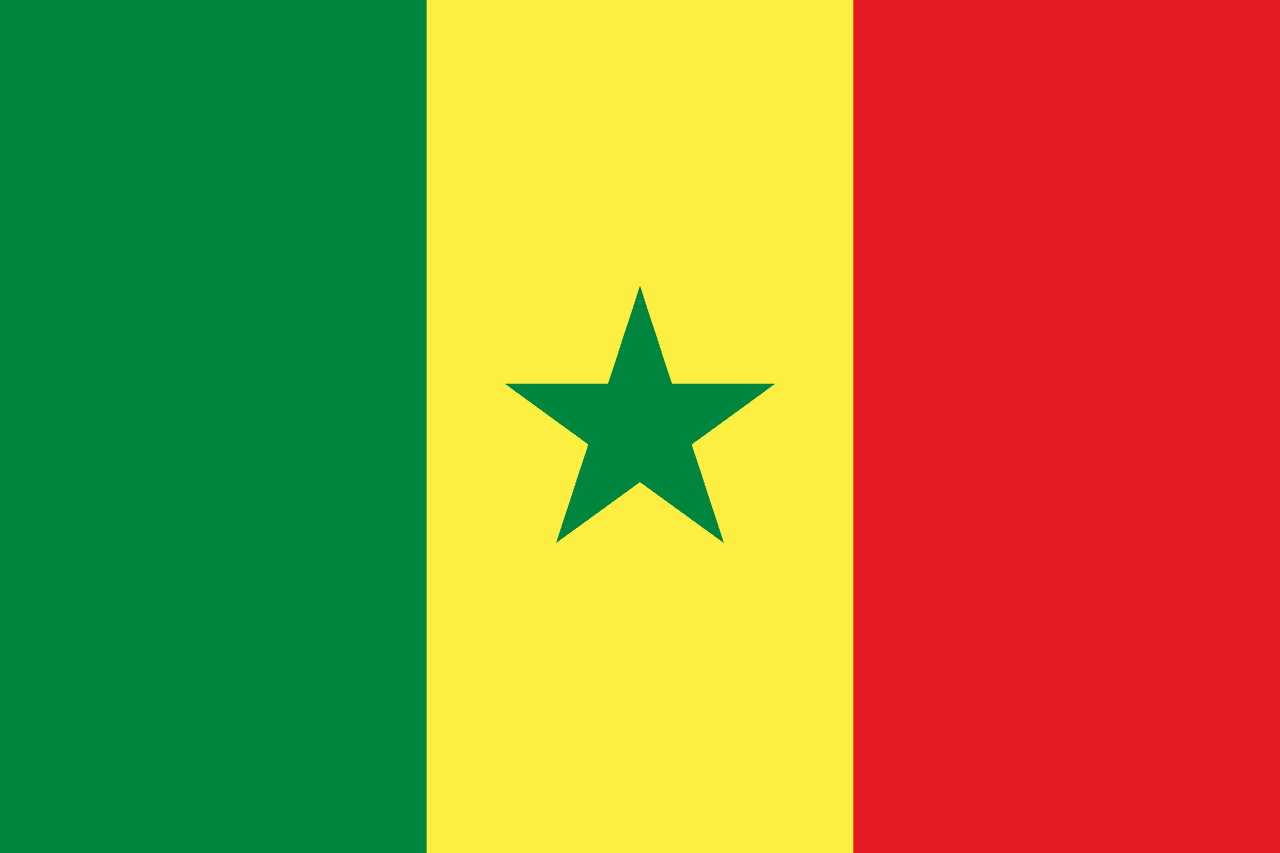
Rising 49 meters above a hill on the Dakar coast, the African Renaissance Monument is the tallest statue in Africa, taller than the Statue of Liberty's body. Unveiled in 2010, the bronze colossus depicts a man, woman, and child striding triumphantly toward the future, symbolizing Africa's emergence from a difficult past. The monument was controversial for its cost and its style, but it has become an unmistakable landmark. Senegal's banknotes and symbols often echo this forward-looking spirit, and the green, yellow, and red of its flag, with a central green star, reflect the same pan-African pride.
10. Wrestling, Not Football, Reigns Supreme
Football is wildly popular in Senegal, and the national team, the Lions of Teranga, won the Africa Cup of Nations in 2022 and have reached the World Cup. But the country's true national obsession is laamb, traditional Senegalese wrestling. Far more than a sport, laamb is a spectacle blending combat with mysticism, drumming, dancing, and elaborate pre-match rituals where wrestlers don protective charms and perform to roaring crowds. Champion wrestlers are celebrities who earn fortunes and pack stadiums in Dakar. The blend of athletic power and ancestral ceremony makes laamb one of the most distinctive cultural experiences anywhere in West Africa.
Frequently Asked Questions
What is the capital of Senegal?
The capital of Senegal is Dakar, a vibrant Atlantic port city on the Cap-Vert peninsula and the westernmost major city in continental Africa. It serves as the country's political, economic, and cultural center and is home to several million people.
What is Senegal famous for?
Senegal is famous for its spirit of teranga (hospitality), its lively mbalax music popularized by stars like Youssou N'Dour, the historic Gorée Island, the pink waters of Lake Retba, and its beloved national dish thieboudienne. It is also celebrated as one of Africa's most stable democracies.
Why does The Gambia cut into Senegal?
The Gambia forms a narrow strip following the Gambia River, nearly surrounded by Senegal. The unusual border is a colonial relic: Britain controlled the navigable river while France held the surrounding land, leaving behind one of the most peculiar national boundaries on the world map.
Conclusion
From a pink lake and a near-encircled neighbor to a wrestling culture steeped in ritual and a history written on the stones of Gorée Island, Senegal proves endlessly fascinating. It is a country that balances deep tradition with forward momentum, anchored by the warmth of its people. These ten facts are only an invitation; the real magic of Senegal lies in discovering the rest for yourself.