
Spain is a country that seems to contain several worlds at once: snow-dusted mountains and sun-baked plains, Moorish palaces and ultramodern art museums, and a calendar packed with festivals where people throw tomatoes, run alongside bulls, and dance flamenco until dawn. Stretched across most of the Iberian Peninsula, it has shaped global history, language, and cuisine in ways few nations can match. Here are ten genuinely fascinating facts that go far beyond the postcard image.
1. It Is Europe's Highest Country After Switzerland
Most people picture Spain as a land of beaches, but it is one of the most mountainous countries in Europe. Its average elevation is roughly 660 metres, making it the second-highest country in Europe after Switzerland. The vast central plateau, the Meseta, sits like a tilted table at around 600 to 700 metres, ringed and crossed by mountain ranges including the Pyrenees, the Sierra Nevada, and the Cantabrian Mountains. This high, dry interior is why Madrid is one of the loftiest capital cities in Europe. The result is a remarkably varied climate, allowing skiing in the morning and Mediterranean swimming the same afternoon in a few well-chosen locations.
2. Madrid Sits Almost Exactly in the Country's Centre
Madrid is not only the capital and largest city of Spain, with a metropolitan population of more than six million; it is also positioned close to the geographic centre of the country. A spot in the Puerta del Sol square, marked by a plaque known as Kilómetro Cero, is the point from which Spain's radial network of national roads is measured. The city became the permanent capital in 1561 when King Philip II moved his court there, partly because of its central location. Today Madrid is famous for the Prado Museum, leafy Retiro Park, and a nightlife that genuinely runs until sunrise.
3. Spanish Is the World's Second-Most Spoken Native Language
The language Spain gave the world, Castilian Spanish, is now the native tongue of well over 450 million people, second only to Mandarin Chinese. This is a direct legacy of Spain's colonial era, which spread the language across Latin America and beyond. Within Spain itself, however, language is gloriously diverse: Catalan, Galician, and Basque are all co-official in their regions. Basque, called Euskara, is especially remarkable because it is a language isolate with no proven relation to any other living language on Earth, a linguistic puzzle that predates the arrival of Indo-European tongues in the region.
4. The Moors Ruled Parts of Spain for Nearly 800 Years
From 711 CE, Muslim armies from North Africa conquered most of the Iberian Peninsula, ushering in centuries of rule by the Moors. The era of Al-Andalus left an extraordinary cultural and architectural inheritance, from advanced irrigation and astronomy to thousands of Arabic-derived Spanish words. The Reconquista, the long Christian campaign to retake the peninsula, finally ended in 1492 with the fall of Granada. That same momentous year, Christopher Columbus sailed west under Spanish sponsorship. To understand the full sweep of this history, our country guide is a great next stop.
5. It Has More UNESCO World Heritage Sites Than Almost Anywhere
Spain consistently ranks among the top countries on Earth for UNESCO World Heritage Sites, with around fifty listed. They span every era and discipline: the Alhambra palace in Granada, the Roman aqueduct of Segovia, the prehistoric cave paintings of Altamira, the historic centres of Toledo and Córdoba, and the still-unfinished Sagrada Família in Barcelona. Architect Antoni Gaudí's masterpiece has been under construction since 1882 and remains a building site to this day. This density of heritage reflects layer upon layer of civilisations: Iberians, Romans, Visigoths, Moors, and Christians all left their mark on the same soil.
6. Tomatoes, Bulls, and Bonfires: Spain's Wild Festival Calendar
Few countries celebrate with Spain's intensity. The Running of the Bulls during San Fermín in Pamplona sends thousands of brave (or reckless) participants sprinting ahead of bulls through narrow streets each July. In Buñol, the festival of La Tomatina turns a town square into a river of pulp as tens of thousands hurl ripe tomatoes at one another. Valencia's Las Fallas sees enormous satirical sculptures built over months, only to be set ablaze in a single spectacular night. Add Holy Week processions in Seville and flamenco's passionate guitar and footwork, born in Andalusia, and Spanish culture becomes impossible to ignore.
7. Spaniards Eat Late, and Dinner Can Start at Midnight
Spain runs on its own clock. Lunch, the largest meal of the day, is typically eaten between 2 and 4 pm, while dinner often does not begin until 9 or 10 pm, sometimes later in summer. This famously late schedule is tied partly to a historical quirk: Spain shares a time zone with Central Europe rather than its westerly neighbour Portugal, a decision dating to the 1940s that effectively pushed clocks an hour ahead of the sun. The result is long evenings, the cherished tradition of tapas hopping from bar to bar, and the sobremesa, the relaxed conversation that lingers long after the plates are cleared.
8. Olive Oil, Wine, and the World's Most Visited Beaches
Spain is an agricultural and tourism superpower. It is the world's largest producer of olive oil by a wide margin, with the rolling groves of Andalusia accounting for a huge share of global supply. It also has more land planted with vineyards than any other country and is a leading wine producer. Tourism is equally colossal: Spain regularly ranks as one of the two most visited countries on Earth, welcoming tens of millions of visitors a year to its beaches, cities, and Balearic and Canary Islands. The Canaries, though, sit off the coast of Africa, far from the European mainland.
9. The Iberian Lynx Came Back From the Brink
Spain's wildlife includes one of the great conservation success stories of our time. The Iberian lynx, a tufted-eared wild cat found almost nowhere else, was once the most endangered feline on the planet, with fewer than a hundred individuals surviving in the early 2000s. Intensive breeding and habitat protection programmes, centred in Andalusia, have since multiplied the population many times over, and the species has been downgraded from critically endangered. Spain's varied landscapes also shelter brown bears, imperial eagles, and flamingos in the wetlands of Doñana, making it one of Europe's most biodiverse nations.
10. Football Is a National Obsession
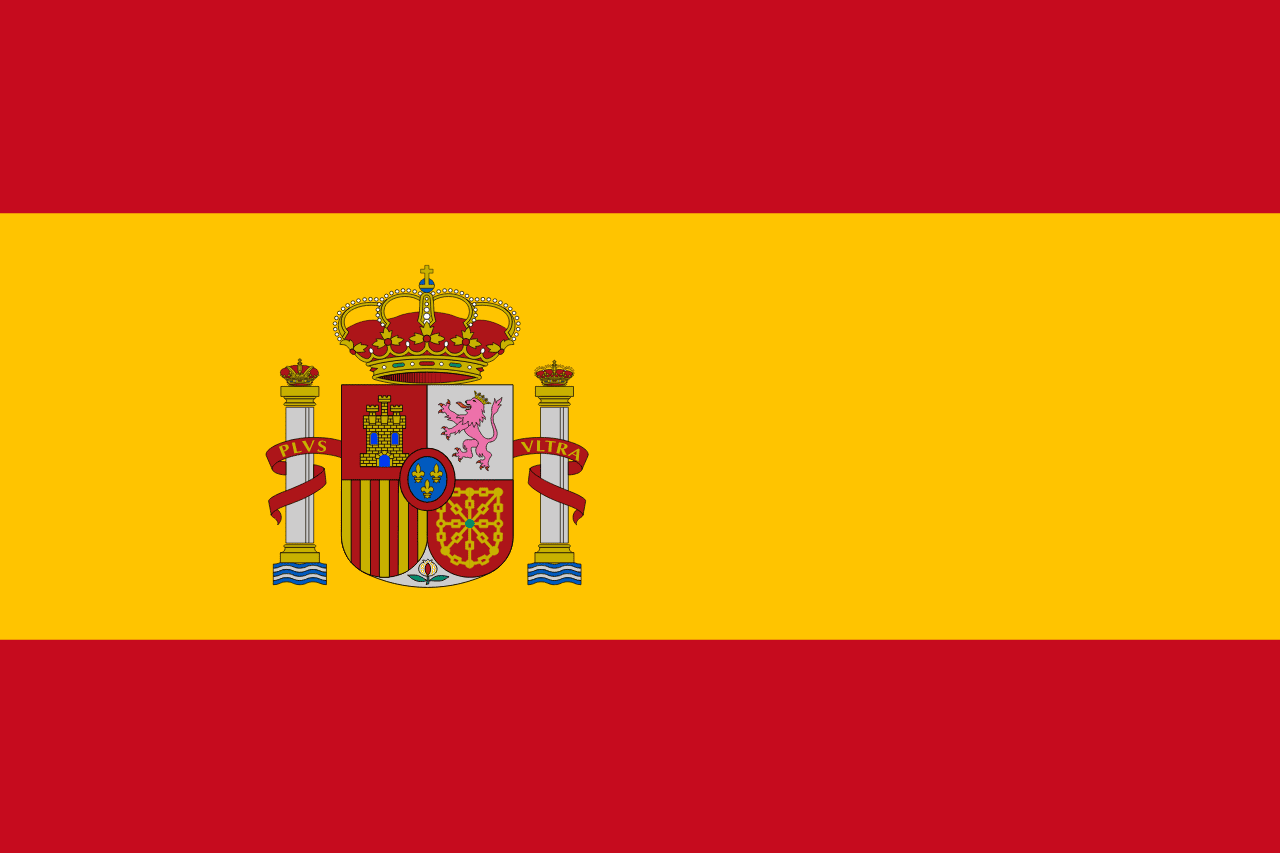
Sport in Spain means football above all else. Real Madrid and FC Barcelona are two of the most successful and valuable football clubs in the world, and their meetings, known as El Clásico, are watched by hundreds of millions globally. The national team reached its golden age between 2008 and 2012, winning back-to-back European Championships either side of the 2010 World Cup, a feat no other nation has matched. Beyond football, Spain produces world-beating tennis champions, cyclists, and basketball stars, and its red-and-yellow flag is a familiar sight at major international competitions.
Frequently Asked Questions
What is the capital of Spain?
The capital of Spain is Madrid, located near the geographic centre of the country on the high central plateau. It is the largest city in Spain and the seat of the national government and the royal family, as well as home to landmarks such as the Prado Museum and the Royal Palace.
What is Spain most famous for?
Spain is famous for many things: flamenco music and dance, vibrant festivals like the Running of the Bulls and La Tomatina, world-class cuisine including paella and tapas, top football clubs, sunny beaches, and architectural treasures such as the Alhambra and Gaudí's Sagrada Família.
Why do Spaniards eat dinner so late?
Late dining is partly cultural and partly a quirk of time zones. Spain uses Central European Time despite sitting geographically further west, a change made in the 1940s. This effectively shifts daylight later, so dinner commonly starts around 9 or 10 pm, followed by lingering conversation known as the sobremesa.
Conclusion
From its towering mountain ranges and 800-year Moorish legacy to its tomato-soaked festivals and record-breaking olive groves, Spain is a nation of endless surprises. These ten facts barely scratch the surface of a country where history, landscape, and joyful celebration are woven into everyday life. Whether you come for the art, the food, or the football, Spain rewards anyone curious enough to look closer.