
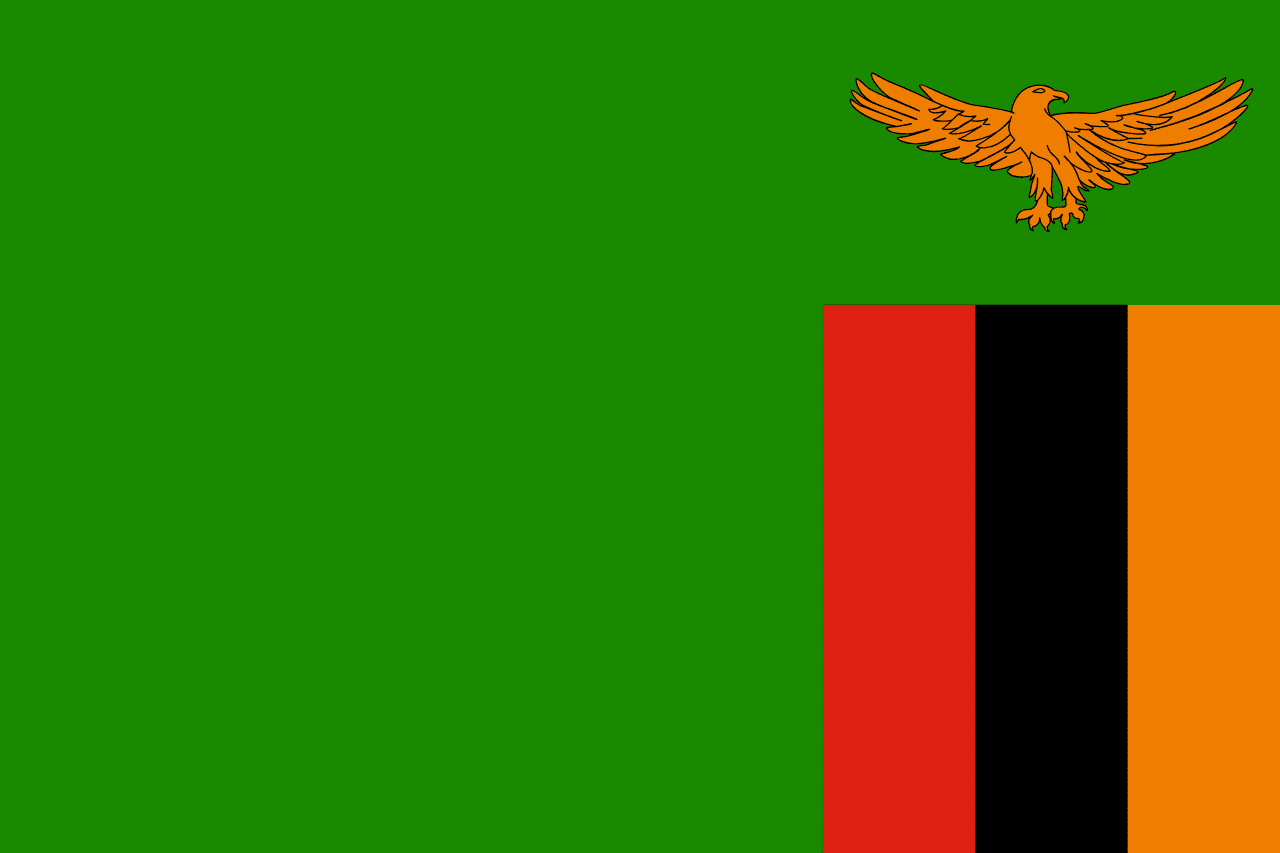
Zambia is a landlocked giant in southern-central Africa, a country shaped almost entirely by water even though it touches no sea. It is home to one of the planet's greatest waterfalls, some of Africa's wildest national parks, and the very birthplace of the walking safari. From copper mines that built its cities to a peaceful independence story that set it apart from its neighbours, here are ten genuinely fascinating facts about Zambia.
1. It Shares the World's Largest Waterfall With Zimbabwe
Zambia's most famous landmark is Victoria Falls, where the Zambezi River plunges over a cliff more than a kilometre wide. The local name, Mosi-oa-Tunya, means "the smoke that thunders" — a perfect description of the spray that rises hundreds of metres into the air and can be seen from kilometres away. Measured by the combined width and height of its sheet of falling water, it is widely considered the largest waterfall on Earth.
On the Zambian side, daring visitors can swim in the natural "Devil's Pool" right at the lip of the falls during the dry season. The falls are a UNESCO World Heritage Site shared with neighbouring Zimbabwe, and they remain the centrepiece of Zambia's tourism industry. You can learn more in our country guide.
2. The Country Is Named After the Mighty Zambezi River
When the territory gained independence in 1964, it took the name "Zambia" from the Zambezi, the fourth-longest river in Africa and the largest flowing into the Indian Ocean. The river rises in north-western Zambia, loops through Angola, and returns to form much of the country's southern border before reaching Victoria Falls.
Water defines Zambia in a way few people expect from a landlocked nation. The country contains huge lakes and wetlands, including Lake Tanganyika in the north — one of the deepest and oldest freshwater lakes in the world — and the enormous, human-made Lake Kariba. Roughly 40% of all the water in southern Africa is said to lie within Zambia's borders.
3. Lusaka Is One of Africa's Fastest-Growing Capitals
Lusaka, the capital, sits on a high plateau in the south-central part of the country. Chosen as the capital of Northern Rhodesia in 1935 partly because of its central location and railway links, it has since exploded into a sprawling metropolis of well over two million people. Today it is the political, financial, and cultural heart of Zambia.
Lusaka blends wide colonial-era avenues with bustling markets, gleaming shopping malls, and rapidly expanding suburbs. The city's growth reflects a broader trend: Zambia is urbanising quickly, and Lusaka has become a regional hub for trade, education, and business across south-central Africa.
4. Copper Is the Backbone of the Economy
Zambia is one of the world's leading copper producers, and the metal has shaped the nation's fortunes for a century. The northern region known as the Copperbelt — home to cities such as Kitwe and Ndola — is dotted with mines that have drawn workers from across the country and beyond. Copper and cobalt still account for the large majority of Zambia's export earnings.
This dependence is a double-edged sword: when global copper prices are high, the economy booms, but slumps can hit hard. In recent years Zambia has worked to diversify into agriculture, tourism, and energy, much of it powered by hydroelectric dams on its rivers. Mining, though, remains central to the national story.
5. There Are Over 70 Ethnic Groups and Languages
Zambia is home to roughly 22 to 23 million people belonging to more than 70 distinct ethnic groups, most of them Bantu-speaking. English is the official language, inherited from the colonial era and used in government, business, and schools, but it sits alongside seven recognised regional languages — including Bemba, Nyanja, Tonga, and Lozi.
Bemba is the most widely spoken indigenous tongue, especially in the north and the Copperbelt, while Nyanja dominates in and around Lusaka. Most Zambians grow up multilingual, switching effortlessly between languages depending on who they are talking to. This diversity is a point of national pride, captured in the country's motto: "One Zambia, One Nation."
6. It Gained Independence Peacefully in 1964
Unlike several of its neighbours, Zambia transitioned to independence without a war. On 24 October 1964, Northern Rhodesia became the Republic of Zambia, with Kenneth Kaunda as its first president. Kaunda, a former schoolteacher, would lead the country for 27 years under a philosophy he called "Zambian Humanism."
Zambia played an outsized role in liberation struggles across the region, sheltering freedom fighters and movements opposing white-minority rule in Rhodesia, South Africa, and beyond — often at great economic cost to itself. In 1991 the country made another peaceful transition, this time to multi-party democracy, a tradition of relatively stable, non-violent political change that has continued since.
7. Nshima Is the Heart of Every Meal
Ask any Zambian about their national dish and the answer is almost certainly nshima — a thick, smooth porridge made from finely ground white maize. It is cooked into a firm, dough-like consistency, broken off in small pieces by hand, and used to scoop up accompanying dishes called relish.
The relish might be vegetables such as pumpkin leaves or rape, beans, groundnuts, beef, chicken, or fish from the country's lakes and rivers. Many Zambians say a meal without nshima simply does not count as eating. More adventurous local delicacies include ifinkubala — caterpillars harvested in the rainy season, which are dried, fried, and prized as a protein-rich seasonal treat.
8. It Invented the Walking Safari
Zambia is where the modern walking safari was born, pioneered in the South Luangwa National Park by the legendary conservationist Norman Carr in the mid-20th century. Instead of viewing wildlife from a vehicle, guests explore on foot with armed guides, getting closer to the rhythms, sounds, and smells of the bush than any jeep allows.
South Luangwa is renowned for its extraordinary density of leopards and its huge herds of elephants and Cape buffalo. Across the country, vast protected areas such as Kafue and Lower Zambezi shelter lions, hippos, wild dogs, and more than 750 bird species. Zambia's reputation as a destination for serious, wilderness-focused safaris is hard to match.
9. Lake Kariba Is One of the Largest Man-Made Lakes on Earth
Straddling the border with Zimbabwe, Lake Kariba was created in the late 1950s by damming the Zambezi River. By volume it is among the largest reservoirs ever built by humans, stretching some 280 kilometres in length. The dam's hydroelectric station supplies a major share of the electricity for both Zambia and Zimbabwe.
The lake's creation was dramatic: as the waters rose, thousands of animals were stranded on shrinking islands and famously rescued in "Operation Noah." Today Kariba is a haven for fishing, houseboats, and wildlife, with elephants and crocodiles along its shores. It stands as a striking symbol of how thoroughly water shapes life in Zambia.
10. Football Is a National Obsession With a Heartbreaking Story
Football is by far the most popular sport in Zambia, and the national team — the Chipolopolo, or "Copper Bullets" — commands huge passion. Their story carries deep emotion: in 1993, almost the entire national squad died in a plane crash off the coast of Gabon while travelling to a World Cup qualifier, a tragedy that devastated the country.
In one of football's most stirring tales of redemption, a rebuilt Zambian side won the Africa Cup of Nations in 2012 — and the final happened to be played in Gabon, close to where the 1993 crash occurred. The victory, against the odds, is remembered as a triumph of national resilience and a tribute to the players who were lost. You can also explore the country's national colours in our piece on the flag.
Frequently Asked Questions
What is the capital of Zambia?
The capital of Zambia is Lusaka, located on a plateau in the south-central part of the country. It is Zambia's largest city, with a population of more than two million, and serves as the nation's political, commercial, and cultural centre.
What is Zambia most famous for?
Zambia is most famous for its share of Victoria Falls, one of the largest waterfalls in the world. It is also renowned for its copper mining, its world-class walking safaris in parks like South Luangwa, and the mighty Zambezi River that gives the country its name.
Why is so much of Zambia's water so important?
Despite being landlocked, Zambia holds an enormous share of southern Africa's fresh water in its rivers, lakes, and wetlands. This water powers hydroelectric dams that supply much of the region's electricity, supports agriculture and fishing, and sustains the wildlife-rich ecosystems that draw visitors from around the globe.
Conclusion
From the thunderous spray of Victoria Falls to the quiet footsteps of a walking safari, Zambia rewards anyone willing to look closely. It is a nation defined by water, copper, resilience, and remarkable cultural diversity — a peaceful democracy with one of Africa's most moving sporting stories. These ten facts only begin to reveal what makes Zambia such a captivating corner of the continent.