

Turkish is an official language in two states: Turkey and Cyprus, where it is co-official with Greek across the whole island and the sole official language of the unrecognised Turkish Republic of Northern Cyprus. That is a much shorter list than most people expect, because Turkish is regularly confused with the wider Turkic family — a group of around 35 related languages spoken by some 200 million people from the Balkans to Siberia, of which Turkish is only the largest.
Turkish Is Not the Same as Turkic
The distinction matters and gets lost constantly. Turkish, or Türkçe, is one language with roughly 85 million speakers, almost all in Turkey. Turkic is a language family that also contains Azerbaijani, Kazakh, Uzbek, Turkmen, Kyrgyz, Uyghur, Tatar, Bashkir, Chuvash, Yakut and two dozen more.
Saying a Kazakh speaks Turkish is roughly like saying a Portuguese speaker speaks Spanish. The languages are related, some pairs are mutually intelligible and others are not at all, and none of the speakers would describe their language by the other's name.
Turkish belongs to the Oghuz branch, along with Azerbaijani, Turkmen and Gagauz. Those four are close enough that speakers can often follow one another with effort. Kazakh and Kyrgyz belong to the Kipchak branch and are far more distant; Chuvash, spoken on the Volga, is so divergent that it forms a branch on its own.
-
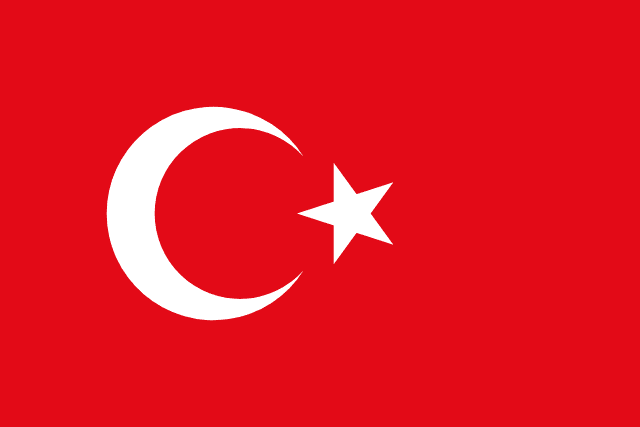 Turkey
Turkish
Turkey
Turkish
-
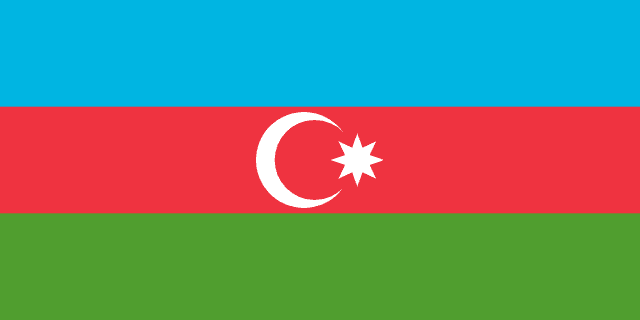 Azerbaijan
i
Azerbaijan
Azerbaijani
-
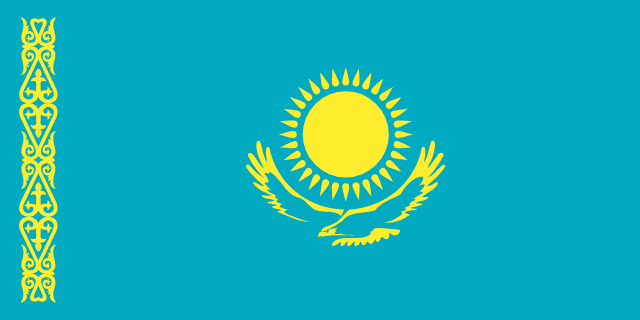 Kazakhstan
Kazakh
Kazakhstan
Kazakh
-
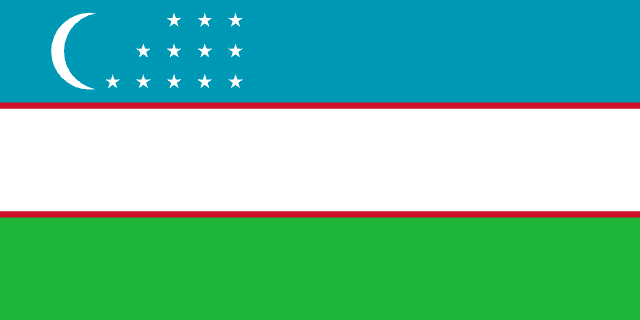 Uzbekistan
Uzbek
Uzbekistan
Uzbek
-
 Turkmenistan
Turkmen
Turkmenistan
Turkmen
-
 Kyrgyzstan
Kyrgyz
Kyrgyzstan
Kyrgyz
Cyprus, and Two Kinds of Official
The 1960 constitution of the Republic of Cyprus makes Greek and Turkish the official languages of the whole island, and that has never been amended. In practice the Republic operates in Greek, and Turkish is used in the north.
The Turkish Republic of Northern Cyprus, declared in 1983 and recognised only by Turkey, uses Turkish exclusively. Cypriot Turkish differs noticeably from the Istanbul standard — it keeps older vocabulary, borrows from Greek, and has a different intonation — though standard Turkish dominates in education and broadcasting.
Because Cyprus is an EU member, Turkish is in an unusual position: it is an official language of a member state but not an official language of the European Union, because Cyprus nominated only Greek when it joined in 2004. Cyprus has said it would nominate Turkish as part of a settlement.
The Six Turkic States
Six sovereign countries have a Turkic language as their state language: Turkey, Azerbaijan, Kazakhstan, Uzbekistan, Turkmenistan and Kyrgyzstan. All six except Turkmenistan are full members of the Organization of Turkic States, founded in 2009 and renamed in 2021, with Turkmenistan and Hungary as observers.
Uzbek has the most speakers after Turkish, at around 35 million, and Uzbekistan is the most populous Central Asian state. Azerbaijani adds roughly 25 million if the speakers in Iranian Azerbaijan are counted, and by some estimates there are more Azerbaijani speakers in Iran than in Azerbaijan.
The Organization has pushed a common Turkic alphabet since the 1990s, and in September 2024 its commission agreed a 34-letter Latin script intended for use across all members. Adoption is voluntary and slow, but the direction is towards convergence.
Turkic Speakers Without a Turkic State
Some of the largest Turkic-speaking populations live inside countries whose main language is not Turkic. Uyghur, spoken by around 11 million people in Xinjiang, is the biggest; Tatar and Bashkir together account for several million in Russia's Volga republics, where both are co-official.
Russia contains more Turkic languages than any other country: Tatar, Bashkir, Chuvash, Yakut, Tuvan, Altai, Khakas, Kumyk, Karachay-Balkar and Nogai, most with republic-level official status. Yakut is spoken in the coldest inhabited region on earth and Chuvash is the sole survivor of the Oghur branch.
Gagauz, spoken by a Christian Turkic people in southern Moldova, is official in the Gagauzia autonomous region. Crimean Tatar has official status in Ukraine's Autonomous Republic of Crimea. Turkish itself is a recognised minority language in Kosovo, North Macedonia, Romania and Greece.
The Alphabet Changed in Three Months
Ottoman Turkish was written in a Perso-Arabic script for six centuries. It fitted the language badly: Arabic script marks consonants clearly and vowels poorly, and Turkish has eight vowels that the system could not distinguish.
Atatürk's Law on the Adoption and Implementation of the Turkish Alphabet passed on 1 November 1928 and made the new Latin script compulsory in public use from 1 January 1929 — a transition of two months. He toured the country with a blackboard teaching the letters personally, and literacy campaigns followed immediately.
The new alphabet has 29 letters, dropping Q, W and X and adding Ç, Ğ, İ, Ö, Ş and Ü. It fits Turkish phonology almost perfectly, which is why Turkish spelling is close to entirely predictable. The cost was that anything printed before 1929 became unreadable to ordinary Turks within a generation.
The Language Reform That Replaced the Vocabulary
Script was only half of it. The Turkish Language Association, founded in 1932, set out to purge Arabic and Persian loanwords and replace them with words built from Turkic roots or revived from old texts and other Turkic languages.
The scale was extraordinary. Estimates of the Arabic and Persian share of written Turkish vocabulary in 1920 run above 50%; by the 1980s it was down to around 25%. Words like müselles gave way to üçgen for triangle, built transparently from üç, three.
The side effect is a generational gap. Atatürk's own 1927 speech, the Nutuk, has been republished in modernised Turkish three times because the original is difficult for contemporary readers. Turkey is one of the few countries where a literate adult cannot easily read a text written a century ago in their own language.
How Turkish Actually Works
Turkish is agglutinative: it builds words by stacking suffixes onto a root, each carrying one piece of meaning, in a fixed order. A single word can express what English needs a clause for, and the textbook example, Çekoslovakyalılaştıramadıklarımızdanmışsınızcasına, is a joke but a grammatical one.
It also has vowel harmony: the vowels in suffixes change to match the vowels in the root, so the plural is -lar after back vowels and -ler after front ones. The rule is close to exception-free and gives the language its characteristic rhythm.
Word order is subject-object-verb, and there is no grammatical gender and no definite article. For English speakers the Foreign Service Institute puts Turkish in Category III at around 1,100 hours — the difficulty is structural unfamiliarity rather than irregularity, since almost nothing in Turkish grammar is irregular.
Where the Turks Came From
The Turkic languages originated somewhere in the region of Mongolia and southern Siberia, and the oldest surviving texts are the Orkhon inscriptions, carved in what is now Mongolia in the early eighth century in a runic script and describing the Second Turkic Khaganate.
Westward migration carried Oghuz tribes across Central Asia and into Anatolia, decisively after the Seljuk victory at Manzikert in 1071. Anatolia had been Greek-speaking and largely Christian for over a millennium; within four centuries it was Turkish-speaking and largely Muslim, one of the more complete language replacements in recorded history.
That history is why Turkish is a Central Asian language spoken in a Mediterranean country, and why it is unrelated to Arabic, Persian, Greek or any of its neighbours despite having borrowed heavily from all of them.
Is Turkish Related to Korean and Japanese?
For most of the twentieth century, textbooks grouped Turkic with Mongolic, Tungusic, Korean and Japanese in an "Altaic" family. The grouping was based on shared features — agglutination, vowel harmony, subject-object-verb order and no grammatical gender.
Most historical linguists have abandoned it. The shared features are typological rather than inherited, and the vocabulary correspondences that would prove common descent turn out to be loanwords from long contact along the steppe. The consensus now treats Turkic, Mongolic and Tungusic as separate families that have influenced each other heavily.
A minority of specialists still argue for a version of the hypothesis, and the debate resurfaces periodically with new statistical methods. What is not disputed is that Turkish has no demonstrated relatives outside the Turkic family.
Where the Turkish Diaspora Is
Germany has by far the largest Turkish-speaking population outside Turkey and Cyprus, following the labour recruitment agreement of 1961. People of Turkish origin number close to three million, and Turkish is among the most widely spoken immigrant languages in Germany.
Smaller but substantial communities live in the Netherlands, France, Austria, Belgium, Switzerland, the United Kingdom, Australia and the United States. Bulgaria has a long-established Turkish minority of around 8% of the population, a legacy of Ottoman rule rather than of migration.
Turkish in Germany has developed recognisable contact features, including borrowed German vocabulary and code-switching patterns that have been studied extensively. Turkish is offered as a school subject in several German states and as an examinable language in the Netherlands and Austria.
Ottoman Vocabulary in Other People's Languages
Five centuries of Ottoman rule left Turkish loanwords across the Balkans, the Levant and North Africa. Serbian, Bosnian, Bulgarian, Greek, Albanian, Romanian and Hungarian all carry hundreds of them, generally in domestic and administrative fields — food, furniture, trades and taxes.
Bosnian has the highest concentration, with several thousand Turkish-derived words in ordinary use. Greek kept meze, kefi and dozens of culinary terms; Hungarian has papucs for slipper and zseb for pocket.
The traffic ran the other way too. Turkish borrowed heavily from Arabic, Persian, French, Italian and, more recently, English — and the language reform of the 1930s spent decades trying to reverse the first two while barely touching the rest. Set beside the count of countries in Asia and the position of Persian across three states, Turkish shows how loosely language families and national borders correspond.