

Persian is an official language in three countries — Iran, Afghanistan and Tajikistan — where it is called Farsi, Dari and Tajik respectively. They are three standard varieties of one language, not three languages, and about 130 million people speak them. Tajik is written in Cyrillic, Farsi and Dari in Perso-Arabic script, and that difference in alphabet does more to separate the three than anything in the grammar.
-
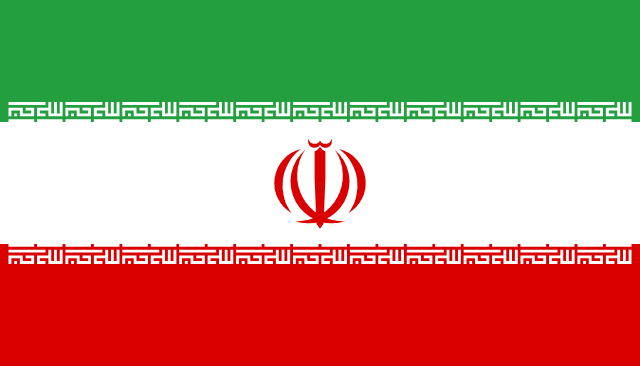 Iran
Farsi
Iran
Farsi
-
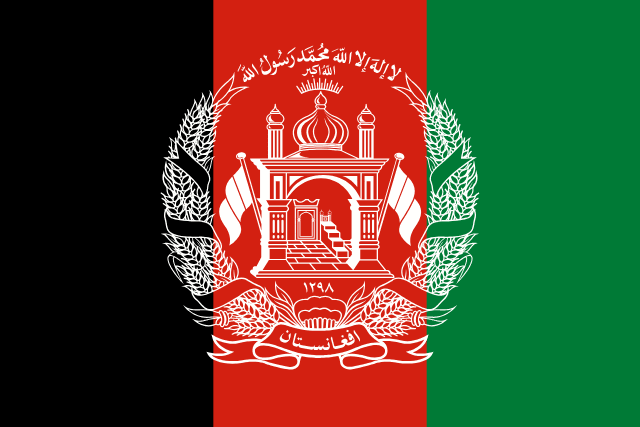 Afghanistan
Dari
Afghanistan
Dari
-
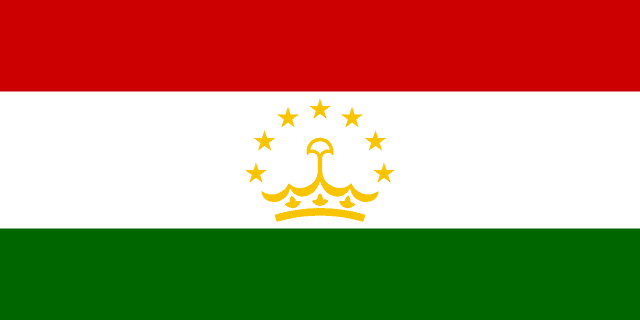 Tajikistan
Tajik, written in Cyrillic
Tajikistan
Tajik, written in Cyrillic
Three Names for One Language
Speakers of Farsi, Dari and Tajik can understand one another in conversation without much difficulty. The differences are comparable to those between British and American English in grammar, somewhat larger in vocabulary, and larger again in pronunciation.
The naming is political. Afghanistan officially renamed its Persian variety Dari in 1964, distinguishing it from Iran's while keeping the Persian literary heritage. Tajik was designated a separate language under Soviet nationality policy in the 1920s and given a Latin then a Cyrillic alphabet, which cut Tajik readers off from the Persian written tradition entirely.
The academic convention is to treat all three as varieties of Persian. Iran objects to the English use of "Farsi" for the language, on the grounds that English already has a name for it, and Iran's own language academy issued a ruling to that effect in 2005.
Iran
Persian is the sole official language of Iran under Article 15 of the constitution, which requires that all official documents, correspondence and textbooks be in Persian while permitting regional languages in the press and in the teaching of their own literature.
Around 60 to 65% of Iranians speak Persian as a first language. The rest speak Azerbaijani — by far the largest minority language, with perhaps 15 to 20 million speakers in the north-west — along with Kurdish, Gilaki, Mazandarani, Luri, Arabic, Balochi and Turkmen.
Almost all of them speak Persian as well, because it is the sole language of state schooling. Provision of mother-tongue education has been a recurring political demand, particularly in Iranian Azerbaijan and Kurdistan, and the constitutional permission has never been implemented at scale.
Afghanistan
Afghanistan has two official languages, Dari and Pashto. Dari is spoken as a first language by roughly a third of the population and understood by considerably more, functioning as the country's lingua franca, particularly in Kabul, Herat and the north.
Pashto is the first language of the Pashtuns, the largest single ethnic group, and has been promoted by successive governments as the more authentically Afghan language. The tension between the two has been a fixture of Afghan politics since the 1930s, and the ratio of official use has shifted with each change of regime.
Herat's Persian is close to the Iranian standard, while Kabul Dari preserves older features that Iranian Persian has lost — including vowel distinctions that make classical Persian poetry scan correctly in Kabul and not in Tehran.
Tajikistan, in Cyrillic
Tajik is the state language of Tajikistan and is written in a modified Cyrillic alphabet of 35 letters, adopted in 1940 after a brief Latin period from 1928. Before that, Tajik was written in Perso-Arabic like the rest of Persian.
The script change is the single biggest barrier between Tajik and the rest of the Persian world. A Tajik reader cannot open an Iranian newspaper, and an Iranian cannot read a Tajik one, despite the spoken language being largely shared.
Tajik has also absorbed a great deal of Russian, particularly in technical and administrative vocabulary, and Uzbek influence is strong in the north. Proposals to return to Perso-Arabic script have been raised repeatedly since independence in 1991 and have not been adopted, partly because of cost and partly because of concern about Iranian influence.
Where Persian Is Spoken Without Being Official
Uzbekistan has a substantial Persian-speaking population, mostly Tajiks in Samarkand and Bukhara — two cities central to Persian literary history that ended up on the Uzbek side of the Soviet border. Estimates of their number are contested and politically sensitive.
Bahrain, Kuwait, Iraq and the UAE all have Persian-speaking communities, some long established. Iraq's are concentrated in the shrine cities of Najaf and Karbala; Bahrain's Ajam community dates back centuries.
The diaspora is large and recent. Around a million Iranians live in the United States, mostly in southern California, with substantial communities in Canada, Germany, Sweden, the UK, Turkey and Australia. Afghan refugee populations in Iran and Pakistan run into the millions and have kept Dari alive across the border.
The Language Barely Changed in a Thousand Years
Modern Persian is remarkably close to the language of the tenth and eleventh centuries. An educated Iranian can read Ferdowsi's Shahnameh, completed around 1010, with far less difficulty than an English speaker reads Chaucer, who wrote nearly four centuries later.
The reason is partly that New Persian was standardised early as a literary language across a wide area, and partly that Persian's grammar is unusually simple and had already shed most of its inflection by then. Old Persian and Middle Persian had case systems and grammatical gender; New Persian has neither.
Ferdowsi is credited in Iranian tradition with preserving the language by writing the national epic in Persian rather than Arabic at a time when Arabic dominated administration and scholarship. Hafez, Rumi, Saadi, Omar Khayyam and Attar all wrote in the same standard, and their work is still read in the original.
Nowruz Is the Shared Calendar
The clearest evidence that the Persian-speaking world is a single cultural zone is that it keeps the same new year. Nowruz falls on the March equinox and is observed across Iran, Afghanistan, Tajikistan, Azerbaijan, Uzbekistan, Turkmenistan, Kazakhstan, Kyrgyzstan, parts of Iraq, Turkey, Pakistan and India.
Iran and Afghanistan both use the Solar Hijri calendar, which begins at Nowruz and is one of the most astronomically accurate calendars in use, determined by observation of the equinox rather than by arithmetic rule. Tajikistan uses the Gregorian calendar but keeps the holiday.
UNESCO inscribed Nowruz on its intangible heritage list in 2009 and the UN General Assembly recognised the day in 2010, with a dozen states co-sponsoring — a rough map of where Persian cultural influence reached, which is considerably wider than where the language is spoken.
Two Registers, One Language
Written Persian and spoken Tehran Persian differ enough that learners effectively acquire two systems. Formal Persian keeps a set of verb forms, pronoun endings and vowel qualities that colloquial speech has collapsed.
The written ast for "is" becomes e in speech; miravam, I go, becomes miram; an becomes un across a whole class of words, so nan, bread, is nun in Tehran. Object marking and word order shift too.
Textbooks that teach only the formal register leave learners able to read a newspaper and unable to follow a conversation, which is a common complaint. Iranian cinema, which mostly uses colloquial speech, has become a standard teaching resource for exactly this reason.
Persian Words in Other Languages
The Persianate world stretched from the Balkans to Bengal, and Persian was the court and administrative language of Mughal India until the British replaced it in 1837. That left enormous deposits in the languages of the region.
Urdu and Hindi carry thousands of Persian words, and Urdu's formal register is largely Persian and Arabic. Turkish absorbed heavily before the twentieth-century purification campaign; Azerbaijani, Kurdish, Georgian, Armenian, Uzbek and Punjabi all show the same layer.
English took Persian words mostly through other languages: bazaar, caravan, kiosk, divan, pyjamas, khaki, shawl, jasmine, lilac, tulip, spinach, orange, lemon, paradise, checkmate — from shah mat, the king is helpless — and magic, from the Magi.
The Script, and What It Hides
Persian uses a 32-letter Perso-Arabic alphabet, the Arabic script plus four letters for sounds Arabic lacks: p, ch, zh and g. It runs right to left and letters change shape according to position in the word.
Short vowels are not normally written, which is the main obstacle for learners. The word written k-r-d could be kard, kord or kerd, and the reader resolves it from context — manageable for a fluent speaker and difficult for anyone else.
Several Arabic letters represent sounds Persian does not distinguish, so Persian has four letters for z and three for s, all pronounced identically and all retained in loanwords from Arabic. Spelling in Persian therefore has to be memorised in a way that Turkish or Malay spelling does not.
How Difficult Is It?
The US Foreign Service Institute places Persian in Category III at around 1,100 hours, the same band as Russian, Hindi and Turkish, and considerably below Arabic despite the shared script.
The grammar is the easy part and is genuinely simple by Indo-European standards: no grammatical gender, no noun cases, regular plural formation, and a verb system with a small number of highly regular patterns and only a handful of irregular verbs. Word order is subject-object-verb but flexible.
The difficulty is the script's unwritten vowels, the gap between formal written Persian and colloquial Tehran speech — which differ enough that learners often have to acquire both — and a vocabulary with few English cognates. Persian is an Indo-European language, more closely related to English than Arabic or Turkish is, but the relationship is distant enough to be no practical help. For neighbouring comparisons, see Turkish and the Turkic states and the count of countries in Asia.