

Only one country in the world starts with the letter O: Oman, officially the Sultanate of Oman, on the southeastern corner of the Arabian Peninsula. It has been a member of the United Nations since 7 October 1971, covers about 315,000 km² (roughly 122,000 sq mi), and had an estimated 5.4 million people in 2026, with Muscat as its capital. The answer is the same whichever list you use, whether the 193 UN member states, the UN’s two observer states, the partially recognised states, or the ISO 3166 list of country codes, where Oman is OM. What changes from list to list is the edge cases, and O has a surprising number of them: a formal title, a German endonym, three vanished states and a name change in 1970.
The Test a Name Has to Pass to Count Under O
A “country that starts with O” has to meet two conditions. The first is that it is a country at all, and the usual test is membership of the United Nations, which currently has 193 member states. Some lists add the two UN observer states, the Holy See (Vatican City) and Palestine, and a few add places such as Kosovo and Taiwan that are recognised by some governments but not UN members. None of those additions begins with O, so they do not change the count.
The second condition is the name itself. Most alphabetical lists file a country under its short English name, the one used on maps and in news reports, rather than its formal title. That convention matters for O, because it is the difference between one country and two. Filing by short name, the letters around O look like this: N has 11 UN members (from Namibia to Norway), P has nine (Pakistan to Portugal), R has three (Romania, Russia and Rwanda), and O and Q have one each. Y also has a single member, Yemen, while no UN member begins with W or X.
Under these rules, Oman is the complete list. There is no dependent territory either: no entry in the ISO 3166 list of countries and territories other than Oman begins with O.
Österreich, the Oriental Republic and Other Near Misses
Three countries come close to qualifying, depending on how the question is asked.
- Uruguay is formally the República Oriental del Uruguay, usually translated as the Oriental Republic of Uruguay. The name means “Republic east of the Uruguay River”, a holdover from the colonial term Banda Oriental, the “Eastern Bank”. Filed by formal English title, Uruguay would sit under O; filed by short name, as on nearly every list, it sits under U.
- Austria calls itself Österreich in German. The name comes from the Old High German Ostarrîchi, “eastern realm”, first recorded in a document of 996, and “Austria” is a Latinised form recorded from the 12th century. In English, though, it begins with A.
- Oman itself does not begin with O in its own language. In Arabic it is عُمان, ʿUmān, which opens with the letter ʿayn, so an Arabic alphabetical list would not place it next to the English O at all.
Other O names that turn up in quiz answers are not countries: Ontario is a Canadian province, Oregon, Ohio and Oklahoma are US states, Odisha is an Indian state and Okinawa is a Japanese prefecture.
States That Once Began With O: the Ottoman Empire, the Orange Free State and the Imamate of Oman
Historical atlases add three more O names, none of which survives as a sovereign state.
The Ottoman Empire grew from a small principality founded in northwestern Anatolia around 1299 by Osman I, from whom the name “Ottoman” derives. It took Constantinople in 1453 under Mehmed II and at its height ruled much of southeastern Europe, West Asia and North Africa. The sultanate was abolished in 1922, after the Turkish War of Independence led by Mustafa Kemal Atatürk, and the Republic of Turkey succeeded it.
The Orange Free State was a landlocked Boer republic between the Orange and Vaal rivers in southern Africa, with its capital at Bloemfontein. It became independent on 23 February 1854 under the Orange River Convention and ceased to exist on 31 May 1902, when the Treaty of Vereeniging ended the Second Boer War. Its territory is the core of South Africa’s present Free State province.
The Imamate of Oman was the interior state of the Hajar Mountains, ruled by an elected Ibadi imam from Nizwa or Rustaq. It was separate from the coastal Sultanate of Muscat and Oman until the Jebel Akhdar War, which broke out in 1954 and again in 1957, ended its independence in favour of the sultan.
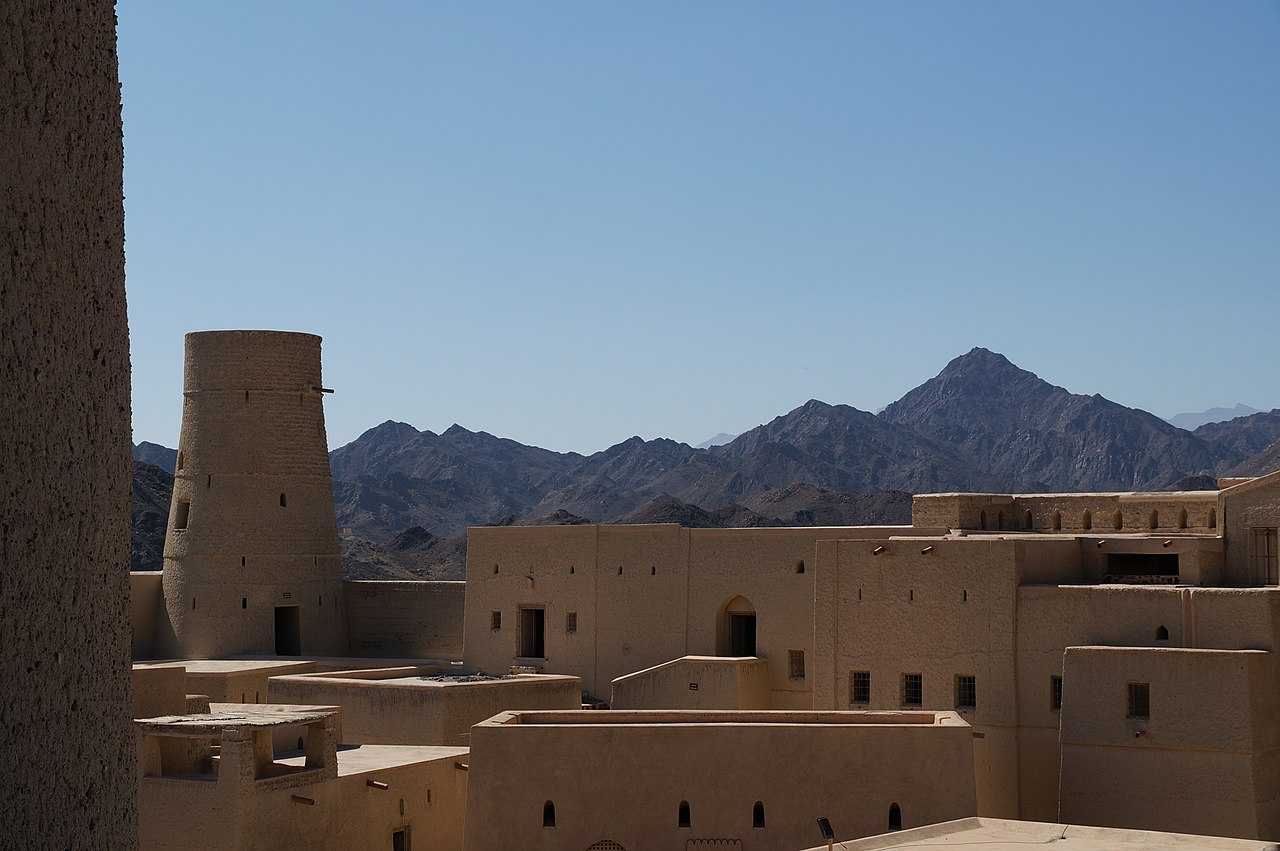
That split explains one more quirk. Until the palace coup of 23 July 1970, when Qaboos bin Said replaced his father Said bin Taimur, the country’s English name was Muscat and Oman, which begins with M. Only after 1970, as the Sultanate of Oman, did the modern state take a name beginning with O. It joined the UN the following year.
Oman on the Map: Muscat, Musandam and Dhofar
Oman borders three countries, Saudi Arabia, the United Arab Emirates and Yemen, and shares maritime boundaries with Iran and Pakistan. Its coast runs along the Gulf of Oman to the northeast and the Arabian Sea to the southeast. The 2020 census counted 4,471,148 people, and about half of the population lives in Muscat and on the Batinah coastal plain northwest of the capital. By contrast, the same census counted 416,458 people across the large southern Dhofar Governorate and 49,062 on the remote Musandam Peninsula. Other sizeable towns include Sohar and Sur on the northern coast and Salalah, the main city of the south. Islam is the state religion and Arabic the official language; most Omanis follow the Ibadi school, a distinct branch of Islam that is rare elsewhere.
The land divides into three clear parts. In the north, the Hajar Mountains run parallel to the coast; their highest summit, Jebel Shams, reaches 3,009 m (9,872 ft) according to Oman’s Ministry of Tourism, and its flank drops into the Al Nakhur gorge, often called the Grand Canyon of Arabia. Inland, a gravel desert plain covers most of central Oman, giving way to the sand of the Sharqiya Sands, formerly the Wahiba Sands, in the east. In the far south, the Dhofar Mountains near Salalah catch the khareef monsoon from mid-June to mid-September, enough to support coconut palms on the coast and frankincense trees in the hills. The frankincense sites, including Khor Rori, have been on UNESCO’s World Heritage List since 2000.
Oman also has two detached pieces. The Musandam Peninsula, at the tip of the Strait of Hormuz, is an exclave separated from the rest of the country by the United Arab Emirates, which gives Oman a share, with Iran, of the shoreline on both sides of that narrow sea lane. Madha, about 93 km² in area, is an enclave entirely surrounded by UAE territory, and it in turn contains a UAE enclave, Nahwa, belonging to Sharjah.

Where the Name Oman Comes From
The oldest known written mention of the name is on a tomb at Mleiha, in what is now the United Arab Emirates, dated to around 220 BCE, where it appears in both Ancient South Arabian and Aramaic script. Classical writers knew it too: Pliny the Elder wrote of “Omana” and Ptolemy of “Omanon”. The most common Arabic explanation derives the name from ʿāmin or ʿamūn, meaning “settled” people, as opposed to nomadic Bedouin. Other traditions name an eponymous founder, or a valley near Ma’rib in Yemen said to be the homeland of the Azd tribe, but none of these is settled. Older names for the region include Magan, used by the Sumerians, and Mazun, used by the Persians.
From the Omani Empire to the Sultanate of 1970
The single country under O was once a maritime power. Omani forces ended Portuguese control of Muscat in the mid-17th century, and in 1696 an Omani fleet under Saif bin Sultan besieged Fort Jesus at Mombasa, which fell after 33 months. By 1783 Omani rule reached east to Gwadar on the coast of present-day Pakistan, and in the 19th century its influence ran south along the East African coast as far as Cape Delgado in modern Mozambique. Sultan Said bin Sultan moved his court to Stone Town on Zanzibar in 1832 or 1840, sources differ, where a clove plantation economy was built on enslaved labour and the East African slave trade expanded.
After Said bin Sultan died in 1856, the empire split between his sons into the Sultanate of Zanzibar and the Sultanate of Muscat and Oman. Gwadar stayed Omani until 1958, when Pakistan bought it. The Al Bu Said dynasty, in power since 1744, still rules: Qaboos bin Said reigned from 1970 until his death in 2020, ending the Dhofar rebellion and abolishing slavery, and Haitham bin Tariq succeeded him. Oman was a founding member of the Gulf Cooperation Council in 1981 and uses the Omani rial, divided into 1,000 baisa.
Saudi Arabia, the UAE and Yemen each get a section of their own on the page about the countries that border Oman; Q is the other letter held by a single Gulf state, explained in countries that start with Q, and the red, white and green design flown in Muscat has its own story in the flag of Oman.