
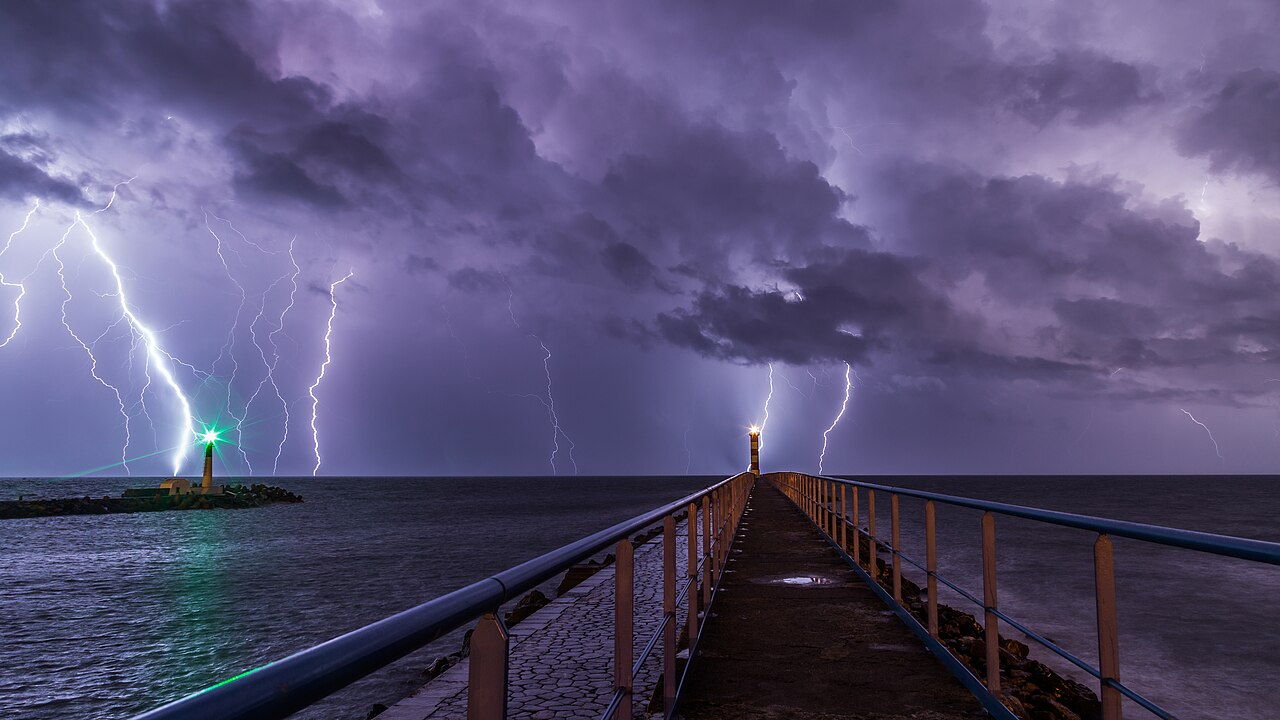
Weather for kids: Weather is what's happening in the atmosphere right now — is it sunny, rainy, windy, or snowy? Weather is caused by the sun heating Earth's surface unevenly, which makes air move around. Warm air rises, cool air sinks, and this movement creates wind, clouds, and storms!
Introduction
Have you ever wondered why some days are sunny and others are rainy? Or why the wind blows? Weather happens because the sun heats different parts of Earth differently. The equator gets more heat than the poles, and land heats up faster than water. All this uneven heating keeps our atmosphere moving.
Let's find out what creates the weather we experience every day!

Types of Clouds
- Cumulus: Fluffy, white cotton ball clouds — usually mean fair weather
- Stratus: Flat, gray sheet clouds that cover the sky — often bring light rain or drizzle
- Cirrus: Thin, wispy clouds high in the sky — made of ice crystals
- Cumulonimbus: Giant towering storm clouds — these bring thunderstorms, heavy rain, and sometimes hail!
What Causes Thunder and Lightning?
Inside a thundercloud, ice particles bump into each other and create electrical charges. The top of the cloud gets a positive charge and the bottom gets a negative charge. When the charge gets strong enough — ZAP! — a giant spark of electricity jumps through the air. That's lightning!
Thunder is the sound that lightning makes. Lightning heats the air around it to about 30,000°C (five times hotter than the surface of the sun!), which makes the air expand so fast it creates a loud boom.
Try This!
Make a weather journal! Each day, draw the sky, record the temperature, and note whether it was sunny, cloudy, rainy, or windy. After a month, look for patterns. Did certain types of clouds always come before rain? That's weather forecasting!
Cool Facts
- Lightning strikes Earth about 100 times every second
- The fastest wind ever recorded was 484 km/h during a tornado in Oklahoma, USA
- Rain falls at an average speed of about 7-18 km/h depending on drop size
- Snowflakes have six sides (hexagonal) and no two are exactly alike
- A single cumulonimbus (thunder) cloud can hold up to 300,000 tons of water!
Did You Know?
- You can estimate how far away a storm is by counting seconds between lightning and thunder — every 3 seconds equals about 1 km
- The hottest temperature ever recorded on Earth was 56.7°C in Death Valley, California
- It can be raining in one spot and sunny just a few meters away — this is called a "sunshower"
Wrap Up
Weather is happening all around us, every day. By learning about clouds, wind, and storms, you can start to predict what the weather will be like. Next time you look up at the sky, see if you can name the type of clouds and guess what weather is coming!
Test What You Learned!
Think you remember everything? Try our fun geography games and quizzes!
Play Geography Games →