
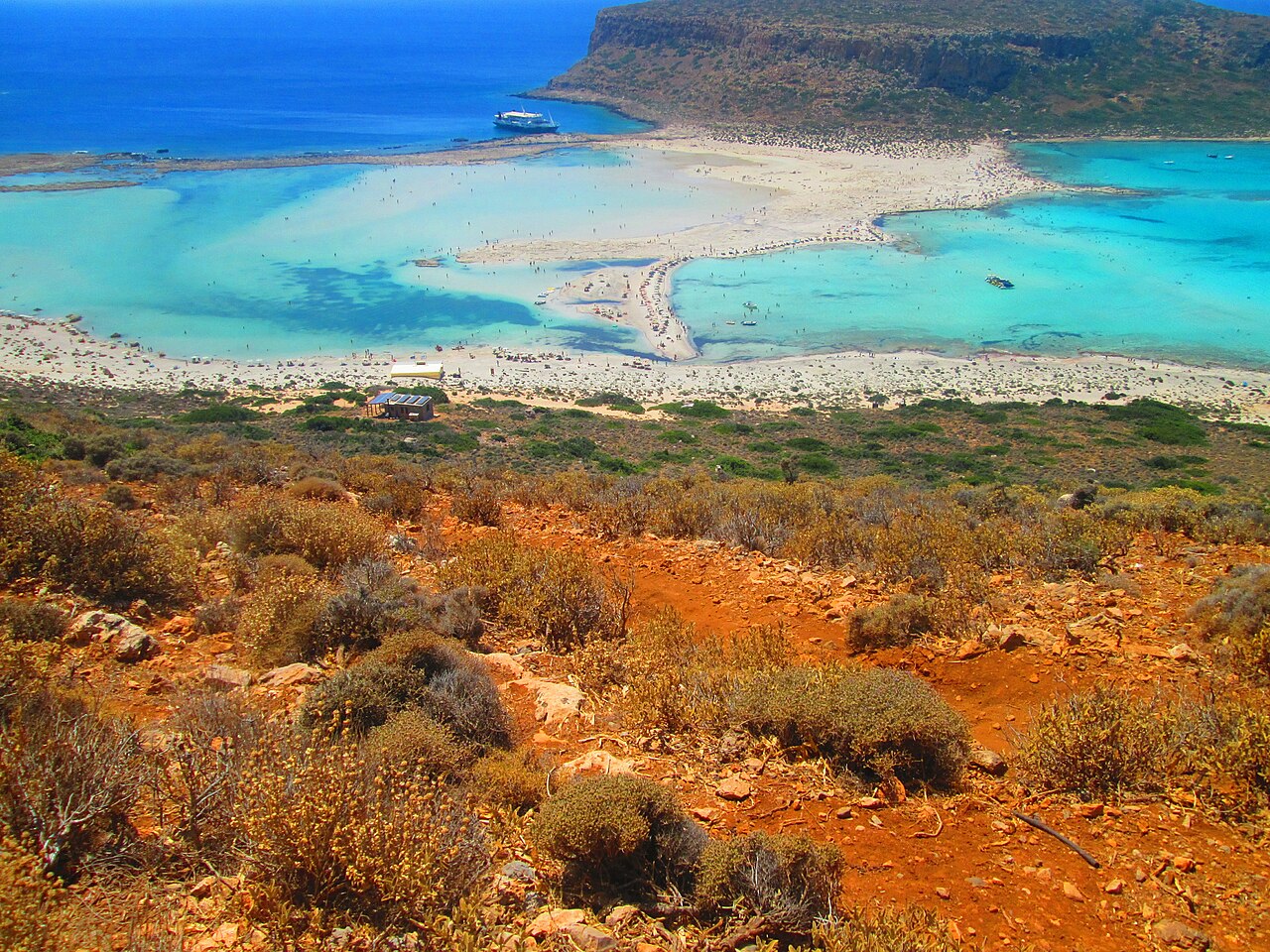
A lagoon is a shallow body of water separated from a larger body of water by a narrow landform such as a barrier island, sandbar, or coral reef. Lagoons can contain saltwater, freshwater, or a brackish mixture of both, depending on their connection to the sea and freshwater inputs.
Introduction
Found along coastlines worldwide, lagoons range from tiny ponds behind beach sand dunes to vast water bodies like the Venice Lagoon or the lagoons of Pacific atolls. They are among the most productive and ecologically important coastal environments on Earth.

How Lagoons Form
- Coastal Lagoons: Formed behind barrier islands or sandbars built by wave action
- Atoll Lagoons: Formed when a volcanic island sinks and its fringing reef persists
- River-Mouth Lagoons: Created when longshore drift builds a sandbar across a river mouth
Coastal lagoons form when wave action and longshore drift build up sandbars or barrier islands parallel to the shore, partially enclosing a body of water behind them. These barriers may have tidal inlets that allow seawater exchange, keeping the lagoon salty, or they may seal off completely, creating freshwater or brackish conditions.
Atoll lagoons are among the most visually stunning. They form over millions of years as a volcanic island slowly subsides beneath the ocean surface. The coral reef that originally fringed the island continues to grow upward, eventually forming a ring-shaped reef enclosing a central lagoon where the island once stood.
Types of Lagoons
- Coastal/Barrier Lagoon: Behind barrier islands, e.g. Indian River Lagoon
- Atoll Lagoon: Inside coral atolls, e.g. Kwajalein Atoll lagoon
- River Delta Lagoon: In delta regions, e.g. Venice Lagoon
- Hutt Lagoon: Rare pink lake lagoon in Western Australia
Coastal lagoons are the most common type globally and are found along roughly 13% of the world's coastline. They can be enormous — the Lagoa dos Patos in Brazil stretches over 280 kilometers, making it one of the largest lagoons on Earth.
Atoll lagoons in the Pacific and Indian Oceans can be strikingly deep and crystal clear, with the enclosed reef providing a calm, sheltered environment in contrast to the open ocean outside. The lagoon of Kwajalein Atoll in the Marshall Islands covers over 2,170 square kilometers.
Famous Lagoons
- Venice Lagoon (Italy): 550 km², home to the city of Venice
- Blue Lagoon (Iceland): Geothermal lagoon, 37-39°C year-round
- Lagoa dos Patos (Brazil): One of the world's largest lagoons at 10,144 km²
- Jokulsarlon (Iceland): Glacial lagoon filled with floating icebergs
- New Caledonia Lagoon: Largest lagoon in the world enclosed by a continuous reef
The Venice Lagoon has been central to Venetian civilization for over 1,500 years. This 550-square-kilometer lagoon is protected by barrier islands and connected to the Adriatic Sea through three inlets. The famous MOSE flood barrier system now protects the lagoon from extreme high tides.
Ecological Importance
- Nursery Habitat: Critical for juvenile fish, crabs, and shrimp
- Bird Habitat: Flamingos, pelicans, herons thrive in lagoon environments
- Water Filtration: Seagrass and mangroves filter sediments and nutrients
- Carbon Storage: Lagoon ecosystems store significant amounts of carbon
Lagoons support remarkably high biodiversity for their size. The calm, shallow, nutrient-rich waters serve as nurseries for many commercially important fish and shellfish species. Seagrass meadows in lagoons are among the most productive ecosystems on Earth, rivaling tropical rainforests in biomass production per unit area.
Key Facts
- A lagoon is a shallow body of water separated from the ocean by a barrier like a sandbar or reef.
- Roughly 13% of the world's coastlines have lagoons.
- Atoll lagoons form when volcanic islands sink but their surrounding reefs keep growing.
- The Venice Lagoon has been central to Venetian civilization for over 1,500 years.
- Lagoons serve as critical nursery habitats for many commercially important fish species.
Fun Facts
- Hutt Lagoon in Western Australia is bright pink due to algae that produce a red pigment in salty conditions.
- Iceland's Blue Lagoon is not natural — it formed in 1976 from wastewater from a nearby geothermal power plant.
- The term "lagoon" comes from the Italian "laguna," originally used to describe the Venice Lagoon.
- Some Pacific atoll lagoons are so large that aircraft carriers have been anchored inside them.
Final Thoughts
Lagoons are dynamic coastal features that serve as critical habitats, natural water filters, and cultural landmarks. Whether it is the canals of Venice, the icebergs of Jokulsarlon, or the coral atolls of the Pacific, lagoons demonstrate the remarkable diversity of Earth's water features.
Test Your Knowledge!
Think you know your geographic features? Try our interactive quiz!
Play Geography Games →