
French is an official language in 26 sovereign countries in 2026: five in Europe, two in the Americas, one in Oceania and 18 in Africa. The total was 29 until Mali (2023), Burkina Faso (2024) and Niger (2025) removed French as an official language and reclassified it as a "working language" of government. Roughly 320 million people speak French worldwide, and most of them now live in Africa.
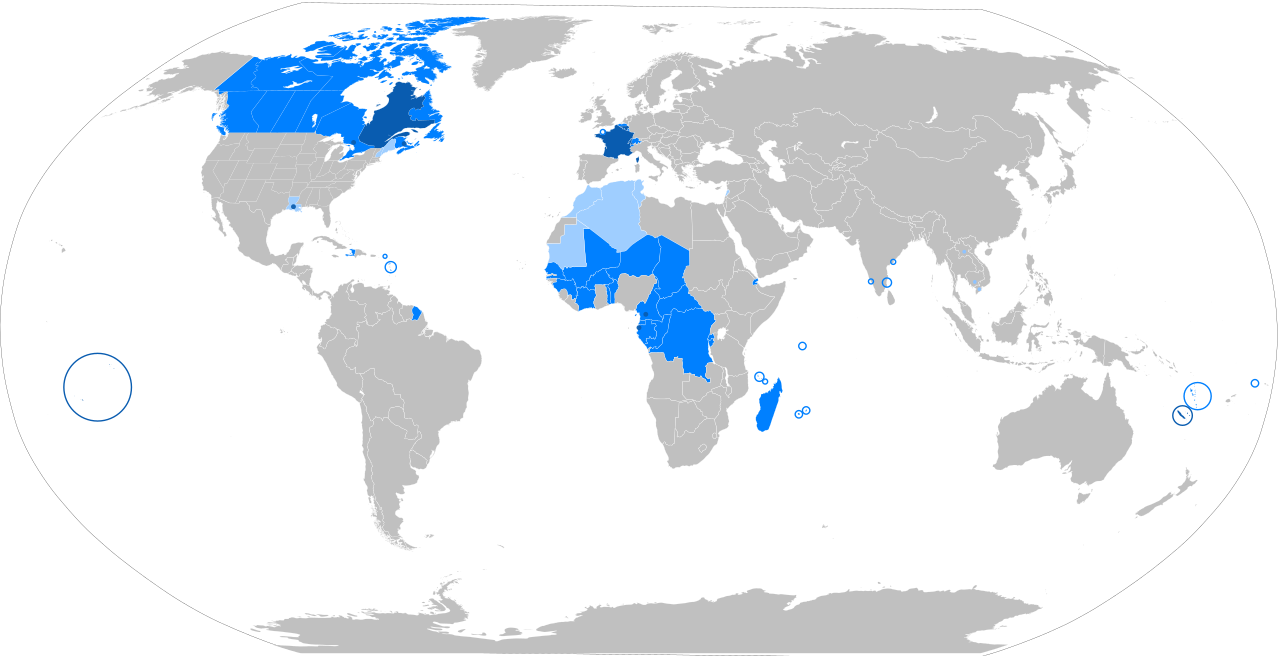
"French-speaking country" can mean two different things. This article uses the stricter meaning: countries whose constitution or national law makes French an official language. That is a smaller group than the members of the Organisation internationale de la Francophonie (OIF), which also includes countries such as Romania, Egypt and Vietnam, where French is a heritage or diplomatic language.
Why the Count Fell From 29 to 26
For decades the standard answer was 29. Between 2023 and 2025, three Sahel countries, each governed by a military government that had cut ties with France, changed their founding documents:
- Mali approved a new constitution in a referendum in June 2023. It made 13 national languages, including Bambara, Fulfulde, Songhai and Tamasheq, the official languages and reduced French to a working language.
- Burkina Faso passed a constitutional amendment in December 2023, which took effect in early 2024. It made national languages such as Mooré, Dioula and Fulfulde official and reduced French to a working language.
- Niger adopted a transitional charter in March 2025 that made Hausa the national language and listed French and English as working languages.
In all three countries, French is still used every day in courts, ministries, universities and newspapers. What changed is its legal status, not how widely it is spoken. The three countries, now allied as the Alliance of Sahel States, also announced their withdrawal from the OIF in March 2025. That is notable because the OIF's predecessor, the Agency for Cultural and Technical Cooperation, was founded in Niamey, Niger's capital, on 20 March 1970. The date is still celebrated each year as International Francophonie Day.
The 26 Countries, Grouped by Continent
Europe (5)
- France: the sole official language, protected by the constitution since 1992.
- Belgium: official alongside Dutch and German, spoken mainly in Wallonia and in bilingual Brussels.
- Switzerland: one of four national languages. It is the main language of about a fifth of residents, in the western cantons known as Romandie, including Geneva and Vaud.
- Luxembourg: official with Luxembourgish and German, and the main language of legislation.
- Monaco: the only official language.
The Americas (2)
- Canada: co-official with English federally under the Official Languages Act of 1969. It is the sole official language of Quebec and co-official in New Brunswick, Canada's only officially bilingual province. See our Canada geography guide for how the language divide follows the St Lawrence valley.
- Haiti: official with Haitian Creole since the 1987 constitution. Almost every Haitian speaks Creole, while fluent French is concentrated among the educated minority.
Oceania (1)
- Vanuatu: official with English and Bislama, a legacy of the Anglo-French condominium that governed the New Hebrides until independence in 1980. Schools are still divided into English-medium and French-medium systems.
In the European and North American countries, laws decide exactly where each language is used. Belgium fixed a linguistic border by law in 1962–63, and municipalities on either side of it must use Dutch or French in their administration. In Switzerland, the informal line between French- and German-speaking areas, jokingly called the Röstigraben ("hash-brown ditch"), runs through the bilingual cantons of Fribourg, Valais and Bern. Quebec's Charter of the French Language, known as Bill 101 and passed in 1977, made French the language of work, commerce and most schooling in the province. Bill 96, passed in 2022, strengthened it further. These laws explain why French is holding steady in Quebec even though fewer than a quarter of Canadians speak it as a first language.
Africa (18)
- West Africa: Benin, Côte d'Ivoire, Guinea, Senegal and Togo. Under its 2025 constitution, Guinea now shares official status between French and eight national languages, including Susu, Fula and Maninka.
- Central Africa: Cameroon (with English), the Central African Republic (with Sango), Chad (with Arabic), the Republic of the Congo, the Democratic Republic of the Congo, Equatorial Guinea (with Spanish and Portuguese) and Gabon.
- East Africa and the Indian Ocean: Burundi, Rwanda, Djibouti (with Arabic), Comoros (with Comorian and Arabic), Madagascar (with Malagasy) and Seychelles (with English and Seychellois Creole).
Africa: Where Most French Speakers Now Live
The Democratic Republic of the Congo, with a population of more than 100 million, is the most populous country where French is official. Its capital, Kinshasa, has an estimated 17 million people, making it the largest French-speaking city in the world, well ahead of Paris. Not all Congolese speak French fluently. Lingala, Swahili, Kikongo and Tshiluba are the everyday languages in different parts of the country. But French is the language of schools, the state and national media, so the number of French speakers grows with every year of schooling.
The OIF estimates that more than 60% of people who use French every day live in Africa. Because Africa has the youngest and fastest-growing population of any continent, most demographers expect the total number of French speakers to keep rising for decades, even as Mali, Burkina Faso and Niger move away from it. Growth is not guaranteed. In many African countries, the number of French speakers depends on how many children finish school, because most people learn French in the classroom, not at home. Where enrolment drops or schools shift toward national languages, as Mali and Burkina Faso have begun to do, the rise could slow. In West Africa, French also works as a common language between large language groups, used by Wolof, Dioula and Ewe speakers when they deal with each other, with the government or with neighbouring countries.
Where French Is Spoken but Not Official
Some of the most French-speaking places in the world do not appear on the official list:
- The Maghreb. In Algeria, Morocco and Tunisia, French is widely used in business, higher education, medicine and the press, but only Arabic is official, together with Amazigh (Berber) in Algeria and Morocco. French has kept a strong position because it was the language of secondary and university education long after independence. Algeria probably has more French speakers than any country outside France and the DRC.
- Lebanon. Arabic is the only official language, but French is taught in many schools and is common among the middle class in Beirut. The country is a full member of the OIF and hosted its summit in 2002.
- Mauritius. The constitution names no official language. English is used in parliament, while French and Mauritian Creole dominate daily life and the media.
- Regions within other countries. These include the Aosta Valley in Italy, the former French settlement of Puducherry in India, and Louisiana's Cajun parishes in the United States.
- France's overseas territories. Guadeloupe, Martinique, French Guiana, Réunion, Mayotte, New Caledonia and French Polynesia are French-speaking, but they are part of France or its territories, not separate countries.
French vs Spanish: Two Colonial Languages Compared
Comparing French with Spanish shows why counting countries and counting speakers give different results:
- Countries: French is official in 26 sovereign states. Spanish is official in 20, plus Puerto Rico. Our list of Spanish-speaking countries covers them one by one.
- Native speakers: Spanish has roughly 480–500 million native speakers, mostly in Latin America. French has perhaps 80–90 million, most of them in France, Belgium, Switzerland and Quebec.
- How people use the language: Spanish replaced most indigenous languages across the Americas and is now the first language of most people there. In Africa, French mostly became a second language used in schools and government, alongside the languages people speak at home. So French has more official-language countries but far fewer native speakers.
- International status: French is one of the two working languages of the UN Secretariat and an official language of the African Union, the International Olympic Committee and the Universal Postal Union. Spanish is an official UN language but not a working language of the Secretariat.
How French Shares Power With Other Languages
Only France and Monaco use French as their sole official language. Every other country on the list shares official status with at least one other language, and the balance is changing. Rwanda made English official in 2003, switched its schools to English in 2008, and joined the Commonwealth in 2009. Yet a Rwandan, Louise Mushikiwabo, has led the OIF as Secretary-General since 2019. Cameroon is officially bilingual in French and English, but tensions between its English-speaking regions and the government have led to armed conflict since 2017. Senegal is officially French-speaking, but Wolof is spoken in the markets, on the radio and increasingly in parliament.
The recent changes suggest that in future, countries will be counted less by an official list and more by how many people actually use French. On that measure, French is still growing, especially in Africa.
For a Caribbean example of French and Creole side by side, see our guide to Haiti's geography, where the landscape of mountains and valleys has helped keep Creole the language of rural daily life.