
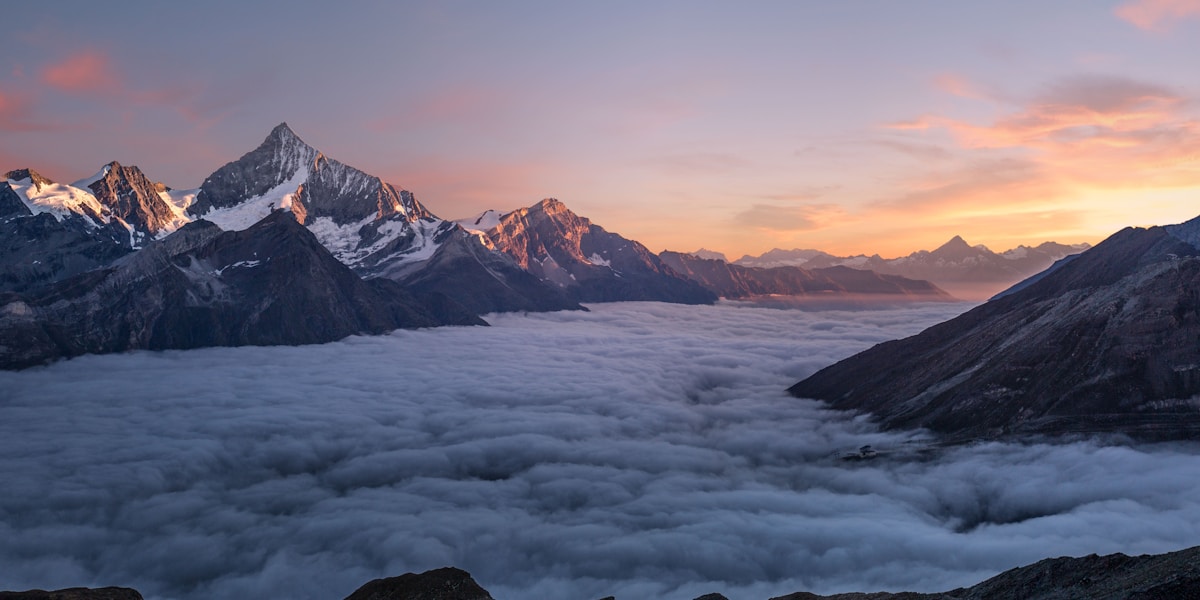
Planet Earth is home to an astonishing array of natural wonders. From mountain peaks that pierce the clouds to rivers that carve through continents, from volcanoes that reshape landscapes to caves that hold millions of years of geological history, our planet's natural features are endlessly fascinating. Understanding these features is fundamental to geography and helps us appreciate the forces that have shaped the world we live in.
This guide provides a comprehensive overview of Earth's major natural wonders, covering the key geographic features that define our planet's landscapes. Whether you are a geography student, nature enthusiast, or curious traveler, these are the natural wonders every person should know about.
The World's Greatest Mountains
Mountains cover about 22% of Earth's land surface and are found on every continent. The Himalayas, formed by the collision of the Indian and Eurasian tectonic plates, contain the world's 14 peaks above 8,000 meters, including Mount Everest at 8,849 meters. The Andes, stretching 7,000 kilometers along South America's western coast, form the world's longest continental mountain range. The Alps have shaped European history and culture for millennia, while the Rocky Mountains extend over 4,800 kilometers through western North America. Africa's Mount Kilimanjaro, a free-standing volcanic mountain, rises to 5,895 meters as the continent's highest point.
Rivers That Shape Continents
Rivers are the arteries of our planet, carrying water from mountains to oceans and sustaining billions of people. The Amazon River system carries more water than any other river, accounting for roughly 20% of all freshwater discharged into the world's oceans. The Nile, traditionally considered the world's longest river at approximately 6,650 kilometers, has supported civilizations for over 5,000 years. The Mississippi-Missouri system drains 31 US states and two Canadian provinces. The Ganges, sacred to Hinduism, supports one of the most densely populated river basins on Earth.
Waterfalls: Nature's Most Dramatic Displays
Waterfalls occur where rivers encounter a sudden change in elevation. Angel Falls in Venezuela, the world's tallest uninterrupted waterfall at 979 meters, drops from the edge of the Auyantepui tepui. Victoria Falls on the Zambia-Zimbabwe border creates the world's largest curtain of falling water at 1,708 meters wide. Niagara Falls, while not the tallest, is famous for its enormous volume of water -- approximately 2,800 cubic meters per second. Iguazu Falls on the Argentina-Brazil border comprises 275 individual drops spread across nearly 3 kilometers.
Volcanoes: Earth's Fiery Builders
Volcanoes are windows into Earth's interior, and their eruptions have shaped landscapes across the planet. The Pacific Ring of Fire, encircling the Pacific Ocean, contains about 75% of the world's active and dormant volcanoes. Mount Vesuvius in Italy famously buried Pompeii in 79 AD. Hawaii's Mauna Loa is the world's largest active volcano by volume. Iceland sits atop the Mid-Atlantic Ridge where volcanic activity continuously creates new land. The supervolcano beneath Yellowstone National Park has produced some of the largest eruptions in geological history.
Deserts: Lands of Extremes
Deserts cover about one-third of Earth's land surface. The Sahara, at 9.2 million square kilometers, is the world's largest hot desert, though Antarctica is technically the largest desert overall due to its extremely low precipitation. The Atacama Desert in Chile is the driest place on Earth, with some weather stations never having recorded rainfall. The Arabian Desert, Gobi Desert, and Kalahari Desert each present unique landscapes ranging from sand dunes to rocky plateaus to salt flats.
Caves: Underground Wonders
Below Earth's surface lies a hidden world of caves and cavern systems. The Mammoth Cave system in Kentucky extends over 680 kilometers, making it the world's longest known cave. Son Doong Cave in Vietnam is the world's largest cave passage by volume, large enough to contain a city block of 40-story buildings. The Waitomo Glowworm Caves in New Zealand are illuminated by thousands of bioluminescent insects. Crystal Cave in Mexico's Naica Mine contains enormous selenite crystals up to 12 meters long.
Glaciers: Rivers of Ice
Glaciers cover about 10% of Earth's land area and hold roughly 69% of the world's freshwater. The Antarctic Ice Sheet is the largest single mass of ice on Earth. The Greenland Ice Sheet, if fully melted, would raise global sea levels by about 7 meters. Mountain glaciers are found on every continent except Australia, from the Himalayas to the Alps to Patagonia. These frozen rivers have sculpted many of the world's most dramatic landscapes, carving valleys, creating fjords, and depositing the fertile soils that support agriculture.
Test Your Knowledge of Natural Wonders
How well do you know Earth's natural features? Try our Geographic Features Quiz to identify mountains, rivers, and deserts on a map, or play Bodies of Water to test your knowledge of seas, gulfs, and straits.
Explore All Natural Geography Articles
Dive deeper into individual natural wonders with our detailed guides below. Each article provides in-depth coverage of a specific geographic feature.