

Portuguese is the official language of nine countries: Brazil, Angola, Mozambique, Portugal, Guinea-Bissau, East Timor, Equatorial Guinea, Cape Verde, and São Tomé and Príncipe. Together they hold about 265 million speakers, which makes Portuguese the sixth most spoken language in the world by native speakers and the most spoken in the southern hemisphere. Only one of the nine is in Europe, and it accounts for under 4% of the total.
-
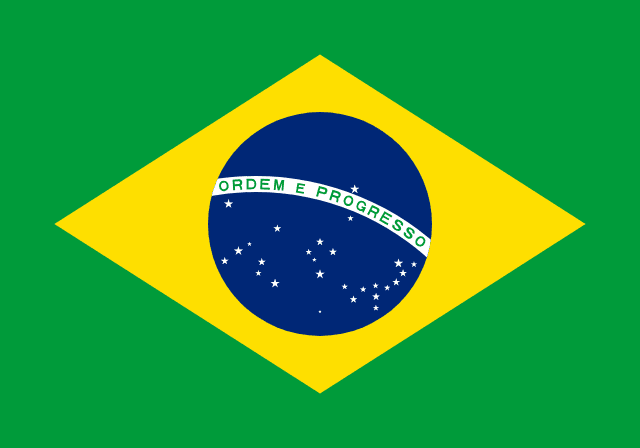 Brazil
212 million
Brazil
212 million
-
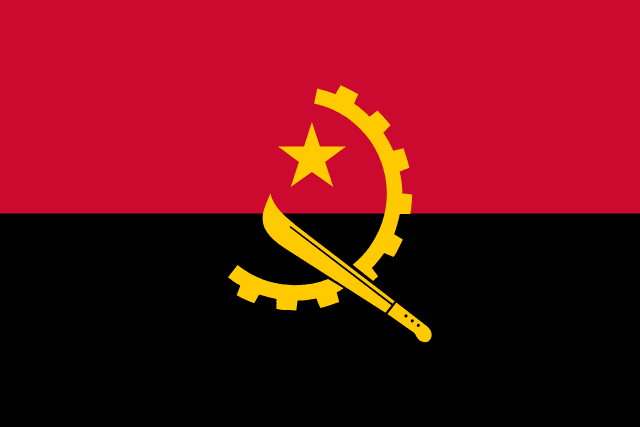 Angola
36 million
Angola
36 million
-
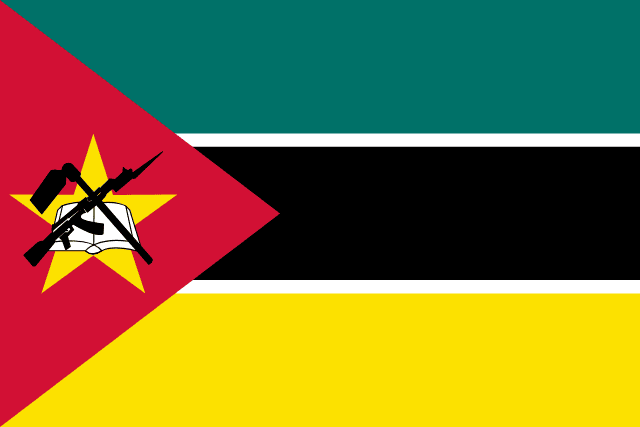 Mozambique
34 million
Mozambique
34 million
-
 Portugal
10 million
Portugal
10 million
-
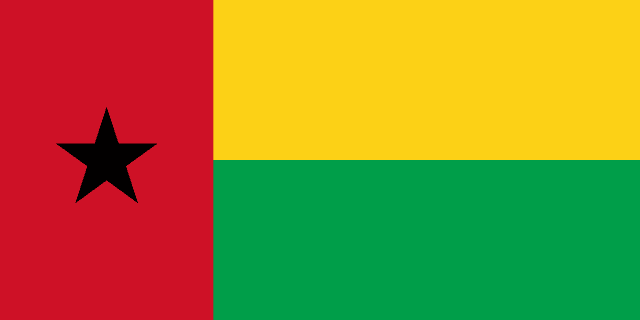 Guinea-Bissau
2.2 million
Guinea-Bissau
2.2 million
-
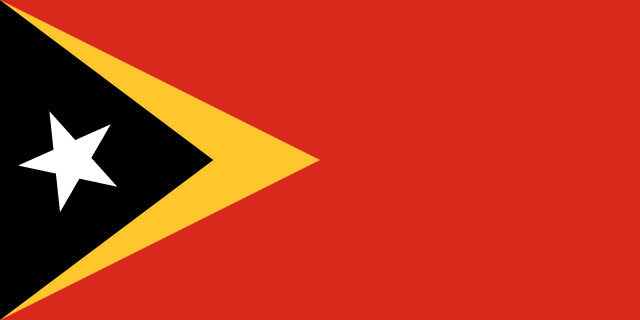 East Timor
1.4 million
East Timor
1.4 million
-
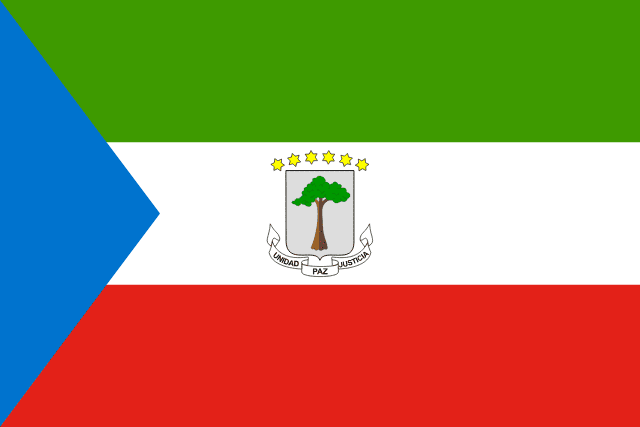 Equatorial Guinea
1.9 million
Equatorial Guinea
1.9 million
-
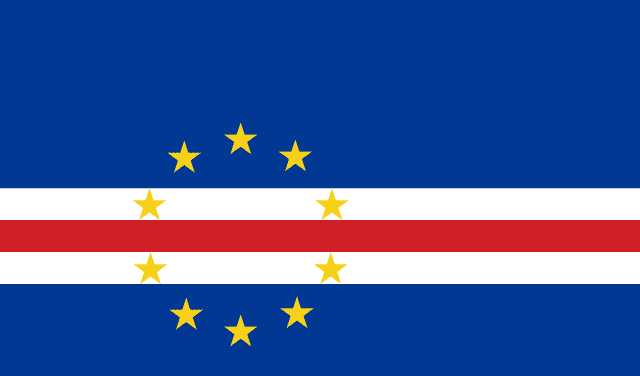 Cape Verde
0.5 million
Cape Verde
0.5 million
-
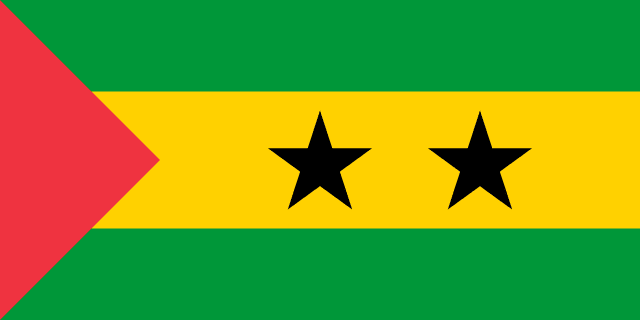 Sao Tome and Principe
0.2 million
Sao Tome and Principe
0.2 million
Brazil Is 80% of the Language
Brazil alone holds around 212 million Portuguese speakers, roughly four-fifths of the world's total and more than twenty times Portugal's population. That imbalance shapes everything about the language's future: the demographic centre of Portuguese sits in South America and has done for a century.
It also shapes what learners hear. Portuguese-language media, music and television flowing out of Brazil vastly outweigh Portuguese output, so a Portuguese learner in Tokyo or Berlin is far more likely to be studying the Brazilian variety without having chosen it.
Portugal has around 10 million speakers at home, and a diaspora that adds several million more across France, Luxembourg, Switzerland, Canada, the United States and Venezuela. Luxembourg is close to 15% Portuguese-origin, the highest share of any country outside the lusophone world.
Africa Is Where the Growth Is
Angola and Mozambique together already hold about 70 million people, and both have young, fast-growing populations. Projections consistently put lusophone Africa ahead of Portugal several times over by mid-century, and Angola's cities are producing a distinct Angolan Portuguese with heavy Kimbundu and Umbundu influence.
The African lusophone states are also the ones where Portuguese competes hardest with other languages. In Mozambique, Portuguese is the official language but only a minority speak it as a first language; Emakhuwa, Xichangana and other Bantu languages dominate at home, and Portuguese functions as the language of school, state and intercity communication.
Cape Verde and Guinea-Bissau add a further complication. Both have Portuguese-based creoles — Kriolu and Kriol — that most people actually speak day to day, with standard Portuguese reserved for writing and officialdom. Cape Verdean Creole has been the subject of a long argument about official recognition that remains unresolved.
The Two Outliers
Equatorial Guinea adopted Portuguese as a third official language in 2007, alongside Spanish and French, largely to qualify for membership of the Community of Portuguese Language Countries. Very few Equatoguineans speak it — the historic Portuguese connection ended in 1778, when Portugal ceded the territory to Spain — and the move was widely read as diplomatic rather than linguistic.
East Timor is the opposite case. Portugal ruled it for four centuries, Indonesia annexed it in 1975 and banned Portuguese, and a generation grew up speaking Indonesian instead. On independence in 2002 the country chose Portuguese as co-official with Tetum anyway, explicitly because the resistance had used it and Indonesia had not.
The decision remains contested inside East Timor. Surveys have found Portuguese fluency well below Tetum and Indonesian among younger Timorese, and teacher shortages have been persistent, but the constitutional position has not moved.
The Spelling Agreement Nobody Fully Signed Up To
Brazilian and European Portuguese diverged in spelling as well as accent, and in 1990 the CPLP countries signed an Orthographic Agreement to standardise them. It removed silent consonants from European spellings — acção became ação, óptimo became ótimo — and adjusted hyphenation and capitalisation.
Brazil implemented it from 2009 and Portugal from 2009 as well, with transition periods running to 2015. Angola and Mozambique, the second and third largest lusophone countries, have never ratified it. Angola's objection is partly that the agreement ignores African vocabulary that has entered the language.
The result is that the standardisation intended to unify written Portuguese is applied in some member states and not others, which is roughly where it started.
How Different Are the Varieties?
Written Portuguese is highly mutually intelligible across all nine countries. Spoken Portuguese is not always so, and the gap runs mostly in one direction: Brazilians often find European Portuguese hard to follow, while Portuguese speakers generally understand Brazilian easily, because of exposure.
The reason is phonetic. European Portuguese reduces or drops unstressed vowels heavily, compressing words into consonant clusters, while Brazilian Portuguese keeps vowels open. Telefone comes out close to tlefon in Lisbon and as five clear syllables in São Paulo.
Grammar differs too. Brazil largely uses você for "you" where Portugal uses tu, and Brazilian Portuguese places object pronouns before the verb where European Portuguese attaches them after. Neither breaks comprehension, but both mark a speaker's origin instantly.
The CPLP and What It Actually Does
The Community of Portuguese Language Countries was founded in Lisbon in July 1996 with seven members; East Timor joined in 2002 and Equatorial Guinea in 2014. It runs cultural and educational programmes, coordinates diplomatic positions, and has a mobility agreement signed in 2021 that eases movement between member states.
Its associate observers now number well over thirty and include Japan, Turkey, Uruguay, Hungary, Georgia and the Czech Republic — a list that says more about the value of access to Angolan and Brazilian markets than about Portuguese-language enthusiasm.
Portuguese is an official language of the African Union, Mercosur, the Organization of American States and the European Union, and a working language of several UN agencies, though not one of the six official UN languages. Brazil and the CPLP have campaigned for that for years without success.
How a Galician Dialect Reached Four Continents
Portuguese began as Galician-Portuguese, spoken in the north-western corner of Iberia, and its earliest surviving documents date to the twelfth and thirteenth centuries. It moved south with the Reconquista, and Lisbon replaced the north as the standard-setting centre after the capital shifted there in 1255.
The overseas expansion was extraordinarily fast. Madeira was settled from the 1420s, Cape Verde from 1462, the Gold Coast forts from 1482, Vasco da Gama reached India in 1498, Cabral reached Brazil in 1500, Malacca fell in 1511 and the first Portuguese reached Japan in 1543. Within a single lifetime the language had a presence on four continents.
It left traces well beyond the nine official states. Japanese took pan for bread, tempura and arigatō's disputed etymology from Portuguese contact; Indonesian and Malay have meja for table and gereja for church; and Portuguese was the main European trade language of the Indian Ocean for well over a century before Dutch and English displaced it.
What the Language Is Worth Economically
The lusophone economies are dominated by Brazil, which is among the world's ten largest, and by Angola, one of Africa's biggest oil producers. Combined lusophone GDP is well over two trillion dollars, and CPLP estimates have put the language's share of global economic output at around 4%.
That has made Portuguese a growth subject in unexpected places. China has expanded Portuguese teaching substantially, using Macau as a training base for the Portuguese-language services its African and Brazilian trade requires, and the Forum for Economic and Trade Cooperation between China and Portuguese-Speaking Countries has met in Macau since 2003.
Uruguay, Argentina and Paraguay all teach Portuguese in schools because of Mercosur. Spain has expanded it in the regions bordering Portugal. Where Portuguese is taught as a foreign language, the reason is almost always Brazil.
Where Portuguese Is Spoken but Not Official
Macau kept Portuguese as a co-official language after the 1999 handover to China, under a fifty-year guarantee running to 2049. Fewer than 3% of residents speak it, but all laws are published in both Chinese and Portuguese and the courts operate in both.
Goa, Daman and Diu were Portuguese until India took them in 1961, and a small elderly population still speaks the language, alongside Indo-Portuguese creoles now close to extinct. Similar creoles survive in Sri Lanka, Malacca in Malaysia — where the Kristang community still uses one — and the Cape Verdean-descended communities of New England.
Uruguay is the significant living case. Along the Brazilian border, a Portuguese-Spanish mixed variety usually called Portuñol or DPU is spoken by a substantial population, and Uruguay made Portuguese a compulsory school subject in 2008.
Why Nine and Not More
Portugal's empire was vast in reach but thin in settlement outside Brazil. It ran trading posts and coastal forts rather than large settler colonies, which meant the language embedded deeply in a handful of places and barely at all in dozens of others where the Portuguese flag once flew.
Compare that with Spanish, official in twenty countries, or French in twenty-nine. Portuguese has fewer countries and more speakers per country than either — a consequence of Brazil's size rather than of any wider spread. Set against the full list of 195 countries, or the wider family of Romance-language states, the lusophone world is unusually concentrated and unusually spread out at the same time.