

Russian is an official or co-official language in four sovereign states — Russia, Belarus, Kazakhstan and Kyrgyzstan — and is widely spoken across most of the former Soviet Union. Around 150 million people speak it as a first language and perhaps another 110 million as a second, making it the most spoken language in Europe by native speakers and the eighth most spoken in the world. The number of speakers is falling, and it has been falling since 1991.
-
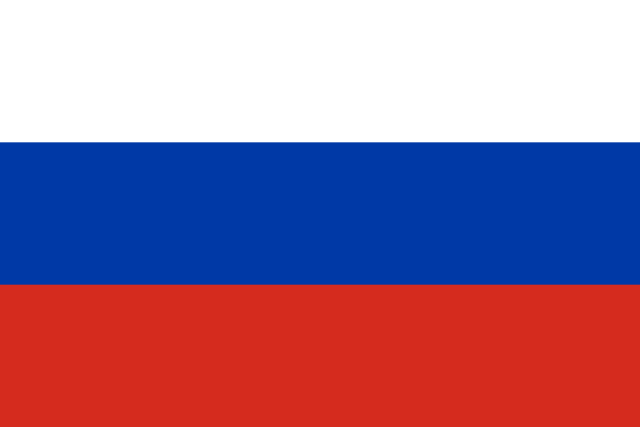 Russia
state language
Russia
state language
-
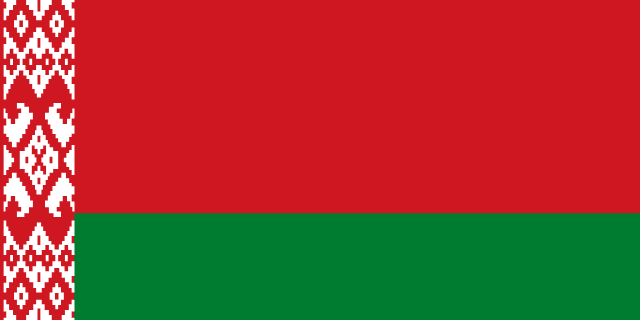 Belarus
co-official with Belarusian
Belarus
co-official with Belarusian
-
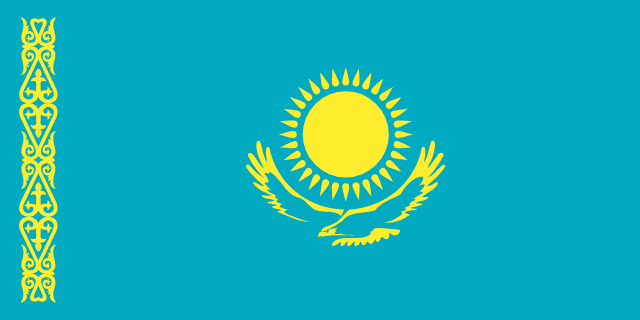 Kazakhstan
official in state bodies
Kazakhstan
official in state bodies
-
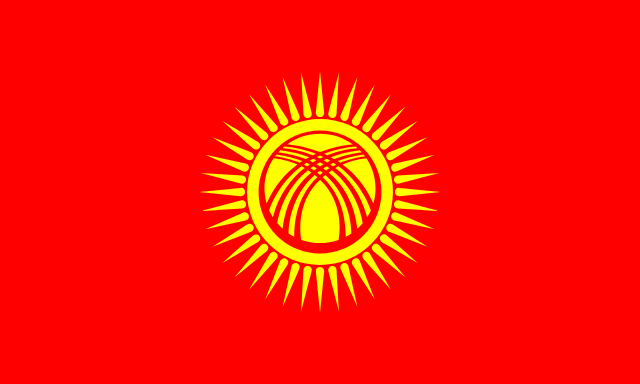 Kyrgyzstan
official language
Kyrgyzstan
official language
Official in Four Places, Legally Complicated in All of Them
Russia's constitution names Russian the state language of the whole federation, while allowing its republics to add their own. Tatarstan, Bashkortostan, Chechnya, Sakha and around twenty other republics do exactly that, so a Russian citizen may live somewhere with two official languages.
Belarus has two state languages, Russian and Belarusian, on paper. In practice Russian dominates almost completely: census and survey data consistently find that a small minority use Belarusian at home, and it appears in schools, government and broadcasting far less than its official status implies.
Kazakhstan gives Kazakh the status of state language and specifies that Russian is used officially on equal terms in state bodies. Kyrgyzstan's constitution makes Russian an official language alongside Kyrgyz as the state language. The distinction between "state" and "official" in both cases is a deliberate compromise, not an accident of translation.
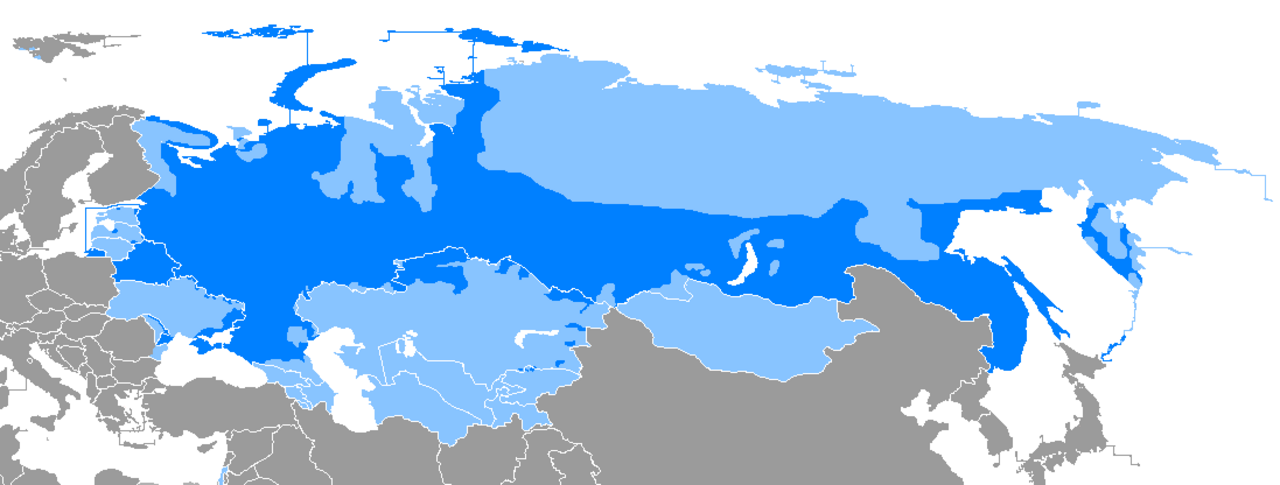
Where It Is Spoken Without Being Official
Russian remains a functioning second language across most of the former USSR even where the law no longer recognises it. Uzbekistan, Tajikistan, Armenia, Azerbaijan, Georgia, Moldova, Ukraine, Latvia, Lithuania and Estonia all have substantial Russian-speaking populations, though the shares vary enormously.
Latvia and Estonia have the largest proportions outside the four official states, at roughly a quarter to a third of their populations, mostly the descendants of Soviet-era migration. Both countries have made Latvian and Estonian the sole official languages and tightened education law repeatedly, most recently requiring the phase-out of Russian-medium schooling.
Tajikistan removed Russian's constitutional status as the language of interethnic communication in 2009 and partially restored it in 2011. Uzbekistan has debated similar changes several times. In each case the argument is the same: how much of a Soviet inheritance to keep when the practical value of the language is still high.
Ukraine Changed the Picture
Ukraine had the largest Russian-speaking population outside Russia, and Russian was a first language for roughly a third of the country in the 2001 census. Language use there was never a clean split — many Ukrainians spoke both, switched between them by context, or used the mixed variety called surzhyk.
The direction of travel since 2014, and much more sharply since 2022, has been away from Russian. Surveys by the Kyiv International Institute of Sociology have recorded large increases in the share of Ukrainians using Ukrainian at home, including among people who grew up speaking Russian, and a 2019 law made Ukrainian mandatory across most public life.
This is the single biggest change in the global distribution of Russian since 1991, and it is a change in behaviour rather than in demography. Millions of fluent Russian speakers have chosen to stop using it.
The Contraction Since 1991
At the Soviet collapse, Russian was studied compulsorily across fifteen republics and across the Warsaw Pact, and estimates of total speakers ran above 300 million. Every subsequent estimate has been lower.
Three things drove the fall. Compulsory Russian ended immediately in Eastern Europe, where Poland, Czechoslovakia, Hungary, Romania and Bulgaria switched school provision to English and German within a few years. Russia's own population has been shrinking since the early 1990s. And the Central Asian republics, whose populations are growing fast, are producing generations with weaker Russian than their parents.
Working against that, labour migration keeps the language alive: several million citizens of Uzbekistan, Tajikistan and Kyrgyzstan work in Russia, and remittances make Russian a directly employable skill. That is why Kyrgyzstan and Tajikistan have both pulled back from measures that would weaken Russian-language schooling.
Cyrillic, and the Countries Leaving It
Russian is written in a 33-letter Cyrillic alphabet derived from the script devised for Old Church Slavonic in the ninth century and reformed by Peter the Great in 1708 and again by the Bolsheviks in 1918, which dropped four letters.
Soviet policy imposed Cyrillic on most of Central Asia in the late 1930s, replacing Latin scripts that had themselves replaced Arabic ones only a decade earlier. Since independence, several countries have reversed that. Azerbaijan, Turkmenistan and Uzbekistan moved to Latin scripts in the 1990s, with mixed completeness — Uzbekistan's transition has been extended repeatedly and Cyrillic is still visible everywhere.
Kazakhstan announced a Latin alphabet in 2017 for completion by 2025, then revised the design twice and pushed the deadline to 2031. Script reform is expensive and slow, and each of these decisions is as much about orientation away from Moscow as about linguistics.
A UN Language With Diplomatic Reach
Russian is one of the six official languages of the United Nations, alongside English, French, Spanish, Chinese and Arabic, a status fixed in the founding arrangements and unchanged since. It is also official in the International Atomic Energy Agency, the World Health Organization, the Shanghai Cooperation Organisation and the Eurasian Economic Union.
It is a working language of the International Space Station, where crew are required to have functional Russian, and it remains the language of Soyuz operations. Astronauts from NASA and other agencies train in Star City near Moscow and take Russian language instruction as part of the programme.
Russian is not, and has never been, an official language of the European Union, despite being spoken natively by more EU residents than several languages that are — a consequence of the rule that member states nominate their own official languages.
The Unrecognised States Where Russian Is Official
Three territories that most of the world does not recognise as states give Russian official status, and in each case the language policy is inseparable from the political dispute.
Transnistria, which broke from Moldova in 1992, has three official languages — Russian, Moldovan written in Cyrillic, and Ukrainian — with Russian dominant in practice. Abkhazia makes Abkhaz the state language and Russian the language of state institutions; South Ossetia has Ossetian, Russian and Georgian, with Russian used for almost all administration.
Russian is also the working language of the Russian-administered areas of Ukraine, and it retained official status in Crimea after 2014 under Russian law. None of these arrangements is recognised by the United Nations, and none appears in the standard count of four states.
Literature Did as Much as Policy
Russian's international standing was not built only on Soviet power. Nineteenth-century Russian literature reached a global readership that few other national canons managed, and it did so in translation while the language itself was barely studied outside the empire.
Pushkin standardised the modern literary language almost single-handedly in the 1820s and 1830s, replacing a stiff Church Slavonic register with something close to educated speech. Tolstoy, Dostoevsky, Turgenev, Gogol and Chekhov followed within two generations, and by 1900 a European reader could reasonably be expected to know them.
That inheritance is why Russian departments exist in universities with no political or commercial connection to Russia, and why the language has held up better in academic study than its economic weight alone would predict.
The Diaspora
Outside the former Soviet space, the largest Russian-speaking communities are in Germany, Israel, the United States and Canada. Germany's arrived largely through the Aussiedler programme for ethnic Germans from the USSR, and numbers well over two million people of Soviet origin.
Israel's is proportionally the largest anywhere: roughly one Israeli in six speaks Russian, following the immigration of over a million people from the former USSR in the 1990s. Russian-language newspapers, television channels and political parties are a permanent feature of Israeli life, and street signage in some cities is trilingual.
Emigration since 2022 has added new concentrations in Georgia, Armenia, Kazakhstan, Turkey, Serbia, Montenegro and the UAE, generally younger and more urban than earlier waves. Whether these become permanent Russian-speaking communities or reverse is still open.
What Makes Russian Hard
The US Foreign Service Institute places Russian in its Category III, requiring roughly 1,100 class hours for professional working proficiency — harder than French or Spanish, easier than Arabic, Chinese, Japanese or Korean.
The difficulty is grammatical rather than phonetic. Russian has six cases, three genders, and a verbal aspect system that requires choosing between a perfective and imperfective form for almost every action, a distinction with no clean English equivalent. Word order is flexible precisely because the case endings carry the information that English gets from position.
The alphabet, by contrast, takes most learners a few days. It is phonetically consistent, and Russian spelling reflects pronunciation far more reliably than English or French does — one reason the script is a much smaller barrier than its unfamiliarity suggests. For the wider picture of which languages dominate which regions, the count of countries in Europe and the position of Polish, the largest West Slavic language, are the natural comparisons.