
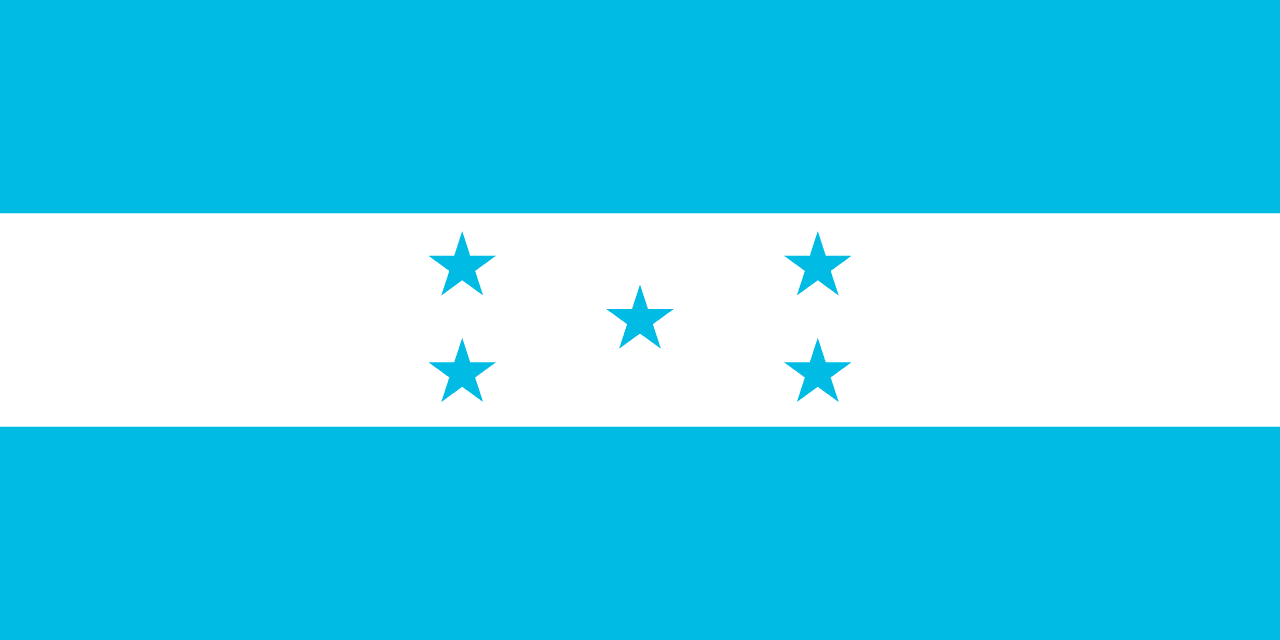
Tucked into the Central American isthmus between Guatemala, El Salvador, and Nicaragua, Honduras is a country of misty cloud forests, coral-fringed islands, and ancient Maya cities that most travelers never expect. It once gave the world the original "banana republic," yet it also guards one of the most spectacular archaeological sites in the Americas. Here are ten genuinely fascinating facts that reveal why this often-overlooked nation deserves a closer look.
1. It Has Coastlines on Two Different Seas
Honduras is one of the few Central American countries with shorelines on opposing bodies of water. Its long northern coast faces the Caribbean Sea, lined with beaches, mangroves, and the colorful Bay Islands, while a short southern strip touches the Pacific Ocean along the Gulf of Fonseca. This dual access shaped the country's history, trade, and cultural mix. The Caribbean coast developed a distinct Afro-Caribbean and English-speaking character, while the Pacific side connected Honduras to its neighbors. Few visitors realize you can, in theory, dip your feet in both the Caribbean and the Pacific within the same country in a single day's drive.
2. Copán Was a Crown Jewel of the Maya World
In the country's west sit the ruins of Copán, a UNESCO World Heritage Site and one of the most artistically refined cities of the ancient Maya. Flourishing between roughly 400 and 800 AD, Copán is famous for its intricately carved stelae, a magnificent Hieroglyphic Stairway with the longest known Maya text, and lifelike sculpture that earned it the nickname "the Athens of the Maya world." Archaeologists have decoded its dynasty of sixteen kings from the inscriptions. Wandering among the moss-covered temples and scarlet macaws that still fly overhead, you get a vivid sense of a sophisticated civilization that thrived here more than a thousand years ago. You can learn more in our country guide.
3. The Bay Islands Sit on a World-Class Coral Reef
Off the Caribbean coast lie Roatán, Utila, and Guanaja, the Bay Islands, which rest atop the Mesoamerican Barrier Reef, the second-largest coral reef system on Earth after Australia's Great Barrier Reef. The waters here are a global magnet for divers and snorkelers, offering warm, clear seas teeming with parrotfish, eagle rays, and the occasional whale shark. Utila, in particular, is celebrated as one of the cheapest places in the world to earn a scuba diving certification, drawing backpackers from around the globe. The islands also blend Garifuna, Creole-English, and Latino cultures, giving them an atmosphere distinct from the Honduran mainland.
4. Tegucigalpa Is a Capital With No Railroad
The capital, Tegucigalpa, sprawls across a bowl of steep hills at around 1,000 meters of elevation in the country's central highlands. Founded as a silver and gold mining town in the sixteenth century, its name is often said to derive from indigenous words, with "hill of silver" being a popular interpretation. Uniquely among Central American capitals, Tegucigalpa has never had a railway connecting it to the coast, partly because of its rugged mountainous terrain. The city forms a Central District together with neighboring Comayagüela, and its colonial churches, hillside neighborhoods, and the towering Basilica of Suyapa give it a character shaped as much by its dramatic topography as its history.
5. Its Name Means "Depths" in Spanish
The word Honduras literally translates to "depths" in Spanish, a reference to the deep coastal waters Christopher Columbus encountered when he reached the region in 1502 during his fourth and final voyage. According to popular tradition, Columbus expressed relief at escaping the deep seas near the coast, and the name stuck. This makes Honduras one of the few nations whose name describes a geographic feature noted by early European explorers. It is a small linguistic detail, but it ties the country's very identity to its rugged Caribbean shoreline and the age of exploration that reshaped the Americas.
6. The Garifuna Bring African Heritage to the Coast
Along the northern Caribbean shore live the Garifuna, descendants of shipwrecked West Africans and indigenous Carib peoples who were exiled to the region by the British in the late eighteenth century. They have preserved a remarkable culture, including their own language, hypnotic punta drumming and dance, and dishes built around coconut and cassava. UNESCO has recognized the Garifuna language, music, and dance as a Masterpiece of the Oral and Intangible Heritage of Humanity. Their presence makes Honduras a striking example of Central America's African heritage, adding a rhythm and flavor along the coast that feels worlds apart from the Spanish-speaking highlands inland.
7. Bananas Made It the Original "Banana Republic"
In the early twentieth century, U.S. fruit companies built vast plantations along the northern coast, and bananas became so central to the economy and politics that Honduras inspired the very phrase "banana republic," coined by writer O. Henry, who spent time in the country. American corporations wielded enormous influence over land, railways, and even governments. While Honduras has worked to diversify, agriculture remains vital today, with coffee being a major export, often regarded among the finest in Central America, alongside bananas, palm oil, and shrimp. The legacy of that fruit-driven era still echoes in the country's geography, infrastructure, and the layout of its coastal towns.
8. Baleadas Are the Beloved National Snack
Honduran cuisine is hearty, affordable, and deeply comforting, and nothing captures it better than the baleada. This simple but addictive dish features a thick, soft wheat flour tortilla folded over refried beans, crumbly salty cheese, and a swipe of mantequilla, a tangy cream similar to crème fraîche. From there, cooks add eggs, avocado, or meat to taste. Sold everywhere from street stalls to family kitchens, baleadas are eaten at all hours and are a point of national pride. Other staples include plato típico with grilled meat, fried plantains, and rice, plus fresh seafood and coconut-rich dishes along the Garifuna coast.
9. Cloud Forests Hide Astonishing Biodiversity
Despite its modest size, Honduras packs in extraordinary natural variety. Highland cloud forests in parks such as Pico Bonito and Celaque shroud the peaks in mist, nurturing orchids, jaguars, tapirs, and hundreds of bird species. Celaque is home to Cerro Las Minas, the country's highest point at roughly 2,870 meters. Meanwhile, in the remote northeast lies La Mosquitia, a vast and roadless expanse of rainforest, wetlands, and rivers often called the "little Amazon" of Central America. This region is so untouched that explorers in recent years reported finding remnants of a long-lost ancient settlement deep within its jungle.
10. Soccer Once Sparked a Brief War
In 1969, tensions between Honduras and neighboring El Salvador, fueled by migration disputes and inflamed by qualifying matches for the FIFA World Cup, erupted into the so-called "Football War," a short but real armed conflict lasting only about four days. While the matches were a trigger rather than the true cause, the episode cemented football's role in the national psyche. Today the sport remains a unifying passion, and Honduras's national team, nicknamed La H, has qualified for multiple World Cups, including 1982, 2010, and 2014. Match days bring the whole country together in a sea of blue and white, the colors of its flag.
Frequently Asked Questions
What is the capital of Honduras?
The capital of Honduras is Tegucigalpa, a hilly highland city of roughly one million people set at about 1,000 meters above sea level. Founded as a colonial mining town, it serves as the country's political and administrative center and forms a Central District alongside the adjoining city of Comayagüela.
What is Honduras famous for?
Honduras is best known for the ancient Maya ruins of Copán, the world-class diving around the Bay Islands and Roatán on the Mesoamerican Barrier Reef, its rich coffee and banana exports, the vibrant Garifuna culture along the Caribbean coast, and lush cloud forests and rainforests bursting with wildlife.
Why is the country called Honduras?
The name Honduras means "depths" in Spanish, referring to the deep coastal waters Christopher Columbus encountered when he reached the region in 1502. According to tradition, he was relieved to leave those deep seas behind, and the descriptive name endured to become the country's official identity.
Conclusion
From the carved temples of Copán and the coral reefs of Roatán to baleadas, Garifuna drumming, and misty mountain jungles, Honduras offers far more than its quiet reputation suggests. It is a country where ancient civilizations, two great seas, and a fierce love of football all meet. These ten facts are only a starting point, an invitation to keep exploring one of Central America's most surprising and rewarding corners.