
Squeezed between the Mediterranean Sea and Syria, Lebanon packs an astonishing amount of history, flavor, and contradiction into a country smaller than the U.S. state of Connecticut. It is a place where you can ski snow-covered peaks in the morning and swim in the warm sea by afternoon, where 7,000-year-old ports sit beside neon nightclubs. Here are ten genuinely fascinating facts about this small but mighty nation.
1. You Can Ski and Swim on the Same Day
Lebanon is famous for one of the most quoted travel boasts in the world: in spring you can ski the slopes of Mount Lebanon in the morning and then drive down to the Mediterranean coast to swim in the sea that same afternoon. The country is dominated by two parallel mountain ranges running north to south, with the fertile Beqaa Valley sandwiched between them. Mzaar Kfardebian and the Cedars are real ski resorts with serious snowfall, while the coastline stays mild. The drive from peak to beach can take just a couple of hours, making this rare combination not a marketing myth but a genuine geographic quirk that locals have enjoyed for generations.
2. The Cedar Tree Is a National Obsession
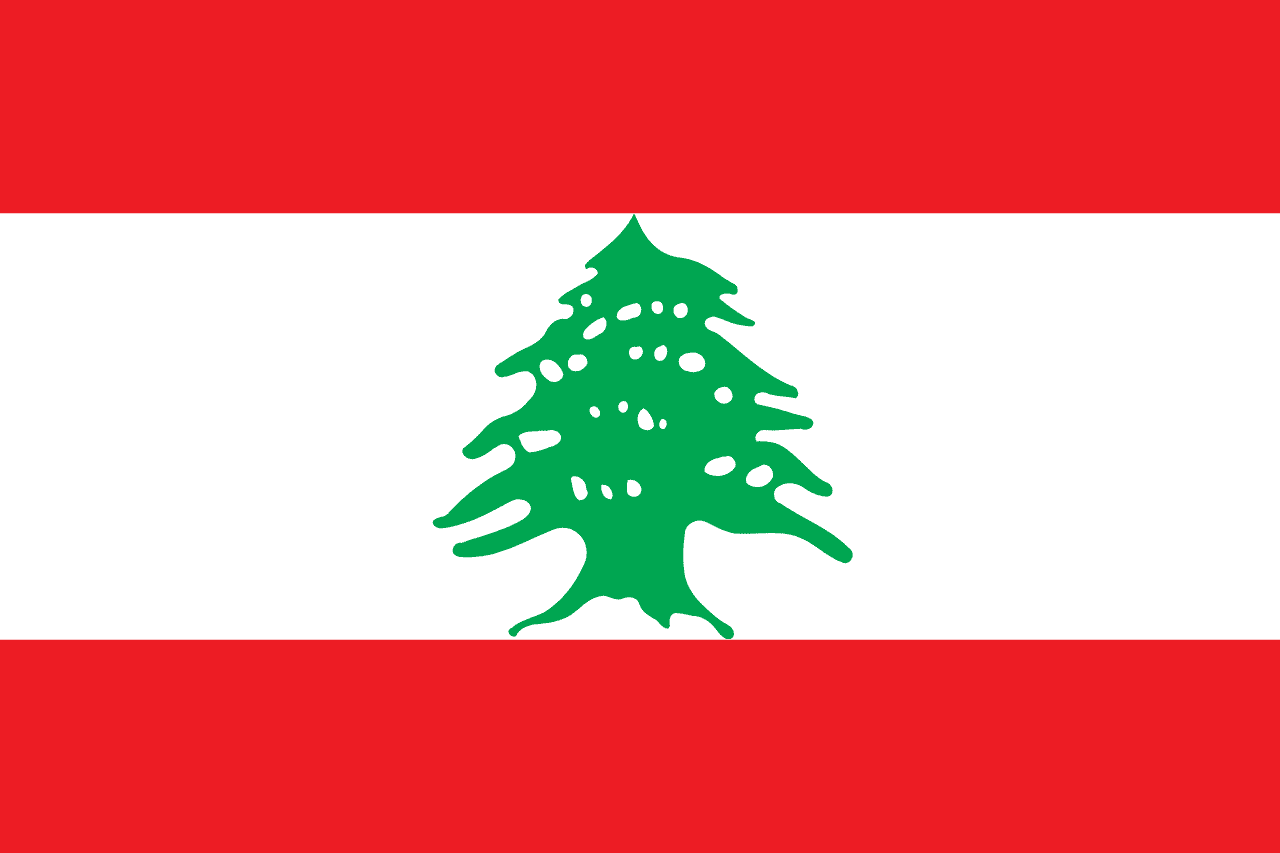
The cedar of Lebanon sits at the very center of the national flag, a green tree on a white band between two red stripes. These majestic trees, some over 1,000 years old, once blanketed the mountains and were prized across the ancient world. The Phoenicians built their famous ships from cedar, the Egyptians used cedar resin in mummification, and the Bible references Lebanese cedar in the construction of King Solomon's Temple. Today only scattered ancient groves remain, the most famous being the protected Cedars of God near Bsharri, a UNESCO World Heritage site. The tree is so central to identity that Lebanese people often call themselves "the children of the cedars." You can learn more in our country guide.
3. Beirut Has Been Destroyed and Rebuilt Seven Times
Beirut, the capital, is one of the oldest continuously inhabited cities on Earth, with roots stretching back more than 5,000 years. According to legend, the city has been destroyed and rebuilt seven times over its long history, surviving earthquakes, conquests, and conflicts. This resilience earned Beirut a reputation as a phoenix rising from the ashes. In the mid-twentieth century it was nicknamed the "Paris of the Middle East" for its glamour, banking, and cosmopolitan culture. Despite a devastating civil war and the catastrophic 2020 port explosion, the city remains a vibrant hub of art, journalism, nightlife, and food, embodying a stubborn spirit of renewal that defines the Lebanese character.
4. There Are More Lebanese Abroad Than at Home
Lebanon's population is roughly 5.9 million, but its diaspora is estimated to be several times larger, with millions of people of Lebanese descent living in Brazil, Argentina, the United States, Canada, Australia, and West Africa. Brazil alone is often said to host more people of Lebanese origin than Lebanon itself. Waves of emigration, driven by economic hardship and conflict, scattered the Lebanese around the globe, where they became famously successful merchants, entrepreneurs, and public figures. Notable people of Lebanese heritage include the late entertainer Shakira's family, fashion designers, and Carlos Slim, once the world's richest man. This vast global network sends money home and keeps Lebanese culture thriving far beyond its borders.
5. A Country of Eighteen Official Religious Sects
Lebanon officially recognizes eighteen religious sects, an extraordinary level of diversity for such a small country. The population is broadly split among Muslims (both Sunni and Shia), Christians (including the large Maronite community, plus Greek Orthodox, Catholics, and Armenians), and the Druze. This mosaic is reflected in the unique power-sharing political system: by long-standing convention, the president is always a Maronite Christian, the prime minister a Sunni Muslim, and the speaker of parliament a Shia Muslim. This confessional arrangement, designed to balance the sects, makes Lebanon's politics fascinating and famously complicated, and gives its cities a remarkable patchwork of churches and mosques standing side by side.
6. Arabic Is Official, but Lebanese Mix Three Languages
The official language is Arabic, and Lebanese Arabic has its own distinctive dialect. Yet what really stands out is how naturally many Lebanese weave French and English into everyday speech. A common greeting is "Hi, kifak, ça va?" which blends English, Arabic, and French in a single phrase. French was widely adopted during the period of French mandate in the early twentieth century and remains common in education, business, and the elite social circles, while English has surged among younger generations and in technology and finance. This effortless trilingualism is a point of pride and a daily reminder of Lebanon's role as a crossroads between East and West.
7. Lebanese Cuisine Conquered the World
Lebanon is a culinary powerhouse whose food has become globally beloved. The mezze tradition, an elaborate spread of small dishes, includes hummus, tabbouleh, baba ghanoush, kibbeh, fattoush, and warm flatbread, often accompanied by the anise-flavored spirit arak. Tabbouleh in particular is a Lebanese signature, dominated by finely chopped parsley rather than the grain-heavy versions found elsewhere. Meals are social marathons meant to be shared slowly among family and friends. Lebanese restaurants now thrive in cities across the globe, and dishes once considered exotic are supermarket staples in the West. The cuisine reflects the land itself: olive oil, lemon, garlic, fresh herbs, and vegetables grown in the sunny Mediterranean climate.
8. Baalbek Holds Some of the Largest Stones Ever Quarried
In the Beqaa Valley sits Baalbek, an ancient Roman temple complex of staggering scale. The Temple of Jupiter once featured columns over 20 meters tall, among the largest ever erected. Even more astonishing are the foundation stones known as the Trilithon, three colossal blocks each weighing roughly 800 tons. Nearby in the quarry lies the "Stone of the Pregnant Woman," one of the heaviest carved stones in the world, weighing well over 1,000 tons. How ancient builders moved such monumental blocks remains a subject of fascination and debate. Baalbek is a UNESCO World Heritage site and one of the best-preserved examples of imperial Roman architecture anywhere on Earth.
9. Byblos May Be the World's Oldest Continuously Inhabited City
The coastal town of Byblos, known locally as Jbeil, has been inhabited for around 7,000 years and is frequently cited as one of the oldest continuously inhabited cities in the world. It was a major Phoenician port, and its name is the source of the Greek word for book, "biblion," from which we get the word "Bible," because Byblos traded papyrus used for writing. The Phoenicians, who originated along this coast, are credited with developing one of the earliest alphabets, an innovation that spread across the Mediterranean and shaped writing systems still used today. Byblos blends Crusader castles, Roman ruins, and a charming old harbor into one remarkable site.
10. The Jeita Grotto Is a Subterranean Wonder
North of Beirut lies the Jeita Grotto, a vast system of interconnected limestone caves carved by underground rivers over millions of years. The upper cave is filled with dramatic stalactites and stalagmites, while the lower cave can be explored by boat along a clear underground river. One of its formations is among the longest known stalactites in the world. The grotto was even a finalist in the campaign to name the New Seven Wonders of Nature. It is a beloved national landmark and a reminder that Lebanon's natural beauty extends not just up its mountains and along its coast, but deep beneath the surface as well.
Frequently Asked Questions
What is the capital of Lebanon?
The capital of Lebanon is Beirut, one of the oldest cities in the world and the country's main center for government, finance, media, and culture. Once nicknamed the "Paris of the Middle East," it remains a lively hub known for its resilience, nightlife, and creative energy.
What is Lebanon famous for?
Lebanon is famous for its ancient cedar trees, world-renowned cuisine, and the ability to ski and swim on the same day. It is also celebrated for spectacular Roman ruins at Baalbek, the ancient port of Byblos, and a remarkably diverse society blending many religions, languages, and cultures.
Why do the Lebanese mix so many languages?
Lebanon sits at a crossroads of civilizations, and its history of French influence plus its modern global outlook mean many Lebanese speak Arabic, French, and English fluently. It is common to hear all three blended into a single sentence, reflecting the country's cosmopolitan identity. The cedar even appears on the national flag.
Conclusion
For such a small country, Lebanon offers an outsized share of wonders: snow-capped peaks beside warm seas, 7,000-year-old cities, monumental Roman temples, a globe-spanning diaspora, and a food culture cherished worldwide. Its blend of resilience, diversity, and ancient heritage makes it one of the most captivating places on the planet. These ten facts are only a starting point, so keep exploring and let Lebanon's remarkable story draw you in.